What is the easiest way to draw a squid?
Short answer
The easiest way to draw a squid is by using a teardrop-shaped body as your foundation. By attaching a triangular mantle to a rounded head and adding eight short arms and two long tentacles, you create a recognizable form. Focus on simple geometric shapes to build the structure before adding final details.
On this page
How to draw a basic squid shape
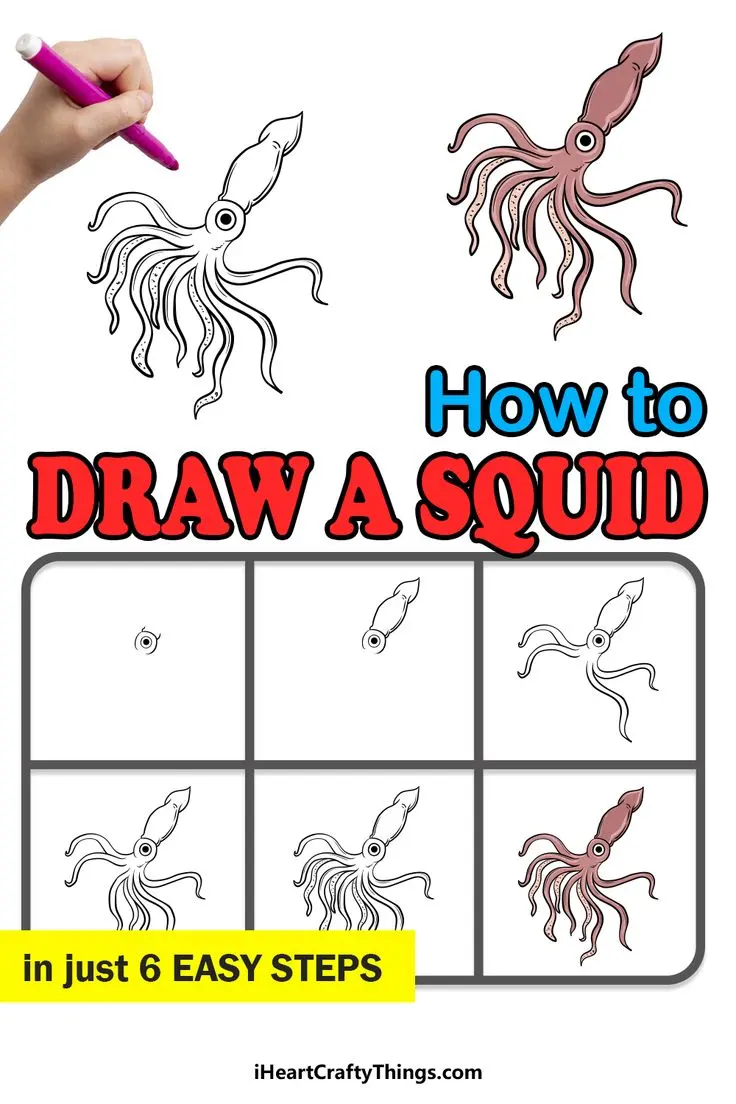
The most efficient approach to drawing a squid involves breaking the animal down into three primary sections: the mantle, the head, and the appendages. Start by sketching an elongated, upside-down teardrop shape to serve as the mantle, which is the main body of the squid. At the bottom of this shape, draw a smaller, flattened oval to represent the head. This simple construction acts as a skeleton that ensures your proportions remain balanced throughout the process.
Once the basic body structure is in place, you can refine the silhouette. Add two small, diamond-shaped fins near the top of the mantle to give the squid its characteristic look. Ensure that the connection between the mantle and the head is smooth, as this transition is where the eyes will eventually be placed. Using light pencil strokes at this stage allows you to erase any overlapping lines later, keeping your drawing clean and professional.
Best drawing tools for beginners
For those just starting, graphite pencils are the most forgiving medium because they allow for easy adjustments. A standard HB pencil provides a good balance of hardness and darkness, making it ideal for the initial sketching phase. You should also have a soft white eraser on hand to clean up construction lines without damaging the paper surface. Using a smooth, medium-weight drawing paper will prevent the graphite from smudging too easily while you work on the finer details.
If you eventually want to move beyond simple sketches, consider adding a fine-liner pen to finalize your work. Once you are satisfied with your pencil outline, trace over it with a permanent ink pen to give the drawing a bold, finished appearance. This technique, often used in scientific illustration, helps define the boundaries of the squid's body clearly. Here is a recommended toolkit for your first attempt:
- HB or 2B graphite pencils for sketching
- A kneaded eraser for lifting graphite gently
- A fine-point permanent ink pen for outlining
- A smooth-surfaced sketchbook or Bristol board
How to add tentacles and arms
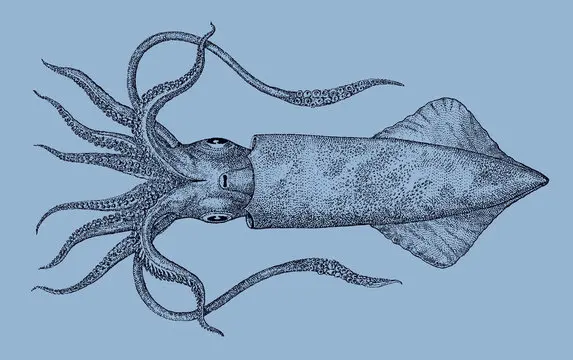
The appendages are the most distinct feature of a squid and require careful placement to look natural. A squid typically has eight shorter arms and two longer, thinner tentacles that extend further than the rest. To draw these, start by sketching thin, curved lines radiating from the bottom of the head. These lines act as guides for the thickness of the limbs. You can then draw around these lines to give the arms volume and a sense of movement.
When adding the tentacles, make them significantly longer and thinner than the arms. You can add small circles or dots along the inner sides of these limbs to represent the suckers, which adds a layer of realism to your drawing. Keep the arrangement somewhat asymmetrical to make the squid look like it is swimming or floating in water. Follow these steps to ensure a balanced look:
- Draw eight short, tapered shapes extending from the base of the head.
- Add two longer, whip-like lines that extend well past the shorter arms.
- Thicken these lines to create the tentacles, adding small circular suckers on the interior side.
- Vary the curves of each arm to suggest fluid motion.
Common mistakes when drawing squids
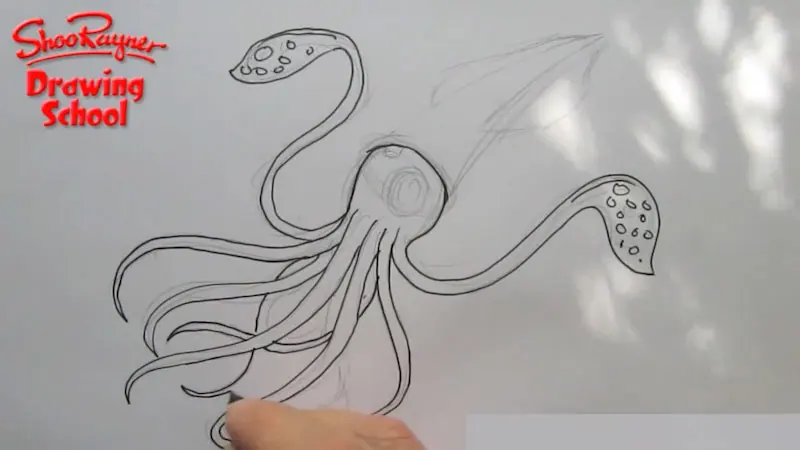
One frequent error is making the mantle too short or square, which makes the squid look more like a jellyfish or a cartoon character. The mantle should be elongated and slightly tapered toward the top to reflect the anatomy of real cephalopods. Another common issue is drawing all the arms the same length. In nature, the two primary tentacles are distinct from the eight arms, and failing to show this difference can make the drawing look stiff or inaccurate.
Additionally, beginners often neglect the eyes, which should be placed prominently on the sides of the head. Drawing the eyes too small or too high up on the mantle can distort the appearance of the animal. Always ensure the eyes are positioned on the head section, just above where the arms attach. By keeping the head distinct from the mantle, you maintain the biological integrity of the drawing. Avoid overcrowding the paper with too many limbs, as this can make the bottom of the squid look messy and confusing.
How to add texture and shading
To make your drawing look three-dimensional, you must incorporate shading that follows the curvature of the body. Since a squid’s mantle is essentially a tube, you should apply darker shading along the edges and lighter tones in the center to create a rounded effect. Use a cross-hatching technique or smooth blending with your pencil to transition between light and shadow. This simple application of value transforms a flat, two-dimensional outline into a form that appears to have mass and volume.
You can also add subtle texture to the skin by using small, light dots or short, dashed lines across the mantle. Squids are known for their chromatophores, which allow them to change color and texture. While you do not need to draw every detail, a few scattered marks can suggest the organic surface of the skin. Keep your light source consistent, ensuring that all shadows fall on the same side of the body. This final step brings your squid to life and provides a professional finish to your artistic effort.
Key facts
- Squids have a mantle that is essentially a long, rounded tube shape.
- A basic squid consists of a main body, two large fins, and ten appendages.
- Two of the appendages are longer tentacles, while the other eight are shorter arms.
- The eyes of a squid are large and located near the base of the arms.
- Always draw the mantle first to establish the overall size and proportion of the creature.
- Adding small suction cup circles along the arms provides an immediate sense of realism.
The bottom line
Drawing a squid is a straightforward process that begins with a simple, elongated tube for the mantle. By adding two triangular fins at the top and ten varied appendages at the bottom, you create a recognizable form. Focus on the contrast between the long tentacles and shorter arms to ensure accuracy. With practice, these basic shapes allow you to capture the fluid grace of this fascinating cephalopod.
People also ask
How many tentacles does a squid actually have?
A squid has ten appendages in total, consisting of eight shorter arms and two longer tentacles. The tentacles are typically used for grabbing prey, while the arms help manipulate it.
Should I draw the squid facing up or down?
Most artists prefer drawing the squid with the mantle pointing upward and the tentacles dangling downward. This orientation mimics how a squid naturally swims through the water column.
What is the most common mistake when drawing a squid?
The most frequent error is forgetting the two long tentacles or making all ten appendages the same length. Ensure the two tentacles are significantly longer than the eight arms to maintain anatomical accuracy.
Do squids have internal skeletons?
Squids do not have a bony skeleton, but they possess a stiff internal structure called a pen. This structure helps maintain the shape of the mantle while the animal swims.
How do I make the squid look like it is moving?
You can suggest motion by curving the mantle into an "S" shape or angling the fins to look like they are fluttering. Adding bubbles or motion lines around the tentacles also enhances the effect.
What is the best medium for a beginner to use?
Graphite pencils are ideal because they allow you to sketch light guidelines for the mantle and arms before committing to darker ink lines. This makes it easy to erase and adjust proportions.
This answer was created with the help of AI research tools and reference sources. Spotted an error? Let us know — we correct mistakes quickly. See our editorial policy.