What is the easiest way to draw a gecko?
Short answer
The easiest way to draw a gecko is to use the "bean and tail" method. By sketching a bean-shaped body, adding a curved tail, and attaching four simple, splayed limbs, you create the basic anatomical silhouette. Refine the shape with small toe pads and an expressive eye to complete the lizard’s distinct look.
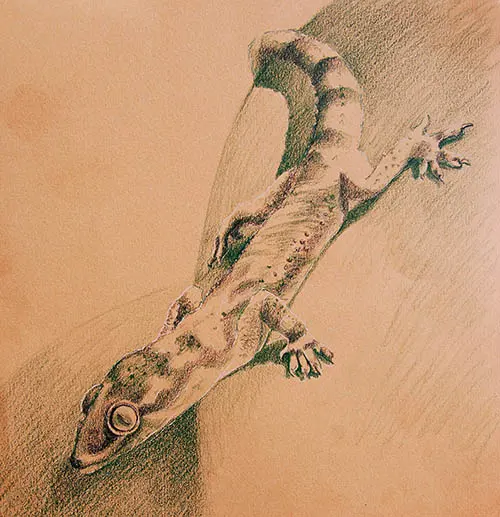
On this page
How to draw a gecko for beginners
Drawing a gecko is most successful when you break the complex reptile down into simple geometric shapes. Start by sketching a small, slightly flattened oval for the head and a larger, elongated bean shape for the torso. Connect these two shapes with a short, thick neck to establish the core posture. Geckos are known for their flexibility, so placing the body in a slight "S" curve often makes the drawing look more natural and dynamic.
Once the main body is established, focus on the limbs and tail. Geckos have distinct, wide toe pads that allow them to climb, which you can represent as small triangles at the end of each leg. Keep the tail thick at the base where it connects to the body, tapering it down to a thin, rounded point. Using light, sketchy pencil lines at this stage allows you to adjust the proportions before committing to final outlines.
- Draw a bean-shaped body centered on your paper.
- Add a rounded triangle for the head and a long, curving tail.
- Place four small "V" shapes where the legs should attach.
- Refine the outlines by thickening the limbs and adding toe pads.
- Erase your initial construction lines and add texture to the skin.
Best tools for drawing geckos
For beginners, a standard HB pencil is the most versatile tool because it allows for both light construction lines and darker, defined edges. Using a mechanical pencil can also be beneficial if you prefer consistent line weight, especially when detailing the small scales or the intricate patterns on a gecko's skin. A soft vinyl eraser is essential for cleaning up the guide shapes without damaging the paper surface.
If you choose to add color, colored pencils or alcohol-based markers work exceptionally well for capturing the vibrant, often mottled patterns found on species like the leopard gecko. When working with markers, start with a light base layer of yellow or cream, then layer darker spots or stripes on top. This technique mimics the natural layering of reptile skin. Always keep a fine-liner pen nearby to add crisp, permanent details to the eyes and mouth once you are satisfied with the underlying sketch.
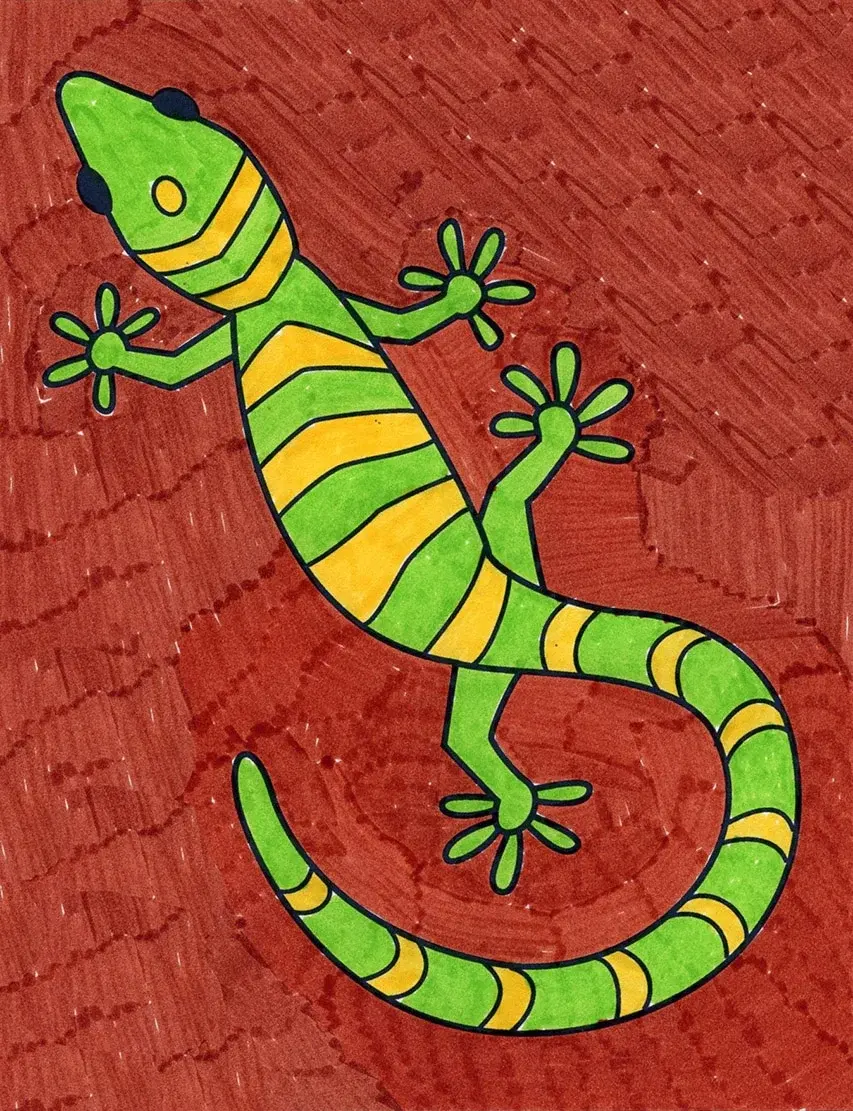
Why gecko proportions are important
The most recognizable feature of a gecko is its large, lidless eye, which is often disproportionately large compared to its head. When drawing the head, ensure the eye occupies a significant portion of the side profile. If the eye is too small, the drawing will lack the characteristic "cute" or alert expression that defines the species. Similarly, the toes must be drawn with a noticeable flare at the tips to emphasize their climbing ability.
Another critical aspect is the tail's relationship to the body. In many gecko species, the tail acts as a storage organ for fat, meaning it should appear plump rather than thin or whip-like. If the tail looks too fragile, the gecko will lose its sturdy, grounded appearance. By keeping the tail volume consistent with the body mass, you maintain the biological accuracy of the creature. Always study reference photos to see how the tail curves in relation to the spine.
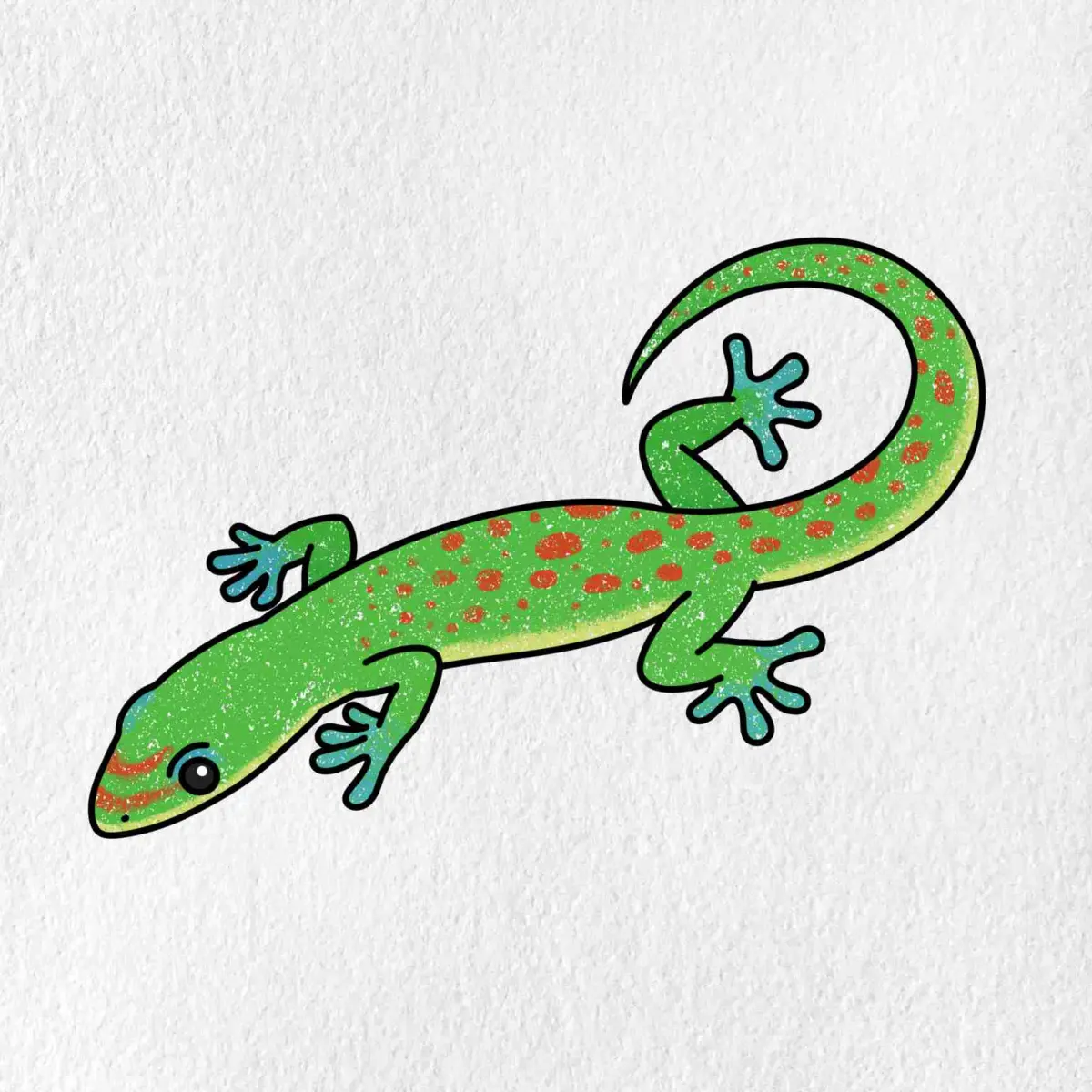
Common mistakes when drawing reptiles
A frequent error is drawing the legs as straight, stiff lines. Geckos hold their limbs in a sprawling, bent position, with the elbows and knees pointing outward away from the body. If the legs are drawn straight down like a mammal's, the gecko will look unnatural and static. Focus on the articulation points at the joints to create a sense of movement and weight.
Another mistake is neglecting the texture of the skin. Beginners often draw a smooth, featureless surface, which makes the gecko look like a plastic toy. Even if you do not want to draw every single scale, adding subtle stippling or small, irregular marks across the back helps suggest the rough or bumpy texture of the skin. Avoid drawing perfectly uniform scales, as nature is rarely symmetrical. Instead, vary the size and shape of the marks to create a more organic and realistic appearance across the entire body.
How to add detail to a gecko drawing
Once the form is correct, you can elevate the drawing by focusing on the face and feet. Add a small, curved line for the mouth, extending it slightly toward the eye to give the gecko a subtle, permanent smile. The pupils of a gecko are often vertical slits, which adds a predatory, focused intensity to the face. Adding a small highlight in the eye with a white gel pen can make the drawing feel alive and vibrant.
To finish, consider the surface the gecko is standing on. Drawing a simple branch or a flat leaf underneath the feet provides context and grounds the animal in its environment. Use darker shading underneath the belly and the tail to create a sense of depth, suggesting that the gecko is physically resting on the surface rather than floating above it. These final touches of shading and environmental context transform a simple outline into a complete, professional-looking illustration that captures the essence of the animal.
Key facts
- Geckos possess a distinct S-shaped body silhouette that serves as the foundation for any sketch.
- The head is typically triangular or heart-shaped, which helps distinguish it from other lizard species.
- Use a light pencil to outline the toes first, as geckos have wide, adhesive pads that are their most recognizable feature.
- Always draw the tail slightly longer than the body, as many gecko species have long, tapering tails.
- Keep the eyes large and lidless, as most geckos lack movable eyelids and rely on licking their eyes to keep them clean.
- Focus on the texture of the skin after the outline is complete, adding small, irregular dots to represent scales.
The bottom line
Drawing a gecko is best approached by focusing on its unique, fluid anatomy. Start with a simple S-curve to establish the posture, then build the triangular head and splayed, padded toes. By emphasizing the long, tapering tail and large, lidless eyes, you create a recognizable silhouette. Remember to use light, gestural lines first, refining the details and skin texture only after the proportions are correctly set.
People also ask
How do I draw the feet of a gecko correctly?
Draw five toes on each foot that splay outward like an open fan. Ensure the tips of these toes are rounded and wider than the rest of the digit to represent their specialized gripping pads.
Should I draw the gecko from a side or top view?
A side profile is the easiest way to capture the characteristic curve of the spine and the shape of the head. This angle also highlights the gecko’s belly and limb placement more clearly for beginners.
How do I make the gecko look realistic?
Incorporate subtle skin folds around the joints and neck area to suggest movement. Adding a slight arch to the back makes the creature appear alert and ready to spring.
What is the most common mistake when drawing a gecko?
Many beginners draw the tail too short or too thick at the tip. A gecko’s tail should taper gradually to a point, often mirroring the thickness of the body near the base.
Do geckos have visible ears?
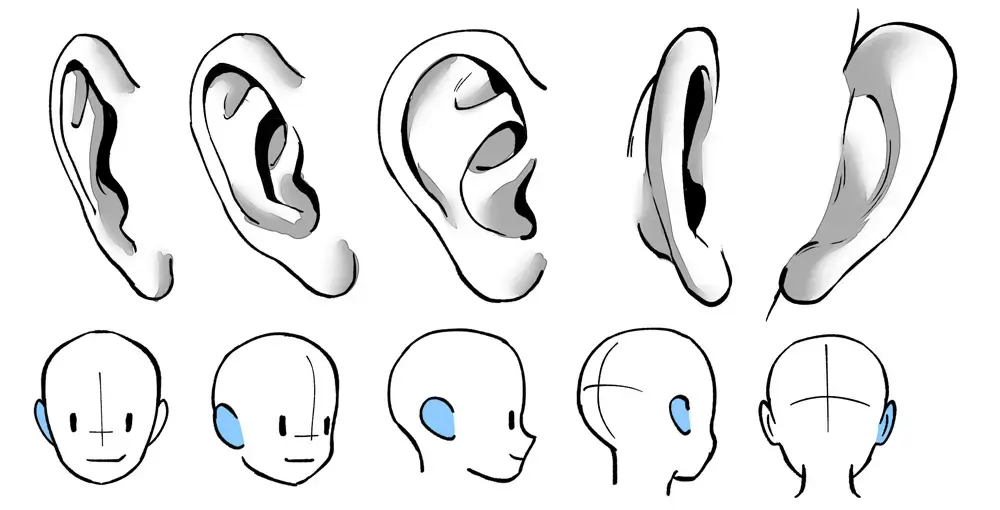
Geckos have small, circular ear openings located behind the eyes. Adding these tiny dots adds a layer of anatomical accuracy that makes the drawing look more professional.
How do I draw the scales without making it look messy?
Avoid drawing every single scale individually. Instead, suggest the texture by placing clusters of small dots along the edges of the body and shading the underside to create depth.
This answer was created with the help of AI research tools and reference sources. Spotted an error? Let us know — we correct mistakes quickly. See our editorial policy.