How do you draw a samurai?
Short answer
Drawing a samurai requires focusing on the iconic silhouette created by the kabuto helmet, the do chest plate, and the dual daisho swords. By establishing a strong anatomical foundation and layering the distinctive segmented armor plates, you can capture the disciplined, formidable presence that defined the warrior class of feudal Japan.
On this page
How to structure a samurai figure
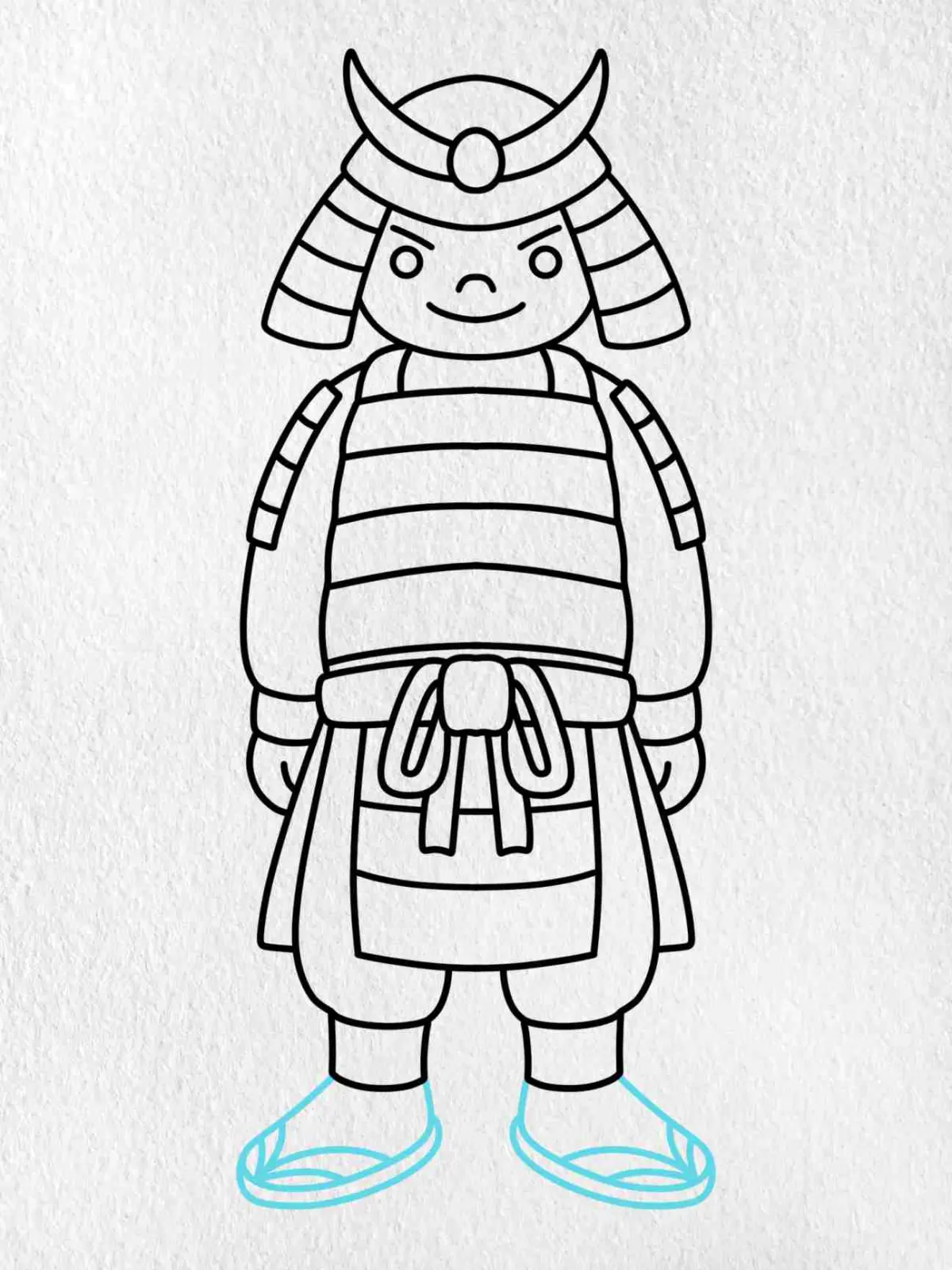
A samurai’s silhouette is defined by the rigid, boxy shape of traditional Japanese armor. Begin by sketching a sturdy, athletic frame to ensure the character looks capable of wielding heavy weaponry. Focus on a wide stance, as samurai were trained to maintain a low, stable center of gravity for combat. Avoid making the limbs too thin, as the heavy silk, leather, and iron plates of the armor add significant bulk to the wearer’s natural form.
When laying out your sketch, use these proportions to maintain accuracy:
- Head: Keep the head slightly smaller than the torso to emphasize the intimidating height of the helmet.
- Shoulders: Draw the shoulders broad to accommodate the sode (shoulder guards).
- Legs: Ensure the legs look powerful, as the haidate (thigh guards) create a skirt-like appearance that hides the knees.
- Stance: Place the feet firmly apart to suggest readiness for a sword draw.
Which armor parts to include
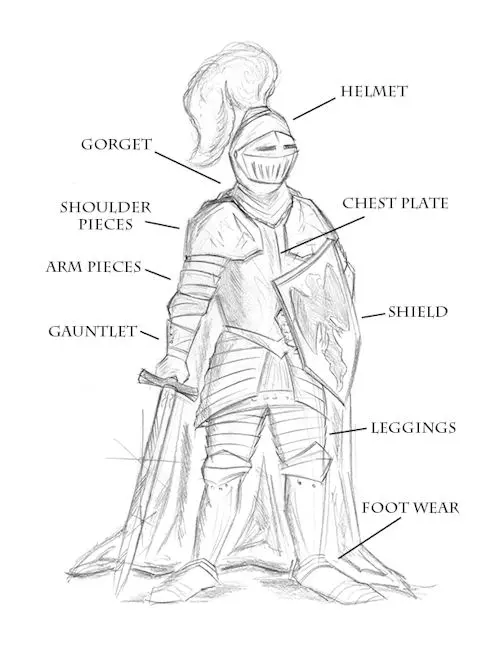
The armor, known as o-yoroi or tosei-gusoku, is the most recognizable feature of a samurai. The chest plate, or do, is typically a solid, slightly curved structure that protects the torso. Below this, the kusazuri hang down in rectangular flaps, allowing for movement while providing protection. The kabuto helmet is essential, often featuring a maedate (crest) on the front and a shikoro (neck guard) that drapes over the back of the neck.
To make your drawing look authentic, include these specific components:
- Sode: Large, rectangular shoulder shields that extend outward.
- Kote: Armored sleeves that cover the forearms and hands.
- Sune-ate: Shin guards that protect the lower legs from strikes.
- Menpo: A facial mask, often designed to look like a fierce demon or a stoic elder, which covers the lower half of the face.
How to draw samurai swords
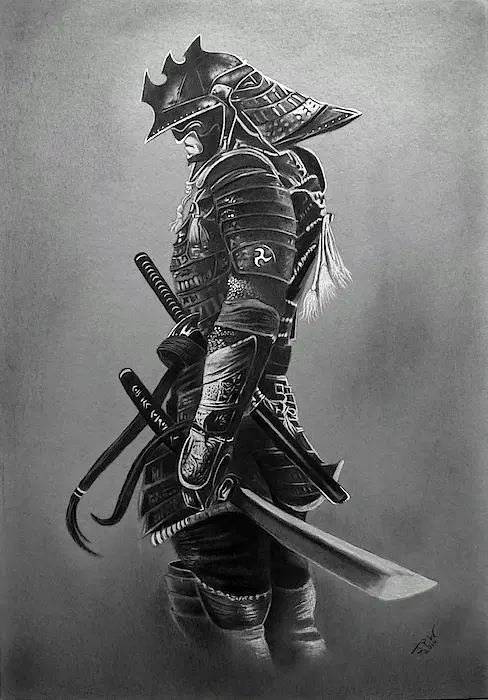
The daisho—a pair consisting of the katana (long sword) and wakizashi (short sword)—is the soul of the samurai. These are typically worn tucked into the obi (sash) on the left side of the body, with the blades facing upward. When drawing the swords, ensure the tsuka (handle) is wrapped in a distinct diamond-patterned braid called ito. The tsuba (handguard) should be a prominent, circular or square metal piece separating the blade from the handle.
Avoid common mistakes when rendering the weaponry:
- Do not draw the swords hanging vertically; they should be angled slightly upward.
- Ensure the curve of the blade is consistent; the katana is famously curved, not straight like a European longsword.
- Keep the scabbard, or saya, sleek and simple, as it was often lacquered in black or dark red to avoid reflecting light.
- Remember that the wakizashi is shorter and should be positioned slightly behind or below the katana.
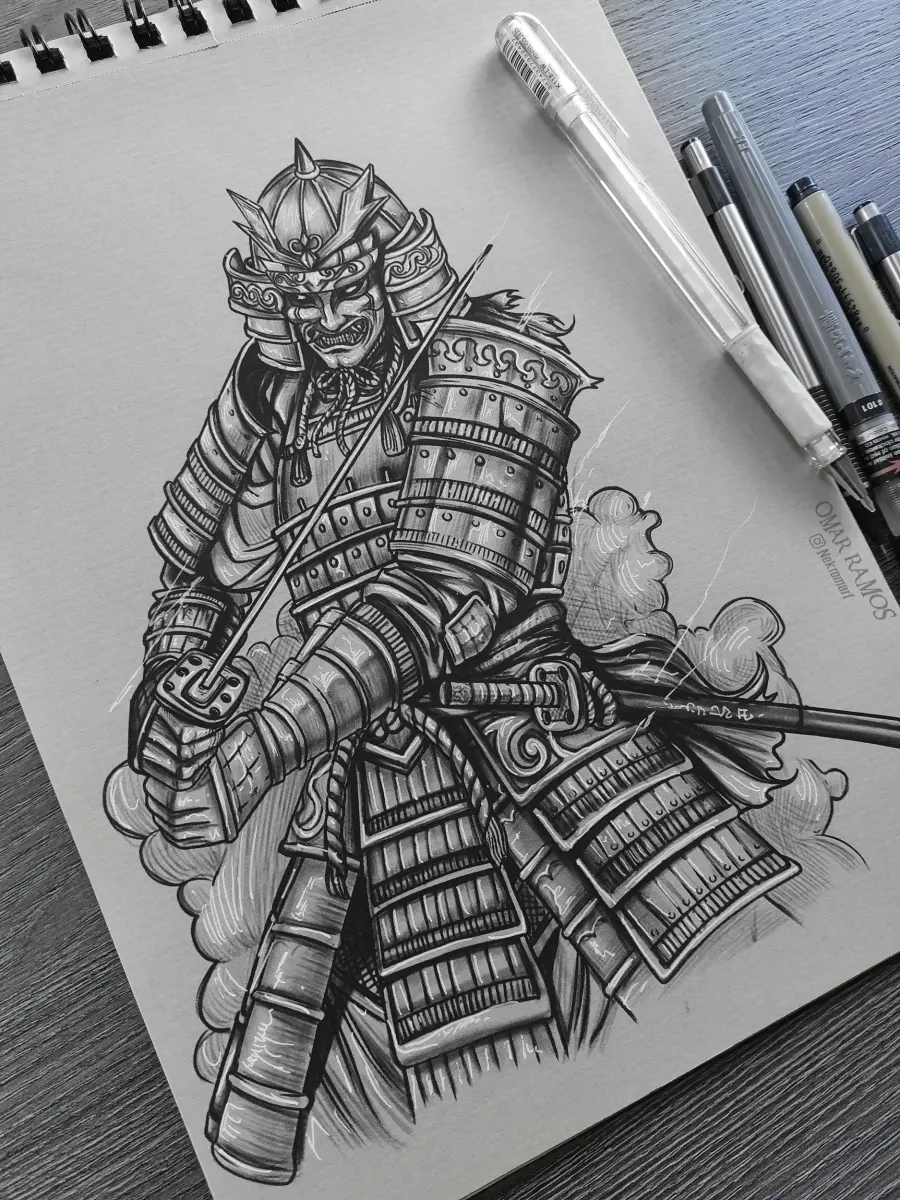
How to add realistic details
Details provide the texture that separates a generic warrior from a historical samurai. Focus on the odoshi, which are the silk cords used to lace the individual iron or leather scales of the armor together. Drawing these as small, repeating horizontal lines across the plates adds a sense of craftsmanship and realism. You should also consider the mon (family crest), which is often placed on the chest or the helmet, serving as a symbol of the warrior's clan allegiance.
Consider these finishing touches to enhance your work:
- Add fraying to the fabric of the hakama (trousers) to show the wear of long campaigns.
- Include subtle highlights on the lacquered surfaces of the armor to indicate a polished, hard finish.
- Use sharp, angular lines for the armor pieces to contrast with the softer, flowing lines of the undergarments.
- Draw the hair in a traditional chonmage topknot, which was a standard grooming practice for the samurai class.
Common mistakes when drawing samurai
One frequent error is failing to account for the thickness of the armor. Beginners often draw the armor as if it were skin-tight clothing, ignoring the fact that it is composed of multiple layers of padding and rigid plates. Another mistake is ignoring the weight of the equipment; a samurai in full gear would not be jumping or performing acrobatic flips. Their movement is deliberate, heavy, and grounded, which should be reflected in the pose you choose for your final illustration.
To ensure your drawing remains professional and accurate, avoid these pitfalls:
- Drawing the armor plates too small; they should look like significant, protective barriers.
- Forgetting the neck guard, which makes the helmet look like it is floating above the shoulders.
- Placing the swords on the right side; historically, they were worn on the left to allow for a quick draw with the right hand.
- Making the face too expressive; samurai were often trained to maintain a calm, stoic, or "no-mind" expression even in the heat of battle.
Key facts
- Samurai armor, or yoroi, is characterized by layered, lacquered iron or leather scales called kozane laced together with silk cords.
- The katana is a curved, single-edged sword typically worn with the cutting edge facing upward in the sash.
- A samurai's helmet, the kabuto, often features a maedate or decorative crest on the front to signify the warrior's status or clan.
- Focus on the menpo, a facial mask designed to protect the chin and cheeks while intimidating enemies with fierce expressions.
- The hakama is a wide-legged pleated trouser that provides the necessary range of motion for traditional martial arts movements.
- When drawing the silhouette, emphasize the broad, boxy shoulders created by the sode (shoulder guards) to convey a sense of power.
The bottom line
Drawing a samurai requires balancing historical accuracy with dynamic composition. By focusing on the structural layers of the armor, the precise placement of the katana, and the distinct silhouette of the helmet, you can create a compelling warrior figure. Remember to emphasize the texture of the lacing and the intensity of the facial features to capture the discipline and lethal grace inherent to the samurai tradition.
People also ask
What is the most important part of a samurai's outfit to get right?
The silhouette is the most critical element, as the layered armor creates a distinct, bulky shape. Ensure the shoulder guards and the flared skirt of the armor are prominent to distinguish the warrior from a commoner.
How should I position the katana for a realistic look?
The katana should be tucked into the obi (sash) on the left side of the waist. Always ensure the curve of the blade faces upward, as this was the standard way to carry the sword for a quick draw.
Should I include a crest on the helmet?
Yes, adding a maedate crest adds historical authenticity and visual interest. Common designs include crescent moons, antlers, or family mon (emblems) that represent the specific clan or personality of the samurai.
What common mistake do beginners make when drawing samurai?
A frequent error is drawing the armor as a single, solid piece of metal. Remember that yoroi is composed of hundreds of individual plates laced together, so adding subtle horizontal lines or texture is essential for realism.
How do I make a samurai look intimidating?
Focus on the eyes and the menpo mask. A deep, focused gaze combined with a mask featuring a snarling expression or a mustache will immediately convey a sense of martial discipline and ferocity.
Do samurai always wear full armor?
No, samurai often appear in casual attire consisting of a kimono and hakama. When drawing them in this state, focus on the fabric folds and the two swords, the daisho, tucked firmly into the belt.
This answer was created with the help of AI research tools and reference sources. Spotted an error? Let us know — we correct mistakes quickly. See our editorial policy.