What is the difference between a crocodile and an alligator?
Short answer
Crocodiles and alligators belong to different biological families and exhibit distinct physical traits. Alligators possess wide, U-shaped snouts and darker, greyish-black skin, while crocodiles feature narrower, V-shaped snouts and lighter, olive-green or tan coloration. Furthermore, when their mouths are closed, a crocodile’s large fourth lower tooth remains visible, whereas an alligator’s teeth are hidden.
On this page
How to tell a crocodile from an alligator by snout shape
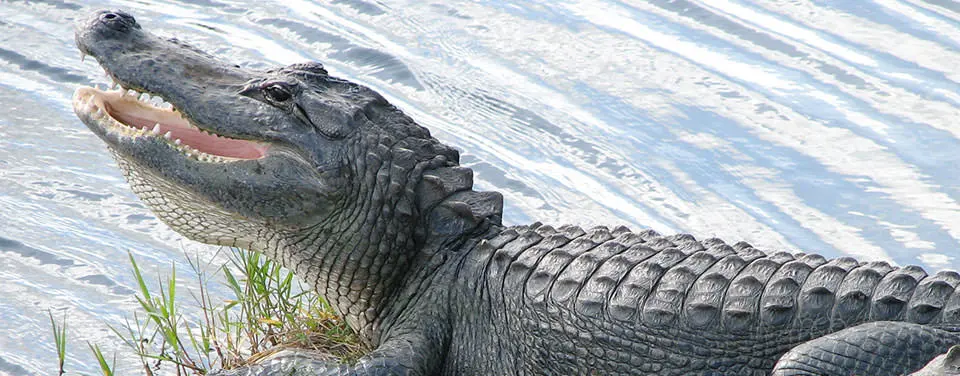
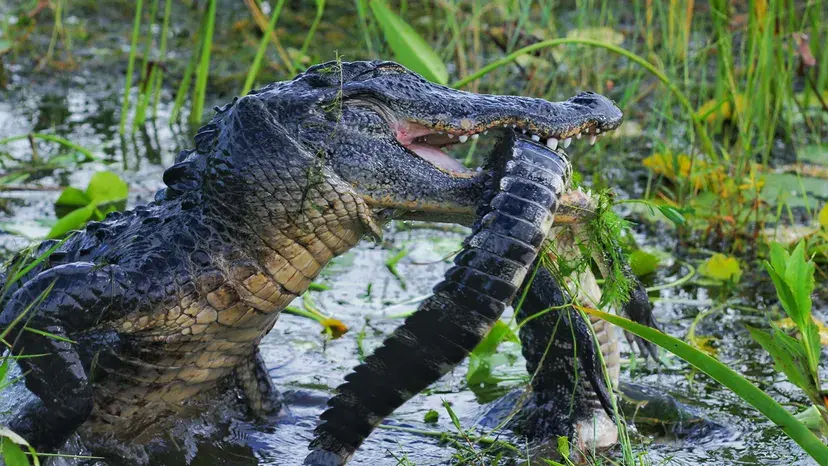
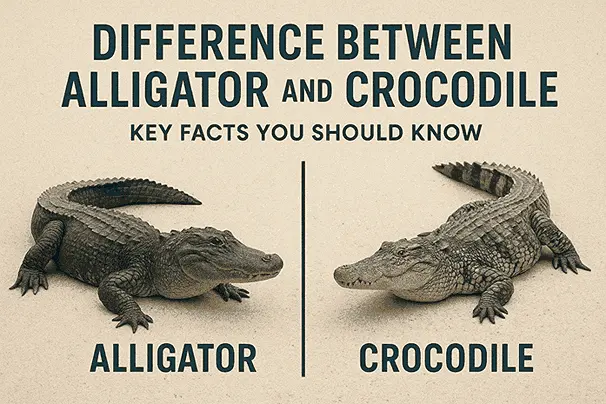
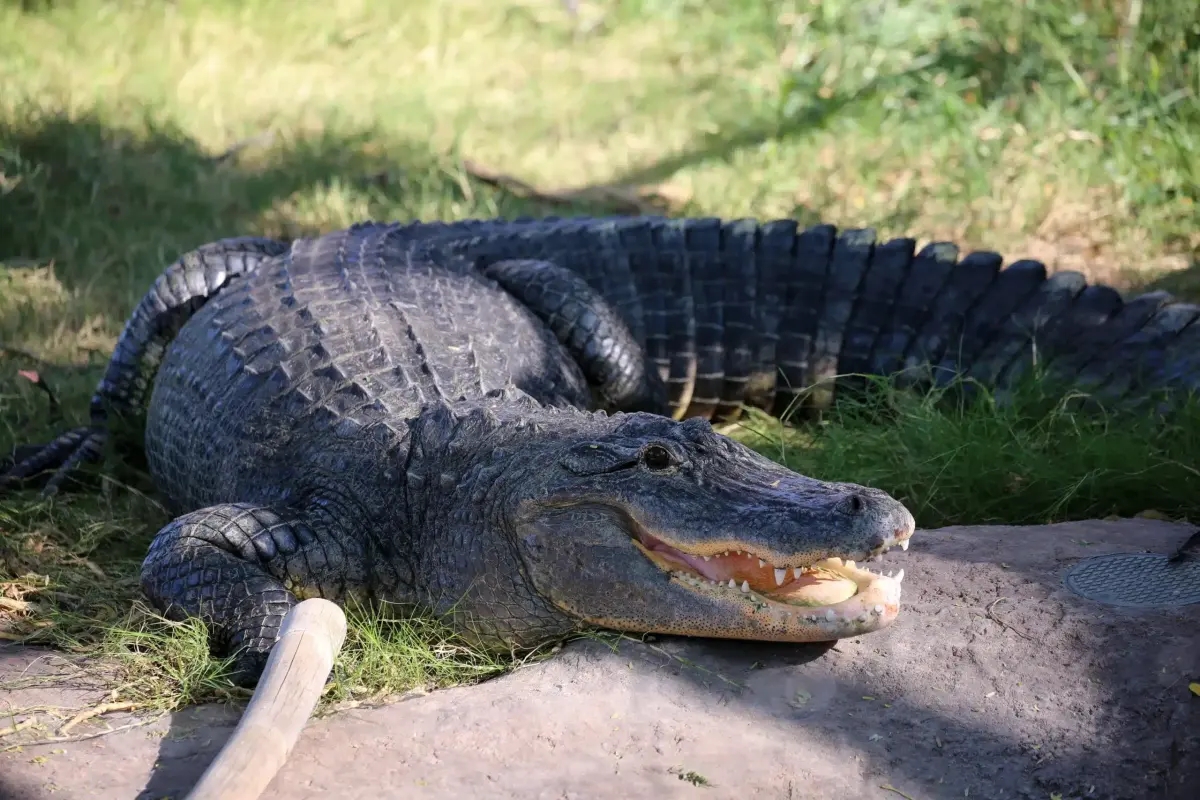
The most reliable way to distinguish these reptiles is by examining the shape of their snouts. Alligators have a broad, rounded snout that resembles the letter "U." This design is highly effective for crushing hard-shelled prey like turtles. In contrast, crocodiles possess a longer, more pointed snout that forms a distinct "V" shape. This narrow profile is better suited for gripping fish and other slippery prey.
Beyond the shape, the teeth provide another immediate visual cue. When an alligator closes its mouth, its upper jaw is wider than the lower one, causing the lower teeth to fit into small pits in the upper jaw. This makes the lower teeth invisible from the outside. Conversely, a crocodile’s upper and lower jaws are roughly the same width. When its mouth is shut, the large fourth tooth on the bottom jaw protrudes upward, resting clearly outside the upper lip.
Where do crocodiles and alligators live
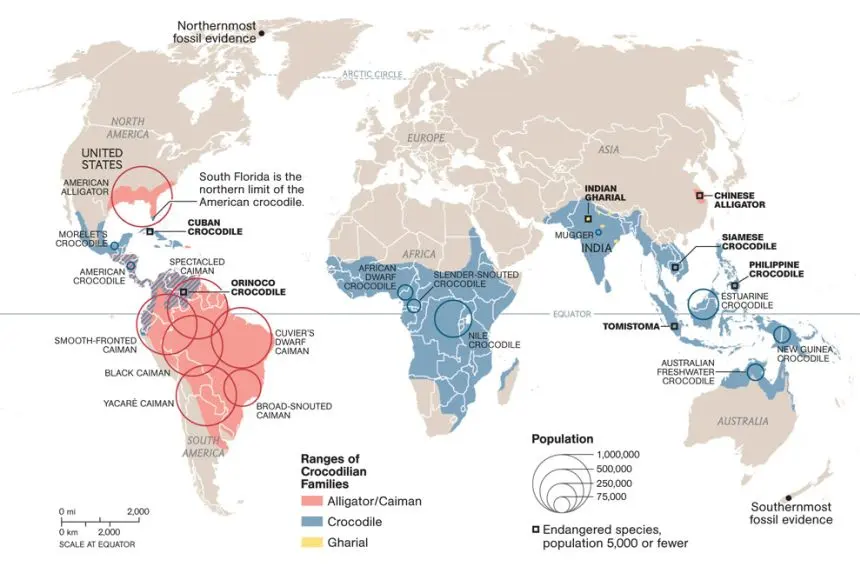
These animals occupy different environments due to their varying tolerances for salinity. Alligators are primarily freshwater animals, preferring swamps, lakes, and slow-moving rivers. While they can tolerate brackish water for short periods, they lack the specialized glands required to thrive in high-salt environments. You will typically find them in the southeastern United States and eastern China.
Crocodiles possess functional lingual salt glands on their tongues, which allow them to excrete excess salt from their bodies. This biological adaptation enables them to inhabit saltwater estuaries, mangroves, and even open ocean waters. Because of this, crocodiles have a much broader global distribution than alligators. They are found across tropical regions in Africa, Australia, Southeast Asia, and the Americas. If you are observing a crocodilian in a saltwater habitat, it is almost certainly a crocodile.
How to identify them by color and behavior
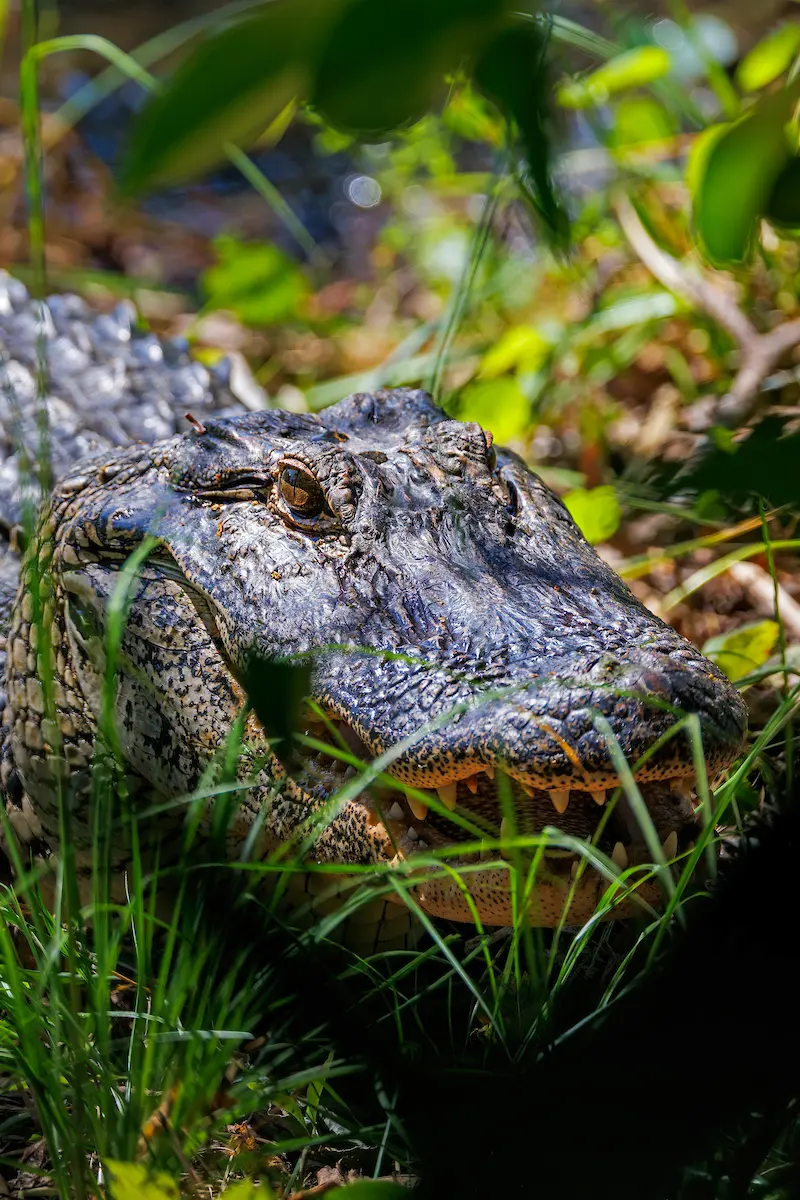
Coloration serves as a helpful secondary identifier for those observing these animals in the wild. Alligators typically display a darker, almost black or dark grey appearance, which helps them blend into the murky, tannin-stained waters of freshwater swamps. Crocodiles usually exhibit lighter shades, ranging from olive green to tan or grey. These lighter tones provide better camouflage in the clearer, often sandier environments where they reside.
Behavioral differences are also notable, particularly regarding temperament. While both animals are apex predators, crocodiles are widely considered more aggressive and territorial than alligators. An alligator will often flee if approached by a human, whereas a crocodile is more likely to stand its ground or exhibit defensive posturing. Regardless of the species, both animals are dangerous and should be observed from a significant distance. Never approach a crocodilian, as their speed on land and in water is often underestimated by observers.
Common mistakes when identifying crocodilians
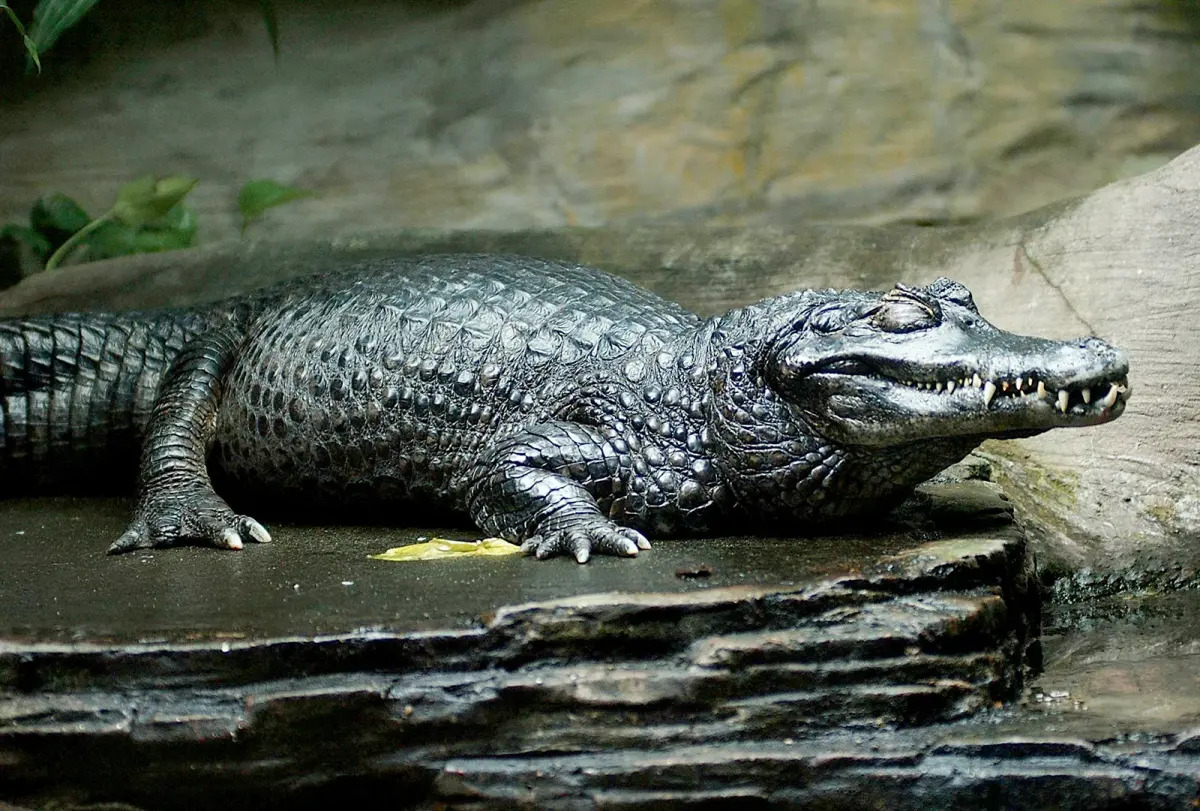
Many people confuse these animals with other reptiles like caimans or gharials. Caimans are members of the alligator family but are generally smaller and possess more armored bellies. Gharials are easily identified by their extremely long, thin snouts, which are specialized for catching fish. Do not assume every large reptile in the water is either an alligator or a crocodile.
- Avoid focusing solely on size, as young crocodiles and alligators can look very similar.
- Do not attempt to look inside the mouth of a wild animal to count teeth.
- Remember that lighting conditions can make dark grey look like black or olive, leading to misidentification.
- Never rely on geographic location alone if you are in a region where species might overlap or have been introduced.
Best safety practices for viewing wildlife
Safety must always be the priority when observing these animals in their natural habitats. Because these reptiles are ambush predators, they often remain motionless for long periods to conserve energy and avoid detection. If you are near water in a known habitat, follow these essential safety steps to avoid dangerous encounters:
- Maintain a distance of at least 50 feet from the water's edge at all times.
- Keep pets on a short leash, as their movement can attract predators.
- Avoid swimming in areas where these animals are known to reside, especially at dawn or dusk.
- Never feed a crocodilian, as this removes their natural fear of humans and creates a long-term danger for the community.
If you encounter one on land, do not attempt to run in a zigzag pattern, as this is a common myth; simply move away in a straight line at a steady pace. If the animal begins to hiss or open its mouth wide, it is signaling that you have entered its personal space. Back away slowly and maintain eye contact until you are at a safe distance from the animal.
Key facts
- Alligators have a wide, U-shaped snout, while crocodiles have a longer, pointed V-shaped snout.
- When their mouths are closed, an alligator’s lower teeth are hidden, but a crocodile’s fourth lower tooth remains visible.
- Alligators prefer freshwater environments like swamps and lakes, whereas crocodiles possess glands that allow them to tolerate saltwater.
- Crocodiles are generally more aggressive and ill-tempered than alligators, which tend to be more timid toward humans.
- Alligators are typically darker in color, often appearing black or dark gray, while crocodiles are usually lighter olive green or tan.
- To identify them from a distance, look at the snout shape first; if it looks like a shovel, it is an alligator.
The bottom line
The primary difference between these reptiles lies in their snout shape, tooth visibility, and habitat preferences. Alligators favor freshwater and possess a broad, U-shaped snout, while crocodiles are often found in saltwater with a pointed, V-shaped snout. While both are formidable predators, crocodiles are generally more aggressive. Recognizing these physical traits allows for safer observation and better identification when encountering these impressive animals in the wild.
People also ask
Are crocodiles or alligators more dangerous to humans?
Crocodiles are considered significantly more dangerous because they are more territorial and aggressive. While alligators may attack if provoked or defending a nest, unprovoked attacks are much rarer than those involving larger crocodile species like the Nile or saltwater crocodile.
Do alligators and crocodiles live in the same places?
They only coexist in one place on Earth: South Florida. This is the only region where the American alligator and the American crocodile share the same habitat, though they usually occupy different water types.
How can you tell if a reptile is a caiman?
Caimans are smaller relatives of the alligator found primarily in Central and South America. They lack the bony septum between the nostrils that alligators possess and often have more heavily armored belly scales.
Do these reptiles have different diets?
Both are opportunistic carnivores that eat fish, birds, and mammals. However, because crocodiles have a broader range of habitats, their diet is often more varied, including larger prey items depending on the specific species.
How long do these animals live in the wild?
Both species are long-lived, often reaching 30 to 50 years in the wild. Some individuals in protected environments have been known to live even longer, sometimes exceeding 70 years.
Can you outrun an alligator or crocodile on land?
Yes, humans can generally outrun them in a straight line because these reptiles tire quickly on land. A common mistake is zig-zagging, which is unnecessary; simply run in a straight line away from the water and keep a safe distance.
This answer was created with the help of AI research tools and reference sources. Spotted an error? Let us know — we correct mistakes quickly. See our editorial policy.