What is a solstice?
Short answer
A solstice is an astronomical event occurring twice yearly when the Sun reaches its highest or lowest point in the sky at noon. It marks the longest and shortest days of the year. These moments signal the official beginning of summer and winter, caused by the Earth’s axial tilt during its orbit.
On this page
Why a solstice happens
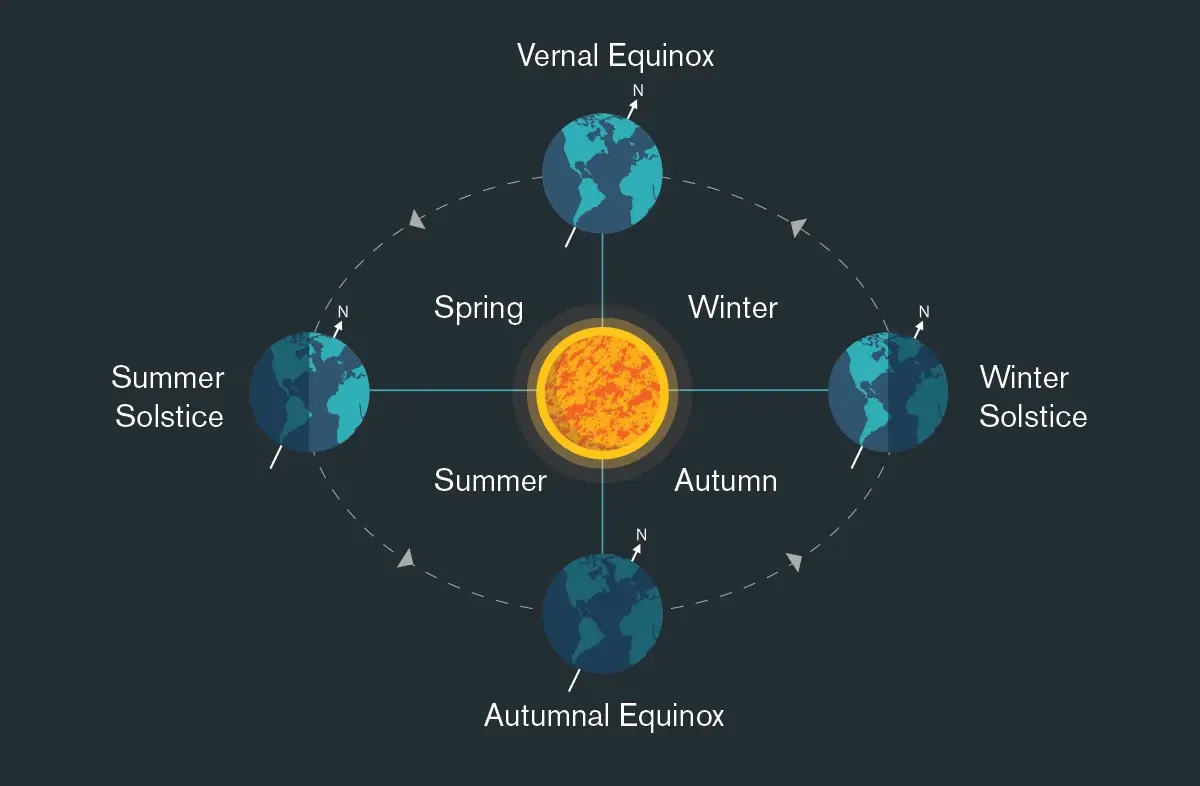
The occurrence of a solstice is a direct result of the Earth’s 23.5-degree axial tilt as it orbits the Sun. Because the planet does not stand perfectly upright, different hemispheres receive varying amounts of sunlight throughout the year. As Earth travels, one hemisphere gradually leans toward the Sun while the other leans away, creating the seasonal cycle.
During the summer solstice, the hemisphere tilted toward the Sun experiences its longest period of daylight. Conversely, the winter solstice occurs when that same hemisphere is tilted furthest away, resulting in the shortest day and longest night. This phenomenon is strictly an astronomical event, defined by the Sun’s position relative to the celestial equator, rather than the specific weather patterns observed on the ground.
When solstices occur each year
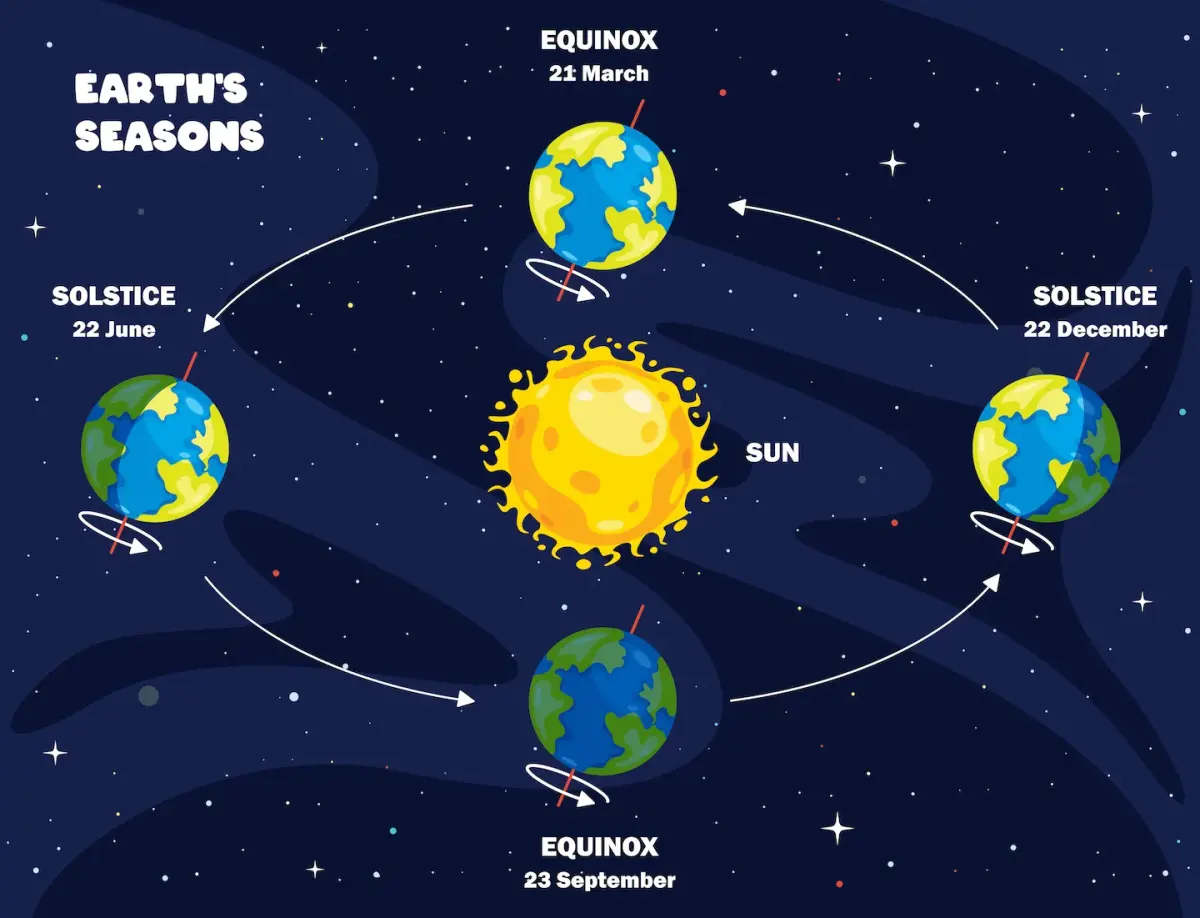
Solstices happen twice annually, typically around June 21 and December 21. The exact timing shifts slightly each year due to the Earth's orbit taking approximately 365.24 days to complete, requiring the inclusion of leap years to keep our calendar synchronized with the solar cycle.
- The June solstice occurs when the Sun reaches its northernmost point in the sky, marking the start of summer in the Northern Hemisphere and winter in the Southern Hemisphere.
- The December solstice occurs when the Sun reaches its southernmost point, signaling the start of winter in the Northern Hemisphere and summer in the Southern Hemisphere.
These dates are not fixed to a specific hour because the Earth’s orbital speed varies. Consequently, the solstice can fall on the 20th, 21st, or 22nd of the month depending on the year's position in the leap year cycle.
How to observe a solstice
Observing a solstice is a simple way to connect with the planet's movement through space. You do not need specialized equipment, though tracking the Sun’s path over several weeks helps visualize the change. By noting where the Sun rises or sets on the horizon relative to a fixed landmark, you can see the "standstill" effect where the Sun appears to pause before reversing its path.
- Find a clear view of the horizon facing east or west.
- Choose a permanent reference point, such as a specific tree or building corner.
- Mark the position of the sunrise or sunset on the solstice day.
- Compare this position to your observations from previous weeks to see the shift in the solar arc.
Many cultures have constructed monuments like Stonehenge specifically to align with these solar positions. Visiting such sites or local observatories can provide a deeper understanding of how ancient civilizations tracked these celestial markers to manage agriculture and religious calendars.
Common mistakes when tracking solstices
A frequent error is assuming that the solstice is a full 24-hour day of extreme weather. While it is the day with the most or least sunlight, it is rarely the hottest or coldest day of the year. Thermal inertia means that the Earth’s atmosphere and oceans take time to heat up or cool down, often delaying the peak of seasonal temperatures by several weeks.
Another common misconception is that the solstice marks the earliest sunrise or latest sunset. Due to the equation of time—a discrepancy between solar time and clock time—the earliest sunrise and latest sunset often occur on different days than the solstice itself. Relying on the solstice as a precise indicator for seasonal weather changes or sunrise fluctuations often leads to disappointment or confusion regarding local climate patterns.
Why the solstice matters today
The solstice remains a significant cultural and scientific milestone. It serves as a reminder of our planet's precise orbit and the delicate balance of light that sustains life. In the modern era, these events are celebrated globally through festivals, light displays, and scientific gatherings that highlight the beauty of planetary mechanics.
- Cultural festivals: Many regions hold traditional celebrations, such as Midsummer in Scandinavia or Yule traditions in various parts of the world.
- Scientific study: Astronomers use the solstice to calibrate instruments and study the Earth's relationship with the Sun.
- Agricultural planning: Historically, the solstice helped farmers determine planting and harvesting schedules, a practice that continues to influence modern gardening and agricultural timing.
By understanding the solstice, you gain a better appreciation for the rhythmic nature of the solar system. Whether you are observing the Sun’s path or simply acknowledging the change in seasons, the solstice serves as a profound connection between human history and the physical laws of the universe.
Key facts
- A solstice occurs twice a year when the Sun reaches its highest or lowest point in the sky at noon.
- The summer solstice is the longest day of the year, while the winter solstice is the shortest.
- In the Northern Hemisphere, the summer solstice typically falls on June 20 or 21.
- The winter solstice in the Northern Hemisphere usually occurs on December 21 or 22.
- Solstices are caused by the Earth’s axial tilt of approximately 23.5 degrees as it orbits the Sun.
- To observe a solstice, mark the shadow of a fixed object at solar noon and compare its length to other days.
The bottom line
A solstice is a fundamental astronomical event marking the moment when the Sun reaches its northernmost or southernmost point in the sky. Driven by the Earth's axial tilt, these biannual occurrences define our longest and shortest days. Understanding these cycles helps us appreciate the mechanics of our planet's orbit and the rhythmic seasonal changes that govern life, agriculture, and climate patterns throughout the entire solar year.
People also ask
Does the solstice happen at the same time everywhere?
Yes, the solstice is a specific astronomical event that happens at the exact same moment for everyone on Earth. However, the local clock time varies depending on your specific time zone.
Is the solstice the hottest or coldest day of the year?
No, the solstice is not the hottest or coldest day because of seasonal lag. The Earth’s oceans and atmosphere take time to heat up or cool down, delaying temperature extremes by several weeks.
Why are there two solstices each year?
There are two solstices because the Earth orbits the Sun while tilted on its axis. One solstice occurs when the North Pole is tilted most toward the Sun, and the other when it is tilted most away.
Do solstices happen on the same calendar date every year?
They do not always fall on the same date because our calendar year is 365 days, while the solar year is about 365.24 days. This discrepancy is corrected by leap years, causing the solstice dates to shift slightly.
What is the difference between a solstice and an equinox?
A solstice marks the point when the Sun is at its greatest distance from the celestial equator. An equinox occurs when the Sun crosses the celestial equator, resulting in nearly equal day and night lengths.
Can you see the solstice with the naked eye?
You cannot see the exact moment of the solstice, but you can observe its effects over several days. By tracking the Sun's position on the horizon at sunrise or sunset, you will notice it stops moving further north or south.
This answer was created with the help of AI research tools and reference sources. Spotted an error? Let us know — we correct mistakes quickly. See our editorial policy.