What is a lens?
Short answer
A lens is a transparent optical device, typically made of glass or plastic, that refracts light to converge or diverge rays. By bending light as it passes through, lenses create images by focusing light onto a specific point. They are essential components in cameras, eyeglasses, microscopes, telescopes, and various human technologies.

On this page
How does a lens work?
A lens functions through the principle of refraction, which is the bending of light as it moves between materials of different densities. When light enters a curved piece of glass or plastic, its speed changes, causing the path of the light rays to shift. The specific shape of the lens determines whether these rays gather at a single focal point or spread outward.
Convex lenses are thicker at the center than at the edges and cause light rays to converge. This process is what allows a camera to project a sharp image onto a sensor or a magnifying glass to enlarge small text. Conversely, concave lenses are thinner at the center and cause light rays to diverge, which is helpful for correcting nearsightedness by spreading light before it reaches the eye.
What are the different types of lenses?
Lenses are categorized by their physical shape and how they manipulate light. While there are many specialized designs, most lenses fall into a few primary classifications based on their curvature. Understanding these shapes is vital for selecting the right tool for optical tasks, whether in photography or vision correction.
- Plano-convex: Flat on one side and curved outward on the other, used for focusing light.
- Biconvex: Curved outward on both sides, providing high magnification power.
- Plano-concave: Flat on one side and curved inward, used to spread light beams.
- Biconcave: Curved inward on both sides, primarily used to correct vision issues.
- Meniscus: Curved on both sides with one side concave and the other convex, common in eyeglasses.
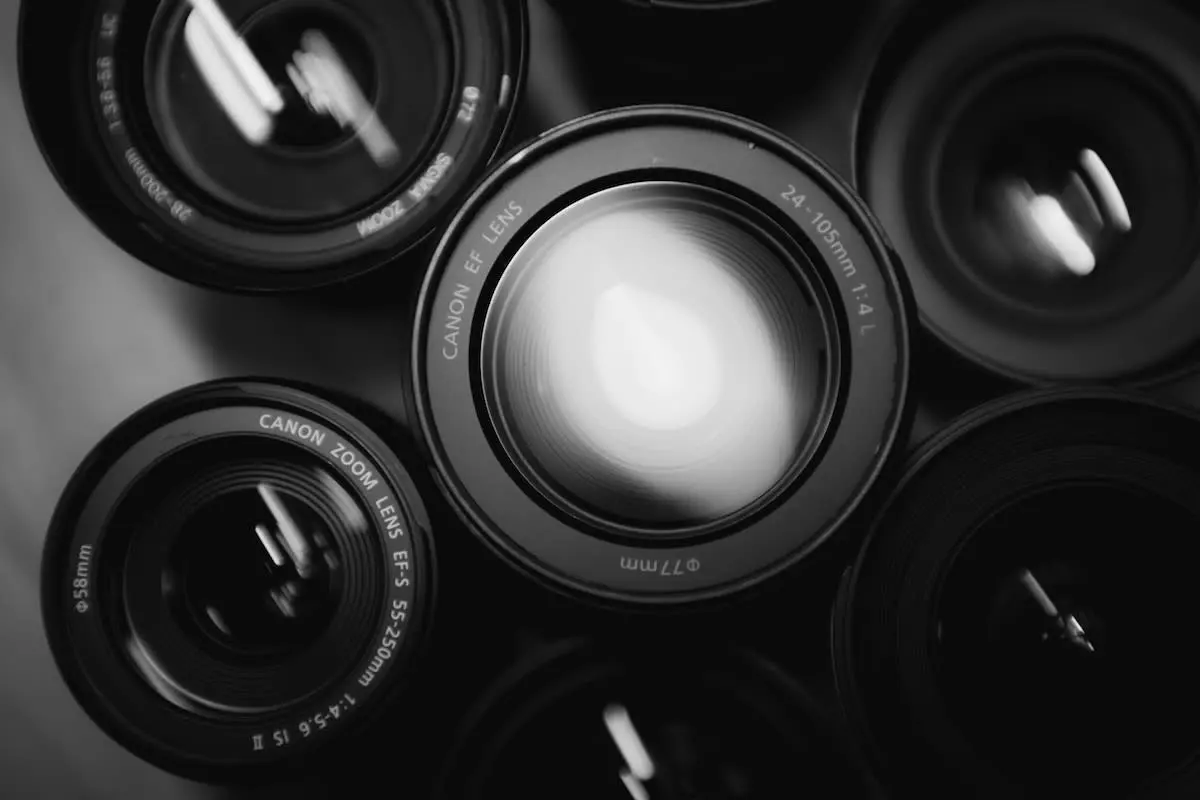
These shapes can be combined in complex systems, such as camera lenses, which use multiple elements to minimize distortion and improve image clarity.
How to choose a lens for photography?
Selecting the right camera lens depends on the subject matter and the desired field of view. A lens is defined by its focal length, measured in millimeters, which determines the zoom level and the width of the frame. Short focal lengths provide a wide view, while long focal lengths bring distant objects closer.
- Identify your primary subject, such as landscapes, portraits, or wildlife.
- Choose a wide-angle lens (under 35mm) for expansive scenery and architecture.
- Select a standard lens (around 50mm) for a natural perspective similar to the human eye.
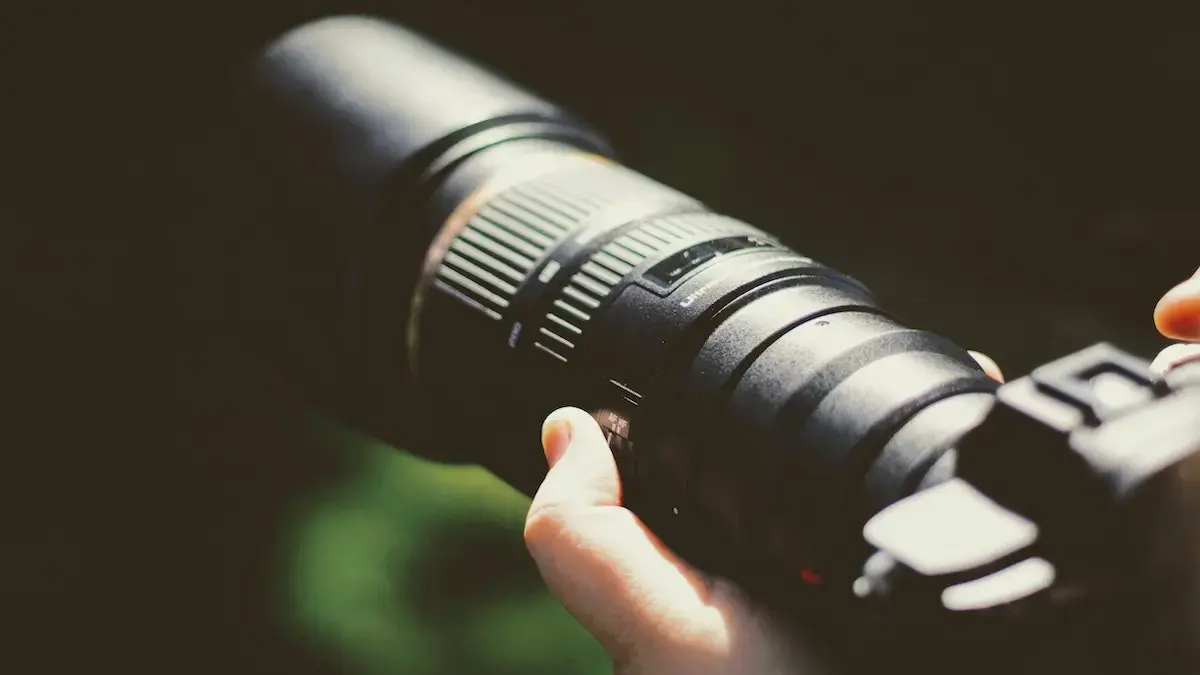
- Use a telephoto lens (above 85mm) for sports, wildlife, or isolating subjects with a blurred background.
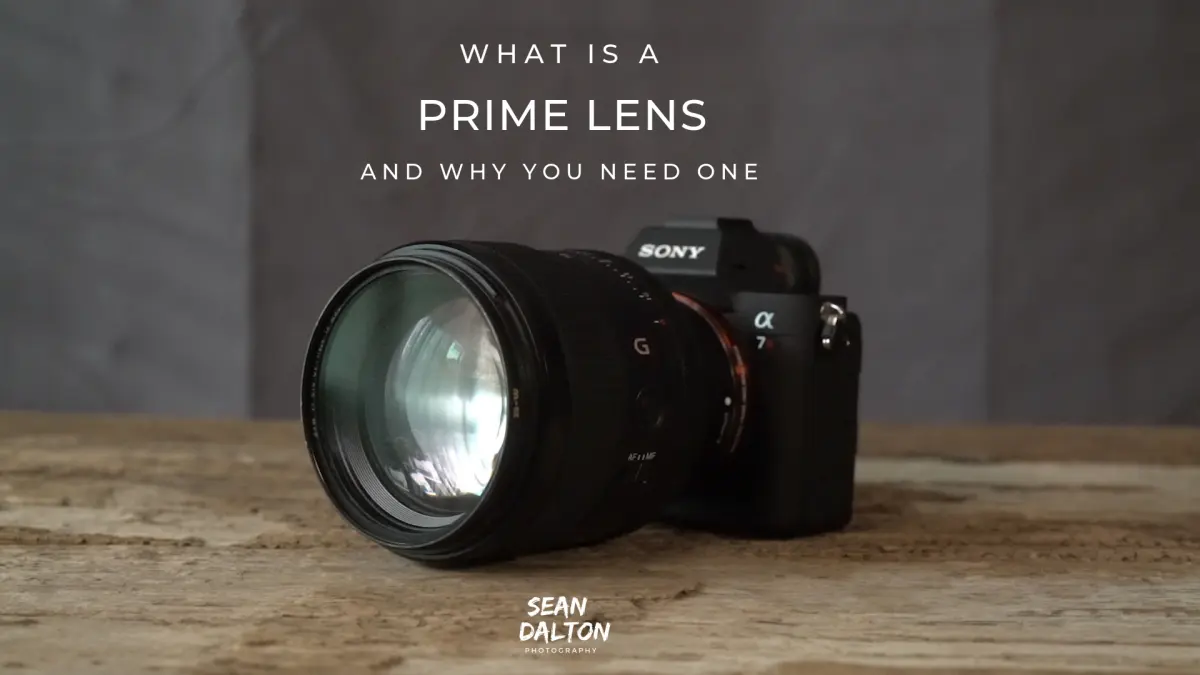
- Consider a prime lens for better image quality or a zoom lens for versatility.
Always check the mount compatibility to ensure the lens fits your specific camera body, as brands often use proprietary connections that are not interchangeable.
Why does lens distortion happen?
Lens distortion is an optical aberration that occurs when the magnification of an image changes from the center toward the edges. This is common in wide-angle lenses, where straight lines may appear curved or bent. While manufacturers use high-quality glass elements to reduce these effects, some degree of distortion is often inherent in the design.
Barrel distortion happens when the image appears to bulge outward, resembling a barrel. Pincushion distortion is the opposite, where the image appears to be pinched inward toward the center. These effects can be corrected during post-processing using software, but they are most effectively managed by using high-quality glass or choosing a focal length that minimizes the physical stress on the light path.
Common mistakes when using lenses
One of the most frequent errors is failing to keep the glass surface clean. Fingerprints, dust, and moisture on the front element can drastically reduce image contrast and create unwanted lens flares. Always use a dedicated microfiber cloth and a gentle circular motion to clean the surface, avoiding harsh chemicals that could strip away protective anti-reflective coatings.
Another mistake is ignoring the minimum focus distance of a lens. Every lens has a physical limit on how close it can get to a subject before the image becomes blurry. Attempting to force a focus beyond this limit will result in a soft, unusable image. Finally, avoid leaving lenses exposed to direct sunlight for extended periods, as the glass can act as a magnifying element and potentially damage internal camera components or sensor surfaces. Always store lenses with their caps on in a dry, temperature-controlled environment to prevent fungus growth inside the glass elements.
Key facts
- A lens is a transparent piece of material, typically glass or plastic, shaped to refract light rays to either converge or diverge them.
- Convex lenses are thicker in the middle and cause light to converge at a single focal point, which is essential for magnifying objects.
- Concave lenses are thinner in the middle and cause light to spread out, which is used to correct nearsightedness.
- The power of a lens is measured in diopters, calculated as the reciprocal of the focal length in meters.
- Eyeglasses were first developed in Italy around 1286, revolutionizing how humans interact with the world by correcting vision.
- To clean lenses safely, always use a microfiber cloth and a dedicated lens cleaning solution to avoid scratching delicate anti-reflective coatings.
The bottom line
Lenses are fundamental optical tools that manipulate light to enhance human vision and capture images. By utilizing the principles of refraction, they allow us to correct sight, magnify the microscopic, and document the world through photography. Whether in eyeglasses or complex telescopes, understanding how lenses bend light is essential for navigating modern technology and improving how we perceive the intricate details of our physical environment.
People also ask
How does a camera lens focus light?
A camera lens uses a series of glass elements that move forward or backward to adjust the distance between the glass and the image sensor. This movement ensures that light rays converge precisely on the sensor plane to create a sharp image.
Why do some lenses look thicker than others?
The thickness of a lens depends on its refractive index and the strength of the prescription. High-index materials can bend light more efficiently, allowing for thinner lenses even for strong prescriptions.
What is the difference between a simple and a compound lens?
A simple lens consists of a single piece of transparent material, while a compound lens is a combination of multiple lens elements. Compound lenses are used in complex devices like microscopes to reduce optical distortions.
Can a lens focus sunlight to start a fire?
Yes, a convex lens can concentrate parallel rays of sunlight into a tiny, intense focal point. If this point is focused on flammable material, the concentrated heat energy can reach the ignition temperature.
What is chromatic aberration?
Chromatic aberration occurs when a lens fails to focus all colors of light to the same point because glass refracts different wavelengths at different angles. This often results in color fringing around the edges of objects in a photograph.
How do contact lenses work differently than glasses?
Contact lenses sit directly on the tear film of the eye, effectively becoming a part of the eye's optical system. This eliminates the distance between the lens and the eye, providing a wider field of view and more natural peripheral vision.
This answer was created with the help of AI research tools and reference sources. Spotted an error? Let us know — we correct mistakes quickly. See our editorial policy.