What is a group of parrots called?
Short answer
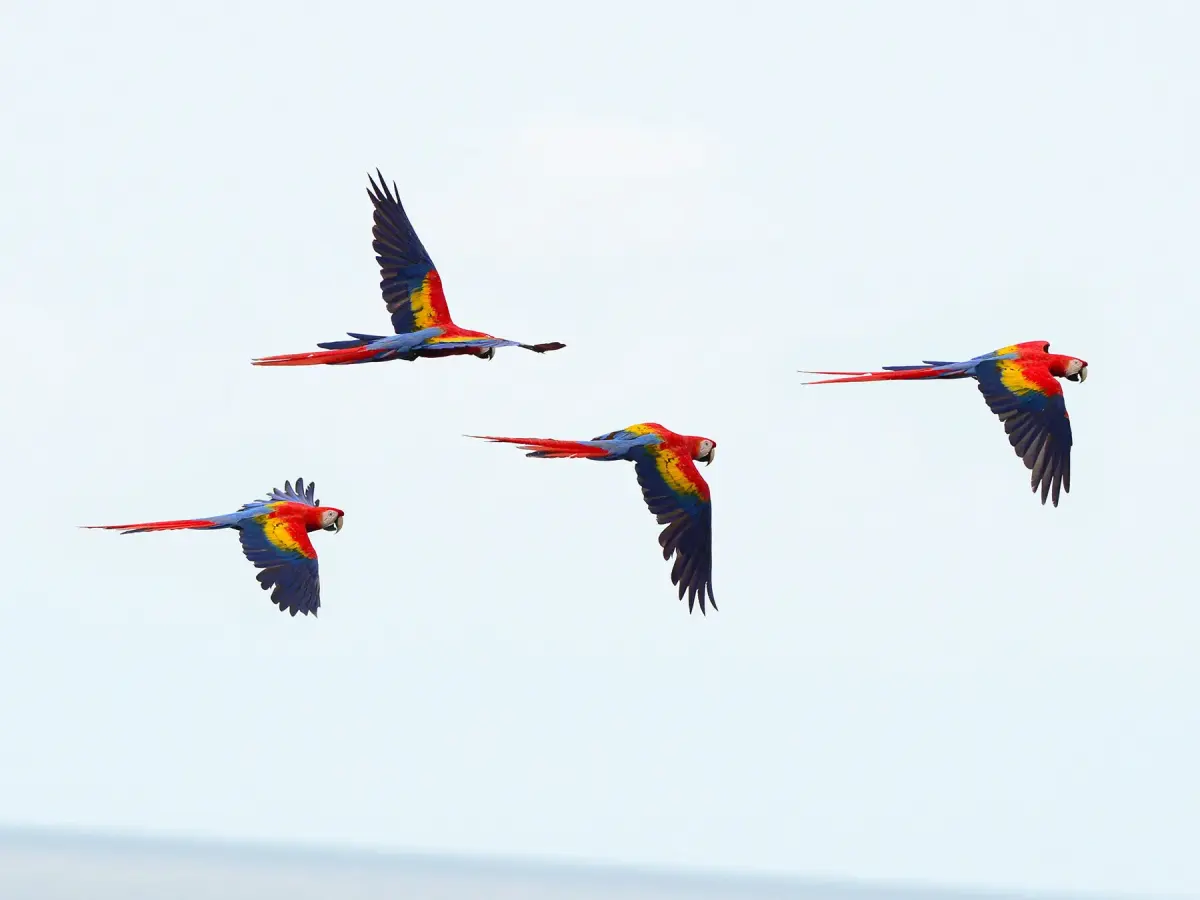
A group of parrots is most commonly referred to as a pandemonium. Other terms used by bird enthusiasts and ornithologists include a flock, a company, or a psittacine gathering. While "pandemonium" is the traditional collective noun, "flock" remains the most accurate and widely accepted term in scientific and casual observational contexts.
On this page
What is a group of parrots called?
The term "pandemonium" is widely recognized as the collective noun for a group of parrots. This evocative word originates from the chaotic, noisy, and high-energy nature of parrot social interactions in the wild. Because parrots are highly intelligent and vocal creatures, their communal gatherings often involve constant squawking, screeching, and social displays that can sound overwhelming to human ears.
While "pandemonium" is the whimsical term favored by literature and trivia, ornithologists typically prefer the term "flock." A flock describes any group of birds that travel, forage, or roost together. In the wild, parrots are rarely solitary; they rely on the safety of the group to spot predators and share information about food sources. Whether you call them a pandemonium or a flock, these groups demonstrate complex social hierarchies and deep bonds that are essential for their survival in diverse habitats ranging from rainforests to savannas.
Why do parrots gather in flocks?
Parrots gather in large groups primarily for protection and resource efficiency. By living in a flock, individual birds benefit from the "many eyes" effect, where multiple members of the group watch for threats such as hawks, snakes, or monkeys. This collective vigilance allows individual parrots to focus more time on foraging for seeds, fruits, and nectar rather than constantly scanning the horizon for danger.
Social bonding also plays a critical role in flock dynamics. Many parrot species, such as macaws and African greys, form lifelong pair bonds that exist within the larger social structure of the flock. These birds engage in mutual preening, vocal mimicry, and synchronized flight patterns to maintain group cohesion. The following factors influence how these groups organize themselves:
- Food availability: Large flocks form when seasonal fruits or flowering trees provide abundant resources.
- Nesting requirements: Some species congregate in specific cliff faces or large trees to share nesting space.
- Predator density: High-risk environments often force smaller groups to merge into larger, safer flocks.
- Social hierarchy: Dominant individuals often lead the flock during migration or foraging trips.
How do parrots communicate within a group?
Communication is the glue that holds a parrot flock together. Parrots use a sophisticated array of vocalizations, body language, and physical displays to convey information to their peers. Each individual often possesses a unique "contact call," which acts like a name, allowing flock members to identify one another even when flying through dense foliage or over long distances.
Beyond vocalizations, parrots utilize visual cues to maintain order. A raised crest, a flared tail, or a specific posture can signal aggression, submission, or excitement to other members of the group. Understanding these signals is vital for researchers studying wild populations. If you are observing a flock in the wild, look for these common behaviors:
- Contact calling: Frequent, short chirps used to keep track of members during flight.
- Mutual preening: Grooming of the head and neck to strengthen social bonds.
- Alarm calling: Sharp, loud screeches that signal the entire group to take flight instantly.
- Play behavior: Acrobatic maneuvers or mock fighting that helps younger birds learn social boundaries.
Common mistakes when identifying parrot groups
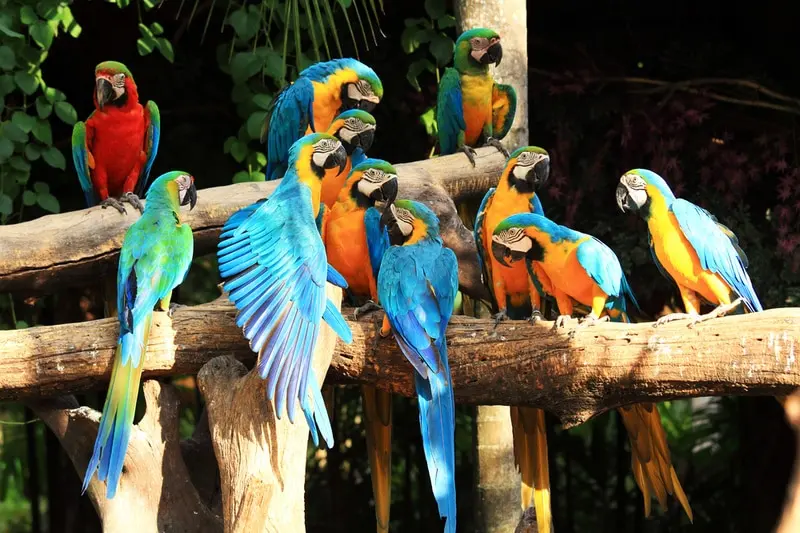
One common mistake is assuming that all parrots in a group belong to the same species. In many parts of the world, such as the Amazon basin or the Australian outback, different species of parrots may forage together in mixed-species flocks. This behavior allows different birds to exploit the same resources while benefiting from the increased security of a larger, more diverse group.
Another error is misinterpreting the noise level of a flock as a sign of distress. While a pandemonium of parrots is indeed loud, this noise is usually a sign of healthy social engagement, communication, or territorial defense rather than panic. Observers should also avoid the mistake of approaching a flock too closely. Parrots are naturally wary of humans, and encroaching on their space can cause them to abandon vital feeding grounds. Always maintain a respectful distance and use binoculars to observe their fascinating social structures without disrupting their natural behaviors.
How to observe wild parrot flocks safely
Observing a flock of parrots is a rewarding experience that requires patience and preparation. The best time to spot them is during the early morning or late afternoon, as these are the peak hours for foraging and movement. To ensure you do not disturb the birds, select a vantage point that offers a clear view of their flight paths or favorite feeding trees without placing you directly in their path.
Preparation is key to a successful observation session. Follow these steps to maximize your experience:
- Research the local species: Know which parrots are native to your area to better understand their specific habits.
- Use quiet equipment: Avoid bright clothing and loud movements that might startle the birds.
- Choose the right gear: High-quality binoculars are essential for tracking fast-moving flocks from a distance.
- Record your findings: Keep a notebook of the time of day, group size, and specific behaviors observed to contribute to citizen science projects.
By following these guidelines, you can enjoy the spectacle of a wild pandemonium while ensuring the safety and well-being of these remarkable, highly social avian communities.
Key facts
- A group of parrots is most commonly referred to as a "pandemonium."
- Other accepted collective nouns include a "flock," a "prattle," or a "scold" of parrots.
- These terms are primarily used in literary or poetic contexts rather than in scientific ornithology.
- Ornithologists generally prefer the term "flock" when describing parrots in their natural habitat.
- The term "pandemonium" reflects the loud, chaotic, and energetic nature of parrot social groups.
- When identifying a group, avoid using "colony" unless referring specifically to a nesting site.
The bottom line
While the whimsical term "pandemonium" perfectly captures the noisy and vibrant nature of a gathering of parrots, it remains a literary convention rather than a strict biological classification. In scientific settings, "flock" is the standard and most accurate term to use. Regardless of the label, understanding these social structures highlights the complex communication and cooperative survival strategies that define these highly intelligent avian species.
People also ask
Why are parrots so loud in groups?
Parrots use loud vocalizations to maintain contact with flock members while flying through dense forests. These calls help individuals coordinate movements and identify family members over long distances.
Do all parrot species live in large groups?
While many parrots are highly social, some species prefer to live in pairs or small family units. Social structure often depends on the availability of food and the presence of predators in their environment.
How do parrots choose their mates within a flock?
Parrots often form long-term pair bonds, sometimes lasting for their entire lives. Courtship involves complex displays, mutual preening, and vocal exchanges to ensure compatibility before breeding.
Can different species of parrots flock together?
In the wild, mixed-species flocks are common, especially when different parrots share the same food sources. They benefit from the "many eyes" effect, which increases the likelihood of detecting approaching predators.
What is the largest known flock of parrots?
Some species, such as the Monk Parakeet or the Budgerigar, can form massive flocks numbering in the thousands. These large gatherings are usually associated with seasonal migrations or abundant food supplies.
Do parrots have a leader in their group?
Parrot flocks do not typically have a single "alpha" leader like some mammal groups. Instead, they operate through a decentralized social system where individuals follow the collective movement of the flock.
This answer was created with the help of AI research tools and reference sources. Spotted an error? Let us know — we correct mistakes quickly. See our editorial policy.