What is a group of fish called?
Short answer
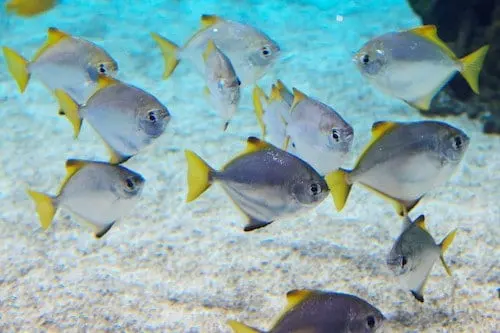
A group of fish is most commonly called a school. When fish swim together in a synchronized, coordinated fashion, the term is specifically a school. If the fish are loosely gathered in one area without moving in unison, they are referred to as a shoal. Other collective nouns include a draft, haul, or run.
On this page
What is the difference between a school and a shoal?
The primary distinction between a school and a shoal lies in the behavior of the fish. A school consists of fish that swim in a synchronized, polarized manner, often moving in the same direction at the same speed. This behavior is highly structured and serves as a defense mechanism against predators. By moving as a single, massive unit, the fish create a confusing visual target that makes it difficult for a predator to isolate an individual.
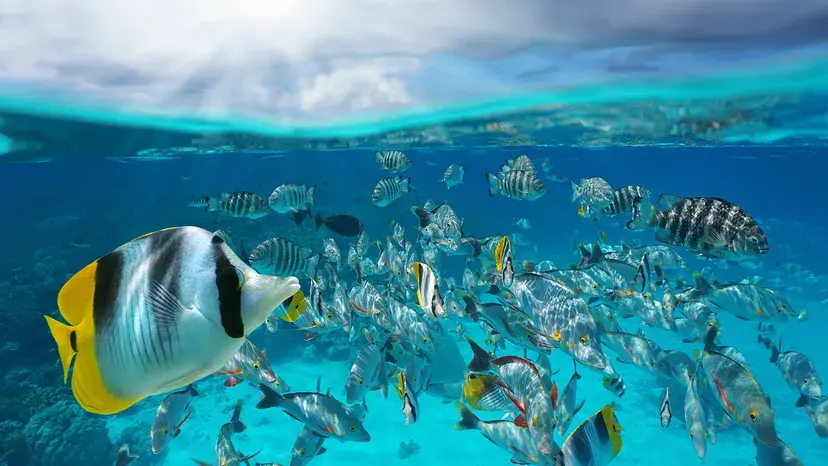
In contrast, a shoal refers to any group of fish that remain together for social reasons. While shoaling fish stay in the same general vicinity, they do not necessarily move in a coordinated, synchronized way. All schools are technically shoals, but not all shoals are schools. Many species, such as sardines and herring, are famous for their schooling behavior, while others, like certain types of minnows or tetras, exhibit more casual shoaling tendencies in aquariums or natural habitats.
Why do fish group together?
Fish aggregate for several evolutionary advantages, primarily survival and efficiency. By staying in a group, fish increase their chances of detecting predators early, as there are more eyes to watch for danger. This is known as the "many-eyes hypothesis." Additionally, schooling can improve hydrodynamic efficiency; fish positioned behind others experience less water resistance, which saves energy during long-distance migrations or while navigating strong currents.
Beyond protection and energy conservation, grouping facilitates essential life processes. For many species, schooling is a prerequisite for successful reproduction. It ensures that mates are readily available and increases the likelihood of fertilization when eggs and sperm are released into the water column. Grouping also aids in foraging, as a large group can locate food sources more effectively than a solitary fish. When a member of the group finds food, the others often follow, creating a collective search pattern that covers more territory.
How do fish maintain their position in a group?
Fish maintain their formation through a combination of sensory inputs, primarily vision and the lateral line system. The lateral line is a specialized sensory organ running along the side of a fish's body that detects vibrations and pressure changes in the water. This system allows fish to sense the movements and proximity of their neighbors without needing to see them directly, which is crucial in murky water or low-light conditions.
To keep a consistent distance and orientation within a school, fish rely on three primary behaviors:
- Attraction: Fish move toward their neighbors to maintain group cohesion.
- Repulsion: Fish maintain a minimum distance to avoid physical collisions.
- Alignment: Fish match their speed and direction with the individuals adjacent to them.
By constantly adjusting these three factors, the entire group can execute rapid, fluid turns and maneuvers as if they were a single organism. This collective intelligence is an emergent property, meaning no single "leader" directs the school; instead, every fish responds to the movements of its nearest neighbors.
Common mistakes when identifying fish groups
One common mistake is assuming that all fish species are social. Many fish, such as groupers, barracudas, or certain species of eels, are solitary by nature and do not form schools or shoals. Attempting to force these solitary species into groups in an aquarium setting often leads to high levels of stress, territorial aggression, and eventual injury. Always research the specific behavioral requirements of a species before assuming it will thrive in a group.
Another error is misinterpreting a "feeding frenzy" as a school. While a group of predators like sharks or piranhas may gather in one spot to feed, this is a competitive, chaotic event rather than a coordinated school. The fish are focused on individual prey items rather than maintaining a synchronized formation. To identify a true school, look for the following signs:
- Uniformity in the direction of travel among all members.
- Consistent spacing maintained between individual fish.
- Rapid, simultaneous changes in direction that occur without a clear external leader.
How to observe fish schools in the wild
If you are interested in observing schooling behavior, the best approach is to visit clear, shallow coastal waters or coral reefs. Snorkeling or diving provides the most immersive experience, but you must move slowly and predictably to avoid startling the fish. Sudden movements or loud noises will cause the school to break formation or flee, as the fish perceive you as a potential threat.
When observing, keep these practical tips in mind:
- Stay still: Find a position near a reef or a pier and wait for the fish to return to their natural activities.
- Use polarized sunglasses: These reduce surface glare, allowing you to see deeper into the water column from the surface.
- Observe from a distance: Do not swim directly into the center of a school, as this will force them to split, disrupting their natural behavior.
- Choose the right time: Many schooling species are most active during dawn or dusk, when they are transitioning between resting and foraging areas.
By practicing patience and minimizing your impact on the environment, you can witness the incredible synchronization that defines these aquatic groups.
Key facts
- A general group of fish is most commonly referred to as a school.
- When fish swim together in a synchronized, coordinated manner, the term school is scientifically accurate.
- If fish are loosely associated and not swimming in a coordinated way, they are referred to as a shoal.
- The term "shoal" is derived from the Old English word "scolu," meaning a troop or multitude.
- Scientists distinguish between schooling and shoaling based on the level of social organization and synchronized movement.
- While "school" and "shoal" are standard, some specific species have unique collective nouns, such as a "draft" of shad or a "battery" of barracuda.
The bottom line
The most accurate term for a group of fish is a school, provided they are swimming in a synchronized, organized fashion. If the fish are merely gathered together without coordinated movement, the term shoal is more appropriate. Understanding these distinctions helps clarify how different species interact, move, and survive in their aquatic environments, moving beyond simple labels to reflect actual biological behavior in the wild.
People also ask
Is it ever correct to call a group of fish a flock?
No, the term flock is reserved exclusively for birds or certain land animals like sheep. Using it for fish is considered incorrect in both biological and common parlance.
Do all fish species form schools?
Not all fish are social; many species are solitary and only come together for mating or feeding. Only about 25 percent of all fish species spend their entire lives in schools.
Why do fish choose to school together?
Schooling provides significant survival benefits, including protection from predators through the "many eyes" hypothesis. It also increases hydrodynamic efficiency, allowing fish to swim faster with less energy expenditure.
What is the difference between a school and a shoal?
A school is a group of fish that swims in a synchronized, polarized direction. A shoal is a social group that stays together for companionship but may move in different directions.
Can a group of fish be called a pod?
The term pod is typically used for groups of marine mammals, such as dolphins or whales. It is not standard terminology for fish, though it is sometimes used colloquially in error.
How do fish maintain their position in a school without colliding?
Fish use their lateral line system, a sensory organ that detects vibrations and pressure changes in the water. This allows them to sense the proximity and movement of their neighbors instantly.
This answer was created with the help of AI research tools and reference sources. Spotted an error? Let us know — we correct mistakes quickly. See our editorial policy.