What do sloths eat?
Short answer
Sloths are primarily folivores, meaning their diet consists almost exclusively of tree leaves. Two-toed sloths are more opportunistic, occasionally consuming fruits, flowers, and small insects. Because leaves are low in calories and nutrients, sloths have evolved an extremely slow metabolism, allowing them to survive on a very limited energy intake.
On this page
What do sloths eat in the wild?
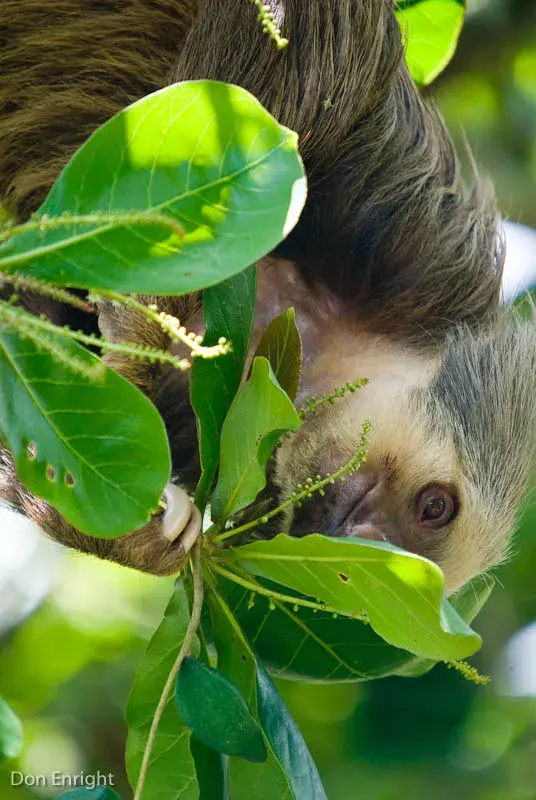
In their natural rainforest habitats, sloths are specialized herbivores that spend most of their time foraging in the canopy. The three-toed sloth is a strict folivore, feeding almost entirely on the leaves of the Cecropia tree. These leaves are abundant but provide very little energy, which dictates the sloth's sedentary lifestyle. By focusing on a diet that requires minimal movement to acquire, they conserve the energy necessary for survival in the humid tropics.
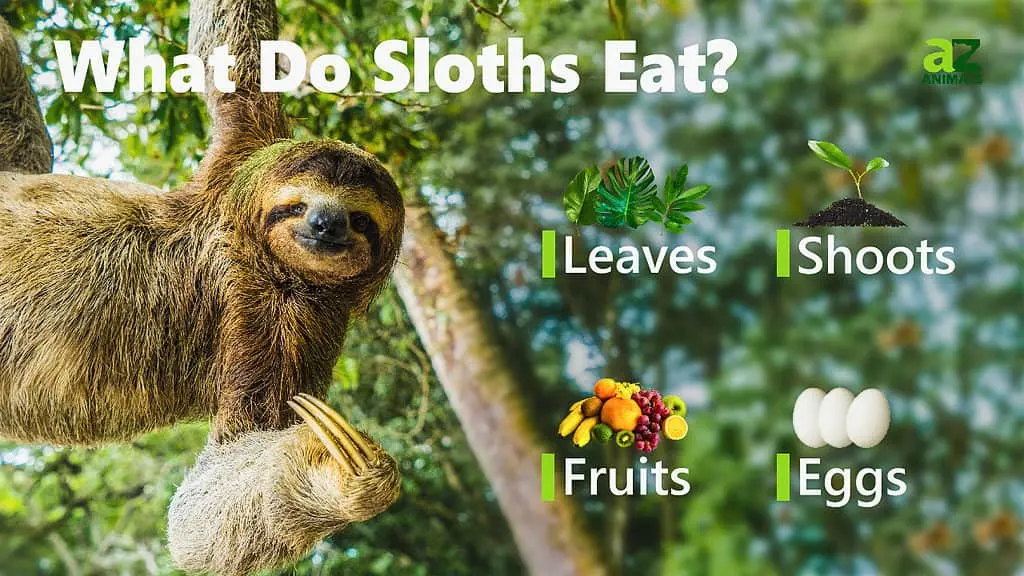
Two-toed sloths exhibit a more diverse palate compared to their three-toed relatives. While they also rely heavily on leaves, they frequently supplement their diet with a variety of other food sources found within their home range. This dietary flexibility allows them to inhabit a wider range of environments and adapt to seasonal changes in food availability. Their diet commonly includes:
- Ripe fruits and berries
- Tropical flowers and buds
- Tender tree shoots
- Small insects or bird eggs
How do sloths digest their food?
The digestive process of a sloth is one of the slowest in the animal kingdom. It can take up to 30 days for a sloth to fully digest a single meal. This inefficiency is due to the complex, multi-compartment stomach that relies on symbiotic bacteria to break down the tough cellulose found in leaves. Because the metabolic rate is so low, the animal must prioritize energy conservation over rapid nutrient absorption.
This slow digestion process has significant implications for the sloth's behavior and physiology. Because they process food so slowly, they cannot eat large quantities at once, which limits their daily activity levels. The fermentation process in their gut also produces gas, which can be seen as a byproduct of their specialized diet. To manage their energy balance, sloths often remain in the same tree for days at a time, minimizing the need to travel for food.
Why do sloths have such a slow metabolism?
The sloth’s metabolism is roughly 40 to 45 percent of the rate expected for a mammal of its size. This evolutionary adaptation is a direct result of their low-energy, leaf-based diet. Leaves are difficult to digest and provide minimal caloric density, meaning that a high-speed metabolism would be unsustainable for the animal. By maintaining a slow internal pace, sloths can thrive in an ecological niche where other animals might starve.
This metabolic strategy is a masterclass in efficiency, allowing the sloth to maintain a stable body temperature while living on a meager nutritional budget. However, this adaptation comes with trade-offs. Sloths are unable to generate significant body heat through movement, making them highly sensitive to extreme temperature fluctuations. Their survival depends on the stable, warm environment of the tropical rainforest, where they do not need to expend extra energy to regulate their internal temperature against cold weather.
Common mistakes when feeding captive sloths
Many people mistakenly believe that sloths can be fed household vegetables or fruits purchased at a grocery store. This is a dangerous misconception that can lead to severe health issues, including metabolic bone disease and digestive failure. Captive sloths require a highly specialized diet that mimics the chemical composition of wild leaves. Providing improper food items can cause:
- Gastrointestinal impaction from lack of fiber
- Nutrient deficiencies due to incorrect mineral ratios
- Dental decay from high sugar content in commercial fruits
- Obesity caused by calorie-dense, non-natural food sources
If you are involved in the care of a rescued sloth, you must follow strict dietary protocols established by wildlife veterinarians. Never offer human food, dairy, or processed snacks, as these are not biologically appropriate for their sensitive digestive systems. Always consult with a professional who understands the specific nutritional requirements of the species, as three-toed and two-toed sloths have different needs. Proper hydration is also critical, and water should always be available in a way that the animal can access safely without stress.
How to support sloth nutrition in conservation
Supporting wild sloths is best achieved by protecting the integrity of their natural habitat. The primary threat to their nutrition is the loss of the specific tree species they rely on for food. Conservation efforts focus on reforestation and the creation of biological corridors that allow sloths to move between feeding grounds without crossing dangerous roads or human-populated areas. By maintaining a healthy canopy, we ensure that these animals have access to the diverse foliage they need.
If you wish to contribute to the health of sloth populations, consider supporting organizations that focus on habitat restoration. Avoid purchasing products that contribute to deforestation in tropical regions, as this directly destroys the food sources sloths depend on for survival. Educating others about the specialized dietary needs of sloths also helps prevent the illegal pet trade, where animals are often fed improper diets that lead to a slow and painful decline. Protecting the environment is the most effective way to ensure that sloths continue to thrive in their natural, leaf-filled homes.
Key facts
- Two-toed sloths are omnivores that supplement their leaf-heavy diet with fruits, insects, and occasionally small lizards.
- Three-toed sloths are strict folivores, meaning they survive almost exclusively on the leaves of specific tropical trees.
- Sloths have a multi-compartment stomach that functions like a fermentation tank to break down tough, fibrous plant material.
- Digestion is incredibly slow; it can take up to 30 days for a sloth to fully process a single meal.
- Sloths obtain most of their necessary hydration directly from the moisture found in the leaves they consume.
- Cecropia tree leaves are a preferred food source for many sloth species due to their abundance and nutritional profile.
The bottom line
Sloths are highly specialized herbivores that have evolved to thrive on a low-energy diet of leaves. By utilizing a slow-acting, multi-chambered stomach, they efficiently extract nutrients from fibrous vegetation that other animals cannot process. Whether they are strictly folivorous or opportunistic omnivores, their survival depends on the specific flora of their tropical habitats, making them essential, albeit slow-moving, components of the rainforest ecosystem.
People also ask
Do sloths drink water from streams or rivers?
Sloths rarely descend to the ground to drink from water sources because they are highly vulnerable to predators there. Instead, they get the vast majority of their water from dew, rain, and the succulent leaves they eat.
Can sloths eat vegetables like lettuce or carrots?
While sloths in captivity might accept some vegetables, these are not part of their natural diet. Feeding them human produce can cause severe digestive distress and nutritional imbalances, so it should always be avoided.
How much food does a sloth eat in a day?
Despite their slow metabolism, sloths consume a surprising amount of foliage relative to their size. An adult sloth typically eats about 10 to 15 grams of leaves per kilogram of body weight each day.
Why do sloths have such a slow digestive system?
Their diet of leaves is low in energy and difficult to digest, requiring a slow process to extract maximum nutrients. This low-energy lifestyle is an evolutionary adaptation that allows them to survive on a nutrient-poor food source.
Do sloths ever eat flowers?
Yes, many sloth species include flowers and flower buds in their diet when available. These provide a quick boost of energy and essential vitamins that are not always present in mature leaves.
Are there any plants that are toxic to sloths?
Sloths are very selective eaters and have evolved to identify and avoid many toxic plants in their environment. However, introducing non-native or ornamental plants to a sloth's environment can be fatal due to unknown chemical compounds.
This answer was created with the help of AI research tools and reference sources. Spotted an error? Let us know — we correct mistakes quickly. See our editorial policy.