What are the best art supplies for kids for beginners?
Short answer
The best art supplies for young beginners prioritize safety, washability, and age-appropriate ergonomics. High-quality crayons, tempera paints, thick markers, and heavy-weight drawing paper form an ideal starter kit. Focus on non-toxic materials that encourage exploration without the frustration of complex cleanup or fragile tools that break easily during early creative development.
On this page
Best art supplies for beginners
For children just starting their artistic journey, simplicity and durability are the most important factors. Beginners benefit from tools that provide immediate, bold results with minimal physical effort. Thick, triangular-shaped crayons are superior to standard thin ones because they prevent rolling and help children develop a proper tripod grip. Large, washable markers with conical tips allow for both fine lines and broad strokes, accommodating developing motor skills.
When selecting supplies, look for the "AP" (Approved Product) seal from the Art and Creative Materials Institute, which ensures the items are non-toxic. Investing in a few high-quality basics is significantly more effective than purchasing large, cheap sets that often produce faint colors or break upon first use. Focus on these core essentials to build a versatile foundation:
- Triangular crayons for grip development
- Washable tempera paint in primary colors
- Heavy-weight construction paper (at least 80lb)
- Large, synthetic-bristle brushes
- Glue sticks rather than liquid glue
How to choose safe art materials
Safety is the primary concern when selecting supplies for young children. Always verify that products are labeled non-toxic and are free from common allergens like gluten or latex, depending on your child's specific needs. Avoid materials with small parts that could pose a choking hazard, such as beads, googly eyes, or tiny sequins, until the child is older and past the stage of mouthing objects.
Read labels carefully to ensure that paints and markers are specifically categorized as "washable." This designation typically means the pigments can be removed from skin and most fabrics with simple soap and water. Be aware that even non-toxic products should be used under supervision to prevent accidental ingestion. When introducing new supplies, follow these steps to ensure a safe environment:
- Clear the workspace of food and drinks.
- Check that the room has adequate ventilation.
- Demonstrate how to use the tool properly before handing it over.
- Establish a cleanup routine to store items safely after use.
Best paper for young artists
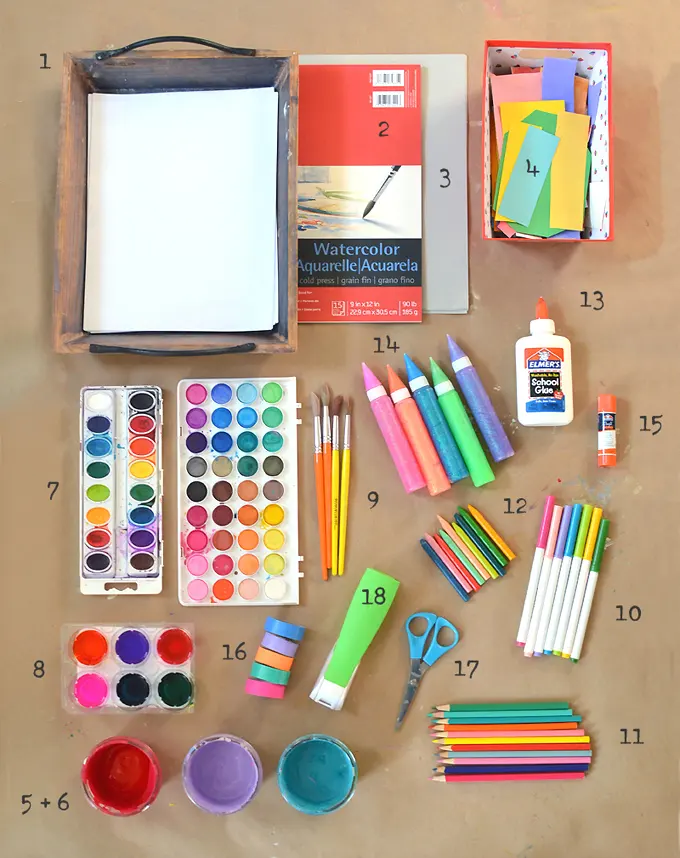
The quality of paper significantly impacts the success of a project. Thin printer paper often tears or becomes soggy when exposed to paint or heavy marker use, which can lead to frustration for a child. Instead, opt for heavy-weight drawing paper or cardstock, which can withstand multiple layers of color and moisture without buckling.
For painting, consider purchasing dedicated watercolor paper or specialized finger-paint paper, which has a coated surface to prevent the paint from soaking through immediately. If you are working on a budget, large rolls of butcher paper or recycled cardboard provide excellent, expansive surfaces for mural-style art. Providing a variety of textures and sizes encourages children to experiment with different scales and mediums, helping them understand how materials interact with one another.
Common mistakes when buying art supplies
One common mistake is purchasing professional-grade supplies for a beginner. Professional paints often contain high pigment loads that are difficult to wash out of clothing, and professional-grade paper is unnecessarily expensive for early experimentation. Stick to "student grade" or "school grade" products, which are specifically formulated to be forgiving and easy to manage.
Another frequent error is providing too many options at once. A child presented with fifty different colors and tools may become overwhelmed and struggle to focus on the creative process. Instead, start with a limited palette of primary colors—red, yellow, and blue—and teach the child how to mix them to create secondary colors. This approach fosters a deeper understanding of color theory and keeps the workspace organized. Avoid these common pitfalls to keep the experience enjoyable:
- Buying oil-based paints that require harsh solvents for cleanup.
- Providing permanent markers that cannot be removed from furniture.
- Using fragile glass or ceramic containers for water.
- Ignoring the need for a dedicated, mess-friendly workspace.
How to organize art supplies for kids
Creating an accessible storage system is vital for encouraging independent creativity. Use clear, low-profile bins that allow children to see their supplies at a glance. Labeling these bins with simple pictures or words helps children learn how to return their tools to the correct place, which is an essential part of the artistic process.
Keep the most frequently used items, such as crayons and paper, at a height where the child can reach them without assistance. Store more specialized or messy items, like glitter or acrylic paints, on higher shelves to be accessed only during supervised sessions. By maintaining a clean and organized station, you reduce the stress associated with cleanup and ensure that art time remains a positive, consistent habit. When supplies are easy to find and put away, children are much more likely to engage in creative play on a regular basis.
Key facts
- Choose non-toxic, washable markers and paints to ensure safety and easy cleanup on household surfaces.
- Select thick, triangular-shaped crayons or pencils to help children develop a natural, comfortable grip.
- Use heavyweight drawing paper, at least 70-pound weight, to prevent markers from bleeding through or paper from tearing when wet.
- Start with a primary color palette of red, blue, and yellow to teach children how to mix secondary colors.
- Keep a dedicated "art bin" with clear lids so children can easily identify and access their supplies independently.
- Avoid low-quality tempera paints that contain high levels of fillers, as these often result in streaky, translucent coverage.
The bottom line
The best approach to selecting art supplies for beginners is to prioritize safety, washability, and age-appropriate ergonomics. By investing in high-quality, student-grade materials like triangular crayons and heavyweight paper, you provide a stable foundation for creative exploration. Keep the process simple by limiting initial color choices, and always emphasize the joy of the creative process over the perfection of the final artistic result.
People also ask
Should I buy professional-grade art supplies for a beginner child?
No, professional-grade materials are often expensive and contain pigments that are difficult to wash out of clothing. Student-grade supplies are specifically formulated to be safe, durable, and easy to clean, making them ideal for developing skills.
How do I prevent art supplies from creating a permanent mess?
Always place a plastic tablecloth or newspaper under the workspace before starting an activity. Use washable formulas for all paints and markers, and keep a damp cloth or baby wipes nearby for immediate cleanup.
Are oil pastels better than wax crayons for young children?
Oil pastels are softer and more vibrant but can be very messy and difficult to remove from fabrics. Wax crayons are generally superior for beginners because they are cleaner, harder to break, and require less fine motor control to manage.
What is the best way to store paintbrushes?
Always store brushes with the bristles pointing upward or lying flat to maintain their shape. Never leave brushes sitting in a jar of water for long periods, as this will cause the bristles to splay and the wooden handles to crack.
Why is paper thickness important for beginner artists?
Thin printer paper buckles and tears when exposed to watercolors or heavy marker application. Using cardstock or dedicated drawing paper provides a stable surface that encourages children to experiment with different techniques without the frustration of ruined work.
When should a child transition from crayons to colored pencils?
Most children are ready for colored pencils between the ages of 5 and 7. Before this, the pressure required to get pigment from a pencil can be frustrating, whereas crayons provide instant, bold color with minimal effort.
This answer was created with the help of AI research tools and reference sources. Spotted an error? Let us know — we correct mistakes quickly. See our editorial policy.