How do you draw a toad?
Short answer
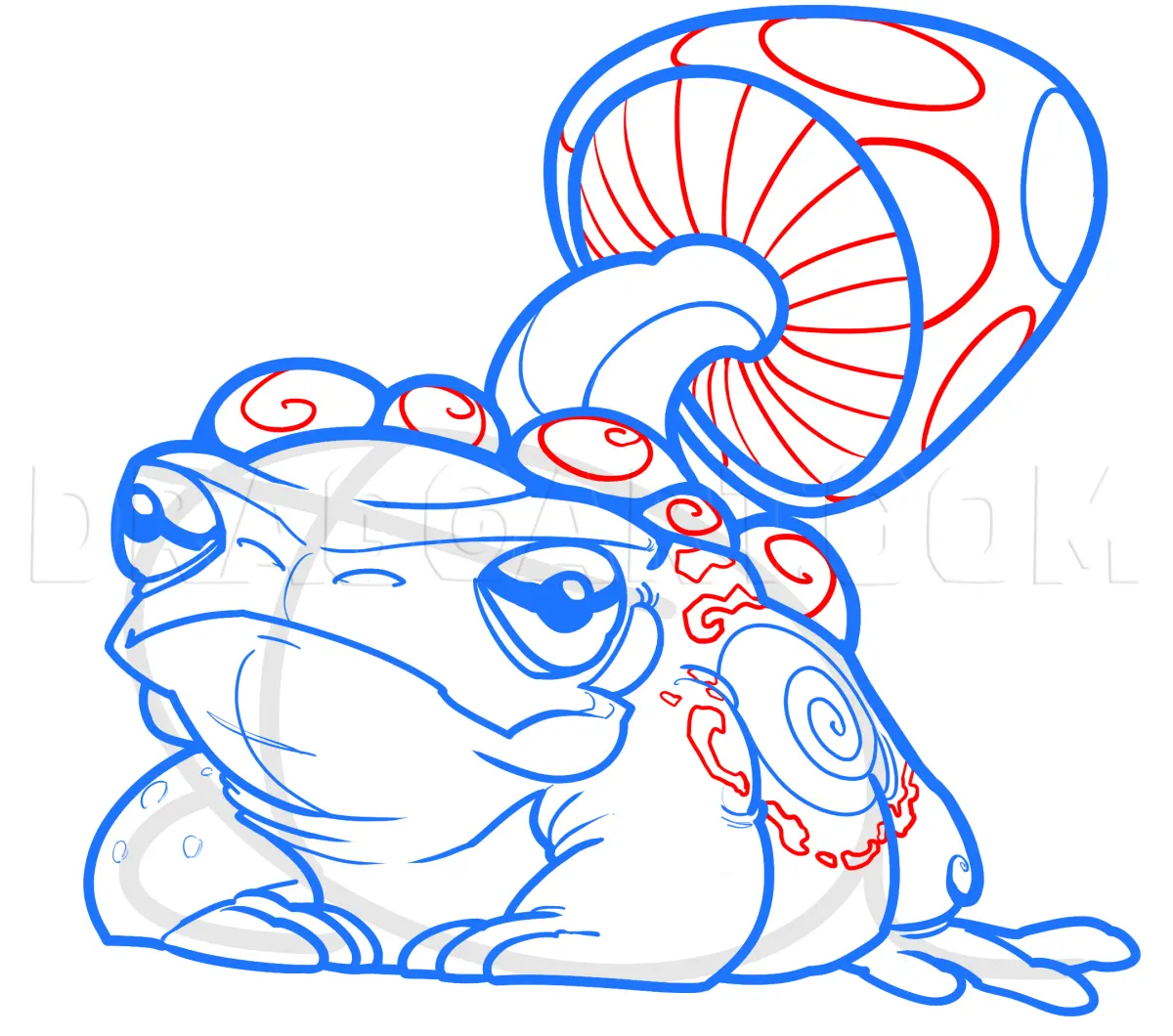
Drawing a toad involves capturing its stout, squat anatomy through a series of rounded shapes. Focus on the wide, blunt snout, the bulging eyes positioned high on the head, and the textured, bumpy skin. By layering these organic forms and adding characteristic mottling, you can create a realistic representation of this amphibian.
On this page
How to structure a toad drawing
Begin by observing the toad’s silhouette, which is defined by a low-slung, oval-shaped body. Unlike frogs, toads have shorter hind legs and a thicker waist, so avoid drawing an elongated or athletic frame. Start your sketch with a large horizontal oval for the main body and a smaller, slightly flattened circle for the head. Ensure the head is not distinct from the body; it should merge seamlessly into the torso.
Once the basic masses are established, add the limbs using simple geometric shapes. The front legs should be short and sturdy, ending in small, blunt toes, while the back legs should be folded tightly against the body. To maintain accurate proportions, follow these steps:
- Draw the primary torso oval, tilting it slightly downward toward the front.
- Attach the head shape to the front of the oval, ensuring the snout is blunt rather than pointed.
- Sketch the folded back legs as triangles tucked against the lower sides of the body.
- Connect the front legs to the mid-section, keeping them thick and muscular.
Best tools for drawing toad textures
To capture the signature warty skin of a toad, you need tools that allow for both fine detail and soft blending. Graphite pencils ranging from 2H for initial light outlines to 4B for deep shadows are essential. A kneaded eraser is particularly useful for lifting graphite to create highlights on the raised bumps, which provides a three-dimensional effect.
For those interested in adding color, colored pencils or watercolors work best on textured paper. The paper’s "tooth" helps catch the pigment, allowing you to build up the mottled, earthy tones characteristic of toad skin. When layering colors, keep these tips in mind:
- Use a stippling technique—small, repeated dots—to mimic the texture of the skin.
- Apply darker shades in the crevices between bumps to create depth.
- Use a white gel pen or a sharp eraser to add tiny specular highlights on top of the largest warts.
Why toad anatomy looks unique
The toad’s appearance is an evolutionary adaptation to its terrestrial lifestyle. Toads possess parotoid glands, which are large, kidney-shaped bumps located behind the eyes that secrete toxins. When drawing, these glands are a crucial anatomical feature that distinguishes a toad from a frog. By placing these prominently behind the eyes, you immediately signal to the viewer that the subject is a toad.
Furthermore, the toad’s eyes are uniquely positioned to provide a wide field of vision while the animal remains close to the ground. These eyes often have horizontal pupils and a golden or copper iris. When rendering the face, remember that the mouth is wide and often curves downward, giving the toad a stoic or grumpy expression. Focus on these specific facial features to ensure your drawing conveys the characteristic personality of the animal.
Common mistakes when drawing toads
A frequent error is giving the toad a smooth, sleek skin texture. Toads are defined by their rugged, dry, and bumpy appearance, so a smooth rendering will look more like a frog or a salamander. Avoid uniform shading; instead, break up the surface with irregular shapes and clusters of dots. This unevenness is what makes the drawing feel authentic.
Another common mistake is miscalculating the length of the limbs. Toads are not built for jumping great distances, so their legs should never look spindly or elongated. If the legs appear too long, the drawing will lose the toad's signature squat, heavy-set silhouette. Watch for these issues:
- Avoid overly symmetrical placement of skin bumps, as natural patterns are always irregular.
- Do not draw the toes too long or thin; they should be stubby and rounded at the tips.
- Ensure the back does not appear too arched, as toads generally maintain a flattened, low profile.
How to add realism with shading
Shading is the final step that brings your toad to life by defining its volume. Focus on the light source, typically coming from above, and apply darker values to the underside of the body and the areas beneath the legs. Because the skin is bumpy, the shadows should be fragmented rather than smooth, reflecting the uneven surface of the toad’s back.
To finish the piece, consider the environment in which the toad sits. Grounding the animal with a cast shadow beneath its belly and feet will prevent it from looking like it is floating on the page. Use a soft blending stump to create a subtle transition between the toad and the ground. By refining the edges of the bumps and deepening the shadows in the eye sockets, you will complete a realistic and scientifically grounded drawing of a toad.
Key facts
- Toads have shorter, stockier legs than frogs, which are better suited for walking or short hops than for powerful, long-distance jumping.
- Their skin is famously warty and dry, featuring a bumpy texture that distinguishes them from the smooth, moist skin of most frogs.
- A toad's body shape is generally oval or pear-shaped, often appearing wider and flatter near the rear.
- The parotoid glands, located behind the eyes, are large, kidney-shaped bumps that serve as a key anatomical feature for identification.
- Toads possess a horizontal, slit-like pupil, whereas many frogs have round or vertical pupils.
- When drawing, focus on the heavy, downward-turned mouth line, which gives the toad its characteristic grumpy or stoic facial expression.
The bottom line
Drawing a toad requires prioritizing its unique, heavy-bodied anatomy over the sleek grace of a frog. By focusing on the squat oval shape, the characteristic warty texture, and the distinct parotoid glands behind the eyes, you can create a lifelike representation. Remember that the toad’s grumpy expression and short, stout limbs are essential details that define its appearance and distinguish it from other amphibians.
People also ask
Should I start with a circle or an oval for the body?
An oval is more accurate for a toad because their bodies are naturally heavy and rounded toward the back. Using an oval allows you to place the head and legs more realistically within the creature's bulky frame.
How do I make the skin look warty without drawing hundreds of circles?
Use irregular, small clusters of dots and semi-circles rather than uniform shapes. Vary the size and density of these marks, placing more near the back and legs while keeping the belly area relatively smoother.
Why do my drawings of toads look like frogs?
You are likely drawing legs that are too long and slender. Shorten the back legs significantly and ensure the body appears squat and low to the ground to capture the toad's distinct silhouette.
What is the best way to draw the eyes?
Draw the eyes as slightly protruding, almond-shaped structures positioned high on the head. Adding a subtle horizontal line for the pupil helps anchor the realistic look of the toad's face.
Do toads have toes like tree frogs?
Most terrestrial toads have shorter, thicker toes without the large, sticky adhesive pads found on tree frogs. Keep the digits blunt and simple to maintain an accurate representation of the species.
Should I use heavy outlines for the final drawing?
Use light, sketchy lines for the initial structure and reserve darker, thicker lines for the shadows beneath the body. This technique creates a sense of weight, emphasizing the toad's sedentary nature on the ground.
This answer was created with the help of AI research tools and reference sources. Spotted an error? Let us know — we correct mistakes quickly. See our editorial policy.