Is digital art harder than traditional art?
Short answer
Neither medium is inherently harder; they simply demand different skill sets. Traditional art requires mastery of physical materials and offers no "undo" button, while digital art requires technical proficiency with software and hardware. Both paths require thousands of hours of practice, color theory knowledge, and a strong foundation in fundamental artistic principles.
On this page
How do the technical requirements differ?
Traditional art relies on tactile interaction with physical media like oil paints, charcoal, or watercolors. Artists must manage the chemistry of their materials, such as drying times, brush maintenance, and surface preparation. The primary challenge here is the permanence of every mark, which necessitates careful planning and a deep understanding of how physical pigments interact on a substrate.
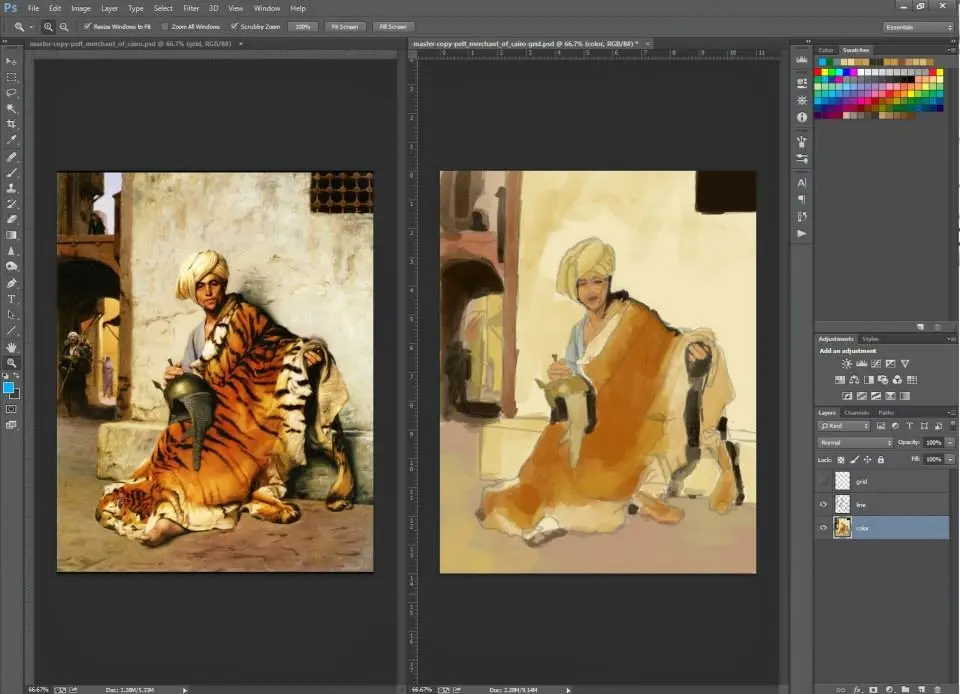
Digital art shifts this burden to hardware and software management. Artists use tools like Wacom tablets or iPads combined with programs such as Adobe Photoshop, Procreate, or Clip Studio Paint. The technical barrier involves learning layer management, brush engine customization, and file resolution settings. While digital tools offer features like layers and color adjustment, they also introduce technical hurdles like software crashes, file corruption, and the need to calibrate color profiles across different monitors.
- Traditional: Manage physical storage, ventilation for solvents, and material costs.
- Digital: Manage digital storage, software subscriptions, and hardware upgrades.
- Both: Require consistent practice and a grasp of anatomy, perspective, and lighting.
Why is traditional art considered less forgiving?
The defining characteristic of traditional media is the lack of an undo function. If an artist makes a mistake with ink or watercolor, the error is often permanent or requires significant effort to conceal. This forces the artist to develop a high degree of confidence and deliberate decision-making early in the creative process. The physical nature of the work means that the artist must also contend with gravity, drying times, and the physical limitations of the canvas.
Conversely, digital art allows for non-destructive editing. Artists can experiment with compositions, color palettes, and lighting effects without risking the integrity of the underlying work. This flexibility can lead to a faster learning curve for experimentation but can also encourage procrastination or "over-polishing." The difficulty in traditional art is often psychological, as the pressure to get it right the first time can be intimidating for beginners.
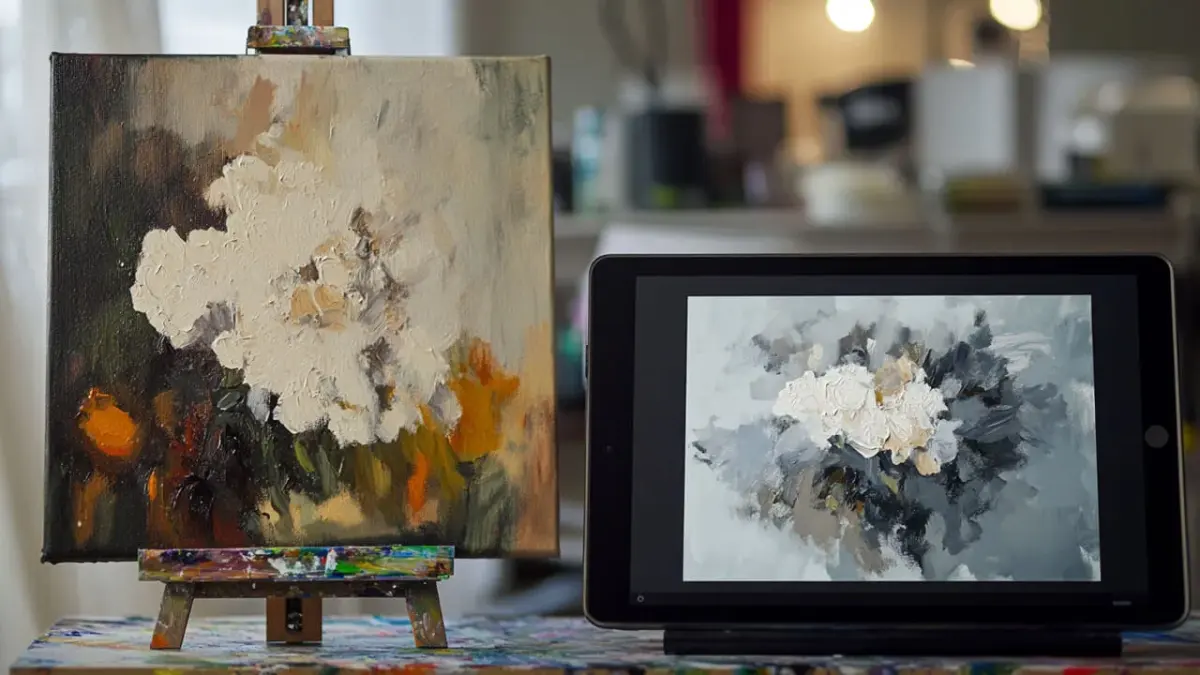
- Traditional media allows for unique textures that are difficult to replicate digitally.
- Digital media offers infinite possibilities for iteration and experimentation.
- Mastering both requires a deep understanding of light, shadow, and form.
What are the common mistakes when starting digital art?
Many beginners struggle with the "digital disconnect," where the hand moves on a tablet while the eyes look at a separate monitor. This lack of hand-eye coordination can make initial strokes feel clumsy and imprecise compared to drawing directly on paper. Another common error is over-relying on software shortcuts, such as using the transform tool to fix poor proportions instead of practicing accurate sketching.
Beginners also frequently get lost in the overwhelming number of settings available in professional software. They may spend more time tweaking brush settings or downloading assets than actually drawing. It is essential to focus on the fundamentals—line quality, value, and composition—rather than the bells and whistles of the interface. Avoiding the temptation to use too many layers or overly complex effects early on will lead to a more disciplined and efficient workflow.
- Avoid using the "undo" button as a crutch for poor planning.
- Do not ignore the importance of basic sketching and anatomy.
- Resist the urge to use excessive filters or pre-made textures.
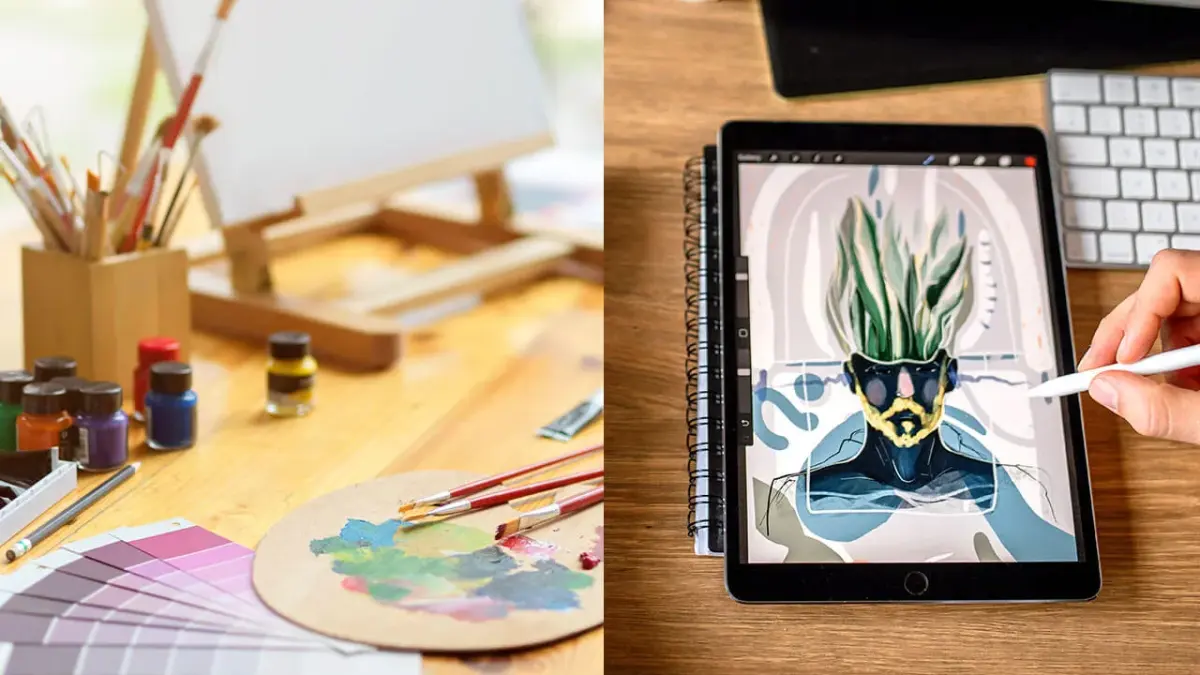
How long does it take to master each medium?
Mastery in any artistic discipline is measured in years rather than weeks. For traditional artists, the time is spent learning the "feel" of materials—how much pressure to apply to a graphite pencil or how to mix the perfect shade of oil paint. This tactile memory is built through repetition and is essential for achieving professional-level results. Most artists find that their work improves significantly after three to five years of consistent, daily practice.
Digital artists face a similar timeline, though the focus is on software efficiency and digital painting techniques. The learning curve is often steeper at the beginning due to the technical interface, but once the software becomes second nature, the artist can focus entirely on the creative output. The speed of digital production is generally faster, allowing for more pieces to be completed in a shorter amount of time, which can accelerate the improvement of visual skills.
- Year 1: Focus on learning the interface or basic material handling.
- Year 2-3: Develop a personal style and refine technical accuracy.
- Year 5+: Achieve professional proficiency and consistent quality.
Which path should a beginner choose?
The choice between traditional and digital art should be based on your personal goals and environment. If you enjoy the physical sensation of paint and the lack of screen time, traditional art is the logical starting point. It provides a foundational understanding of color and light that translates perfectly to any other medium. If you prefer a clean workspace, portability, and the ability to iterate quickly, digital art is an excellent choice.
Ultimately, the most successful artists often bridge the gap between both worlds. Many professionals begin their sketches on paper to capture the raw energy of a drawing before scanning it into a computer for digital coloring and refinement. By treating the two as complementary rather than competing disciplines, you can utilize the strengths of each to improve your overall artistic ability. Focus on the principles of design, and the medium will eventually become a secondary concern.
Key facts
- Digital art allows for non-destructive editing, meaning artists can use "layers" to modify specific elements without altering the entire composition.
- Traditional art requires physical materials like oil paint, canvas, or charcoal, which have inherent costs and require proper storage space.
- Digital artists often utilize undo commands (Ctrl+Z) and customizable brushes, features that do not exist in traditional media.
- Traditional mediums like watercolor or oil paint involve chemical drying times and physical blending techniques that cannot be replicated perfectly by software.
- Learning digital art requires mastery of hardware like drawing tablets and software interfaces such as Adobe Photoshop or Procreate.
- Both disciplines require a fundamental understanding of anatomy, color theory, lighting, and composition to produce professional-quality work.
The bottom line
Neither medium is inherently harder; they simply present different technical challenges. Digital art demands proficiency with complex software and hardware, while traditional art requires physical mastery of materials and a lack of "undo" options. Ultimately, the difficulty lies in the artist's dedication to mastering fundamentals like light, shadow, and form. Choose the medium that best aligns with your creative goals and your preferred workflow style.
People also ask
Does digital art require a expensive computer?
You do not need a high-end workstation to start, as many entry-level tablets and budget laptops can handle basic illustration software. However, professional-grade animation or 3D modeling often requires significant RAM and a dedicated graphics card.
Can I transfer my traditional art skills to digital?
Yes, the principles of perspective, value, and composition are universal across all mediums. Once you understand how to navigate the software interface, you will find that your hand-eye coordination translates naturally to a digital stylus.
What are the most common mistakes for beginners in digital art?
Beginners often rely too heavily on the undo button or over-use complex layer effects instead of focusing on fundamental drawing techniques. Another common error is neglecting to calibrate the pressure sensitivity of the stylus, which leads to stiff, unnatural line work.
Is it easier to sell digital art than physical art?
Digital art is easier to distribute globally because it can be sold as high-resolution prints or digital assets without shipping costs. Physical art provides a unique, one-of-a-kind object that often commands a higher price point in galleries and auctions.
How do I choose the right digital drawing software?
Select software based on your specific goals, such as raster painting, vector design, or 3D modeling. Many artists start with free options like Krita or GIMP before upgrading to industry standards like Photoshop or Clip Studio Paint.
Does digital art feel the same as drawing on paper?
Most digital surfaces are smooth glass, which provides less friction than paper, though many artists apply textured screen protectors to mimic the feel of graphite. The lack of physical resistance can make digital drawing feel faster but sometimes less tactile than traditional sketching.
This answer was created with the help of AI research tools and reference sources. Spotted an error? Let us know — we correct mistakes quickly. See our editorial policy.