How far is the Moon from Earth?
Short answer
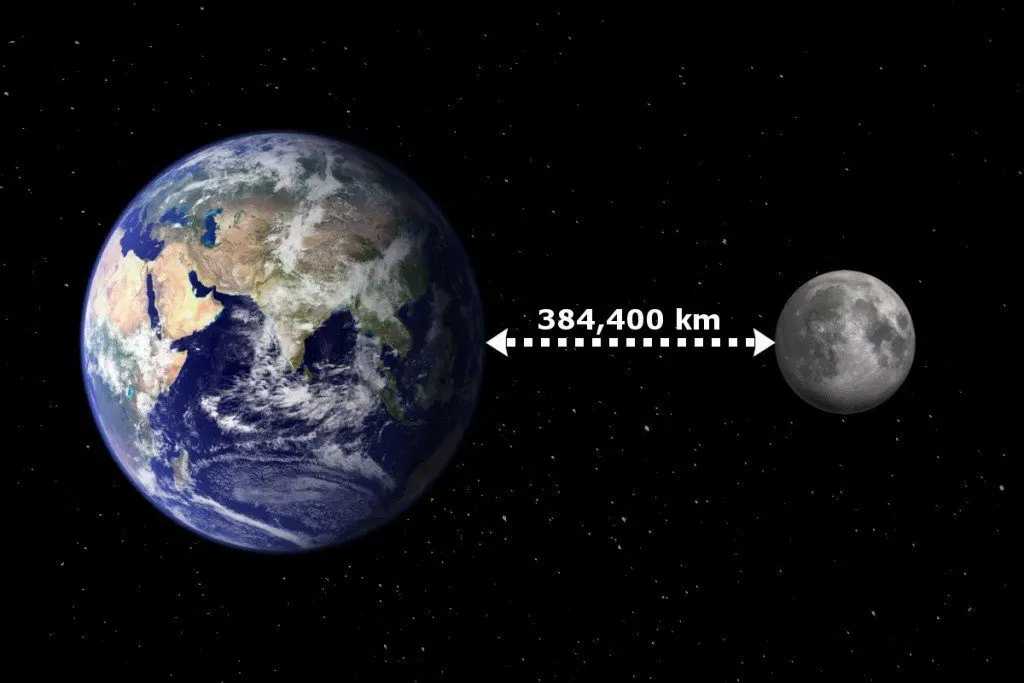
The Moon orbits Earth at an average distance of approximately 238,855 miles (384,400 kilometers). Because the lunar orbit is elliptical rather than a perfect circle, this distance constantly changes. At its closest point, known as perigee, the Moon is about 225,623 miles away, while at its farthest, apogee, it reaches 252,088 miles.
On this page
Why does the distance to the Moon change?
The Moon does not travel in a perfect circle around our planet. Instead, its orbit is elliptical, shaped more like an elongated oval or a flattened circle. This geometry means that the Moon periodically swings closer to Earth and then drifts further away over the course of its monthly cycle. This variation is a fundamental feature of orbital mechanics governed by gravitational interactions.
The primary points in this cycle are defined by specific astronomical terms that help scientists track the Moon's position. When the Moon reaches its closest approach, it is at perigee; when it reaches the most distant point, it is at apogee. These fluctuations result in a difference of roughly 26,000 miles between the two extremes. Because of this, the Moon appears slightly larger or smaller in the night sky depending on where it is in its orbit.
- Perigee: The point where the Moon is closest to Earth.
- Apogee: The point where the Moon is farthest from Earth.
- Orbital Eccentricity: The measure of how much an orbit deviates from a perfect circle.
How long does it take to travel to the Moon?
The time required to reach the Moon depends entirely on the technology used and the trajectory chosen for the mission. During the Apollo program in the late 1960s and early 1970s, it typically took NASA astronauts about three days to reach lunar orbit. These missions utilized high-speed trajectories designed to minimize time spent in the harsh radiation belts surrounding Earth while ensuring enough fuel remained for the return journey.
Modern robotic missions often take longer, sometimes weeks or months, because they use fuel-efficient paths that rely on gravity assists from Earth or the Moon. By taking a more circuitous route, space agencies can launch heavier payloads with less propellant. Ultimately, the duration is a trade-off between the urgency of the mission, the amount of fuel available, and the gravitational forces being utilized to navigate the vacuum of space.
- Apollo 11: Approximately 76 hours to reach lunar orbit.
- Robotic Probes: Can take several weeks via low-energy transfer orbits.
- Future Human Missions: Aiming for similar three-day transit times to prioritize crew safety.
How do scientists measure the distance to the Moon?
Measuring the distance to the Moon with high precision relies on a technique called lunar laser ranging. During the Apollo 11, 14, and 15 missions, astronauts placed retroreflector arrays on the lunar surface. These devices act like high-tech mirrors that reflect laser beams fired from observatories on Earth directly back to their source. By timing exactly how long the light takes to complete the round trip, scientists calculate the distance with millimeter-level accuracy.
This method is remarkably effective because the speed of light is a constant in a vacuum. By knowing this speed, researchers can solve the simple equation of distance equals speed multiplied by time. This ongoing monitoring has revealed that the Moon is actually slowly spiraling away from Earth. Specifically, tidal interactions cause the Moon to drift outward by about 1.5 inches, or 3.8 centimeters, every single year.
How to observe the Moon's changing size
Observing the variation in the Moon's size is a rewarding activity for amateur astronomers. Because the distance changes by about 10 percent between perigee and apogee, the difference in apparent diameter is noticeable if you know what to look for. The most dramatic effect occurs during a "supermoon," which happens when a full moon coincides with perigee. During these events, the Moon can appear up to 14 percent larger and 30 percent brighter than a micromoon at apogee.
To track these changes, you do not need expensive equipment, but consistency is key. Taking a photograph of the full moon every month from the same location using the same camera settings will clearly demonstrate the size difference over time. By comparing these images side-by-side, you can visually confirm the elliptical nature of the lunar orbit. Always remember that atmospheric conditions can affect how the Moon appears, so clear nights are essential for accurate comparisons.
Common mistakes when calculating lunar distance
A frequent error when discussing lunar distance is assuming the Moon stays at a fixed average. While 238,855 miles is a useful figure for general education, it is an average that does not represent the Moon's actual location at any given moment. Relying solely on this average can lead to inaccuracies when calculating gravitational effects or planning orbital maneuvers for spacecraft. Always check current astronomical data if you require precise positioning for scientific or navigational purposes.
Another mistake is failing to account for the Earth's own dimensions. Measurements are often taken from the center of Earth to the center of the Moon, but the distance from a specific observer on the surface can vary by thousands of miles depending on where the observer is located. If you are near the horizon, the Moon is actually slightly farther away than if it were directly overhead. Recognizing these nuances ensures a much deeper and more accurate understanding of our celestial neighbor.
Key facts
- The Moon orbits Earth at an average distance of approximately 238,855 miles (384,400 kilometers).
- Because the Moon’s orbit is elliptical rather than a perfect circle, the distance varies throughout the month.
- At its closest point, known as perigee, the Moon is about 225,623 miles (363,104 kilometers) away.
- At its farthest point, known as apogee, the distance increases to about 252,088 miles (405,696 kilometers).
- Light reflected from the Moon takes roughly 1.3 seconds to travel the distance to Earth.
- A common mistake is assuming the distance is constant; always check an astronomical calendar if you are planning to photograph a "supermoon."
The bottom line
The Moon maintains an average distance of 238,855 miles from Earth, though its elliptical orbit causes this gap to shift by tens of thousands of miles monthly. While this distance is vast enough to fit thirty planets, it remains the closest celestial neighbor in our solar system. Understanding these fluctuations helps observers appreciate the subtle changes in the Moon's apparent size and brightness throughout the year.
People also ask
Does the Moon move away from Earth over time?
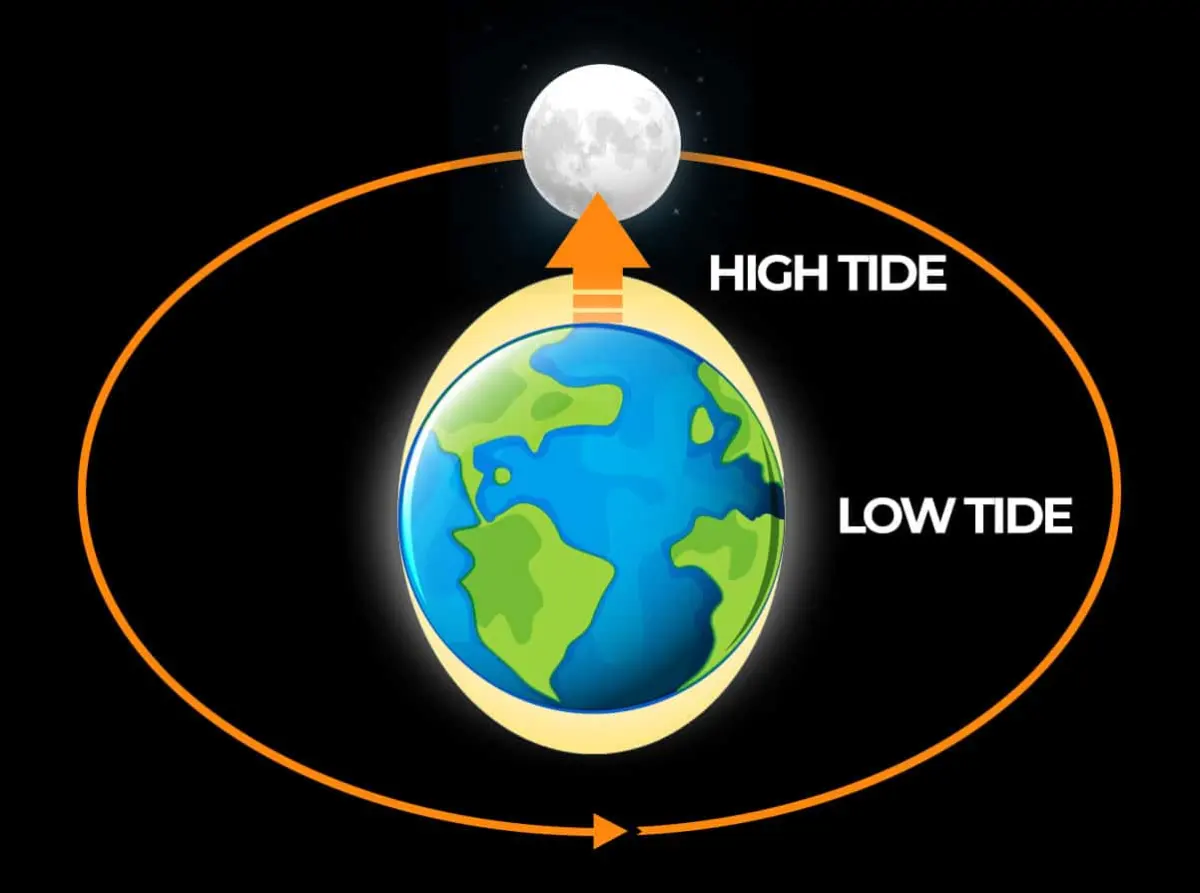
Yes, the Moon is slowly spiraling away from Earth at a rate of approximately 1.5 inches (3.8 centimeters) per year. This phenomenon is caused by tidal interactions between the two bodies.
How long would it take to drive to the Moon?
If you could drive a car at a constant speed of 60 miles per hour, the journey would take about 166 days. This assumes a straight path and ignores the lack of roads or atmosphere in space.
Why does the Moon look larger when it is near the horizon?
This is known as the "Moon illusion," a psychological phenomenon where the human brain perceives objects near the horizon as larger than those high in the sky. The actual physical distance to the Moon remains virtually unchanged during this time.
Can you see the Moon from Earth without a telescope?
Yes, the Moon is the brightest object in the night sky and is easily visible to the naked eye. Using basic binoculars can help you distinguish craters and lunar maria, which are large, dark basaltic plains.
What is a supermoon?
A supermoon occurs when a full moon coincides with the Moon’s perigee, or its closest approach to Earth. During this event, the Moon appears slightly larger and brighter than a typical full moon.
Read the full answer →How many Earths could fit in the gap between Earth and the Moon?
You could fit approximately 30 Earth-sized planets in the space between the Earth and the Moon. This illustrates the vast scale of the distance relative to the size of our home planet.
This answer was created with the help of AI research tools and reference sources. Spotted an error? Let us know — we correct mistakes quickly. See our editorial policy.