How do you draw an iguana?
Short answer
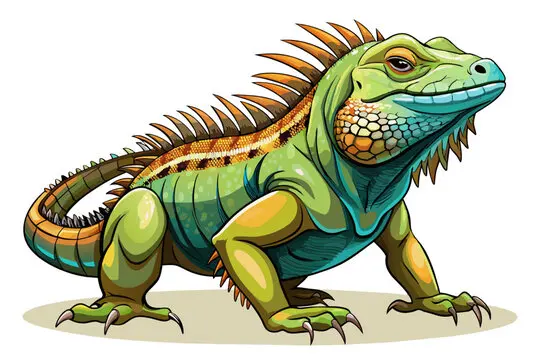
Drawing an iguana requires capturing its distinct anatomical features, including a heavy dewlap, a spiky dorsal crest, and a long, muscular tail. By breaking the reptile down into basic geometric shapes like ovals and triangles, you can build a realistic structure before refining the scales, skin texture, and characteristic facial features.
On this page
How to sketch the basic anatomy of an iguana
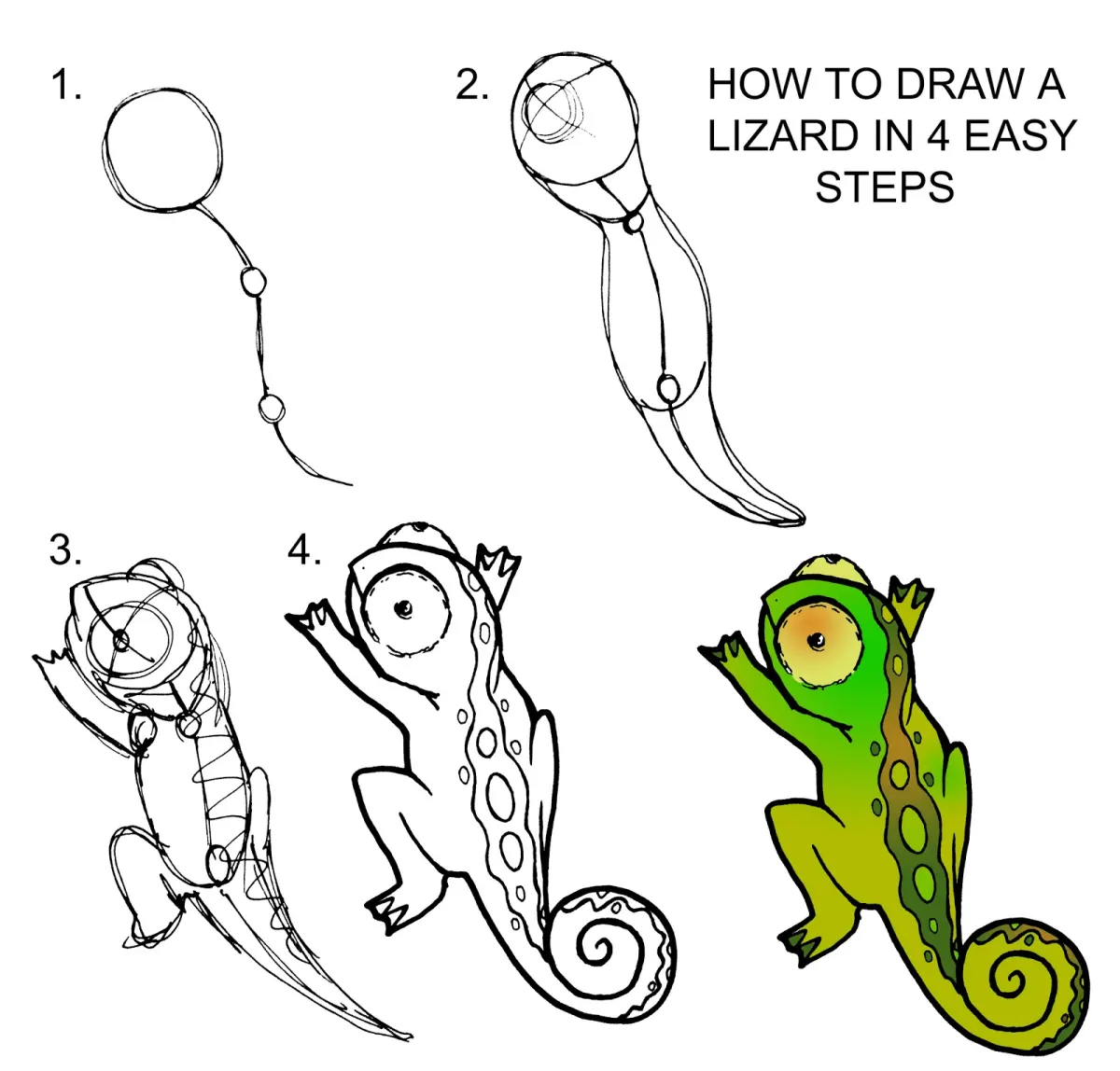
To begin, visualize the iguana as a series of connected shapes. Start by drawing a large, elongated oval for the body and a smaller, rounded shape for the head. Connect these with a curved line representing the spine, which should extend into a long, tapering tail that often measures longer than the body itself. Place two smaller ovals near the front and back of the main body to serve as the shoulder and hip joints.
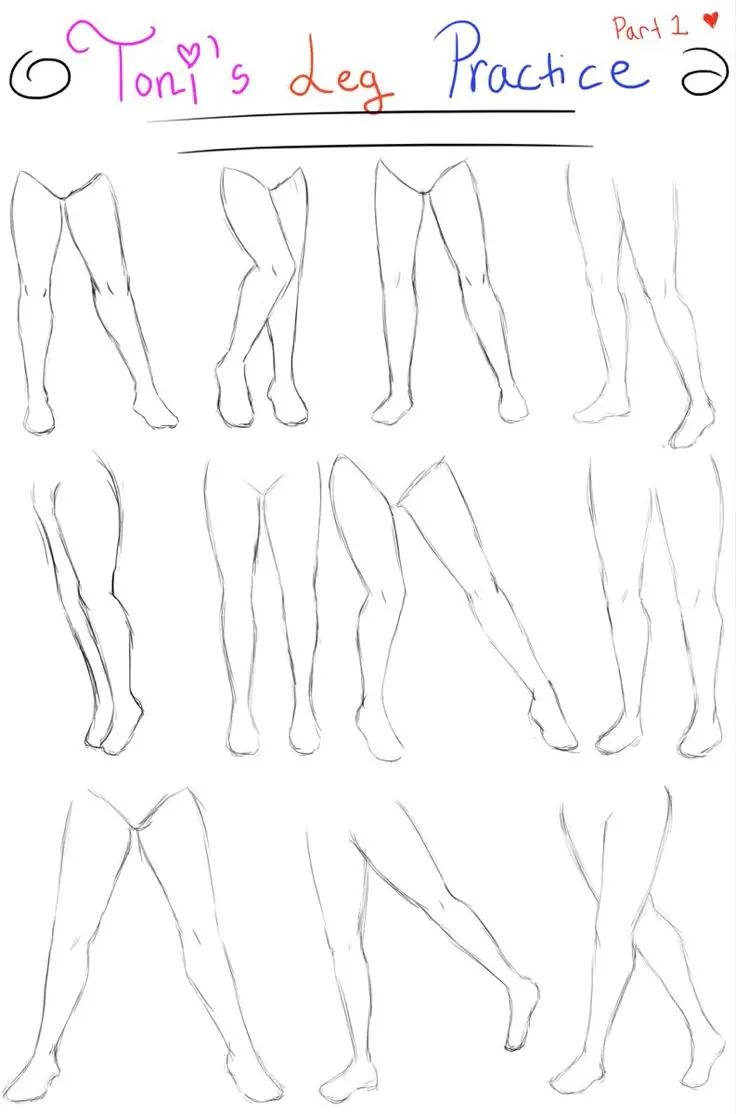
Once the frame is set, refine the limbs. Iguanas have distinct, splayed legs with long, sharp claws used for climbing. When sketching the legs, use a "Z" shape for the hind limbs to mimic their natural resting position. Keep your initial lines very light, as these are merely structural guides. You will erase these later once the primary contours of the lizard’s muscular frame are established.
Best drawing techniques for iguana skin texture
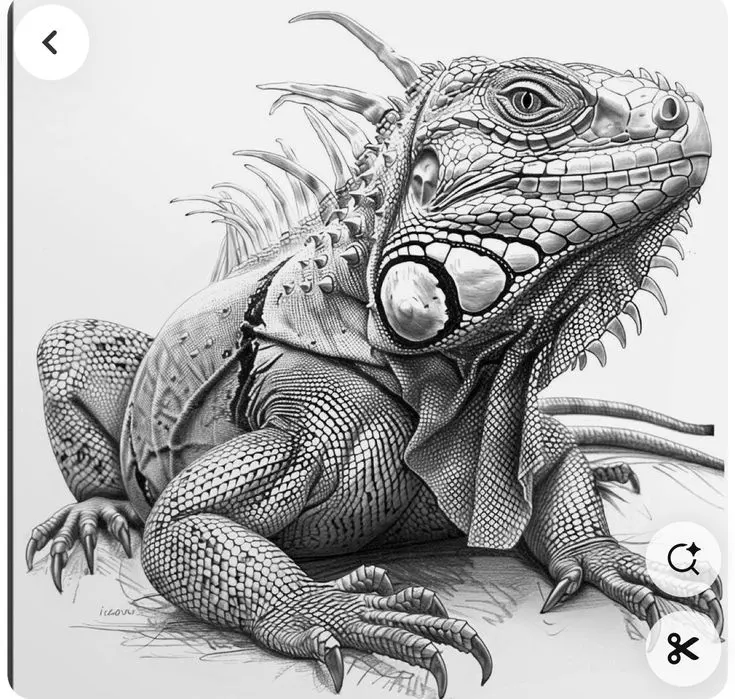
The most defining feature of an iguana is its complex, scaly skin. Rather than drawing every individual scale, focus on creating a pattern that suggests texture. Use small, overlapping "U" shapes or irregular polygons across the body. Concentrate the detail around the neck and limbs, where the skin appears thicker and more folded. Leave the belly area relatively smooth to show the transition between different types of scales.
To add depth, use cross-hatching or stippling in the areas where the body curves away from the light. This technique creates a three-dimensional effect that makes the reptile appear solid. Remember that iguanas often have a row of soft, triangular spines running from the back of the head down to the tail. Draw these as a series of connected triangles, varying their size to match the natural flow of the spine.
How to draw the head and facial features
The iguana’s head is characterized by a blunt snout and a prominent, circular ear drum located behind the eye. Start by drawing a large, almond-shaped eye with a vertical pupil. Above the eye, add a slight brow ridge to give the lizard a stern expression. The mouth should be drawn as a long, straight line that extends back toward the ear, often giving the creature a permanent, stoic smile.
Pay special attention to the dewlap, which is the large flap of skin hanging beneath the chin. This is a primary identifier for the species. Draw it as a loose, curved fold that hangs down from the lower jaw. You can add small, circular bumps or "tubercles" along the jawline to enhance the realism of the face. These details distinguish the iguana from other lizard species like geckos or chameleons.
Common mistakes when drawing iguanas
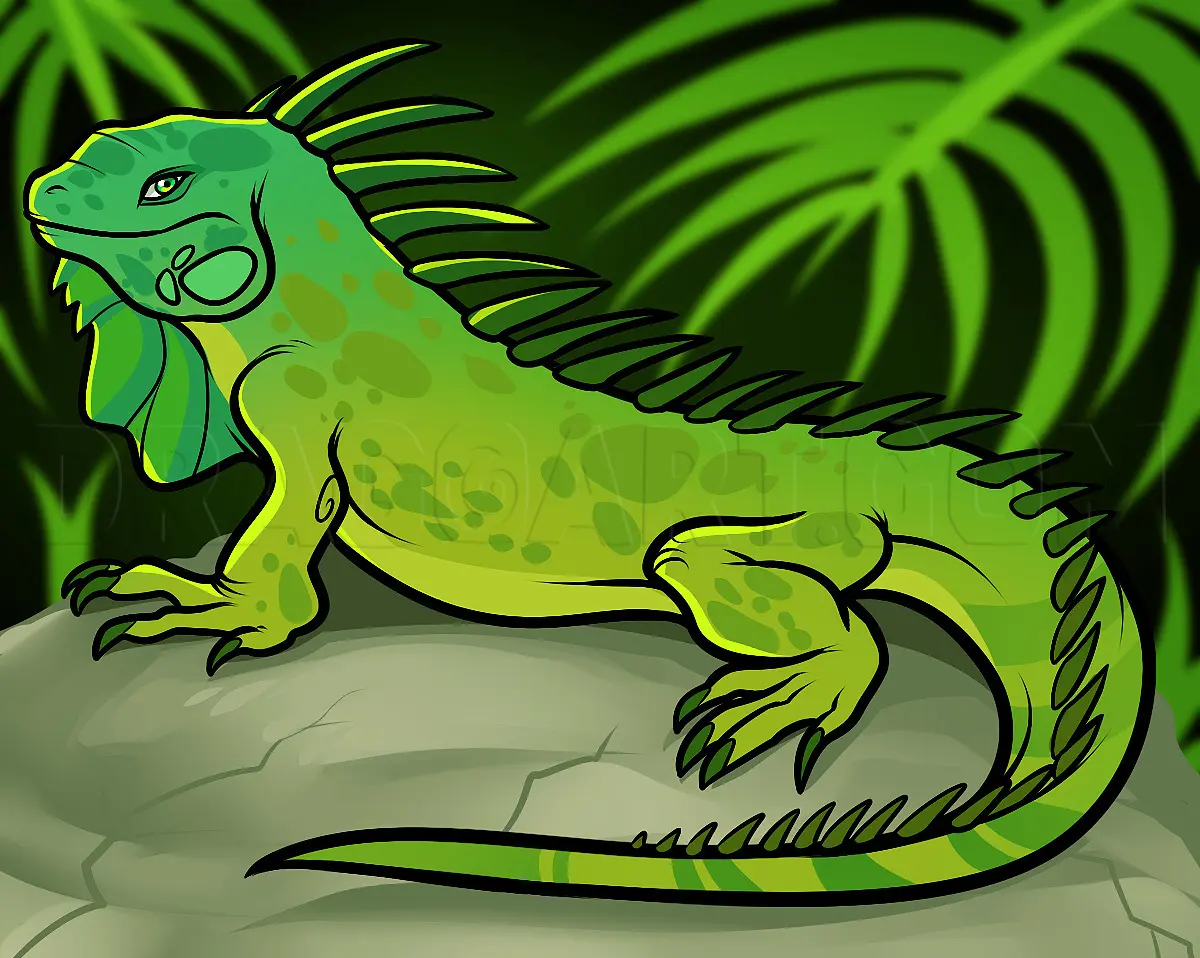
Many beginners struggle with the proportions of the tail and the placement of the limbs. A common error is drawing the tail too short or too rigid. In reality, the tail is highly flexible and acts as a counterbalance. Ensure the tail follows the natural curve of the body and tapers significantly toward the tip. Another frequent mistake is making the legs look like human arms; remember that lizard limbs extend outward from the sides of the body, not directly beneath it.
- Avoid making the body too cylindrical; it should look slightly flattened or compressed.
- Do not draw the scales in a perfectly uniform grid, as this looks unnatural.
- Ensure the claws are long and curved, as these are essential for the animal's grip.
- Check that the neck is thick enough to support the weight of the head and the dewlap.
How to add shading and final details
Once your outline is complete, it is time to add shading to bring the drawing to life. Identify your light source first, then apply darker tones to the underside of the belly, the bottom of the tail, and the shaded side of the limbs. Use a soft graphite pencil to create smooth gradients, which helps represent the leathery quality of the skin. Deepen the shadows under the dewlap to make it pop against the neck.
Finally, clean up your drawing by erasing the initial structural lines. Use a kneaded eraser to lift away excess graphite and create highlights on the top of the head and the back. If you are using color, remember that iguanas range from vibrant greens to dull browns and even oranges. Use light washes of color initially, then layer darker pigments to define the shadows between the scales. This layering process provides the necessary richness to make your iguana look truly lifelike and professional.
Key facts
- Iguanas have a distinctive dewlap, a large flap of skin under the chin, which is essential for accurate anatomy.
- The body is characterized by a row of dorsal spines running from the neck down to the tail.
- Their limbs are positioned at a sprawling angle, meaning the elbows point outward rather than tucked under the body.
- Use a series of overlapping ovals to map out the head, torso, and hips before adding fine details.
- Scales on an iguana are not uniform; they vary in size and shape across the head, body, and limbs.
- The tail is exceptionally long, often measuring up to two-thirds of the animal's total body length.
The bottom line
Drawing an iguana requires a focus on structural proportions and distinct anatomical markers like the dewlap and dorsal spines. By mapping the body with simple geometric shapes first, you can ensure the sprawling limb placement and long tail are correctly balanced. Avoid the temptation to over-detail every scale; instead, use varied line work to suggest texture, which maintains the overall clarity and realism of your drawing.
People also ask
What is the best way to draw realistic iguana scales?
Do not draw every individual scale, as this creates a cluttered look. Instead, focus on drawing larger, irregular shapes on the limbs and smaller, tighter patterns on the torso to suggest texture.
How do I capture the shape of an iguana's head?
An iguana's head is somewhat triangular and blunt. Focus on the large, circular tympanum, or ear drum, located behind the eye to give the head a realistic profile.
Should I draw the iguana's claws?
Yes, iguanas have long, sharp, curved claws used for climbing. Drawing these clearly helps define the animal's interaction with the surface it is standing on.
How do I make the iguana look like it is moving?
Use a curved line for the spine to show the animal's flexibility. Position the legs in an asymmetrical way to imply the motion of walking or climbing.
What is a common mistake when drawing the eyes?
A common error is drawing the eye too far forward. The eye should be placed midway along the side of the head, often surrounded by specialized, armor-like scales.
How do I shade an iguana to show its volume?
Use cross-hatching or stippling to follow the contours of the body. Focus your darkest shadows along the underside of the belly and beneath the chin to create a three-dimensional effect.
This answer was created with the help of AI research tools and reference sources. Spotted an error? Let us know — we correct mistakes quickly. See our editorial policy.