How are pencils made?
Short answer
Pencils are manufactured by sandwiching a graphite and clay core between two grooved wooden slats. These slats are glued together, cut into individual pencils, and finished with paint and a ferrule-attached eraser. The process relies on precision machining to ensure the core is perfectly centered within the protective wooden casing.
On this page
How are pencil cores made?
The "lead" in a pencil is actually a mixture of graphite and clay, first patented by Nicolas-Jacques Conté in 1795. Manufacturers mix finely ground graphite powder with clay and water to create a thick paste. The ratio of clay to graphite determines the hardness of the pencil; more clay results in a harder, lighter mark, while more graphite creates a softer, darker stroke.
Once the mixture is prepared, it is forced through a metal die to create long, thin strands. These strands are cut to length, dried in an oven, and then fired in a kiln at temperatures exceeding 1,800 degrees Fahrenheit. After firing, the cores are soaked in hot wax or oil to ensure they glide smoothly across paper. This step is critical for preventing the "scratchy" feeling associated with low-quality writing instruments.
What wood is used for pencils?
Most high-quality pencils are made from incense-cedar, a species native to the mountains of California and Oregon. This wood is preferred because it is soft enough to sharpen easily but strong enough to resist snapping during the manufacturing process. It also features a straight grain, which prevents the pencil from warping over time in humid environments.
The wood is first cut into thin slats known as "pencil tablets." These tablets are treated with wax and stain to give them a consistent color and texture. The manufacturing process typically follows these steps:
- The slats are run through a machine that cuts several parallel grooves into one side.
- A machine deposits a thin layer of glue into these grooves.
- The graphite cores are placed into the grooves by an automated feeder.
- A second, grooved slat is glued on top, creating a "sandwich" of wood and graphite.
How are pencils shaped and finished?
After the graphite-filled sandwich has dried, it passes through a high-speed shaper. This machine cuts the wood into individual pencils, which can be hexagonal, round, or triangular in cross-section. Hexagonal shapes are the most popular because they prevent the pencil from rolling off a desk and provide a comfortable grip for the user.
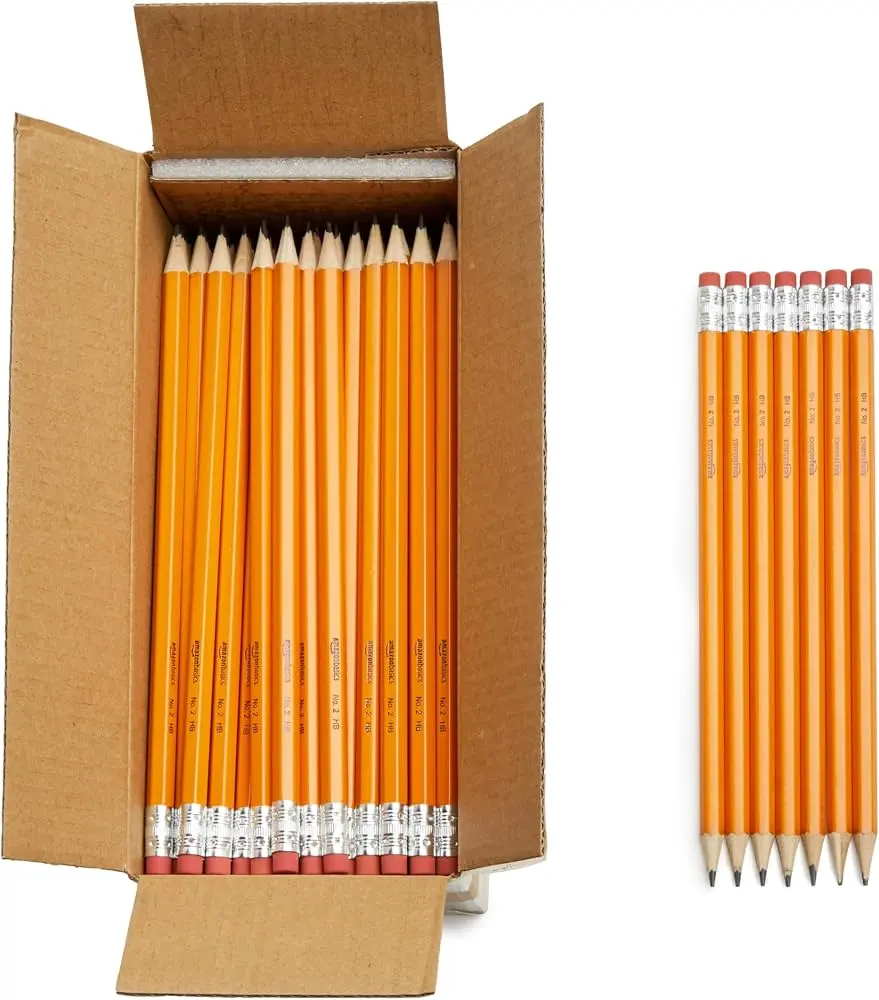
Once the pencils are cut, they undergo a multi-stage finishing process. They are sanded until the surface is perfectly smooth and then coated with several layers of paint or lacquer. Finally, a machine stamps the brand name, grade, and model information onto the side of the pencil. If the pencil is designed to include an eraser, a small metal ring called a ferrule is crimped onto the end to hold the rubber plug in place.
Common mistakes when sharpening pencils
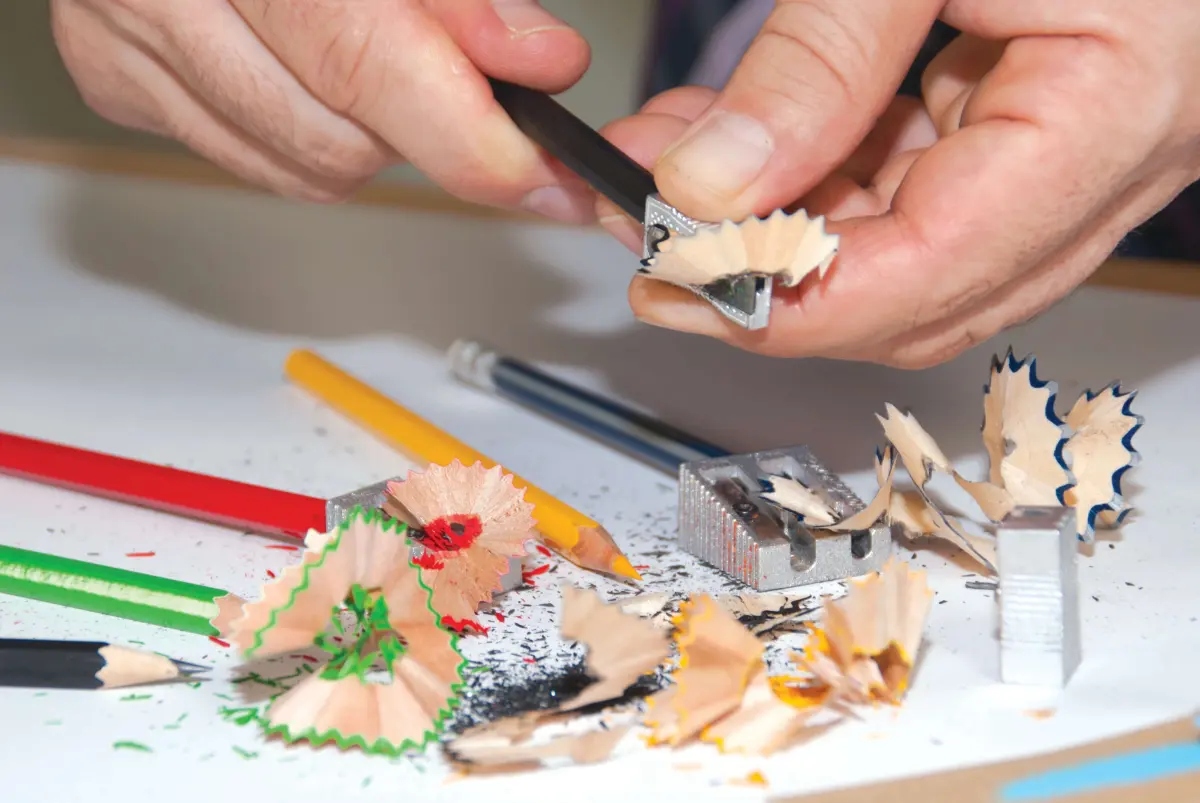
Using the wrong tool or technique can significantly shorten the lifespan of a pencil by damaging the wood or breaking the core. One of the most frequent errors is using a dull blade, which tears the wood fibers rather than slicing them cleanly. This results in a jagged tip that breaks easily during use.
Another common mistake is applying excessive pressure during the sharpening process. When using a manual or electric sharpener, the goal is to let the blade do the work. If you find yourself pushing hard, the sharpener is likely dull and needs to be replaced. Additionally, avoid sharpening until the pencil is excessively long, as this removes unnecessary wood and leads to a fragile, over-extended core that is prone to snapping under minimal pressure.
Why do pencil grades matter?
Pencil grades follow the HB scale, which helps users select the right tool for their specific needs. The "H" stands for hard, while the "B" stands for blackness. A standard school pencil is an HB, which offers a balanced ratio of graphite and clay. Artists often use a wide range of grades to achieve different levels of shading and detail in their work.
To choose the best pencil for your task, consider these guidelines:
- 9H to 4H: Extremely hard, light marks; ideal for technical drafting and architectural blueprints.
- 3H to H: Medium-hard; used for light sketching and initial outlines.
- HB and F: Standard writing; versatile for everyday note-taking and general schoolwork.
- B to 6B: Soft and dark; preferred by artists for dramatic shading and expressive, bold lines.
- 7B to 9B: Very soft; leaves a thick, dark deposit that is easily smudged but excellent for deep, rich shadows.
Understanding these distinctions ensures that you are using the correct tool for the job, whether you are writing a quick grocery list or creating a complex piece of fine art. Proper selection prevents unnecessary frustration and helps you achieve the best possible results with your writing and drawing instruments.
Key facts
- Graphite is mixed with clay and water, then fired in a kiln at 1,800 degrees Fahrenheit to create the "lead" core.
- The hardness of a pencil core is determined by the ratio of graphite to clay; more clay results in a harder, lighter mark.
- Cedar wood is the industry standard for pencil casings because it sharpens easily without splintering.
- The "sandwich" method involves gluing two grooved wooden slats together with the graphite core placed in the middle.
- Pencils are painted with multiple coats of lacquer and finished with a metal ferrule to hold the eraser.
- A single cedar tree can produce approximately 172,000 pencils.
The bottom line
The manufacturing of a pencil is a precise industrial process that combines geology and forestry. By blending graphite with clay and encasing it in high-quality cedar, manufacturers create a reliable writing tool that has remained largely unchanged for centuries. Understanding the grading system and the structural design of the pencil allows users to select the right tool for their specific writing or artistic needs effectively.
People also ask
Why are pencils called "lead" pencils if they contain graphite?
Early pencil makers in the 16th century believed the graphite deposit found in Borrowdale, England, was a form of lead. The name persisted even after scientists identified the material as a crystalline form of carbon in 1789.
What do the letters like HB or 2B on a pencil mean?
These letters indicate the grade of the core. "H" stands for hard, "B" stands for black, and "HB" is the middle-ground standard for everyday writing.
Can you sharpen a pencil with a knife safely?
Yes, but always cut away from your body using short, controlled strokes. Avoid digging the blade deep into the wood, as this can snap the fragile graphite core inside.
Why do some pencils have a hexagonal shape instead of being round?
The hexagonal shape prevents the pencil from rolling off flat surfaces like desks or drafting tables. It also provides a better grip for the fingers during extended writing sessions.
How long does a standard pencil last?
A typical pencil can draw a line approximately 35 miles long or write about 45,000 words. The exact lifespan depends on the pressure applied and how frequently the user sharpens the tip.
Are pencil erasers made of rubber?
Most modern erasers are made from synthetic rubber or vinyl. Natural rubber is rarely used today because synthetic alternatives are more durable and leave fewer crumbs on the paper.
This answer was created with the help of AI research tools and reference sources. Spotted an error? Let us know — we correct mistakes quickly. See our editorial policy.