Where do koalas live?
Short answer
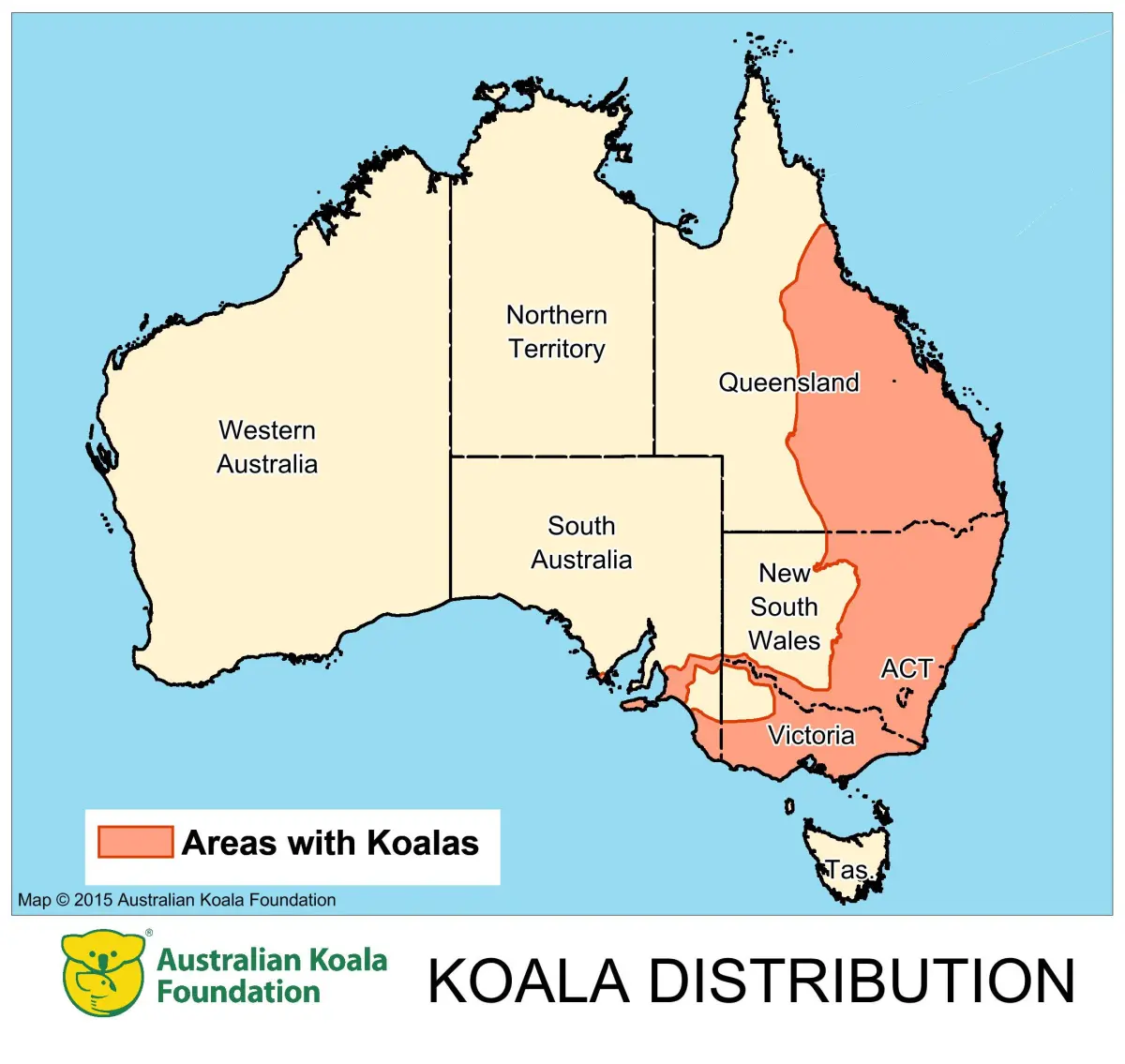
Koalas live exclusively in the wild in eastern and southeastern Australia. Their natural range spans the states of Queensland, New South Wales, Victoria, and South Australia. They inhabit diverse forest environments, specifically favoring woodlands dominated by eucalyptus trees, which provide both their essential food source and primary shelter throughout their lives.
On this page
Where do koalas live in the wild?
Koalas are endemic to Australia, meaning they are found nowhere else on Earth in the wild. Their distribution is restricted to the eastern coastal regions and inland areas where eucalyptus forests thrive. They do not inhabit the arid deserts of the Australian interior, as these environments lack the specific vegetation and moisture levels required for their survival.
The geographical range of the koala covers four distinct Australian states. While populations were once widespread, habitat loss and fragmentation have restricted them to specific pockets of suitable forest. Their presence is primarily associated with the following regions:
- Queensland: Found in coastal and sub-coastal regions, particularly in the southeast.
- New South Wales: Inhabits the eastern seaboard and the Great Dividing Range.
- Victoria: Located in scattered populations across the southern forests.
- South Australia: Primarily found on Kangaroo Island and the Mount Lofty Ranges.
What kind of trees do koalas need?
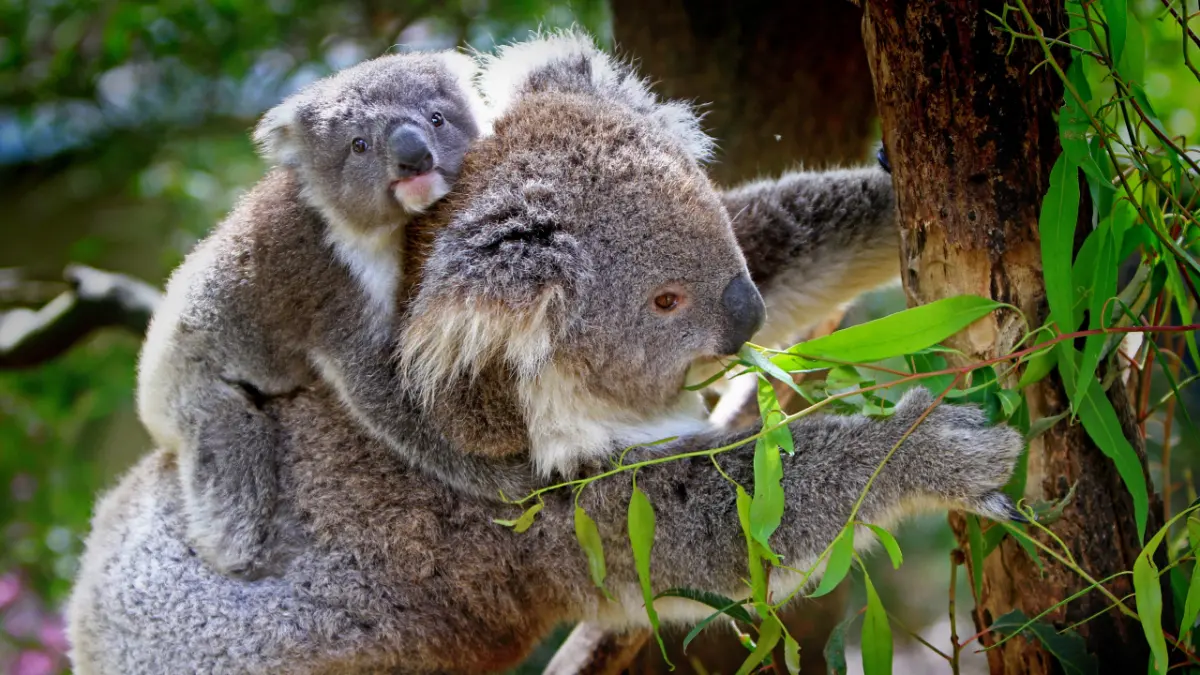
The survival of a koala is inextricably linked to the presence of eucalyptus trees. These trees serve as both their primary food source and their permanent home. A koala will spend the majority of its life in the canopy, using the branches for sleeping, protection from predators, and social interaction.
While there are over 700 species of eucalyptus in Australia, koalas are highly selective feeders. They only consume the leaves of approximately 50 species, with a preference for a much smaller subset of those. To identify a suitable habitat, researchers look for specific environmental indicators:
- Soil fertility: Higher nutrient levels in the ground lead to more palatable leaves.
- Species diversity: A mix of preferred eucalyptus trees ensures year-round food availability.
- Canopy density: Thick foliage provides essential thermal regulation during hot summer days.
- Water access: Proximity to creeks or rivers often increases the likelihood of a healthy population.
Why do koalas stay in one area?
Koalas are sedentary animals that exhibit strong site fidelity, meaning they rarely leave their established home range. A home range is the specific area an individual koala patrols to find food and mates. The size of this range depends heavily on the quality of the habitat and the availability of food.
In areas with high-quality, nutrient-rich eucalyptus forests, a koala’s home range can be quite small, sometimes spanning only a few hectares. Conversely, in poorer habitats where trees are sparse, a koala may need to travel across a much larger territory to gather enough sustenance. Because they are specialized leaf-eaters, they must conserve energy. Their slow metabolic rate is an adaptation to a low-energy diet, which is why they spend up to 20 hours a day sleeping or resting in the forks of trees.
How to spot a koala in the wild
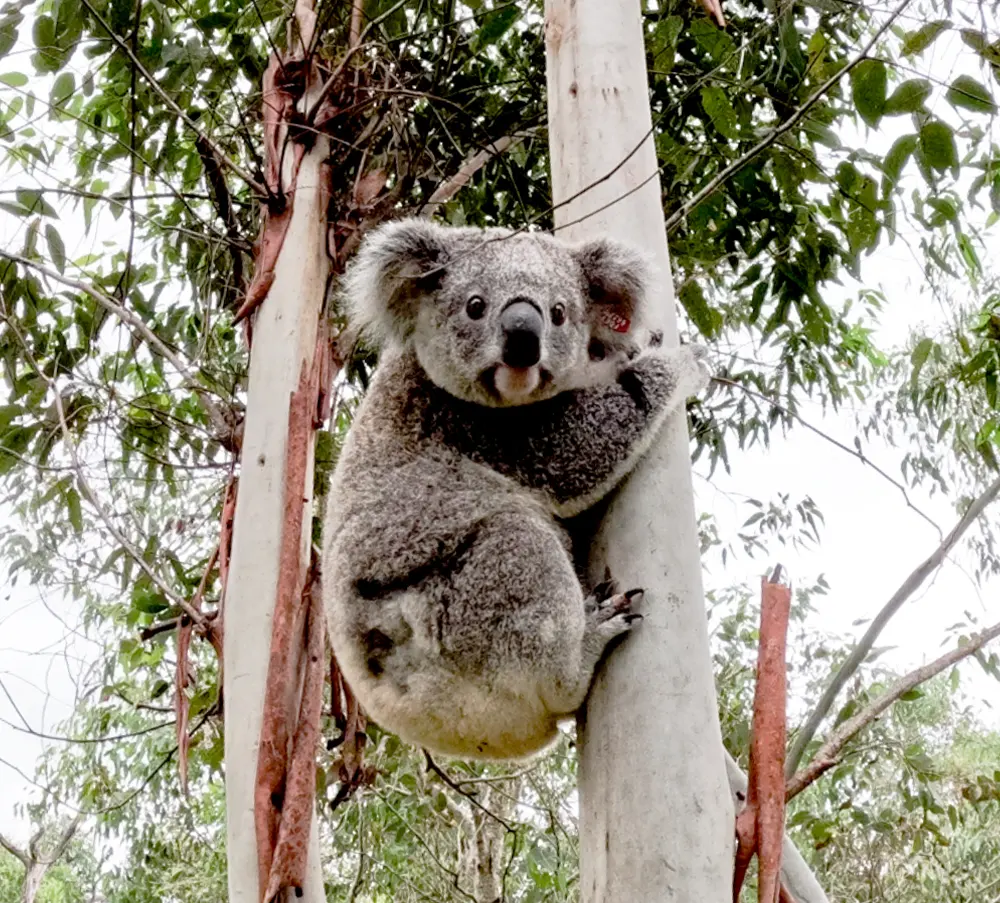
If you are traveling through eastern Australia, you might hope to see a koala in its natural habitat. However, spotting them requires patience and a keen eye, as their gray fur provides excellent camouflage against the bark and shadows of eucalyptus trees. They are most active during the night and at dawn or dusk.
To increase your chances of a successful sighting, follow these practical steps:
- Visit known koala hotspots, such as the Great Otway National Park in Victoria or the Tidbinbilla Nature Reserve near Canberra.
- Look for "scats" or droppings at the base of trees, which indicate a koala is likely nearby.
- Scan the forks of trees for a rounded shape that looks like a clump of leaves or a bird's nest.
- Listen for the distinct, guttural bellows of male koalas during the breeding season, which typically runs from August to February.
Common mistakes when looking for koalas
One of the most frequent errors visitors make is looking too high up in the canopy. While koalas can climb very high, they are often found in the middle or lower branches where the leaves are most accessible. Another mistake is assuming that every eucalyptus tree will house a koala; they are solitary animals and do not live in large groups, so finding one does not guarantee there are others in the immediate vicinity.
It is also vital to respect the animal's space to ensure its safety. Never attempt to touch, feed, or disturb a wild koala, as this causes them significant stress. Avoid making loud noises or standing directly beneath a tree for an extended period, as your presence may force the animal to move, wasting precious energy. Always keep a respectful distance of at least several meters and use binoculars to get a better view. By observing from afar, you help protect these unique marsupials and ensure their natural behaviors remain undisturbed in their fragile forest homes.
Key facts
- Koalas are endemic to Australia, meaning they are found nowhere else in the world in the wild.
- Their natural range is restricted to the eastern and southeastern coastlines of Queensland, New South Wales, Victoria, and South Australia.
- They live exclusively in eucalyptus forests and woodlands, which provide both their primary food source and shelter.
- A single koala requires a home range of several hectares to ensure it has enough high-quality eucalyptus leaves to eat.
- When visiting koala habitats, always keep dogs on a leash to prevent them from harassing or injuring these vulnerable animals.
- Avoid loud noises and do not attempt to touch or feed wild koalas, as this causes them significant stress and disrupts their natural behavior.
The bottom line
Koalas are specialized marsupials found exclusively in the eucalyptus forests of eastern and southeastern Australia. Their survival depends entirely on access to specific tree species for food and shelter. Because they are solitary and sensitive to habitat loss, protecting these native woodlands is essential for their future. By respecting their space and supporting conservation efforts, we help ensure these iconic animals continue to thrive in the wild.
People also ask
Do koalas live in rainforests?
Koalas generally avoid dense rainforests because their preferred eucalyptus species do not grow well in those environments. They thrive in open forest ecosystems where sunlight can reach the trees they rely on for food.
Can koalas survive in urban areas?
Yes, some koalas live in suburban regions where remnants of native bushland still exist. However, these populations face high risks from vehicle collisions, domestic dog attacks, and habitat fragmentation.
Do koalas live in groups?
Koalas are solitary animals and do not live in social groups like primates or wolves. They maintain individual home ranges that may overlap with other koalas, but they typically interact only during the breeding season.
Why are koalas not found in Western Australia?
Koalas are not native to Western Australia because the climate and vegetation types across the Nullarbor Plain act as a natural barrier. The environments in the west do not support the specific eucalyptus species required for their specialized diet.
How do koalas choose which trees to live in?
They select trees primarily based on the chemical composition of the leaves, specifically looking for low levels of toxins and high levels of nitrogen. They spend up to 20 hours a day resting in these trees to conserve energy.
Are koalas considered endangered?
In 2022, the Australian government officially listed koala populations in Queensland, New South Wales, and the Australian Capital Territory as endangered. This status reflects the severe decline in their numbers due to land clearing, disease, and climate change.
This answer was created with the help of AI research tools and reference sources. Spotted an error? Let us know — we correct mistakes quickly. See our editorial policy.