What is the Statue of Liberty made of?
Short answer
The Statue of Liberty is primarily constructed from a thin outer skin of hammered copper sheets, supported by a complex internal iron and steel framework. Designed by Frédéric Auguste Bartholdi and engineered by Gustave Eiffel, the statue stands on a massive pedestal made of concrete and granite, ensuring its long-term structural stability.
On this page
What materials is the Statue of Liberty made of?
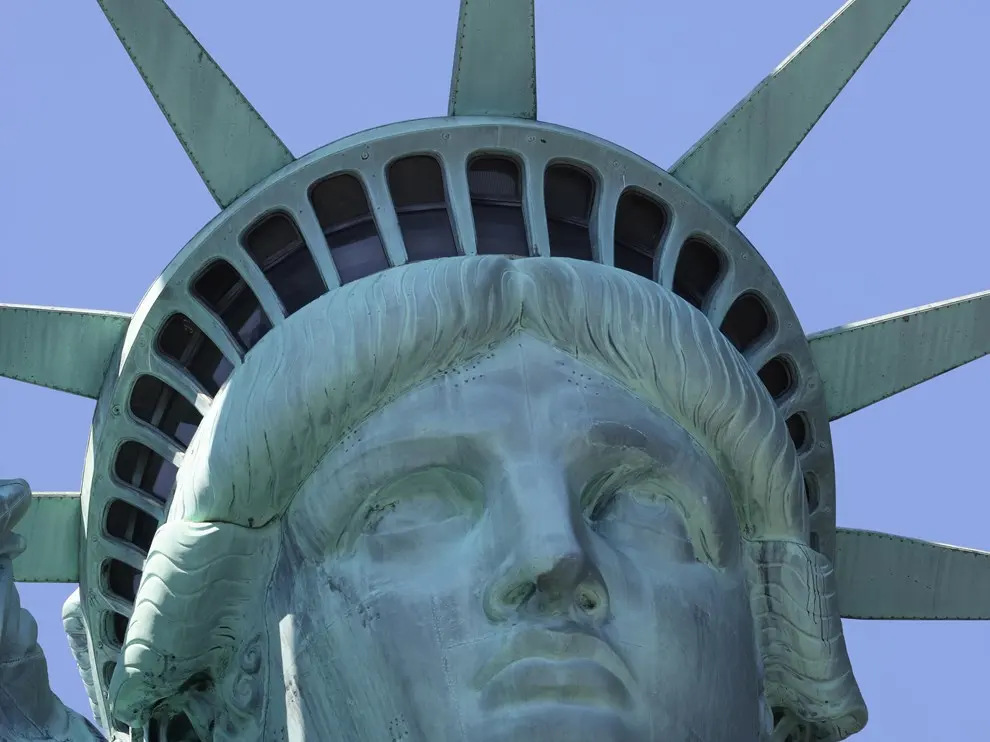
The Statue of Liberty’s iconic green appearance is the result of its exterior copper skin, which is only about 3/32 of an inch thick—roughly the thickness of two pennies stacked together. This copper was sourced from the Visnes Copper Mine in Norway and shaped into 300 individual pieces by French artisans using a technique called repoussé. This process involved hammering the copper into wooden molds to create the statue's intricate folds and features.
Beneath this delicate exterior lies a sophisticated structural skeleton. Originally, Gustave Eiffel designed a pylon system made of wrought iron. During the 1980s restoration, much of this iron was replaced with stainless steel to prevent galvanic corrosion, which occurs when two dissimilar metals are in contact. This internal framework acts like a flexible spine, allowing the statue to sway slightly in high winds without compromising its integrity.
How does the statue stay standing?
The statue’s stability relies on its massive foundation, which is an engineering marvel in its own right. The pedestal, designed by Richard Morris Hunt, is constructed from poured concrete, which was the largest mass of concrete poured in the United States at the time of its completion in 1886. This concrete base is encased in granite blocks, providing the necessary weight to anchor the structure against the elements.
To ensure the statue remains upright and safe for visitors, engineers monitor several key components:
- The central pylon, which acts as the main load-bearing column.
- The secondary iron framework that connects the copper skin to the central pylon.
- The stainless steel bars, known as armatures, that hold the copper plates in place while allowing for thermal expansion.
- The granite pedestal, which protects the foundation from saltwater erosion and tidal shifts.
Why is the Statue of Liberty green?
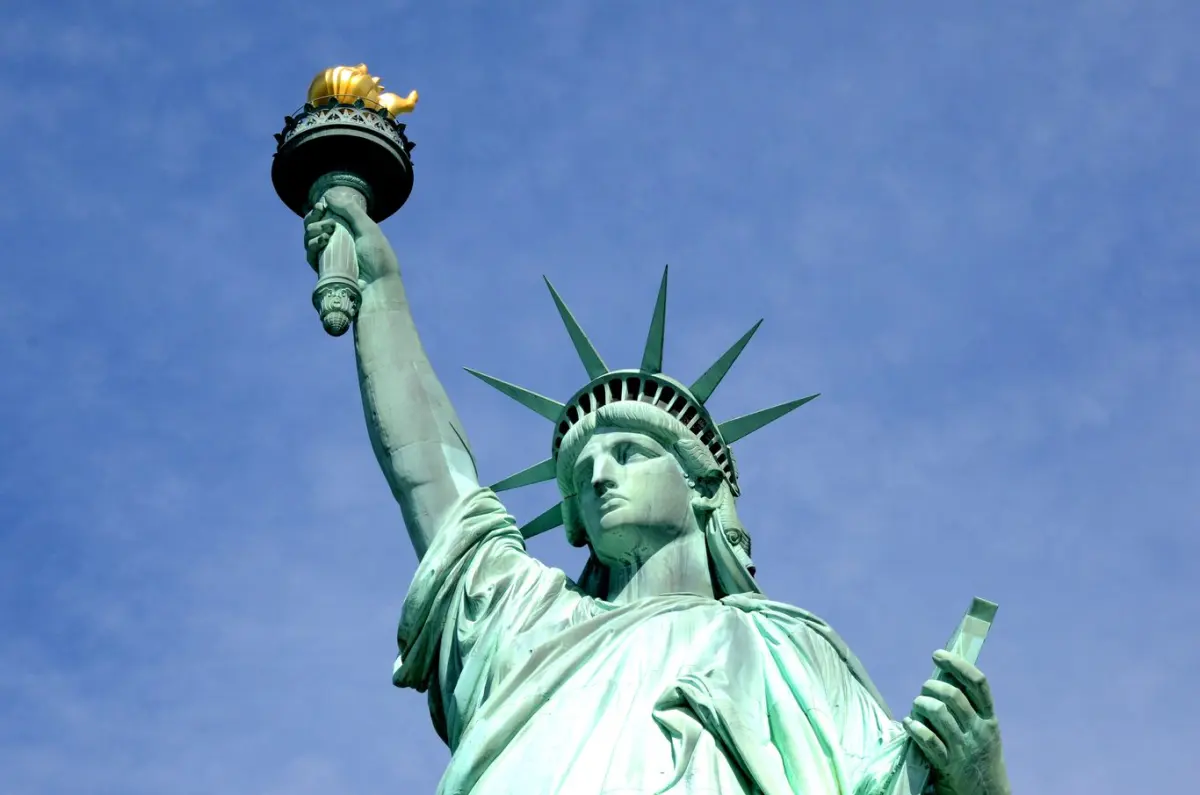
The statue was not always green; when it was dedicated in 1886, it possessed the reddish-brown color of a shiny new penny. The transformation to its current sea-green hue, known as a patina, is the result of natural oxidation. Over the course of three decades, exposure to air, moisture, and pollutants caused the copper to react chemically, forming a layer of copper carbonate.
This patina acts as a protective shield for the metal beneath it. While some might mistake the green color for decay, it is actually a stable, non-reactive layer that prevents further corrosion of the underlying copper. If the statue were to be cleaned or stripped of this patina, the copper would simply begin the oxidation process all over again. The color is now a permanent feature of the monument’s character and identity.
How was the statue assembled?
The assembly of the statue was a massive logistical challenge that required precision engineering. Because the statue was too large to ship in one piece, it was dismantled into 350 individual parts and packed into 214 wooden crates for its transatlantic voyage from France to New York. Once it arrived, workers had to reassemble the pieces atop the pedestal, working from the inside out.
The assembly process followed these specific steps:
- The central pylon was anchored securely into the concrete pedestal.
- The internal iron framework was built upward, section by section, around the central pylon.
- The copper sheets were hoisted into place and riveted to the iron frame using copper saddles.
- Final adjustments were made to ensure the statue’s balance and alignment were correct before the torch was installed.
Common mistakes when studying the statue's construction
A frequent misconception is that the statue is made of solid copper or bronze. Visitors often assume the statue is heavy and rigid, but its strength actually comes from its flexibility and thinness. Another common error is believing the statue was built in America; in reality, the entire structure was prefabricated in Paris, tested for stability, and then shipped to the United States as a gift from the French people.
When researching the statue, avoid these common pitfalls:
- Assuming the torch is original: The original torch was replaced in 1986 with a copper replica covered in 24-karat gold leaf.
- Overlooking the role of Gustave Eiffel: Many people associate the statue only with Bartholdi, forgetting that Eiffel’s structural engineering was essential for the statue to withstand the harsh conditions of New York Harbor.
- Misidentifying the base: The pedestal is often confused with the star-shaped Fort Wood, which serves as the foundation for the entire monument.
Key facts
- The statue’s exterior skin is made of copper sheets that are only 3/32 of an inch thick, about the thickness of two pennies.
- Gustave Eiffel designed the internal iron pylon and secondary skeletal framework that supports the copper skin.
- The statue’s signature green color, known as a patina, is the result of natural oxidation occurring over several decades.
- Frédéric Auguste Bartholdi served as the primary sculptor, while Richard Morris Hunt designed the granite pedestal.
- Workers used approximately 300 copper sheets, hammered into shape by hand using a technique called repoussé.
- To prevent galvanic corrosion between the copper skin and iron frame, engineers installed asbestos-impregnated shellac as an insulator.
The bottom line
The Statue of Liberty is a masterpiece of 19th-century engineering, featuring a thin copper exterior supported by a robust iron skeleton designed by Gustave Eiffel. While its original metallic sheen has long since faded into a protective green patina, the structure remains structurally sound. Understanding its composition reveals how innovative material science and artistic vision combined to create an enduring symbol of international friendship and freedom.
People also ask
Why is the Statue of Liberty green instead of copper-colored?
When the statue was dedicated in 1886, it had a shiny, reddish-brown copper appearance. Over the next 30 years, exposure to salt air and rain caused a chemical reaction that created a protective layer of copper carbonate, resulting in its iconic green hue.
How much does the copper skin weigh compared to the internal structure?
The copper skin weighs approximately 31 tons, while the internal iron framework weighs about 125 tons. The total weight of the statue, including the steel and concrete foundation, is roughly 225 tons.
Can visitors touch the copper skin from the inside?
No, visitors are prohibited from touching the internal structure or the copper skin. The interior is restricted to authorized personnel to ensure the preservation of the delicate framework and safety of the public.
What would happen if the statue was cleaned to remove the green patina?
Removing the patina would strip away the protective layer that prevents further corrosion of the copper. It would also permanently damage the historical aesthetic of the monument, which is now protected by its oxidized surface.
Is the statue solid copper?
No, the statue is hollow. The copper sheets are attached to an iron skeleton, allowing the structure to flex slightly in high winds without cracking.
What materials were used for the pedestal?
The pedestal is constructed primarily of poured concrete, which was the largest mass of concrete poured at the time of its completion. It is faced with granite blocks to provide durability and aesthetic support for the copper figure above.
This answer was created with the help of AI research tools and reference sources. Spotted an error? Let us know — we correct mistakes quickly. See our editorial policy.