What is the difference between a river and a stream?
Short answer
Rivers and streams are both bodies of flowing water, but they differ primarily in size, volume, and complexity. A stream is a small, narrow channel of water, while a river is a large, significant natural watercourse. Streams often feed into rivers, which eventually drain into oceans, lakes, or larger inland basins.
On this page
How do scientists distinguish between rivers and streams?
Hydrologists distinguish between these two features based on flow volume, channel width, and biological complexity. A stream is typically small enough to be crossed on foot or by jumping, whereas a river requires a bridge or boat for passage. Streams are often characterized by high-energy, turbulent flow that changes rapidly with precipitation, while rivers maintain a more consistent, albeit larger, volume of water.
The classification is often hierarchical. Scientists use the Strahler stream order system to categorize waterways. In this system, the smallest headwater tributaries are first-order streams. When two first-order streams meet, they form a second-order stream. Once a waterway reaches a significant size, usually around a sixth-order designation or higher, it is traditionally classified as a river. This numerical approach provides a technical standard that removes ambiguity from geographical naming conventions.
Why do streams eventually become rivers?
The transformation from a stream to a river is a process of accumulation known as drainage basin integration. As a stream flows downhill, it collects water from smaller tributaries, groundwater seepage, and surface runoff. This constant influx of water increases the discharge, or the volume of water passing a specific point per second, which forces the channel to widen and deepen over time.
Geological factors also play a significant role in this transition. As a stream moves from steep, mountainous terrain into flatter valleys, its velocity decreases, causing it to deposit sediment. This deposition creates wider floodplains and allows the channel to meander. The following factors influence how quickly a stream evolves into a river:
- The total surface area of the upstream drainage basin.
- The average annual precipitation within the watershed.
- The geological composition of the underlying bedrock.
- The presence of human-made dams or diversions.
What are the defining characteristics of a stream?
Streams are the primary arteries of a watershed, often starting as mountain springs or snowmelt. Because they are smaller, they are highly sensitive to immediate environmental changes. A heavy rainstorm can cause a stream to flash flood within minutes, while a dry spell can cause it to shrink or disappear entirely. These ephemeral or intermittent characteristics are common in smaller channels.
Streams are vital for local ecosystems because they provide oxygen-rich, fast-moving water. They are typically divided into three distinct zones: the headwaters, the transfer zone, and the depositional zone.
- Headwaters: High-gradient areas where water moves quickly over rocks.
- Transfer zone: Mid-section where the stream begins to widen and slow.
- Depositional zone: Lower section where sediment settles before entering a larger body.
Understanding these zones helps researchers monitor water quality and identify potential pollution sources that might affect the downstream river system.
How to navigate rivers versus streams safely?
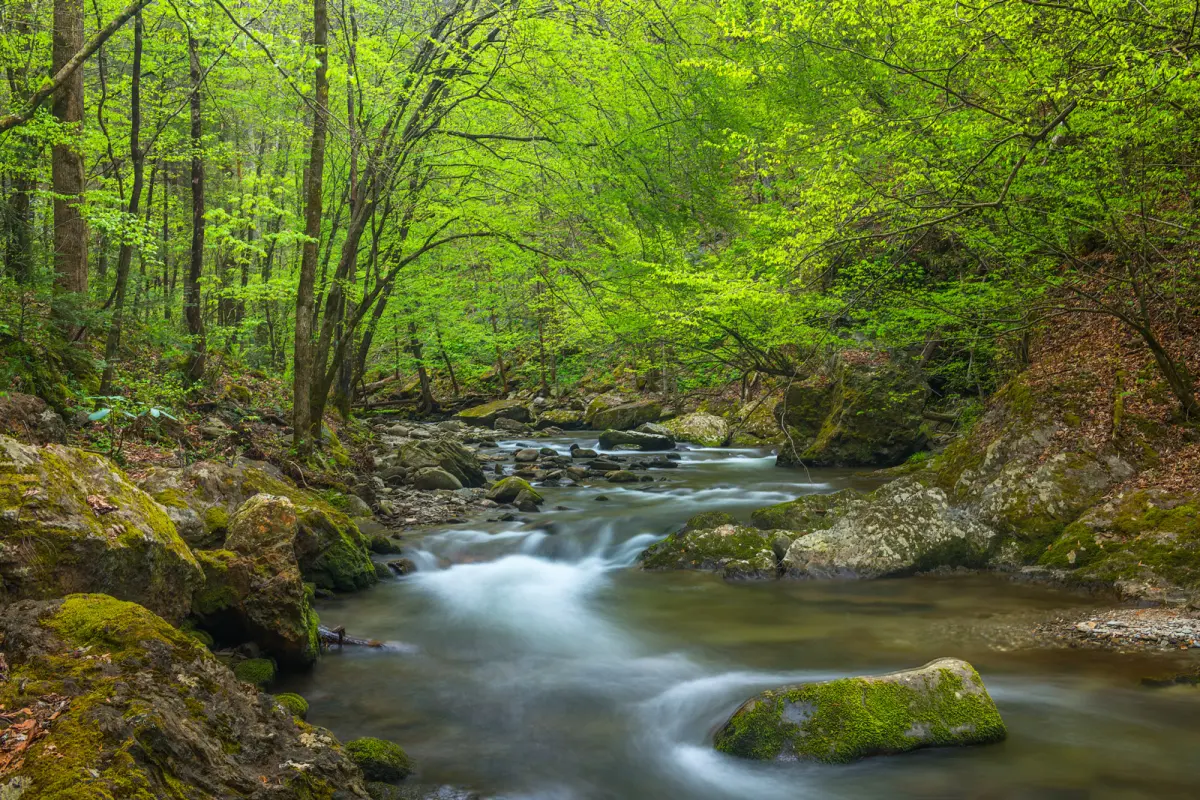
Navigating these water bodies requires different skill sets and safety precautions. When approaching a stream, the primary danger is often hidden debris or slippery, uneven footing on the streambed. Because streams are narrow, they can contain dangerous strainers—objects like fallen trees that allow water through but trap people or boats. Always scout the path ahead before attempting to cross.
Rivers present different challenges, primarily related to depth, current speed, and boat traffic. Because rivers are deeper, they can mask powerful undercurrents that are not visible from the surface. When planning a trip on a river, follow these steps to ensure safety:
- Check local water gauges to determine current flow rates.
- Wear a personal flotation device regardless of swimming ability.
- Research the river’s classification, such as Class I to Class VI rapids.
- Avoid anchoring in the main shipping channel of large rivers.
Common mistakes include underestimating the speed of the current and failing to account for how quickly weather changes upstream can affect water levels miles away.
Common mistakes when identifying water bodies?
A frequent error is assuming that all large flowing bodies are rivers and all small ones are streams. In many regions, local naming conventions are inconsistent; a large body of water might be called a "creek" or "kill," while a smaller one might be named a "river." These names are often historical artifacts rather than scientific classifications. Relying solely on the name on a map can lead to misunderstandings about the waterway's actual size or power.
Another mistake is ignoring the seasonal nature of these features. Many people assume a dry channel is not a stream, but it may be an intermittent stream that only flows during the wet season. Conversely, a river may look like a stream during a severe drought. To accurately identify a waterway, observe the channel's width, the presence of a defined bank, and the surrounding vegetation. Rivers typically support a wider riparian zone with mature trees, while streams may be surrounded by smaller shrubs and grasses. By looking at the broader landscape, you can better understand the role the water plays in the local environment.
Key facts
- A stream is a general term for any body of flowing water, whereas a river is a large, natural stream that serves as a primary drainage channel.
- Most hydrologists classify streams by "orders," where a first-order stream has no tributaries and a river is typically a higher-order stream.
- Rivers are generally wide enough to be navigable by boats, while many streams are too shallow or narrow for such transit.
- Streams often originate from springs, snowmelt, or runoff, eventually converging to form the larger volume of a river.
- A common mistake is assuming size is the only factor; the distinction often depends on local naming conventions and historical usage.
- You can identify a stream by its smaller, more turbulent flow, while a river usually exhibits a more consistent, deeper, and slower-moving current.
The bottom line
The primary difference between a river and a stream lies in their relative size, volume, and role within a drainage basin. While streams act as the smaller, initial channels that collect runoff, rivers represent the larger, more stable systems that carry water toward a sea or lake. Understanding these terms helps clarify how water moves across landscapes, supporting both ecological study and practical navigation.
People also ask
Can a stream turn into a river?
Yes, as smaller streams join together through the process of confluence, their combined volume increases. Once the water flow becomes substantial enough to maintain a consistent channel, it is typically classified as a river.
Are creeks and brooks the same as streams?
Yes, "creek" and "brook" are simply regional or colloquial terms for small streams. While a brook is usually the smallest, a creek is often slightly larger, but both function as tributaries to rivers.
Does the speed of the water determine if it is a river?
No, the speed is determined by the gradient of the land rather than the classification of the water body. Rivers can flow quickly through steep canyons or move slowly across flat plains.
Why do some rivers have names like "Creek"?
Historical naming conventions often persisted even after a waterway was mapped or expanded. For example, Boulder Creek in Colorado is a significant waterway that retains its original name despite its size.
How do I measure the flow of a stream?
You can estimate flow by measuring the cross-sectional area of the water and multiplying it by the velocity of a floating object. Professionals use specialized flow meters to get precise cubic feet per second data.
Is a river always permanent?
Not necessarily, as some rivers are ephemeral or intermittent, meaning they only flow during certain seasons or after heavy rainfall. However, most major rivers are perennial, flowing throughout the entire year.
This answer was created with the help of AI research tools and reference sources. Spotted an error? Let us know — we correct mistakes quickly. See our editorial policy.