What is the longest river in the world?
Short answer
The Nile River is traditionally considered the longest river in the world, stretching approximately 6,650 kilometers (4,130 miles) through northeastern Africa. While some researchers argue that the Amazon River possesses a greater length due to different source measurements, the Nile remains the officially recognized titleholder by most geographic authorities and encyclopedic standards.
On this page
How is the length of a river measured?
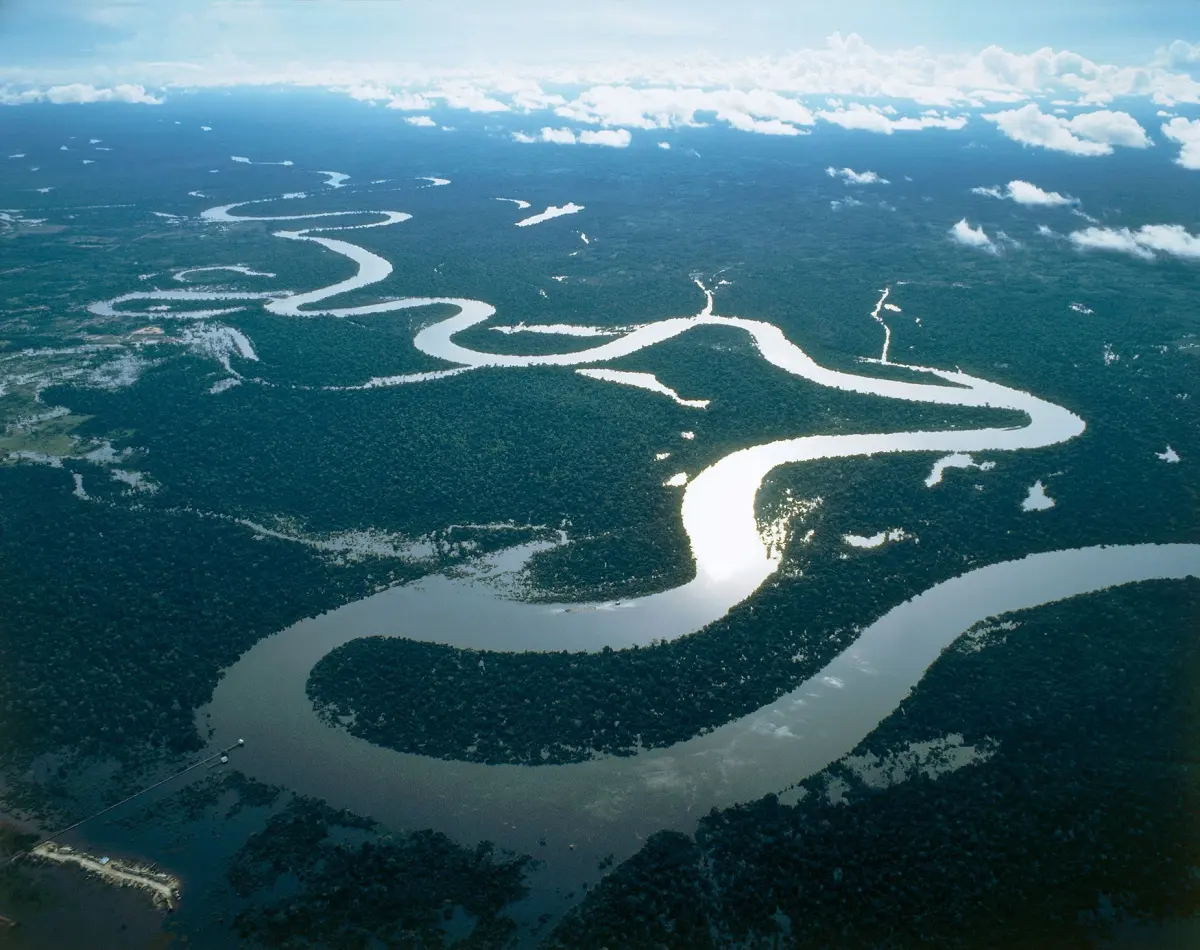
Determining the exact length of a river is a complex task that depends on identifying the precise location of the source and the mouth. Geographers must decide which tributary is the "true" headwater, as many rivers are fed by multiple streams that change seasonally. Once the source is identified, researchers trace the path of the main channel to the point where it enters the sea or a larger body of water.
Modern technology has refined these measurements significantly over the last few decades. Scientists now use satellite imagery and high-resolution digital elevation models to map riverbeds that were previously inaccessible. Despite these advancements, debates persist because the mouth of a river often consists of a wide, shifting delta. Defining where a river ends and the ocean begins involves subjective criteria, leading to varying length estimates for the world’s major waterways.
Why is there a debate between the Nile and the Amazon?
The Nile has held the title of the world’s longest river for generations, flowing northward from Lake Victoria through eleven countries before emptying into the Mediterranean Sea. Its length is consistently cited at roughly 6,650 kilometers. However, some researchers using satellite technology have argued that the Amazon River, which flows across South America, is actually longer. They suggest that if the Amazon's source is traced to a more distant point in the Peruvian Andes, its total length could exceed 6,900 kilometers.
This disagreement highlights the difficulty of standardizing geographic measurements. The Amazon is undisputed as the largest river by discharge volume, carrying more water than the next seven largest rivers combined. Because the Amazon’s path is highly complex and its delta is enormous, measurement teams often arrive at different conclusions. Most international geographic organizations continue to list the Nile as the longest, but the scientific community remains open to new mapping data.
Which are the longest rivers in the world?
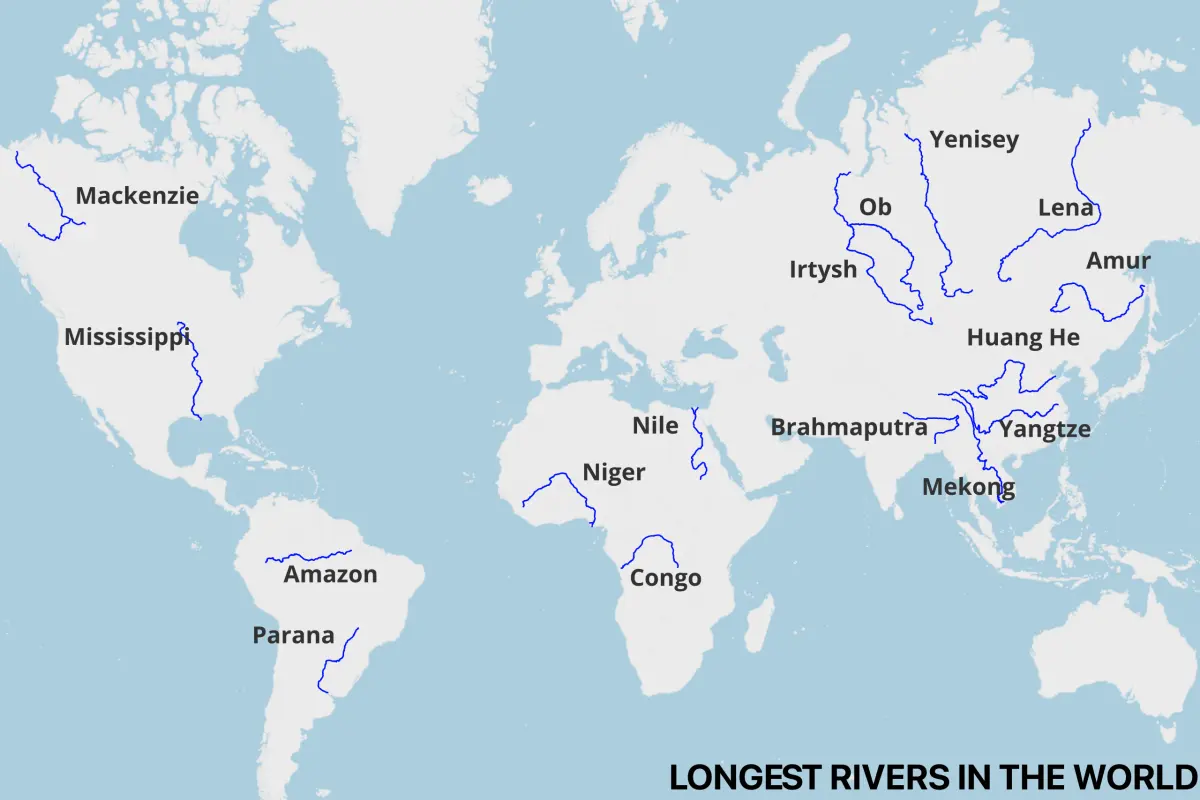
While the Nile and Amazon compete for the top spot, several other rivers reach impressive lengths that span entire continents. These rivers serve as vital lifelines for millions of people, providing water for agriculture, transportation, and hydroelectric power. The following list highlights the top five longest rivers based on generally accepted geographic data:
- Nile: 6,650 km (4,130 miles)
- Amazon: 6,400 km (3,976 miles)
- Yangtze: 6,300 km (3,917 miles)
- Mississippi-Missouri: 6,275 km (3,902 miles)
- Yenisei: 5,539 km (3,445 miles)
These figures represent the main stem of each river system. It is important to note that these rankings can fluctuate if researchers include the length of major tributaries in their calculations. The Mississippi-Missouri system, for example, is often measured as a single unit, which significantly boosts its standing compared to measuring the Mississippi River alone.
How to research river geography accurately?
If you are interested in studying river systems, you must learn to distinguish between primary sources and secondary interpretations. Many online databases provide conflicting information because they use different methodologies or outdated survey data. To conduct accurate research, follow these steps to ensure you are gathering reliable information:
- Consult peer-reviewed geographic journals or official national survey maps.
- Check the methodology section of your source to see how they define the river's mouth and source.
- Compare data from multiple reputable organizations, such as the United States Geological Survey or the Royal Geographical Society.
- Look for the date of the study, as environmental changes like dam construction or erosion can alter a river's path.
Avoid relying on general-purpose encyclopedias or unverified travel blogs, as these often repeat common myths without citing specific scientific surveys. Always prioritize data that explains the specific criteria used to measure the river's total distance.
Common mistakes when identifying river lengths
A frequent error is assuming that a river's length is a static, unchanging number. Rivers are dynamic features of the landscape; they constantly shift their channels through erosion, sediment deposition, and human intervention. Natural events like floods can create new meanders, effectively lengthening the river, while human-made diversions or dams can shorten the path to the sea. Treating a river as a fixed line on a map ignores the physical reality of its movement.
Another common mistake is failing to account for the difference between a river and a river system. A river system includes the main channel plus all its tributaries and distributaries. When comparing the Nile to the Amazon, people often confuse the main channel length with the total length of the entire basin. Always clarify whether you are looking for the length of the main stem or the total extent of the drainage basin to avoid confusion in your findings.
Key facts
- The Nile River is traditionally considered the longest in the world, stretching approximately 4,130 miles (6,650 kilometers).
- Scientific debate persists, as some researchers argue the Amazon River is longer, measuring up to 4,345 miles (6,992 kilometers).
- Measuring a river's length is difficult because identifying the exact source and the precise mouth is subject to interpretation.
- The Nile flows northward through northeastern Africa, passing through eleven countries before emptying into the Mediterranean Sea.
- The Amazon River holds the record for the largest discharge of water, carrying more volume than the next seven largest rivers combined.
- When researching river lengths, ensure the data source specifies the methodology used, as seasonal changes and delta shifts alter measurements.
The bottom line
While the Nile River is traditionally recognized as the longest river in the world, the title remains a subject of ongoing geographical debate. Because measuring river systems involves complex variables like shifting deltas and ambiguous source points, experts often disagree on exact figures. Regardless of the specific ranking, both the Nile and the Amazon remain vital ecological and cultural lifelines for the continents they sustain.
People also ask
Which river carries the most water?
The Amazon River carries the most water of any river on Earth. Its massive drainage basin accounts for approximately 20 percent of the world's total river flow into the oceans.
Where does the Nile River begin?
The Nile is generally considered to have its primary source in the mountains of Rwanda or Burundi. It flows through Lake Victoria before continuing its journey toward the Mediterranean.
Why is it hard to measure a river's length?
Measuring a river is complex because riverbeds shift over time and deltas can be vast and swampy. Determining the exact point where a river starts or ends often depends on which tributary is designated as the primary source.
How many countries does the Nile pass through?
The Nile Basin encompasses eleven countries, including Tanzania, Uganda, Rwanda, Burundi, the Democratic Republic of the Congo, Kenya, Ethiopia, Eritrea, South Sudan, Sudan, and Egypt.
Is the Amazon River in South America?
Yes, the Amazon River flows across South America, primarily through Brazil, Peru, and Colombia. It is fed by hundreds of tributaries originating in the Andes Mountains.
What is the difference between length and discharge?
Length measures the distance from the source to the mouth, while discharge measures the volume of water passing a specific point per unit of time. A river can be very long but have low discharge if it flows through arid regions.
This answer was created with the help of AI research tools and reference sources. Spotted an error? Let us know — we correct mistakes quickly. See our editorial policy.