What is carbon dioxide?
Short answer
Carbon dioxide is a colorless, odorless gas composed of one carbon atom covalently bonded to two oxygen atoms. It is a vital component of Earth's atmosphere, essential for photosynthesis in plants and regulating global temperatures via the greenhouse effect. While naturally occurring, human activities have significantly increased its concentration since the Industrial Revolution.
On this page
What is carbon dioxide made of?
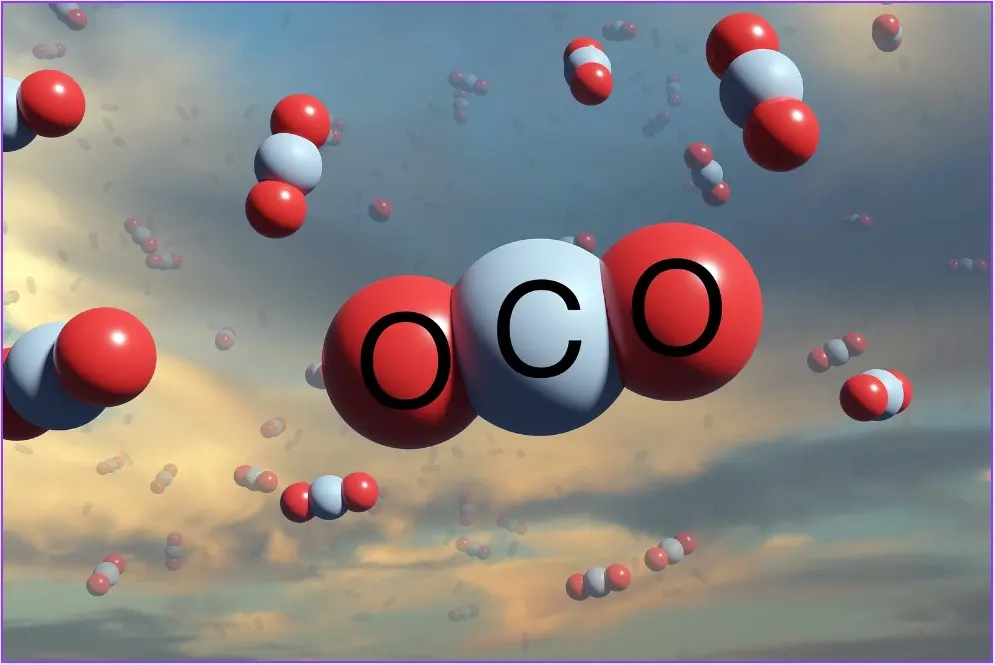
Carbon dioxide, denoted by the chemical formula CO2, is a stable molecule consisting of a central carbon atom double-bonded to two oxygen atoms. At standard atmospheric pressure and temperature, it exists as a gas. It is denser than air and does not support combustion, which is why it is frequently utilized in fire extinguishers to displace oxygen.
The molecule is linear in shape and possesses no net dipole moment, making it nonpolar. Despite being a gas under normal conditions, it can transition into a solid known as "dry ice" at temperatures below -78.5 degrees Celsius (-109.3 degrees Fahrenheit). Unlike water ice, dry ice undergoes sublimation, meaning it transitions directly from a solid to a gas without passing through a liquid phase. This unique property makes it highly useful for shipping temperature-sensitive goods and creating theatrical fog effects.
Why does carbon dioxide matter for life?
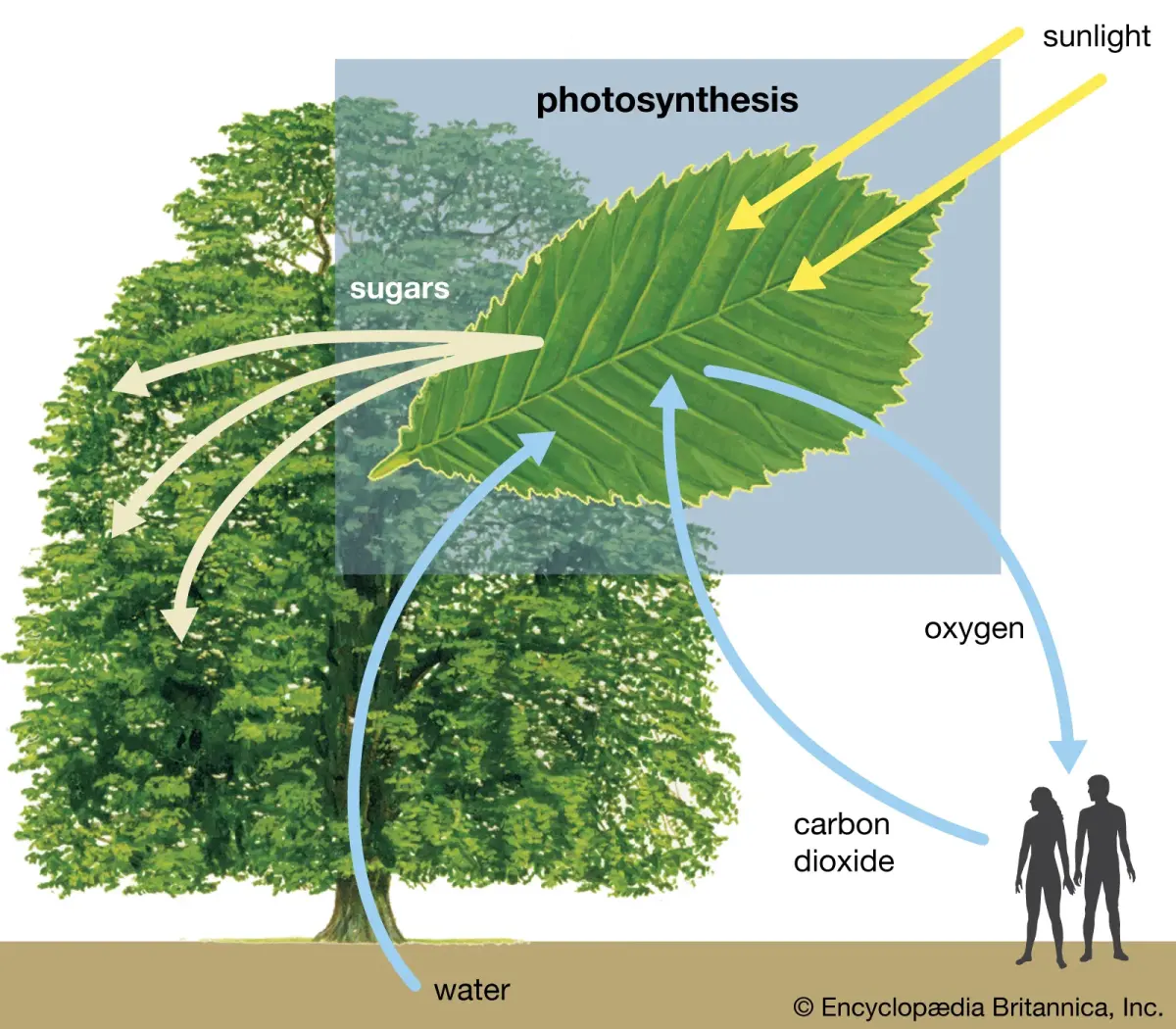
Carbon dioxide serves as the fundamental building block for life on Earth through the process of photosynthesis. Plants, algae, and cyanobacteria absorb CO2 from the atmosphere and combine it with water and sunlight to produce glucose, which provides energy for growth. This process also releases oxygen as a byproduct, which is essential for the survival of aerobic organisms, including humans.
Beyond its role in plant biology, CO2 acts as a critical regulator of the planet's climate. It is a primary greenhouse gas that traps heat within the atmosphere, preventing it from escaping into space. Without this natural greenhouse effect, Earth’s average surface temperature would be far below freezing, rendering the planet inhospitable to most life forms. However, the delicate balance of this cycle is currently being disrupted by human activities.
- Photosynthesis converts CO2 into oxygen and chemical energy.
- Respiration in animals releases CO2 back into the atmosphere.
- Ocean absorption acts as a massive carbon sink, though it leads to acidification.
- Decomposition of organic matter returns stored carbon to the atmosphere.
How does human activity change carbon dioxide levels?
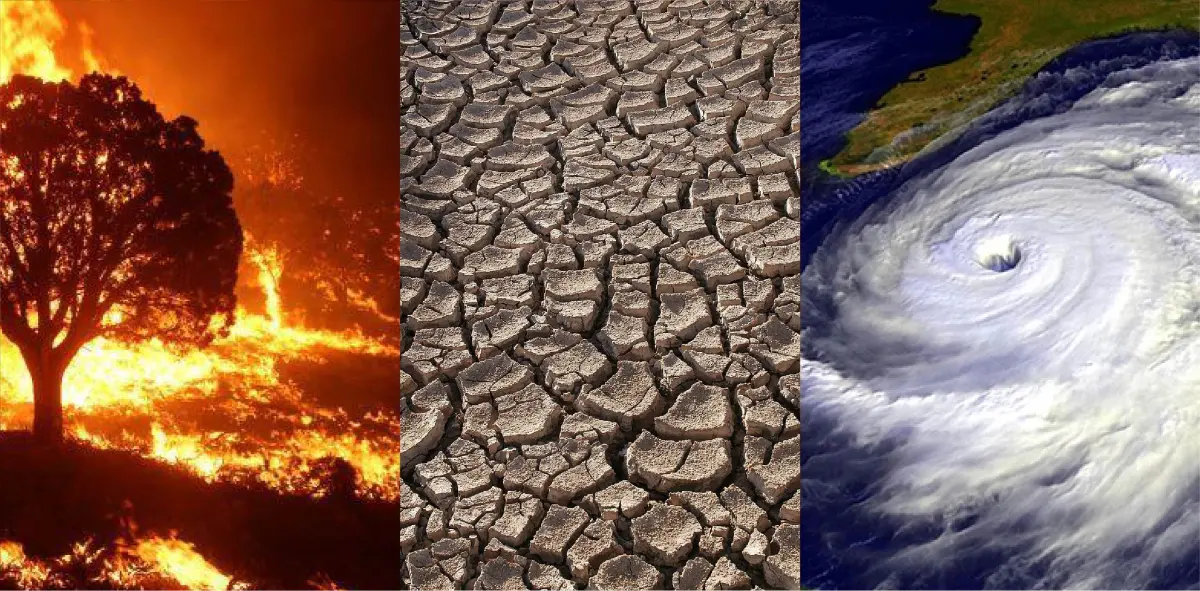
Since the mid-18th century, human industrial activity has dramatically altered the concentration of carbon dioxide in the atmosphere. The burning of fossil fuels—such as coal, oil, and natural gas—for electricity, transportation, and manufacturing releases vast quantities of stored carbon. Deforestation further exacerbates this issue, as fewer trees are available to absorb the excess gas through photosynthesis.
Current atmospheric concentrations have risen from approximately 280 parts per million (ppm) in the pre-industrial era to over 420 ppm today. This rapid increase is the primary driver of modern global warming and climate change. The excess CO2 traps more heat, leading to rising global temperatures, melting polar ice caps, and more frequent extreme weather events. Understanding these mechanics is essential for developing strategies to mitigate environmental impacts and transition toward sustainable energy sources.
How to measure carbon dioxide at home?
Monitoring indoor air quality has become increasingly popular as people seek to improve ventilation and health. High levels of CO2 in enclosed spaces can lead to drowsiness, headaches, and reduced cognitive performance. To accurately measure these levels, you should use a non-dispersive infrared (NDIR) sensor, which is the industry standard for precision.
- Purchase a reputable NDIR-based CO2 monitor rather than a cheap electrochemical sensor.
- Place the device at breathing level, away from windows, doors, or direct ventilation sources.
- Allow the device to calibrate for at least 24 hours in a well-ventilated area.
- Observe the readings: 400–800 ppm is generally considered healthy, while levels above 1,000 ppm suggest poor ventilation.
- If levels are consistently high, increase fresh air intake by opening windows or adjusting your HVAC system settings.
Common mistakes when managing carbon dioxide
Many people misunderstand the relationship between CO2 and indoor air quality, leading to ineffective management strategies. A frequent error is assuming that air purifiers or HEPA filters remove carbon dioxide. In reality, these devices are designed to capture particulate matter like dust and pollen; they have no chemical mechanism to extract or neutralize CO2 gas. Only proper ventilation or specialized scrubbers can effectively reduce indoor concentrations.
Another mistake is ignoring the impact of human density in small rooms. In a small, unventilated office or bedroom, CO2 levels can climb rapidly within an hour simply due to the respiration of the occupants. Relying on "feeling" the air quality is unreliable, as humans cannot detect CO2 concentrations until they reach dangerously high levels. Always prioritize mechanical ventilation or natural airflow to ensure a steady supply of oxygen and the removal of exhaled gases, thereby maintaining a productive and healthy living environment.
Key facts
- Carbon dioxide (CO2) is a colorless, odorless gas composed of one carbon atom covalently bonded to two oxygen atoms.
- It makes up approximately 0.04% of Earth's atmosphere by volume, playing a vital role in regulating the planet's temperature.
- Plants absorb CO2 during photosynthesis, converting it into glucose and oxygen to fuel their growth.
- Humans and animals exhale CO2 as a byproduct of cellular respiration, which occurs when cells burn food for energy.
- Dry ice is the solid form of carbon dioxide, which undergoes sublimation to turn directly into gas at -78.5 degrees Celsius.
- To safely handle dry ice, always wear insulated gloves to prevent frostbite and ensure the area is well-ventilated to avoid oxygen displacement.
The bottom line
Carbon dioxide is a fundamental chemical compound essential for life on Earth, serving as the primary carbon source for plants and a byproduct of animal metabolism. While it naturally regulates our climate, human industrial activity has raised its atmospheric concentration to unprecedented levels. Understanding its properties, from its role in photosynthesis to its use in industrial safety, helps us better manage our impact on the environment.
People also ask
Does carbon dioxide cause global warming?
Yes, CO2 acts as a greenhouse gas by trapping heat in the atmosphere that would otherwise escape into space. Increased concentrations from human activities like burning fossil fuels are the primary driver of current climate change.
How can I reduce my personal carbon footprint?
You can lower your impact by choosing energy-efficient appliances, reducing meat consumption, and opting for public transportation or electric vehicles. Minimizing waste and choosing locally sourced products also help decrease the emissions associated with production and shipping.
Is carbon dioxide toxic to humans?
While CO2 is a natural part of the air we breathe, it becomes dangerous at high concentrations. Exposure to levels above 5% in the air can cause dizziness, headaches, and eventual loss of consciousness due to asphyxiation.
Why is carbon dioxide added to soda?
Carbonation is achieved by dissolving CO2 into liquid under high pressure. When you open the bottle, the pressure drops, allowing the gas to escape as bubbles, which creates the characteristic fizz and sharp taste.
How do fire extinguishers use carbon dioxide?
CO2 fire extinguishers work by displacing the oxygen surrounding a fire, effectively starving the flames of the gas needed to sustain combustion. They are particularly effective for electrical fires because the gas is non-conductive and leaves no residue.
Can carbon dioxide be captured from the air?
Carbon capture and storage (CCS) technology is designed to trap CO2 emissions from industrial sources or directly from the atmosphere. The captured gas is then compressed and stored underground in geological formations to prevent it from contributing to warming.
This answer was created with the help of AI research tools and reference sources. Spotted an error? Let us know — we correct mistakes quickly. See our editorial policy.