What is the largest bird?
Short answer
The common ostrich (Struthio camelus) is the largest and heaviest living bird on Earth. Adult males can reach heights of up to 9 feet (2.7 meters) and weigh as much as 340 pounds (155 kilograms). These flightless birds are native to Africa and are well-adapted to life in savannas and deserts.
On this page
What are the physical characteristics of an ostrich?
The common ostrich is a flightless bird belonging to the ratite group. Its massive size is supported by powerful, long legs that allow it to reach running speeds of up to 43 miles per hour (70 kilometers per hour). These limbs are so strong that a single kick can be lethal to potential predators, including lions. The bird's wings are relatively small and cannot be used for flight, but they serve as rudders for balance during high-speed maneuvers.
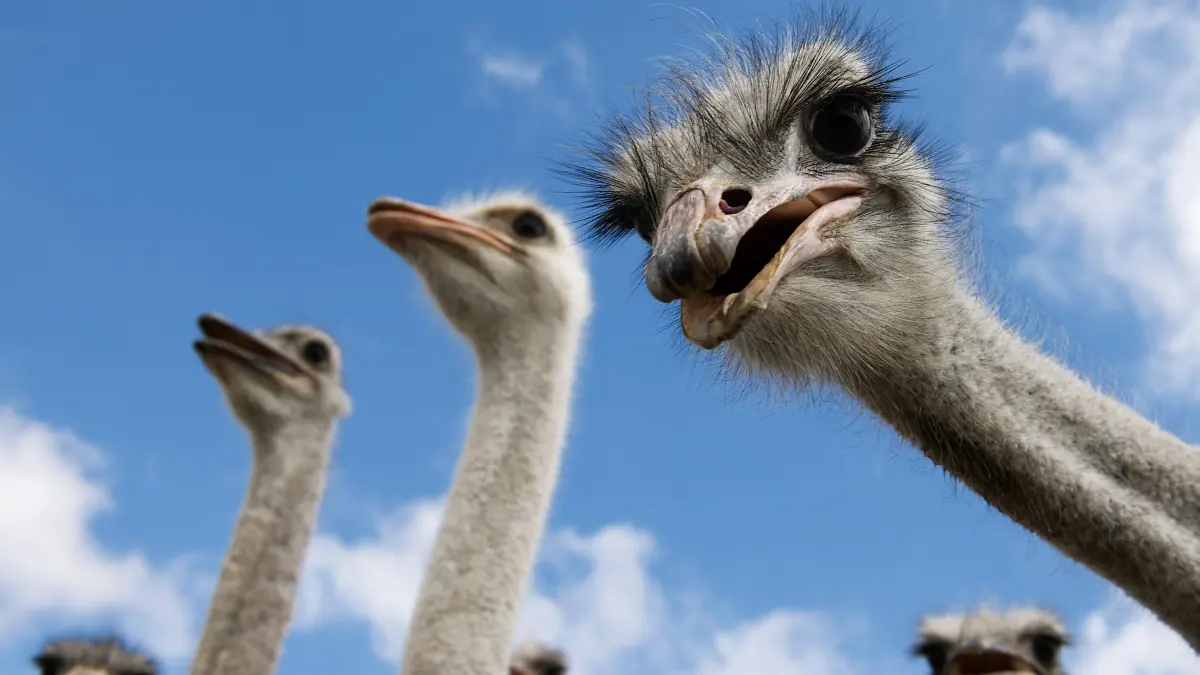
Beyond their speed, ostriches possess unique anatomical features that distinguish them from all other avian species. They are the only birds with just two toes on each foot, which helps them maintain traction while sprinting. Their eyes are the largest of any land vertebrate, measuring about 2 inches (5 centimeters) in diameter, providing them with exceptional vision to spot predators from great distances. They also lack a keel on their breastbone, which is the structure that anchors flight muscles in birds that can fly.
Where do ostriches live in the wild?
Ostriches are primarily found in the open savannas, grasslands, and semi-arid regions of sub-Saharan Africa. They thrive in environments where they can utilize their speed to escape threats and their height to scan for danger. While they prefer dry habitats, they are highly adaptable and can survive in a variety of temperatures, provided they have access to sufficient vegetation and water sources.
Historically, ostriches occupied a much larger range, including parts of the Middle East and North Africa. Today, their wild populations are largely concentrated in protected national parks and reserves. When observing these birds in their natural habitat, it is important to understand their social structure and environmental needs:
- They often gather in small nomadic groups or herds to improve collective vigilance against predators.
- They are omnivorous, feeding mostly on roots, leaves, and seeds, though they occasionally consume insects and lizards.
- They require large, open spaces to move freely and maintain their health through regular exercise.
How do ostriches reproduce and raise their young?
The reproductive process of the ostrich is communal and highly organized. A dominant male typically mates with several females, who then lay their eggs in a single large communal nest, often referred to as a "dump nest." The primary female, often called the major hen, is responsible for incubating the eggs during the day, while the male takes over the duty at night to provide camouflage.
The eggs themselves are the largest produced by any living bird, weighing about 3 pounds (1.4 kilograms) each. Despite their size, they are relatively small compared to the size of the adult bird. The incubation period lasts approximately 42 days. Once the chicks hatch, they grow at an incredible rate, often gaining nearly a foot in height every month during their first year of life.
- The male digs a shallow pit in the ground to serve as the nest.
- Multiple females deposit their eggs into this central location.
- The male and the dominant female rotate incubation duties to protect the eggs from heat and predators.
- After hatching, the chicks are precocial, meaning they are active and able to follow their parents shortly after birth.
What are common mistakes when observing ostriches?
One of the most frequent errors people make when encountering ostriches is underestimating their temperament. While they may appear docile in a zoo or farm setting, they are wild animals that can become aggressive if they feel threatened or if their territory is encroached upon. Approaching an ostrich, especially during nesting season, is dangerous and should be avoided at all costs.
Another common mistake is assuming that ostriches bury their heads in the sand when frightened. This is a persistent myth that likely stems from the bird's habit of lowering its head to the ground to tend to its eggs or to swallow pebbles for digestion. From a distance, this behavior makes it look as though the bird has hidden its head underground. Understanding these behaviors helps observers appreciate the bird's actual survival strategies rather than relying on folklore.
How can I learn more about large birds?
If you are interested in learning more about the ostrich or other large birds, the best approach is to visit reputable wildlife sanctuaries or natural history museums. These institutions provide accurate information regarding the biology, conservation status, and evolutionary history of ratites. You can also consult scientific journals or wildlife documentaries that focus on African ecology to gain a deeper understanding of how these birds fit into the broader ecosystem.
When researching, ensure you are looking for peer-reviewed information or content produced by established zoological organizations. Avoid relying on anecdotal social media posts or unverified travel blogs, as these often contain inaccuracies regarding animal behavior. By following these steps, you can build a solid foundation of knowledge about the world's largest bird and the fascinating adaptations that have allowed the ostrich to thrive for millions of years in some of the most challenging environments on the planet.
Key facts
- The common ostrich (Struthio camelus) is the largest and heaviest living bird on Earth.
- Adult male ostriches can reach heights of up to 9 feet (2.7 meters) and weigh as much as 320 pounds (145 kilograms).
- Despite their size, ostriches are flightless, having evolved powerful legs for running rather than wings for aerial travel.
- Ostriches can maintain a consistent running speed of 30 to 40 miles per hour (48 to 64 kilometers per hour) when threatened.
- Their eggs are the largest of any living bird, typically measuring about 6 inches in length and weighing up to 3 pounds.
- When observing ostriches in the wild, maintain a safe distance of at least 50 feet, as they can deliver dangerous kicks if they feel cornered.
The bottom line
The common ostrich holds the title of the world's largest bird, standing as a testament to evolutionary adaptation for life on the African savanna. While they lack the ability to fly, their massive size, incredible running speed, and powerful defensive kicks make them formidable creatures. Understanding their unique biology and behavior helps clarify why these flightless giants continue to thrive in their natural, arid environments today.
People also ask
Can ostriches fly?
No, ostriches are flightless birds. Their wings are too small to lift their heavy bodies, but they use them for balance and steering while running.
How fast can an ostrich run?
An ostrich can reach top speeds of up to 45 miles per hour (72 kilometers per hour). They are the fastest birds on land and can sustain high speeds for long distances.
What do ostriches eat?
Ostriches are omnivores that primarily consume roots, leaves, and seeds. They also occasionally eat insects, lizards, and other small creatures found in their savanna habitats.
Read the full answer →Do ostriches bury their heads in the sand?
This is a common myth. Ostriches do not bury their heads; they may lower their heads to the ground to tend to eggs in shallow nests or to swallow sand and pebbles to aid digestion.
How many toes does an ostrich have?
Ostriches are unique among birds because they have only two toes on each foot. This specialized anatomy helps them achieve greater speed and stability while running.
Are ostriches dangerous to humans?
Yes, ostriches can be aggressive, especially during mating season or when protecting their young. Their powerful legs can deliver a kick strong enough to cause serious injury or even kill a predator.
This answer was created with the help of AI research tools and reference sources. Spotted an error? Let us know — we correct mistakes quickly. See our editorial policy.