What is the language of flowers?
Short answer
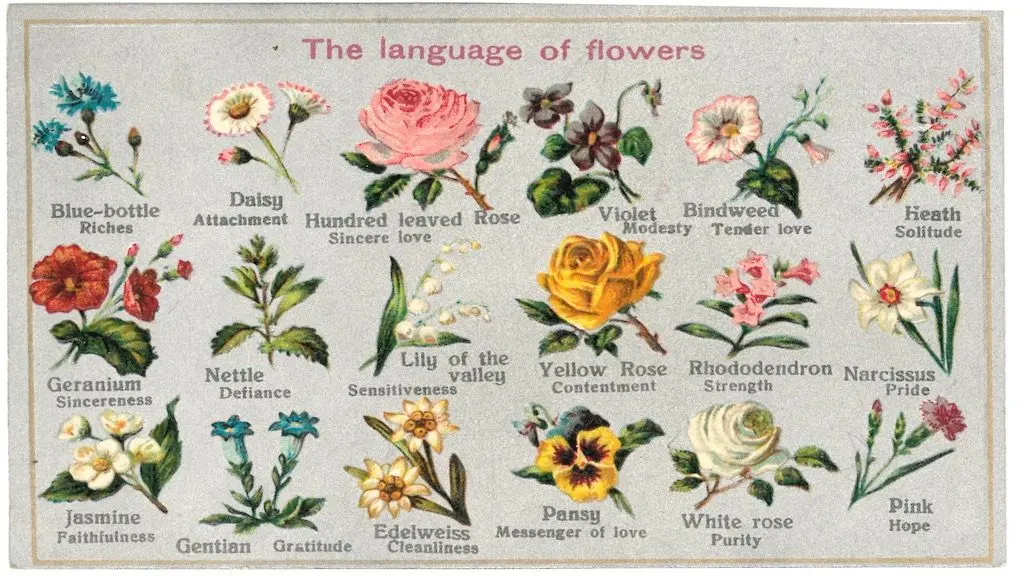
The language of flowers, or floriography, is a historical method of communication where specific floral species are assigned symbolic meanings. Popularized in Victorian England, this system allowed individuals to convey complex emotions or messages through bouquets. Today, it remains a meaningful way to add layers of intent to floral gifts.
On this page
What is the history of floriography?
Floriography gained immense popularity in 19th-century Britain and the United States as a coded language for social interaction. During the Victorian era, strict etiquette often prevented people from expressing their true feelings, particularly regarding romance. Flowers provided a discreet, sophisticated alternative to spoken words, allowing suitors to send messages that were both poetic and socially acceptable.
The practice was heavily influenced by Ottoman Turkish customs, which were introduced to Europe by travelers like Lady Mary Wortley Montagu in the early 1700s. By the 1800s, numerous "flower dictionaries" were published, standardizing the meanings of various blooms. These guidebooks allowed recipients to decode the specific sentiments hidden within a delivered bouquet, turning a simple arrangement into a private, nuanced conversation between the sender and the receiver.
How to use flower meanings today
Modern floral gifting can be enhanced by selecting blooms that reflect the intended message. Whether you are celebrating a milestone or offering comfort, choosing flowers with recognized symbolism adds a thoughtful, personal touch. While many traditional meanings have persisted, contemporary arrangements often blend these historical interpretations with aesthetic preferences to create a balanced, expressive gift.
To effectively communicate through flowers, consider these common symbolic pairings:
- Red Rose: Passionate love and desire.
- Yellow Carnation: Disappointment or rejection.
- White Lily: Purity and sympathy.
- Sunflower: Adoration and longevity.
- Lavender: Devotion and serenity.
- Peony: Prosperity and good fortune.
When selecting your flowers, keep the recipient’s personal taste in mind. A bouquet that adheres strictly to historical meanings but ignores the recipient's favorite colors or scents may feel less sincere. Focus on finding a harmony between the symbolic message you wish to send and the overall visual appeal of the arrangement.
What are the most common flower symbols?
Understanding the most frequent symbols helps in deciphering the intent behind popular bouquets. Many flowers have multiple meanings, often depending on their color or the cultural context in which they are presented. For instance, while roses are universally associated with love, the specific hue significantly alters the message, moving from deep romantic commitment to platonic friendship or even apology.
- Identify the primary emotion you wish to convey.
- Research the specific flower species to ensure its traditional meaning aligns with your intent.
- Select secondary flowers that complement the primary bloom's message.
- Arrange the flowers in a vessel that highlights their natural beauty.
- Include a small card explaining the symbolism if the message is subtle.
By following these steps, you ensure that your floral arrangement serves as a clear, intentional gesture. Avoid choosing flowers based solely on their visual impact, as some blooms carry negative connotations that could be misinterpreted by someone familiar with traditional floriography.
How to avoid common mistakes when gifting flowers
One of the most frequent errors in floriography is ignoring the cultural or historical context of a flower's meaning. For example, in some traditions, yellow flowers are associated with jealousy or the end of a relationship, which could contradict a well-intentioned gift of sunshine and cheer. Always verify the symbolism of a flower before including it in a bouquet for a formal event or a sensitive situation.
Another common mistake is overloading a bouquet with too many different symbols, which can create a confusing or contradictory message. A clear, focused arrangement with one or two dominant meanings is generally more effective than a cluttered display of conflicting sentiments. Additionally, remember that the "language" of flowers is not a universal science; meanings can shift across different regions and time periods. It is always best to prioritize the recipient's preferences and your own genuine feelings over rigid adherence to an outdated dictionary.
Why do people still use flower language?
Despite the rise of digital communication, the language of flowers remains a powerful tool for human connection because it engages the senses and adds a layer of intentionality to a gift. Receiving a bouquet is a tactile and visual experience that feels more permanent and personal than a text message. The effort required to select and arrange flowers demonstrates a level of care that resonates deeply with the recipient.
Furthermore, floriography provides a bridge to the past, allowing modern individuals to participate in a centuries-old tradition of artistic expression. It transforms a standard grocery store purchase into a deliberate act of communication. Whether used for weddings, anniversaries, or simple gestures of kindness, the language of flowers continues to thrive because it provides a beautiful, non-verbal way to express the complexities of the human heart in a way that words alone sometimes cannot capture.
Key facts
- The language of flowers, also known as floriography, assigns specific emotional or symbolic meanings to different plant species.
- This practice reached its peak popularity during the Victorian era in England, roughly between 1837 and 1901.
- Charlotte de la Tour published the first definitive guide, Le Langage des Fleurs, in France in 1819.
- A red rose traditionally symbolizes deep love and passion, while a yellow rose historically signified jealousy or waning affection.
- To avoid misunderstandings, always include a small note explaining your intent, as modern interpretations of floral symbols vary widely.
- When selecting flowers, prioritize the recipient's personal preferences over rigid historical definitions to ensure the gesture feels authentic.
The bottom line
The language of flowers is a historical system of non-verbal communication that assigns symbolic meanings to various plants. While it flourished during the Victorian era as a way to express hidden sentiments, it is primarily a decorative art today. By understanding these traditional associations, you can add a thoughtful, personalized layer to your floral gifts, provided you prioritize the recipient's preferences over rigid historical definitions.
People also ask
Does the color of a flower change its meaning?
Yes, color often alters the primary message of a floral gift. For example, while a red carnation represents admiration, a striped carnation historically conveys a refusal or a message of "I cannot be with you."
Are there flowers that represent negative emotions?
Many flowers carry somber or cautionary meanings, such as the yellow carnation representing rejection or the cyclamen signaling resignation. Historically, these were used to send subtle, often indirect, messages during social interactions.
How did people communicate using flowers in the 19th century?
Victorians used "floral dictionaries" to decode bouquets, often exchanging them to convey sentiments that were considered improper to speak aloud. The way a flower was presented—such as holding it upside down—could even invert its intended meaning.
Is the language of flowers still relevant today?
While rarely used for complex communication, the practice persists in wedding traditions and modern gift-giving. Most people now focus on the aesthetic beauty of a bouquet rather than strictly adhering to historical symbolic codes.
Can I combine different flowers in one bouquet?
Mixing flowers is a traditional way to compose a "floral sentence" that expresses a complex sentiment. However, be careful not to include conflicting symbols, such as mixing flowers of love with those of mourning, to avoid confusing the recipient.
What is the most common mistake when giving flowers?
The most frequent error is ignoring the cultural context or the recipient's personal associations with a specific bloom. Always verify if a flower has a negative connotation in the recipient's culture before including it in a gift.
This answer was created with the help of AI research tools and reference sources. Spotted an error? Let us know — we correct mistakes quickly. See our editorial policy.