What is the difference between realism and hyperrealism?
Short answer
Realism aims to depict subjects as they appear in objective reality, focusing on naturalistic accuracy and faithful representation. Hyperrealism, an evolution of photorealism, goes further by creating a simulated reality that often exceeds the clarity of human vision, emphasizing extreme detail, heightened contrast, and emotional intensity to surpass the limitations of photographic truth.
On this page
What defines the realism art movement
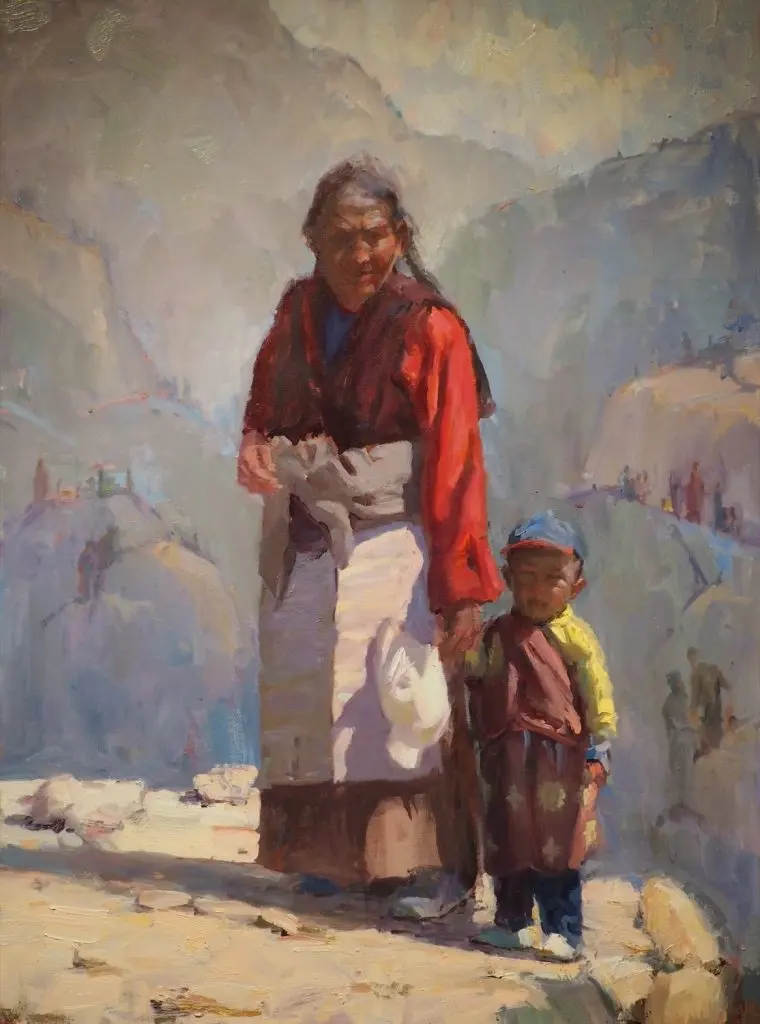
Realism emerged in mid-19th-century France as a reaction against the idealized subjects of Romanticism. Artists like Gustave Courbet and Jean-François Millet sought to portray everyday life, laborers, and the mundane world without embellishment or dramatic flair. The goal was to paint things exactly as they were, focusing on the honest depiction of social conditions and physical environments.
In a realistic work, the artist utilizes traditional techniques such as perspective, anatomy, and chiaroscuro to mimic the natural world. While the result is highly accurate, the artist often retains a visible brushstroke or a stylistic interpretation of the subject. Realism is fundamentally about observation, prioritizing the "truth" of the subject over the technical perfection of the medium. It invites the viewer to recognize the reality of the scene rather than marveling at the technical process of its creation.
How hyperrealism differs from realism
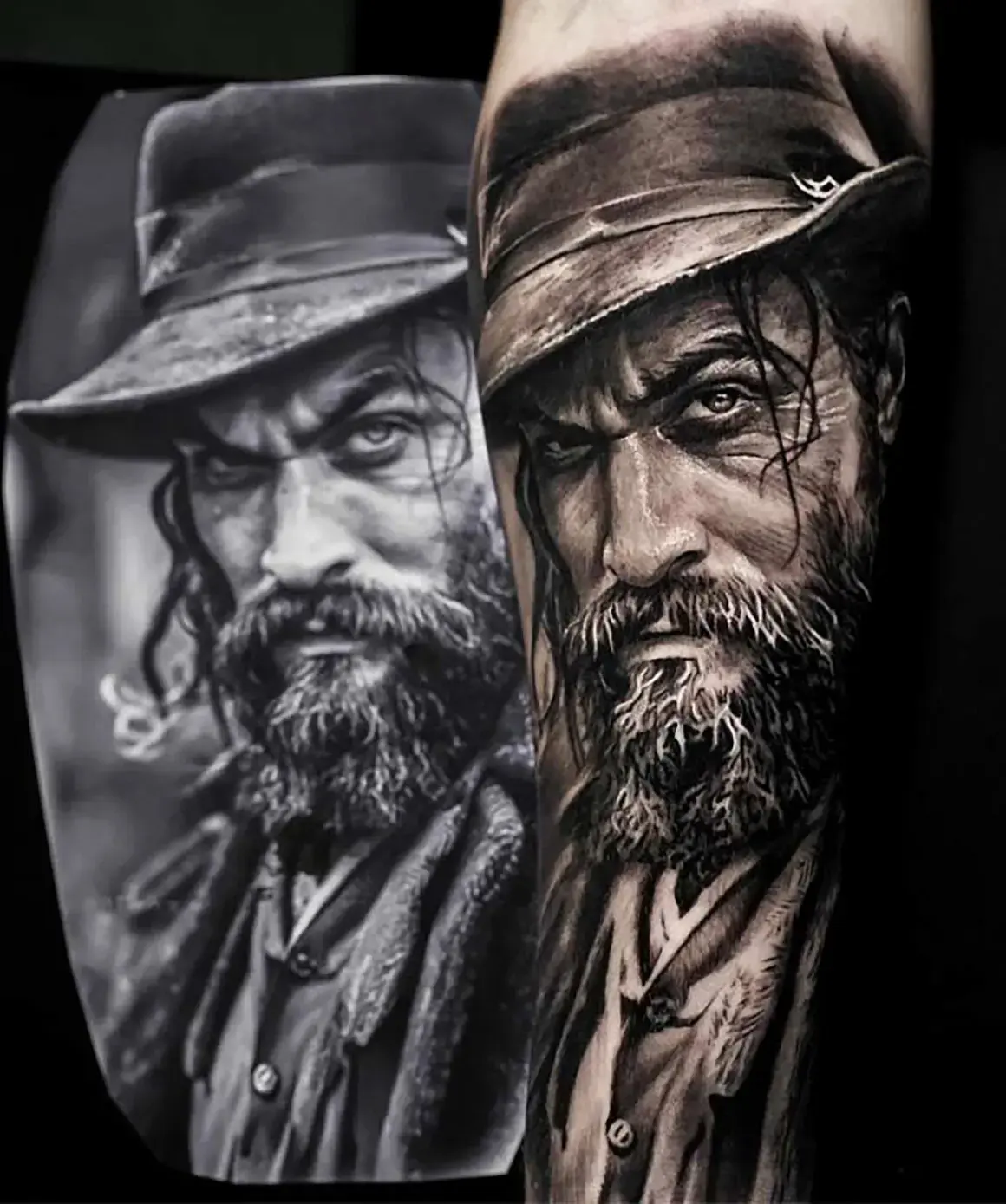
Hyperrealism is a contemporary movement that began in the early 2000s, building upon the foundations of 1970s photorealism. Unlike realism, which seeks to capture the essence of a subject, hyperrealism aims to create a high-definition simulation that often feels more vivid than reality itself. Artists frequently use photographic references, projectors, or digital software to achieve a level of precision that is impossible to attain through the naked eye alone.
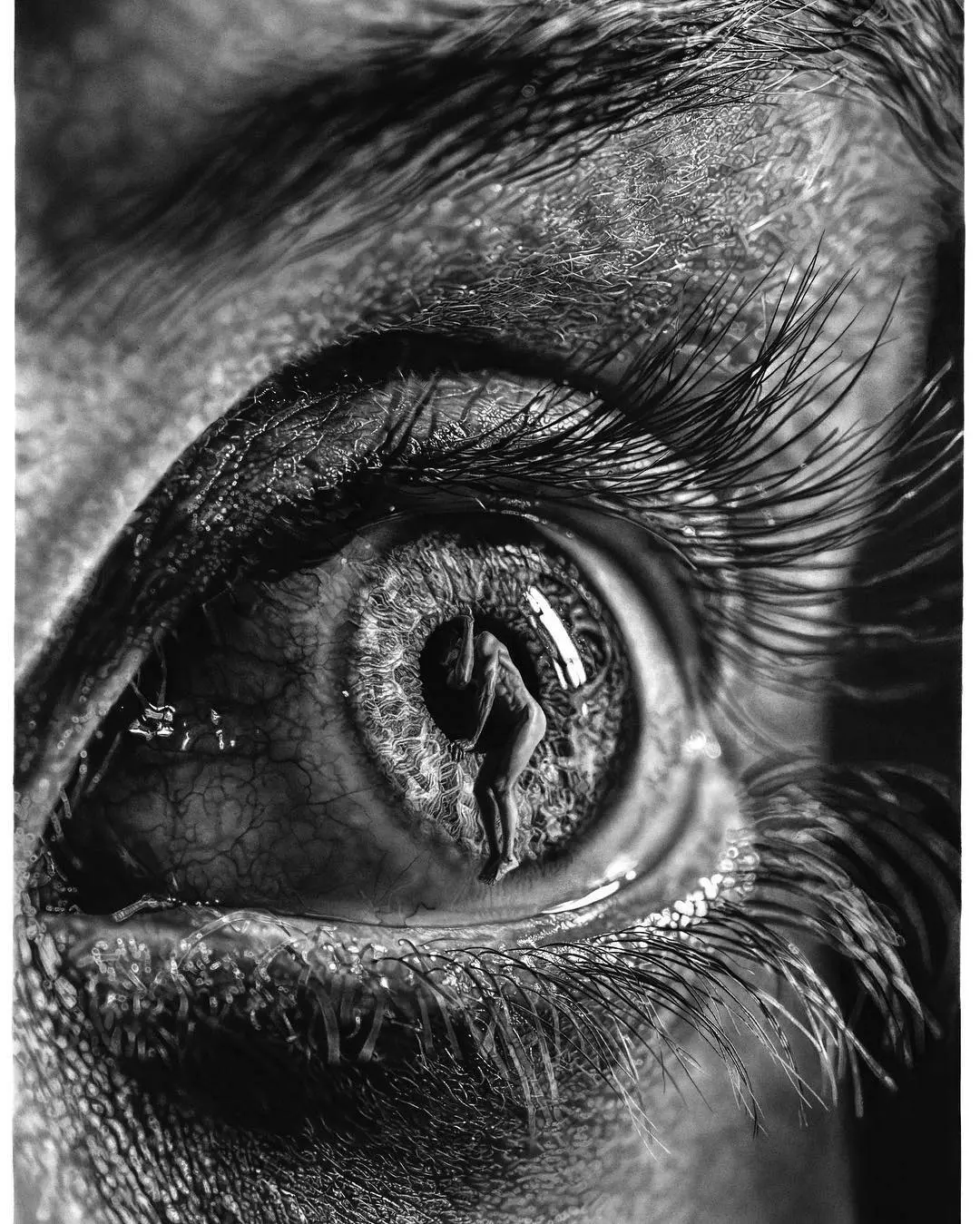
The primary distinction lies in the intent and the final aesthetic. While a realist painting might capture the texture of skin, a hyperrealist work will emphasize pores, individual hairs, and microscopic blemishes that are usually ignored by the human brain. This creates a "super-real" effect that can feel uncanny or jarring. Hyperrealism often focuses on:
- Extreme magnification of specific details.
- High-contrast lighting that flattens or exaggerates depth.
- The removal of artistic "handwriting" to achieve a smooth, seamless finish.
- A deliberate attempt to provoke a visceral reaction through sensory overload.
Why artists choose these styles
Choosing between realism and hyperrealism often depends on the artist's thematic goals. Realists typically want to tell a story or document a moment in time, using their technical skill to ground the viewer in a recognizable, human experience. The focus remains on the subject matter, whether it is a portrait, a landscape, or a genre scene, ensuring that the technique serves the narrative rather than overshadowing it.
Hyperrealists, conversely, are often interested in the limitations of human perception and the nature of imagery in a digital age. By rendering a subject with such intense detail, they force the viewer to confront the medium itself. This style is frequently used to comment on consumer culture, the passage of time, or the fragility of the human form. The process is often slow and methodical, requiring hundreds of hours to complete a single piece. Common motivations include:
- Exploring the boundary between the physical object and its digital representation.
- Demonstrating extreme technical mastery over complex materials like oil paint or charcoal.
- Challenging the viewer to distinguish between a photograph and a hand-crafted image.
Common mistakes when learning these techniques
Novices often struggle with the balance between detail and overall composition. In realism, a common error is "over-rendering," where an artist spends too much time on a single area, causing the rest of the painting to look unfinished or disconnected. To avoid this, artists should work across the entire canvas simultaneously, building up layers of color and tone in tandem to maintain a cohesive structure.
In hyperrealism, the most frequent mistake is losing the "big picture" in favor of microscopic accuracy. When an artist focuses solely on individual pores or reflections, they may lose the correct proportions or the overall lighting logic of the subject. This results in a work that looks technically impressive in fragments but fails as a complete image. To ensure success, follow these steps:
- Establish the primary values and proportions using a light sketch before adding detail.
- Use a grid or projection method to ensure geometric accuracy early in the process.
- Step back from the work frequently to check how the details integrate into the whole.
- Maintain a consistent light source to ensure shadows and highlights remain logical throughout.
Best practices for starting your first project
If you are beginning your journey, start with a simple realist study of a still-life object. Focus on understanding how light hits a surface and how colors shift in the shadows. Realism is the best foundation for any artist because it forces you to look at the world carefully. Once you have mastered the basics of anatomy and light, you can decide whether to push toward the intense, labor-intensive precision of hyperrealism.
Always remember that technique is a tool, not the end goal. Whether you prefer the raw, honest touch of a realist or the polished, surreal precision of a hyperrealist, your work will be most effective when it conveys a specific mood or idea. Practice daily, study the works of masters like John Singer Sargent for realism or Chuck Close for hyperrealism, and never be afraid to experiment with your medium to see how much detail you can truly control.
Key facts
- Realism focuses on depicting subjects as they appear in natural light, often emphasizing social or political truths.
- Hyperrealism aims to create an illusion of a high-resolution photograph, often using techniques like airbrushing or digital projection.
- Realism emerged in mid-19th-century France, led by artists like Gustave Courbet, to reject the idealism of Romanticism.
- Hyperrealism developed in the late 1960s and 1970s in the United States, influenced by the rise of photography and pop art.
- To practice realism, focus on accurate proportions and tonal values rather than individual pores or microscopic textures.
- To practice hyperrealism, use a grid system or projector to map exact details, then build up thin, transparent layers of paint.
The bottom line
Realism and hyperrealism differ primarily in their intent and execution. Realism captures the essence and natural appearance of a subject, often grounding it in a specific social context. Conversely, hyperrealism functions as an extension of photography, pushing technical precision to an extreme degree. While realism focuses on truthful observation, hyperrealism prioritizes the simulation of a high-resolution image, resulting in a polished, almost surreal level of detail.
People also ask
Is hyperrealism just a form of realism?
While hyperrealism is a descendant of realism, it is distinct because it prioritizes the mechanical accuracy of a camera lens over the artist's subjective interpretation of reality. Realism seeks to represent the "truth" of a subject, whereas hyperrealism seeks to transcend the subject by making it appear more vivid than reality.
What mediums are most common in hyperrealism?
Oil paint and acrylics are standard, but many artists also use colored pencils, graphite, and charcoal. Because the goal is to eliminate visible brushstrokes, artists often use high-quality synthetic brushes or airbrushes to achieve a seamless, glass-like finish.
How long does a hyperrealistic painting take to complete?
Due to the extreme level of detail, a single hyperrealistic work can take hundreds or even thousands of hours to finish. Artists often work on a single square inch of canvas for several days to ensure every reflection and shadow is perfectly rendered.
What is the biggest mistake beginners make when trying realism?
The most common error is "symbolic drawing," where the artist draws what they think an object looks like rather than what they actually see. Beginners often outline features too heavily, which flattens the image and removes the natural sense of depth found in real life.
How do hyperrealists handle lighting?
Hyperrealists often rely on high-contrast, studio-quality lighting to create dramatic highlights and deep shadows. This lighting helps define the intricate textures, such as the sheen on skin or the reflection in a glass, which are hallmarks of the style.
Can realism be abstract?
Realism is defined by its representational nature, meaning it must depict recognizable objects or figures. While an artist might use loose brushwork, the primary goal remains the faithful representation of the physical world, which contradicts the core principles of pure abstraction.
This answer was created with the help of AI research tools and reference sources. Spotted an error? Let us know — we correct mistakes quickly. See our editorial policy.