What is the difference between a seal and a sea lion?
Short answer
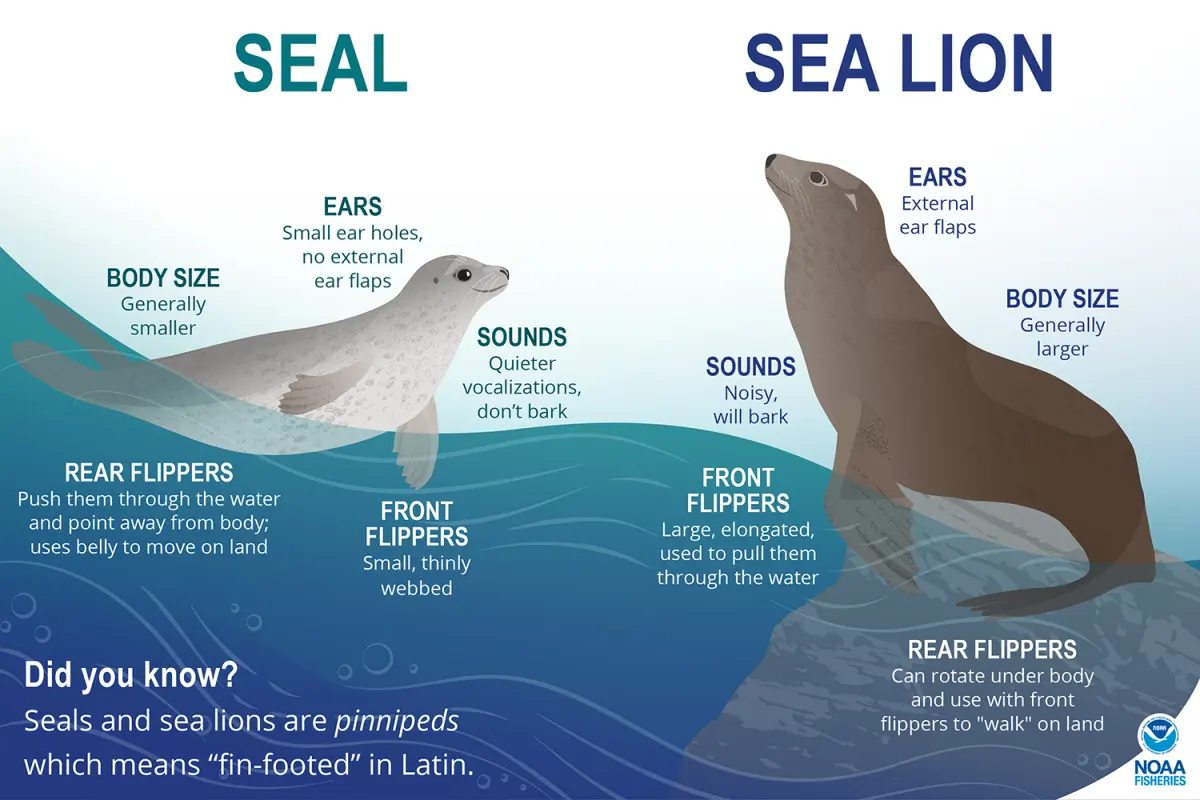
Seals and sea lions are both pinnipeds, but they belong to different families. True seals lack external ear flaps, have small flippers, and move on land by wiggling on their bellies. Sea lions possess visible ear flaps, large front flippers for walking on land, and are generally more vocal and social animals.
On this page
How to tell the difference between seals and sea lions
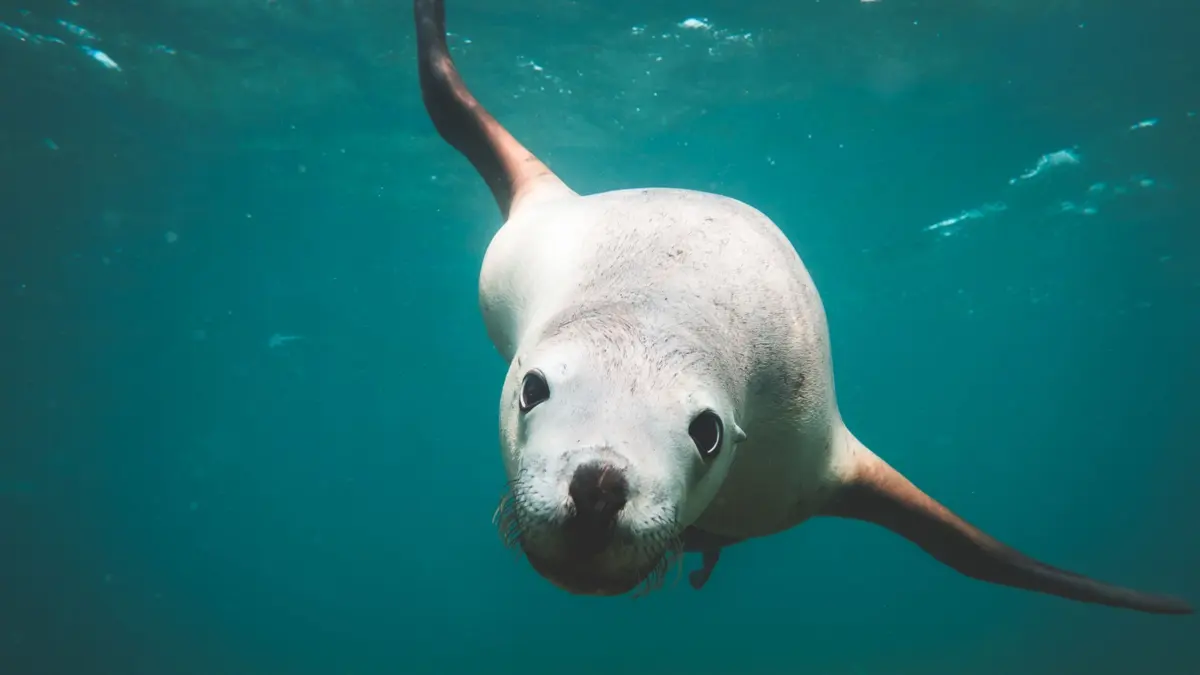
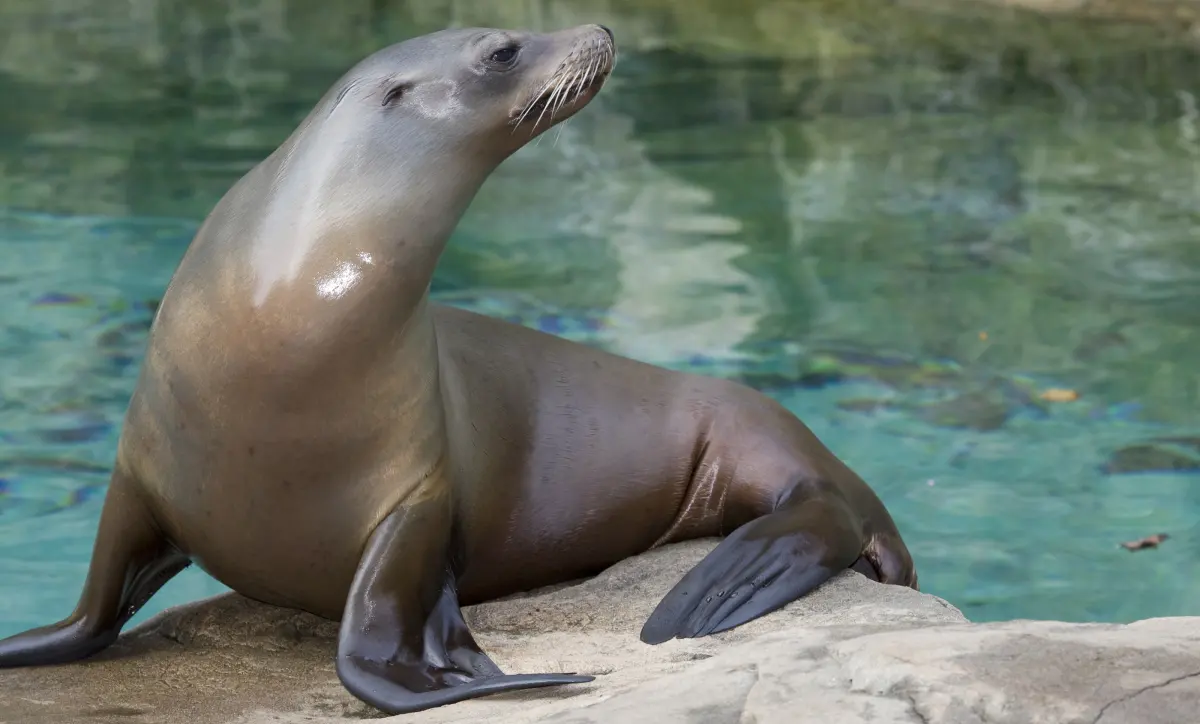
The primary physical distinction lies in the ears and the limbs. Seals, members of the Phocidae family, have tiny holes on the sides of their heads rather than external ear flaps. In contrast, sea lions, part of the Otariidae family, feature small, visible ear flaps that protrude from their heads. This anatomical difference is the most reliable way to identify them from a distance.
Beyond the ears, their method of locomotion is fundamentally different. Because seals have short front flippers, they cannot support their weight on land and must scoot or "inchworm" across the sand. Sea lions have much larger, stronger front flippers that allow them to rotate their hind flippers forward. This unique skeletal structure enables them to walk or gallop on land with surprising agility.
- Seals: No external ear flaps, short front flippers, wiggles on belly.
- Sea lions: Visible ear flaps, long front flippers, walks on all fours.
Why sea lions are louder than seals
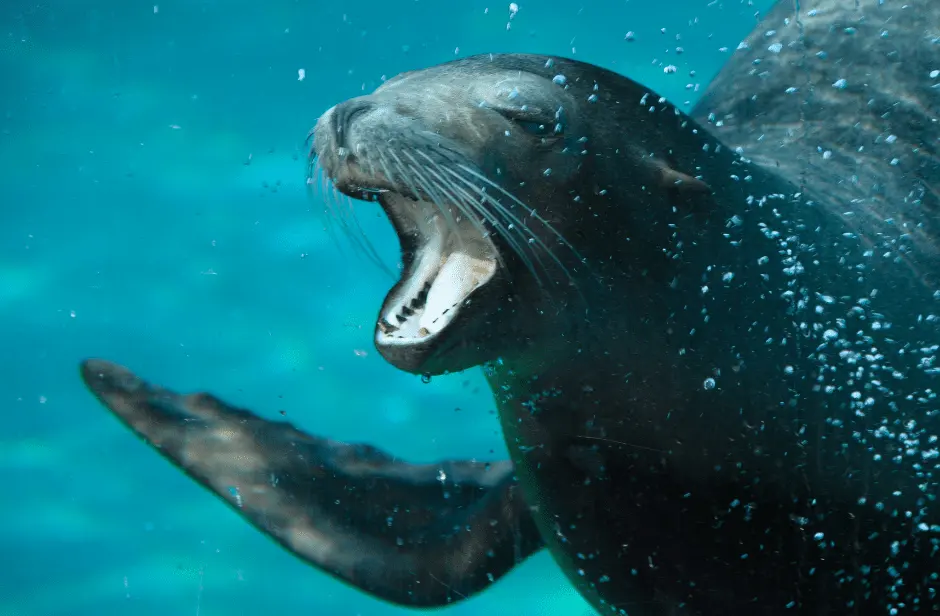
If you visit a coastal haul-out site, you will likely notice that sea lions are significantly more vocal than seals. Sea lions use a wide array of barks, roars, and grunts to communicate with one another, especially during breeding seasons. This behavior is linked to their highly social nature, as they often congregate in large, noisy colonies on rocky shores or piers.
True seals, by contrast, are generally solitary and much quieter animals. While they do produce vocalizations, such as underwater grunts or slaps against the water surface, they rarely engage in the constant barking associated with sea lions. Their preference for silence is an evolutionary adaptation that helps them remain inconspicuous to predators while resting on ice floes or isolated beaches. If you hear a loud, chaotic chorus of barking at the beach, you are almost certainly observing a group of sea lions.
Where seals and sea lions live
While both animals are semi-aquatic, they often occupy different environmental niches. Seals are frequently found in colder, polar regions, such as the Arctic or Antarctic, where they use ice floes as platforms for resting and giving birth. Their thick layers of blubber provide the necessary insulation to survive in freezing water temperatures for extended periods.
Sea lions generally prefer temperate or tropical waters. They are commonly spotted along the Pacific coast of North America, from the chilly waters of Alaska down to the warmer regions of Mexico. Because they are more agile on land, they often choose rocky outcrops or human-made structures like docks and jetties to haul out.
- Check the local climate: Seals dominate polar regions; sea lions prefer temperate coasts.
- Observe the terrain: Look for seals on ice or sand; look for sea lions on rocks or docks.
- Assess the group size: Large, crowded colonies are usually sea lions.
Common mistakes when identifying pinnipeds
A frequent error is assuming that any marine mammal resting on a beach is a seal. Many people use the term "seal" as a catch-all, but this leads to confusion when observing creatures that are clearly walking on their flippers. If the animal is upright and moving with purpose, it is almost certainly a sea lion or a fur seal, which shares the ear-flap trait.
Another mistake is focusing solely on size. While some seals, like the elephant seal, are massive, others are quite small. Size is not a reliable indicator because both families contain species with vast weight differences. Instead of guessing based on bulk, always look for the ear flaps first. If you cannot see ears, look at how the animal moves. If it is struggling to move forward by dragging its body, you are looking at a true seal.
How to safely observe these animals
Observing pinnipeds in their natural habitat is a rewarding experience, but it requires caution and respect. The most important rule is to maintain a significant distance, as these animals can become aggressive if they feel threatened or cornered. Use binoculars or a camera zoom lens to get a better view rather than approaching them on foot.
Never attempt to feed or touch a seal or sea lion. Not only is this illegal in many jurisdictions under wildlife protection laws, but it also disrupts their natural behavior and can expose them to human diseases. If you see a pup alone on the beach, do not assume it is abandoned; the mother is likely nearby hunting. Observe from afar and contact local wildlife authorities only if the animal appears visibly injured or tangled in fishing gear.
Key facts
- Seals have small, internal ear holes, while sea lions have visible, external ear flaps.
- Sea lions use their large front flippers to "walk" on land, whereas seals must wiggle on their bellies.
- Seals have short, stubby front flippers with claws, while sea lions have long, leathery, clawless front flippers.
- Sea lions are generally more vocal and bark loudly, while seals are typically quiet and make grunting or chirping sounds.
- Look at the swimming style: seals use their hind flippers to propel themselves, while sea lions use their front flippers like wings.
- When observing from a distance, remember that sea lions can rotate their hind flippers forward to support their weight, but seals cannot.
The bottom line
The primary distinction between these marine mammals lies in their physical anatomy and movement. Sea lions possess external ear flaps and can rotate their hind flippers to walk on land, while seals have internal ear holes and must scoot on their bellies. By observing their ear structures and how they navigate both on the beach and in the water, you can easily identify which species you are viewing.
People also ask
Are seals or sea lions more aggressive toward humans?
Sea lions are generally more curious and bold, but both animals can be aggressive if they feel threatened or cornered. It is best to maintain a distance of at least 150 feet to avoid startling them.
Do both seals and sea lions live in the same environments?
While both are pinnipeds, they often occupy different niches. Seals are more adapted to icy, polar waters, while sea lions prefer temperate or tropical coastal regions.
How can I tell the difference between them while they are in the water?
Watch their movement; sea lions swim with powerful strokes of their front flippers, appearing to "fly" underwater. Seals keep their front flippers tucked against their bodies and steer primarily with their hind flippers.
Can seals and sea lions interbreed?
No, seals and sea lions belong to different biological families and cannot interbreed. They have distinct evolutionary paths that separated millions of years ago.
Do both animals have fur?
Yes, both have fur, but sea lions often have a thicker, more visible coat. Some seal species have a dense underfur, while others rely more on a thick layer of blubber for insulation.
Which animal is commonly seen performing tricks in zoos?
Sea lions are the ones typically seen in shows because they are more social, agile on land, and easier to train. Their ability to walk on their flippers makes them more interactive with human trainers.
This answer was created with the help of AI research tools and reference sources. Spotted an error? Let us know — we correct mistakes quickly. See our editorial policy.