What is space in art?
Short answer
Space in art refers to the area provided for a particular purpose, encompassing the distance or area between, around, above, below, or within objects. It is a fundamental element of design that artists manipulate to create the illusion of depth, organize compositions, and establish a sense of scale or atmosphere within a work.
On this page
What is positive and negative space
Positive space refers to the actual subjects or objects depicted in a work of art, such as a figure, a tree, or a building. Negative space is the area that surrounds these subjects, often called the background or empty space. Artists must balance these two elements to ensure the composition does not feel cluttered or overly sparse.
Effective use of negative space can define the boundaries of the positive space and bring clarity to the viewer. For example, in the minimalist paintings of Ellsworth Kelly, the negative space is just as important as the colored shapes themselves. By intentionally designing the empty areas, artists guide the viewer's eye toward the focal point.
- Positive space: The primary subject matter or "filled" areas.
- Negative space: The "empty" areas that define the shape of the subject.
- Balance: The harmonious distribution of both types of space.
How to create depth in art
Creating the illusion of three-dimensional space on a two-dimensional surface is a primary goal for many artists. Techniques such as linear perspective, developed during the Italian Renaissance by figures like Filippo Brunelleschi, allow artists to create a mathematical system for depth. By using a vanishing point on a horizon line, parallel lines appear to converge as they recede into the distance.
Beyond linear perspective, artists use atmospheric perspective to suggest depth. This involves painting distant objects with less detail, lighter values, and cooler, bluer tones, mimicking how the atmosphere scatters light. Overlapping objects also creates a simple yet powerful sense of spatial layering, as the brain naturally interprets the object in front as being closer to the viewer.
- Establish a horizon line to determine the eye level of the viewer.
- Select one or more vanishing points on that horizon line.
- Draw orthogonal lines from the edges of objects toward the vanishing point.
- Reduce the size and detail of objects as they approach the vanishing point.
Why space matters in composition
Space acts as the "breathing room" for a composition. Without adequate space, a piece can feel claustrophobic or chaotic, making it difficult for the viewer to identify the main subject. Conversely, excessive empty space can make a subject feel isolated or insignificant. The strategic use of space dictates the rhythm and mood of an artwork.
In photography and graphic design, the "rule of thirds" is often used to manage space effectively. By placing the subject off-center, the artist creates dynamic tension and utilizes the remaining space to provide context. This intentional arrangement prevents the composition from feeling static and encourages the viewer to scan the entire frame, enhancing the overall engagement with the piece.
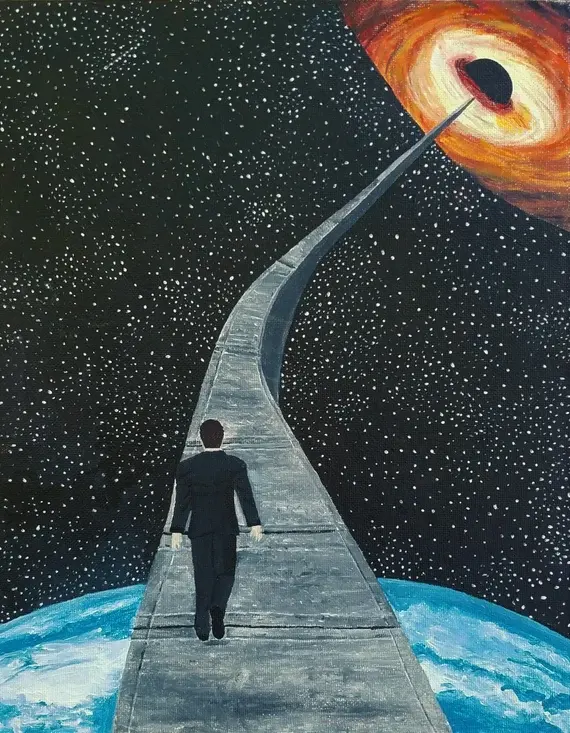
Common mistakes when using space
A frequent error for beginners is the "horror vacui" effect, or the fear of empty space. This leads to overcrowding a canvas with too many details, which overwhelms the viewer and destroys the focal point. To avoid this, artists should identify one primary area of interest and allow the surrounding space to remain relatively simple or neutral.
Another common mistake is inconsistent scale, where objects meant to be in the background are drawn as large as foreground objects. This flattens the image and confuses the viewer's spatial perception. Always verify that the size of your objects corresponds to their intended distance from the viewer. If an object is meant to be far away, it must be smaller and less saturated than those in the foreground.
Best techniques for practicing spatial awareness
To improve your spatial skills, start by sketching simple geometric shapes in different sizes to practice overlapping. Move on to drawing still-life arrangements, focusing specifically on the shapes of the negative space between objects rather than the objects themselves. This exercise, often taught in foundational drawing courses, helps bypass the brain's tendency to label objects and instead focuses on the actual spatial relationships.
You can also study masterworks to analyze how artists manipulate space. Look at the works of M.C. Escher for complex, impossible spaces, or the vast, empty landscapes of Georgia O'Keeffe. By consciously observing how these artists distribute their subjects across the frame, you will develop a better intuition for balancing your own compositions. Consistent practice in observing the world around you will eventually make these spatial decisions second nature.
Key facts
- Positive space refers to the actual subjects or objects in an artwork, while negative space is the area surrounding them.
- Overlapping objects is the simplest way to create the illusion of depth on a flat, two-dimensional surface.
- Linear perspective uses a vanishing point on the horizon line to make parallel lines appear to converge in the distance.
- Atmospheric perspective mimics how distant objects appear lighter, bluer, and less detailed due to particles in the air.
- Foreshortening is a technique that compresses an object or figure to create the illusion that it is projecting toward the viewer.
- Scale variation, where distant objects are drawn smaller than foreground objects, is a fundamental tool for establishing spatial hierarchy.
The bottom line
Space in art is the essential tool for defining the relationship between objects and their environment. By mastering positive and negative space, perspective, and scale, artists transform flat surfaces into immersive, three-dimensional experiences. Whether through the precise geometry of linear perspective or the subtle shifts of atmospheric depth, understanding these spatial principles allows you to guide the viewer’s eye and create compelling, balanced compositions.
People also ask
How can I practice using negative space in my drawings?
Focus on drawing the shapes of the empty areas around your subject rather than the subject itself. This technique forces your brain to see proportions accurately instead of relying on symbolic representations of objects.
What is the difference between two-point and three-point perspective?
Two-point perspective uses two vanishing points on the horizon line to depict objects viewed from an angle. Three-point perspective adds a third vanishing point above or below the horizon, creating a dramatic bird's-eye or worm's-eye view.
Why do my drawings look flat?
Flatness often results from ignoring the interplay between foreground, middle ground, and background. Incorporate overlapping, varied sizes, and atmospheric depth to push elements back and pull others forward.
Read the full answer →What is the most common mistake when creating space?
Beginners often place all objects on a single horizontal line across the bottom of the page. Varying the placement of objects at different heights creates a more realistic sense of depth and ground plane.
How does color affect the perception of space?
Warm, bold colors tend to advance toward the viewer, while cool, muted colors appear to recede. Using high-contrast colors in the foreground and low-contrast, desaturated colors in the background enhances spatial depth.
Can space be used in abstract art?
Yes, abstract artists use spatial tension through the placement, size, and layering of shapes. Even without recognizable subjects, the arrangement of forms creates a visual rhythm that suggests depth or compression.
This answer was created with the help of AI research tools and reference sources. Spotted an error? Let us know — we correct mistakes quickly. See our editorial policy.