What is momentum?
Short answer
Momentum is a physical quantity defined as the product of an object's mass and its velocity. Represented by the symbol "p," it measures the amount of motion an object possesses. Because it includes velocity, momentum is a vector quantity, meaning it has both a specific magnitude and a distinct direction in space.
On this page
What is the formula for momentum?
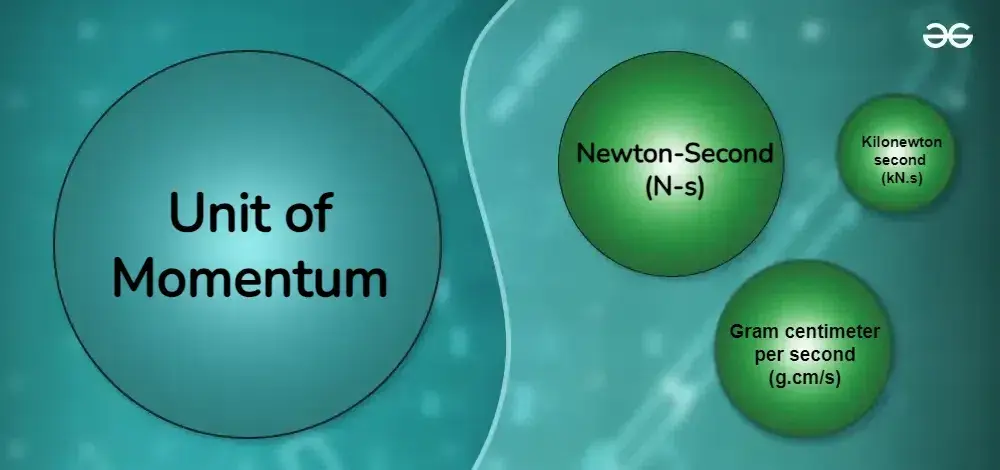
In physics, momentum is calculated using the simple equation p = mv, where "p" stands for momentum, "m" represents mass, and "v" denotes velocity. Mass is typically measured in kilograms, while velocity is measured in meters per second. Consequently, the standard unit for momentum is the kilogram-meter per second (kg·m/s).
Because velocity is a vector, momentum is also a vector. If an object moves in a straight line, its momentum points in that same direction. If the object changes direction, its momentum changes as well, even if its speed remains constant. Understanding this distinction is crucial for analyzing collisions and complex movements in mechanical systems.
- Identify the mass of the object in kilograms.
- Determine the velocity of the object, including its direction.
- Multiply the mass by the velocity to find the momentum.
- Assign the direction of the velocity to the final momentum value.
Why does momentum matter in physics?
Momentum is a fundamental concept because it is conserved in isolated systems. The law of conservation of momentum states that the total momentum of a closed system remains constant unless acted upon by an external force. This principle explains why a cannon recoils when it fires a projectile or why two billiard balls behave predictably during a collision.
This conservation law allows scientists and engineers to predict the outcomes of interactions between objects. By calculating the momentum before an impact, one can determine the velocities of objects after they collide. This is essential in fields ranging from automotive safety engineering to the study of subatomic particles in high-energy physics.
- It allows for the calculation of impact forces during accidents.
- It explains the motion of rockets as they expel gas.
- It provides a basis for understanding rotational motion and angular momentum.
- It helps in analyzing the dynamics of planetary orbits.
How do collisions affect momentum?
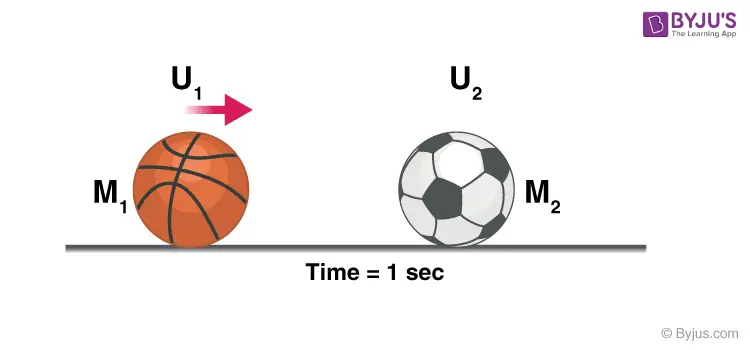
Collisions are generally categorized as either elastic or inelastic based on how momentum and kinetic energy are handled. In an elastic collision, both momentum and kinetic energy are conserved, meaning the objects bounce off each other without losing energy to heat or deformation. A classic example is the interaction between two steel balls on a Newton’s cradle.
In an inelastic collision, momentum is still conserved, but kinetic energy is not. Some energy is converted into sound, heat, or structural damage. A perfectly inelastic collision occurs when two objects stick together after impact, such as a lump of clay hitting a wall or two vehicles locking bumpers during a traffic accident.
- Elastic: Objects bounce apart; kinetic energy is conserved.
- Inelastic: Objects deform or stick; kinetic energy is lost.
- Perfectly Inelastic: Objects move together as a single mass post-impact.
- Explosion: The reverse of an inelastic collision where internal energy increases momentum.
How to calculate momentum in real-world scenarios?
To calculate momentum accurately, you must ensure your units are consistent. A common mistake is failing to convert grams to kilograms or kilometers per hour to meters per second. Always perform these conversions before applying the formula p = mv to avoid significant errors in your final result.
When dealing with multiple objects, you must sum the individual momentums to find the total momentum of the system. Remember that because momentum is a vector, you must account for direction using positive and negative signs. For example, if one object moves right at 5 m/s and another moves left at 5 m/s, their total momentum is zero.
- Convert all mass values to kilograms (kg).
- Convert all speed values to meters per second (m/s).
- Assign a positive sign to one direction and a negative to the opposite.
- Add the individual momentum values together to get the system total.
Common mistakes when analyzing momentum?
A frequent error is confusing momentum with kinetic energy. While both depend on mass and velocity, kinetic energy is a scalar quantity calculated as 0.5mv², and it does not account for direction. Relying on energy equations to solve problems involving directional changes will lead to incorrect conclusions, as energy does not capture the vector nature of motion.
Another mistake is ignoring external forces like friction or air resistance when assuming conservation. In a real-world scenario, these forces act as external agents that change the momentum of a system over time. To apply the conservation law correctly, you must isolate the system or account for the impulse provided by these external forces during the observation period.
- Failing to define a coordinate system for direction.
- Forgetting to account for the mass of all objects involved in a collision.
- Assuming momentum is lost when it is actually transferred to the surroundings.
- Confusing the impulse-momentum theorem with simple conservation of momentum.
Key facts
- Momentum is the product of an object's mass and its velocity, expressed by the formula p = mv.
- Sir Isaac Newton first formally defined this concept in his 1687 work, Philosophiæ Naturalis Principia Mathematica.
- Momentum is a vector quantity, meaning it possesses both a magnitude and a specific direction.
- In a closed system, the total momentum remains constant, a principle known as the law of conservation of momentum.
- A heavy truck moving at 5 mph has the same momentum as a light car moving at 50 mph if their mass-velocity products are equal.
- When calculating momentum, always use SI units: kilograms for mass and meters per second for velocity.
The bottom line
Momentum is a fundamental physical property describing the quantity of motion an object possesses. By multiplying mass by velocity, you can predict how objects interact during collisions and movements. Understanding this concept allows engineers to design safer vehicles and helps scientists analyze everything from subatomic particles to planetary orbits. Mastering momentum is essential for grasping how forces shape the physical world around us every day.
People also ask
How does momentum differ from kinetic energy?
While momentum is mass times velocity, kinetic energy is one-half mass times velocity squared. Momentum is a vector that accounts for direction, whereas kinetic energy is a scalar quantity that only measures magnitude.
What is an impulse?
An impulse is the change in momentum resulting from a force applied over a specific period of time. It is calculated by multiplying the force by the duration of the impact.
Why do cars have crumple zones?
Crumple zones increase the time it takes for a vehicle to come to a complete stop during a collision. By extending the impact duration, the force exerted on the passengers is significantly reduced.
Can momentum be negative?
Yes, because momentum is a vector, a negative value simply indicates that the object is moving in the opposite direction of your chosen reference point. If moving right is positive, moving left is negative.
Does friction affect the conservation of momentum?
Friction is an external force that acts on a system, which can cause momentum to change over time. To observe true conservation, you must account for all external forces acting on the objects involved.
How do rockets move in space without pushing against air?
Rockets move by ejecting mass at high velocity in one direction, which creates an equal and opposite momentum change for the rocket. This follows Newton’s third law of motion.
This answer was created with the help of AI research tools and reference sources. Spotted an error? Let us know — we correct mistakes quickly. See our editorial policy.

![9+ Polar Moment Of Inertia Formulas [2026]](/img/d0/what-is-inertia-1.webp)