How do solar panels work?
Short answer
Solar panels convert sunlight into electricity using the photovoltaic effect. When photons from sunlight strike silicon cells, they knock electrons loose, creating an electric current. This direct current (DC) is then sent to an inverter, which transforms it into alternating current (AC) for use in your home’s electrical appliances and lighting.
On this page
How do solar panels work scientifically?
At the heart of a solar panel is the photovoltaic cell, typically made from crystalline silicon. Silicon is a semiconductor, meaning it can conduct electricity under specific conditions. Manufacturers dope the silicon with elements like phosphorus and boron to create a positive-negative (P-N) junction. This structure creates an internal electric field that acts as a gatekeeper for electrons.
When sunlight hits the panel, photons—tiny packets of solar energy—collide with the silicon atoms. This energy transfer knocks electrons free from their atomic bonds. Because of the internal electric field, these loose electrons are pushed toward the conductive metal plates on the sides of the cell. This movement of electrons creates a flow of electricity.
The process relies on several key components working in tandem:
- Photons: Particles of light that provide the energy to displace electrons.
- Silicon layer: The semiconductor material that forms the base of the cell.
- Electric field: The force that directs the flow of current.
- Metal contacts: Conductive strips that collect the generated current for external use.
How do solar panels generate usable electricity?
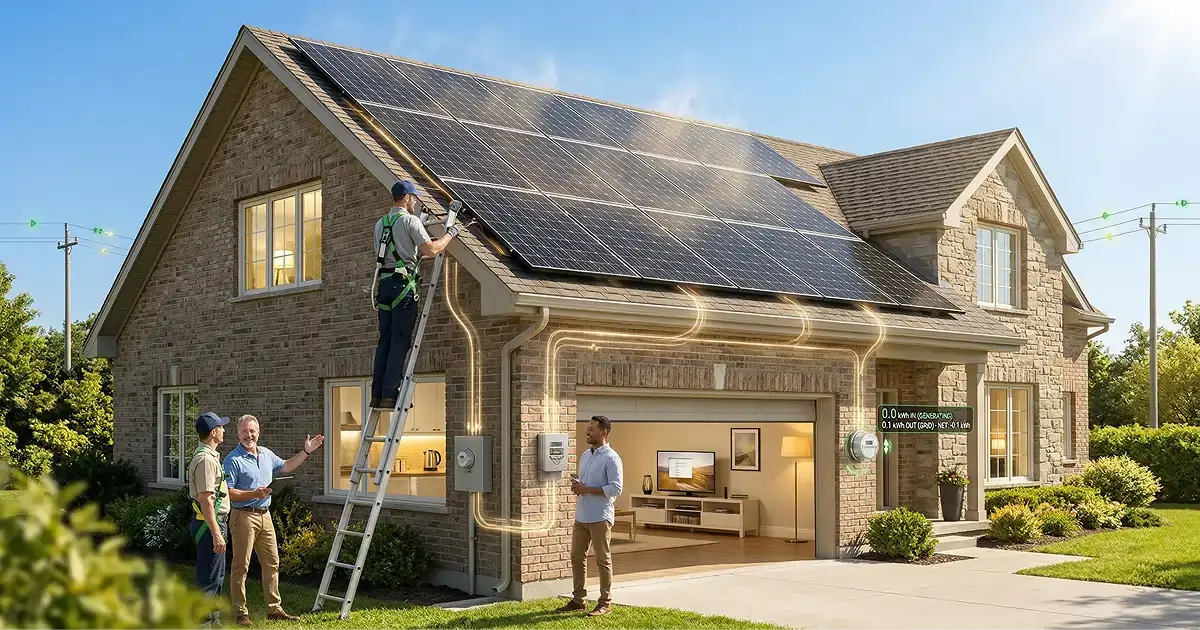
The electricity produced by a solar panel is direct current (DC), where electrons flow in one constant direction. However, most household appliances and the electrical grid operate on alternating current (AC), where the direction of current reverses periodically. To bridge this gap, every solar system requires an inverter to convert the DC output into usable AC power.
Once the inverter processes the electricity, it flows to your home’s main service panel. If your panels produce more energy than your home consumes, the excess is typically sent back to the local utility grid through a process called net metering. If the panels produce less than you need, the grid automatically supplies the remainder.
Key stages in the energy conversion process include:
- Sunlight strikes the panel surface to generate DC power.
- The inverter converts DC power into standard AC power.
- Electricity flows through your home’s breaker box to power devices.
- Excess energy is exported to the grid or stored in a battery.
How long do solar panels last?
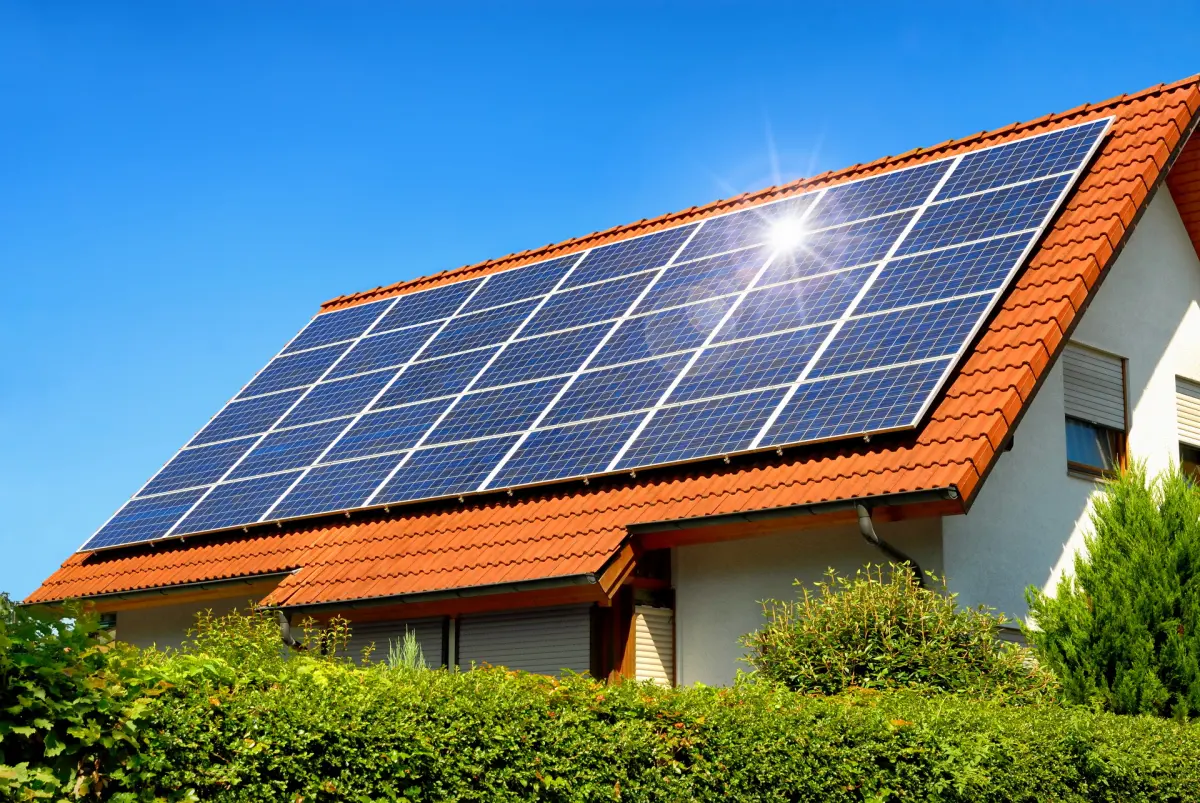
Solar panels are designed for long-term durability, with most manufacturers offering performance warranties of 25 years. While the power output gradually declines over time due to environmental exposure and material degradation, panels do not simply stop working after this period. Many systems continue to produce 80% or more of their original capacity even after three decades of operation.
Environmental factors play a significant role in longevity. High heat, heavy snow loads, and extreme wind can stress the mounting hardware and the glass surface. However, modern panels are tested against rigorous standards, such as those set by the International Electrotechnical Commission (IEC), to ensure they can withstand hail, humidity, and thermal cycling.
To maximize the lifespan of your installation:
- Keep the panels free of debris, such as leaves or bird droppings.
- Ensure the inverter is housed in a cool, well-ventilated area.
- Monitor your system’s output regularly to identify potential hardware failures.
- Schedule professional inspections every few years to check for loose connections.
What are the common mistakes when installing solar panels?
One of the most frequent errors is failing to account for shading. Even a small amount of shade from a nearby tree or chimney can significantly reduce the efficiency of an entire string of panels. If one panel is blocked, it can act as a bottleneck, lowering the output of the connected series. Proper site assessment is essential to ensure maximum sun exposure throughout the day.
Another mistake is neglecting the condition of the roof. Solar panels are heavy and expected to remain in place for decades. If your roof is nearing the end of its life, it is often more cost-effective to replace the shingles before installing the solar array. Removing and reinstalling panels later to fix a leaking roof is an expensive and labor-intensive process.
Avoid these common pitfalls during the planning phase:
- Underestimating energy needs by failing to review past utility bills.
- Choosing the lowest-cost equipment without considering efficiency ratings.
- Ignoring local zoning laws or Homeowners Association (HOA) restrictions.
- Failing to verify the credentials and insurance of the installation contractor.
Why is solar energy efficiency important?
Efficiency refers to how much sunlight a panel can convert into usable electricity. Most residential panels have an efficiency rating between 17% and 23%. While this may seem low, it is sufficient to power a standard home given the vast amount of energy provided by the sun. Higher efficiency panels are smaller, allowing you to generate more power in limited roof space.
Advancements in technology, such as monocrystalline cells and bifacial panels, continue to push these boundaries. Bifacial panels are particularly effective because they capture sunlight on both the front and back sides, utilizing reflected light from the roof or ground. As efficiency increases, the total cost of ownership decreases, making solar an increasingly accessible solution for homeowners looking to reduce their carbon footprint and long-term utility expenses.
Key facts
- Solar panels convert sunlight into electricity using the photovoltaic effect, a process first observed by Edmond Becquerel in 1839.
- Most residential panels use silicon, a semiconductor material that releases electrons when struck by photons from sunlight.
- A standard solar cell produces about 0.5 to 0.6 volts of direct current (DC) electricity.
- An inverter is a mandatory component that converts the panel's DC electricity into the alternating current (AC) used by home appliances.
- Solar panels perform best when oriented toward the equator, which is true south in the Northern Hemisphere and true north in the Southern Hemisphere.
- Avoid shading your panels with trees or chimneys, as even a small amount of shade can significantly reduce the power output of an entire string of panels.
The bottom line
Solar panels function by capturing sunlight through silicon cells, which trigger the flow of electrons to create electricity. By converting this energy into usable AC power, homeowners can significantly reduce their reliance on traditional utility grids. While installation requires careful planning regarding placement and maintenance, the technology offers a reliable, long-term solution for generating clean, renewable energy that lowers monthly utility costs and environmental impact.
People also ask
Do solar panels work on cloudy days?
Yes, solar panels still generate electricity on cloudy or overcast days, though their efficiency is reduced. They rely on light intensity rather than direct heat, so they continue to function as long as some daylight reaches the cells.
How long do solar panels typically last?
Most solar panels are designed to last between 25 and 30 years. While they do not stop working after this period, their energy production gradually declines as the materials age.
Can I go completely off-grid with solar power?
It is possible to go off-grid, but it requires a robust battery storage system to provide electricity during the night or periods of low sunlight. Without a battery, you would lose power whenever the sun is not shining.
Do solar panels require much maintenance?
Solar panels are generally low-maintenance because they have no moving parts. Occasional cleaning with water to remove dust, leaves, or bird droppings is usually sufficient to maintain optimal performance.
What happens to excess electricity produced by my panels?
In many regions, you can participate in net metering, which allows you to send excess electricity back to the utility grid. You receive credits on your utility bill for the energy you contribute to the local power supply.
Are solar panels expensive to install?
While the upfront cost of purchasing and installing a solar system is significant, prices have dropped by over 80% since 2010. Many governments offer tax credits or rebates that help offset these initial expenses.
This answer was created with the help of AI research tools and reference sources. Spotted an error? Let us know — we correct mistakes quickly. See our editorial policy.