Who invented the stop sign?
Short answer
The modern stop sign was not invented by a single individual but evolved through the efforts of William Phelps Eno and various traffic safety organizations. Eno, a businessman often called the father of traffic safety, proposed the first stop sign in 1915, which was later standardized by the Mississippi Valley Association of State Highway Departments in 1922.
On this page
Who invented the stop sign?
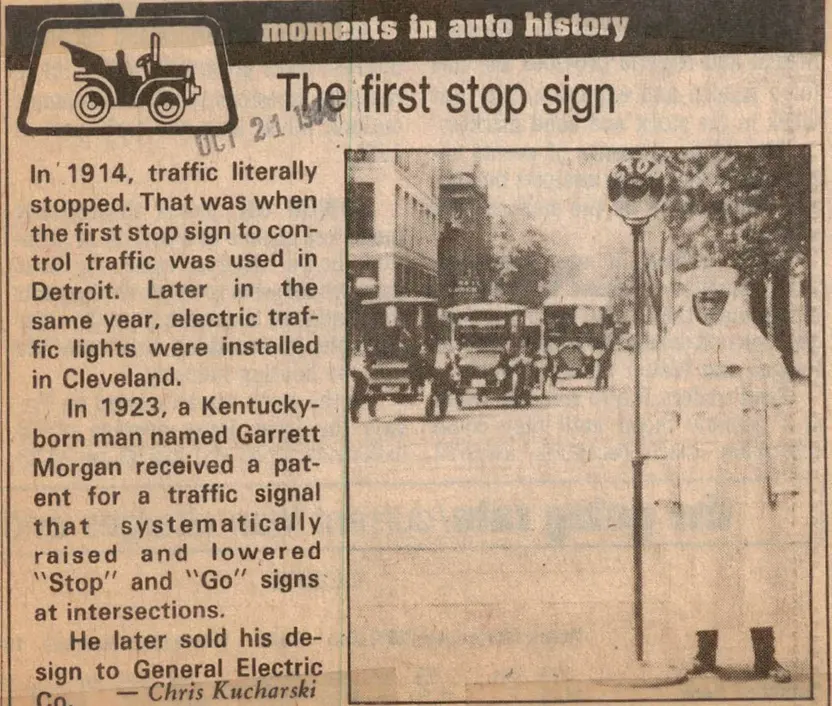
The stop sign emerged from the chaotic transition period when horse-drawn carriages shared roads with early automobiles. William Phelps Eno, a wealthy New Yorker who never learned to drive, was the primary architect of early traffic management. In 1900, he published "Rules of the Road," which outlined the first systematic approach to traffic flow. By 1915, he formally proposed the use of a stop sign to regulate intersections, though his initial designs were far from the standardized markers seen today.
Eno’s vision was refined by the Mississippi Valley Association of State Highway Departments in 1922. This group sought to bring order to the growing number of regional traffic signs. They determined that the stop sign should be octagonal, a shape chosen specifically to distinguish it from other road signs even in poor visibility or at night. This decision ensured that drivers could identify the command to stop by shape alone, regardless of whether the sign was obscured by snow or dirt.
Why are stop signs octagonal?
The octagonal shape of the stop sign was a strategic choice made to improve driver safety during the early 20th century. Before this standardization, signs came in various shapes, including squares, circles, and triangles. The eight-sided design was selected because it is unique among standard road signs, making it instantly recognizable to motorists from a distance. This distinct silhouette serves as a fail-safe; even if the paint fades or the sign is covered in frost, the shape conveys the message clearly.
Furthermore, the octagonal shape allows for better structural integrity and mounting efficiency. By using an eight-sided board, engineers could easily mount the signs on standard posts without the corners protruding into traffic lanes or creating unnecessary hazards. The design has remained remarkably consistent for over a century, proving that the original ergonomic and psychological considerations were highly effective. Today, the octagonal shape is recognized globally as the universal symbol for a mandatory halt at an intersection.
How did stop sign colors change?
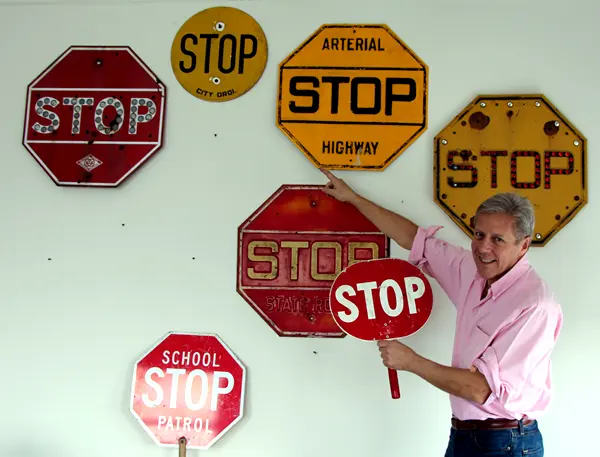
The color of the stop sign has undergone significant evolution to improve visibility and compliance. Originally, early stop signs were often yellow with black lettering, as yellow was considered the most visible color for daylight and headlights. However, the development of high-intensity reflective materials in the mid-20th century allowed for more effective color combinations. In 1954, the United States officially transitioned to the red background with white lettering that is standard today.
This change was driven by the need for a color that signaled "danger" or "stop" instantly. Red was chosen because it is psychologically associated with warnings and is highly visible against most natural backgrounds. The transition involved several key phases:
- 1915-1922: Various experimental colors, often white or yellow backgrounds with black text.
- 1922-1954: Standardization on yellow backgrounds with black lettering to improve nighttime visibility.
- 1954-Present: Adoption of red backgrounds with white text, utilizing reflective sheeting for maximum night-time impact.
Common mistakes when approaching a stop sign
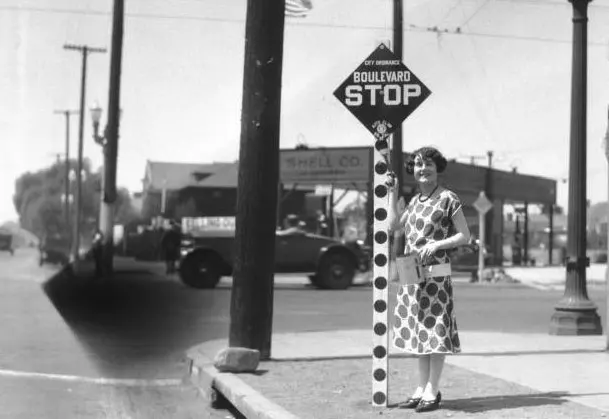
Many drivers fail to realize that a "rolling stop" is a common traffic violation that can lead to accidents. A legal stop requires the vehicle to come to a complete, full halt, where the motion of the car ceases entirely. Drivers often mistakenly believe that slowing down to a crawl is sufficient, but law enforcement agencies define a stop by the cessation of tire rotation. Failing to stop completely is a leading cause of intersection collisions, especially in residential areas where pedestrians are present.
Another frequent error is failing to stop behind the designated limit line or crosswalk. Drivers often pull too far into the intersection to gain a better view of oncoming traffic, which forces pedestrians to walk around the vehicle. To avoid these errors, follow these steps:
- Come to a complete stop before the white limit line or the crosswalk.
- Look left, then right, then left again to ensure the intersection is clear.
- If visibility is poor, pull forward slowly only after the initial full stop to gain a better vantage point.
- Proceed only when it is safe to do so, yielding the right-of-way to any pedestrians or vehicles already in the intersection.
Best practices for safe intersection navigation
Navigating intersections safely requires constant vigilance and an understanding of right-of-way rules. When multiple vehicles arrive at a four-way stop simultaneously, the driver on the right generally has the right-of-way. If you are unsure about who should proceed, it is always safer to wait and allow the other driver to go first. Defensive driving at these locations prevents the confusion that often leads to "gridlock" or minor fender benders.
In addition to following right-of-way rules, drivers should remain aware of their surroundings at all times. Distractions like mobile phones or loud music significantly decrease a driver's ability to hear sirens or notice other vehicles entering the intersection. By maintaining focus and adhering to the standardized rules of the road, drivers contribute to the overall efficiency of the traffic system. Remember that the stop sign is a tool designed for your protection; respecting it ensures that every traveler reaches their destination without incident.
Key facts
- William Phelps Eno, often called the "father of traffic safety," proposed the first octagonal stop sign in 1915.
- Before standardized signs, many intersections used simple wooden boards or lacked any formal markings.
- The Manual on Uniform Traffic Control Devices (MUTCD) officially adopted the octagonal shape in 1923 to distinguish it from other signs.
- Stop signs were originally painted yellow with black lettering because high-visibility red pigments were not durable enough for outdoor use.
- The red background became the industry standard in 1954 after the development of fade-resistant reflective materials.
- A standard stop sign in the United States must be 30 inches by 30 inches and mounted at least 7 feet above the ground.
The bottom line
The stop sign evolved from William Phelps Eno’s early traffic management theories into the standardized octagonal icon recognized globally today. While the shape was established in 1923, the iconic red and white color scheme followed decades later due to advancements in reflective technology. Understanding the history and proper function of these signs is essential for maintaining road safety and ensuring predictable traffic flow for all motorists.
People also ask
Why are stop signs octagonal?
The eight-sided shape was chosen so that drivers approaching from the back of the sign could identify it as a stop sign by its unique silhouette. This design helps prevent confusion with other road signs, especially in snowy conditions or at night.
Are all stop signs the same size?
While 30 inches is the standard for most residential streets, larger 36-inch or 48-inch signs are used on high-speed highways. The size increases to ensure that drivers traveling at higher velocities have enough time to perceive the sign and react accordingly.
What happens if a stop sign is missing or knocked down?
If you encounter a missing sign at an intersection, treat the situation as an all-way stop or use extreme caution. Report the downed sign to local public works or law enforcement immediately to prevent accidents.
Do stop signs have to be reflective?
Yes, all regulatory signs must be retroreflective to ensure they are visible to drivers using headlights at night. Modern signs use high-intensity prismatic sheeting to bounce light back toward the vehicle.
Is it legal to perform a "rolling stop"?
No, a rolling stop is considered a traffic violation in most jurisdictions. You must bring your vehicle to a complete halt where the wheels stop rotating entirely before proceeding.
Who is responsible for installing stop signs?
Local municipal, county, or state departments of transportation are responsible for traffic signage. They conduct engineering studies to determine if a stop sign is necessary based on traffic volume and accident history.
This answer was created with the help of AI research tools and reference sources. Spotted an error? Let us know — we correct mistakes quickly. See our editorial policy.