How do you draw a peace sign?
Short answer
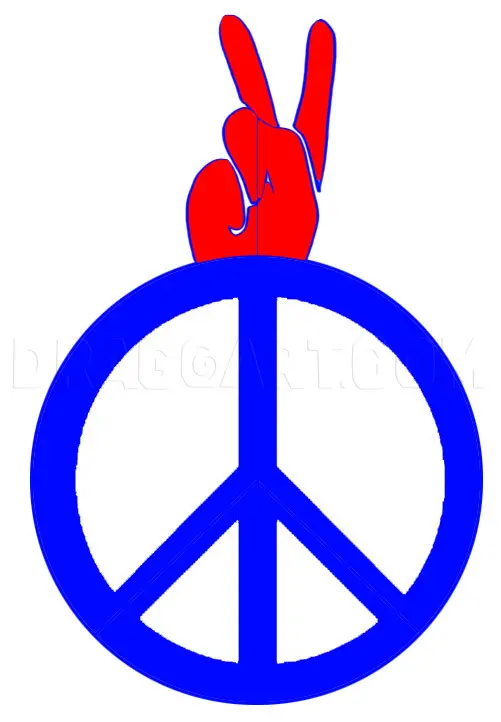
Draw a circle, then add a vertical line from the top to the bottom center. Finally, draw two diagonal lines from the center point of the vertical line to the bottom left and right edges of the circle. This iconic symbol, created by Gerald Holtom in 1958, represents nuclear disarmament.
On this page
How to draw a peace sign step by step
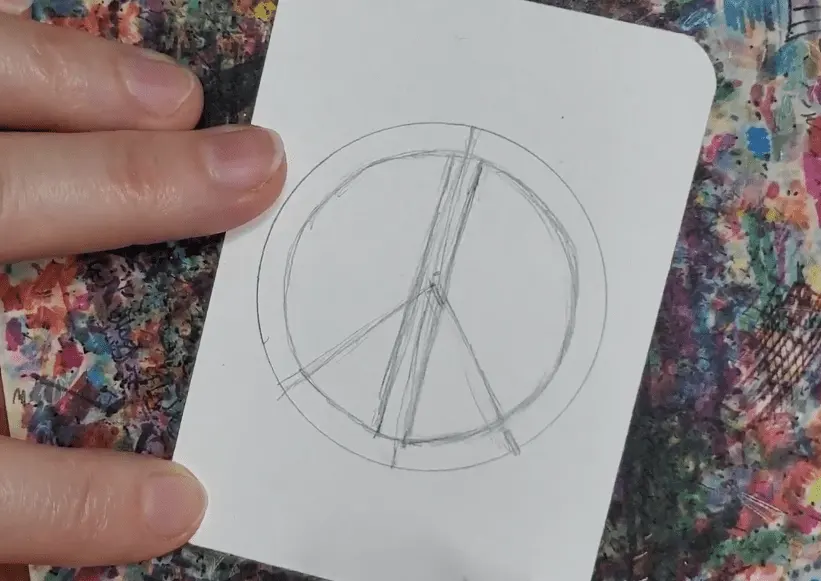
Drawing a standard peace sign is a straightforward process that relies on basic geometric shapes. By following a structured approach, you can ensure the proportions remain balanced and visually appealing. Whether you are using a pencil, marker, or digital tool, the method remains the same.
- Draw a perfect circle using a compass or a circular object to serve as the outer boundary.
- Use a ruler to draw a straight vertical line starting from the top center of the circle down to the bottom center.
- Mark the exact center point of the circle where the vertical line passes through.
- Draw two diagonal lines originating from this center point, extending outward to the bottom left and bottom right edges of the circle.
These four steps provide the structural skeleton of the symbol. Once the lines are drawn, you can thicken them to create a bold, graphic look that stands out on paper or posters.
Where did the peace sign symbol come from
The peace sign has a specific historical origin that is often misunderstood. It was designed in 1958 by Gerald Holtom, a British artist and designer, for the Direct Action Committee against Nuclear War. The symbol was intended to be used during the first Aldermaston March, a protest against the Atomic Weapons Research Establishment in the United Kingdom.
Holtom based the design on the semaphore signals for the letters "N" and "D," which stand for "Nuclear Disarmament." In semaphore, the letter "N" is represented by two flags held in an inverted "V" shape, while "D" is represented by one flag held straight up and one held straight down. By superimposing these two signals inside a circle, he created the now-universal icon. It was later adopted by the American anti-war movement in the 1960s, which helped solidify its global status as a symbol for peace and protest.
Common mistakes when drawing a peace sign
Many people struggle with the symmetry of the peace sign, which can make the finished drawing look lopsided or unprofessional. One of the most frequent errors is failing to center the vertical line perfectly. If the vertical line is off-center, the diagonal lines will not align correctly with the bottom of the circle, ruining the geometric balance of the design.
Another common mistake involves the length of the diagonal lines. Beginners often draw these lines too short or too long, which disrupts the visual flow of the symbol. To avoid this, always use a straightedge or ruler to ensure the lines hit the edge of the circle at consistent points. Additionally, some people forget to draw the circle first, attempting to freehand the entire shape. Starting with the circle is essential because it acts as a guide for the internal lines, ensuring that the entire composition fits within a defined boundary.
Best tools for drawing a peace sign
The tools you choose can significantly impact the precision of your drawing. For beginners, a standard graphite pencil and a ruler are the best starting points. A compass is highly recommended for creating a clean, uniform circle, as freehand circles often look distorted. If you are drawing on a large scale, such as for a protest sign or a mural, use a piece of string attached to a center point to swing an accurate arc.
- Use a compass for precise, circular outlines.
- Utilize a ruler or straightedge for the internal lines to maintain sharp, clean angles.
- Select a bold marker or thick pen for the final outline to make the symbol pop.
- Keep an eraser handy to remove the construction lines once the main shape is finalized.
By using these tools, you can transition from a simple sketch to a professional-looking graphic. Always ensure your surface is flat to prevent the ruler from slipping while you draw the internal lines.
Why the peace sign is still relevant today
Despite being over sixty years old, the peace sign remains one of the most recognizable icons in the world. Its simplicity is its greatest strength, allowing it to be reproduced quickly on clothing, signs, and digital media. Because the design is so minimalist, it transcends language barriers and cultural differences, serving as an immediate visual shorthand for non-violence and social activism.
The symbol's endurance is also tied to its versatility. It can be drawn in a variety of styles, from minimalist line art to complex, colorful illustrations, without losing its core meaning. While the original intent was specifically related to nuclear disarmament, the symbol has evolved to represent a broader spectrum of humanitarian causes. As long as people continue to advocate for global harmony and social justice, this simple geometric figure will likely remain a primary tool for visual communication in public demonstrations and personal expression across the world.
Key facts
- The peace symbol was designed in 1958 by Gerald Holtom for the British nuclear disarmament movement.
- It is a combination of the semaphore signals for the letters "N" and "D," standing for "Nuclear Disarmament."
- To draw the base, use a compass or a circular object to trace a perfect circle.
- Draw a vertical line from the top center to the bottom center of the circle.
- Add two diagonal lines starting from the center point, extending downward to the left and right sides.
- Ensure the two diagonal lines meet the vertical line at the exact center of the circle.
The bottom line
Drawing a peace sign is a simple geometric exercise that requires only a circle and three intersecting lines. By tracing a circle and placing a vertical line through the center with two supporting diagonal legs, you replicate a historic icon of global activism. Precision at the center point ensures the symbol remains balanced, honoring its origins as a clear, unified message for nuclear disarmament and peace.
People also ask
Is the peace sign a religious symbol?
No, the peace sign has no religious origins. It was created specifically as a political protest symbol for the Campaign for Nuclear Disarmament in the United Kingdom.
Why are there two diagonal lines at the bottom?
These lines represent the semaphore position for the letter "D." When combined with the vertical line representing "N," they form the acronym for nuclear disarmament.
Can I draw it without a compass?
You can trace the bottom of a glass, a roll of tape, or any circular household item. Using a stencil helps maintain symmetry, which is vital for the symbol's recognizable look.
What is a common mistake when drawing it?
A frequent error is making the diagonal lines too short or connecting them to the wrong points. They must originate from the center and touch the circle's edge at the bottom quadrants.
Did the symbol change over time?
The design has remained remarkably consistent since 1958. While artists sometimes add colors or textures, the core geometric structure of the circle and three internal lines remains unchanged.
Is the peace sign copyrighted?
The design is in the public domain. Gerald Holtom never copyrighted the image, allowing it to be used freely by activists and artists worldwide for decades.
This answer was created with the help of AI research tools and reference sources. Spotted an error? Let us know — we correct mistakes quickly. See our editorial policy.