What is Lost Lagoon?
Short answer
Lost Lagoon is a 16-hectare man-made tidal lake located within Stanley Park in Vancouver, British Columbia. Originally a natural tidal mudflat connected to Coal Harbour, it was transformed into a freshwater lagoon in 1916 following the construction of the Stanley Park Causeway. It now serves as a protected sanctuary for local wildlife.
On this page
Where is Lost Lagoon located
Lost Lagoon is situated at the southern entrance of Stanley Park, one of North America’s largest urban parks. The lagoon is bordered by the Stanley Park Causeway to the west, Georgia Street to the south, and the lush forest trails of the park to the north. Its central location makes it a primary gateway for visitors entering the park from downtown Vancouver.
The area is easily accessible by foot, bicycle, or public transit. Visitors often start their journey at the nearby Vancouver Rowing Club or the park’s main entrance near Denman Street. Because the lagoon sits in a low-lying basin, it provides a quiet, reflective contrast to the bustling city skyline visible just across the water. It remains a vital landmark for both tourists and locals navigating the park's extensive trail network.
What is the history of Lost Lagoon
The lagoon was once a tidal mudflat that emptied completely at low tide, leaving the area exposed. In 1916, the construction of the Stanley Park Causeway severed the lagoon from the waters of Coal Harbour. This engineering project permanently altered the hydrology of the site, turning the saltwater basin into a freshwater lake fed by local runoff and rainfall.
The name "Lost Lagoon" was coined by the poet Pauline Johnson, who frequented the area before the causeway was built. She described the feeling of the water disappearing during low tide, making the lagoon seem "lost" to the sea. Today, the site is managed as a wildlife refuge, ensuring that the human-made changes do not disrupt the ecological balance established over the last century.
How to explore the trails around the lagoon
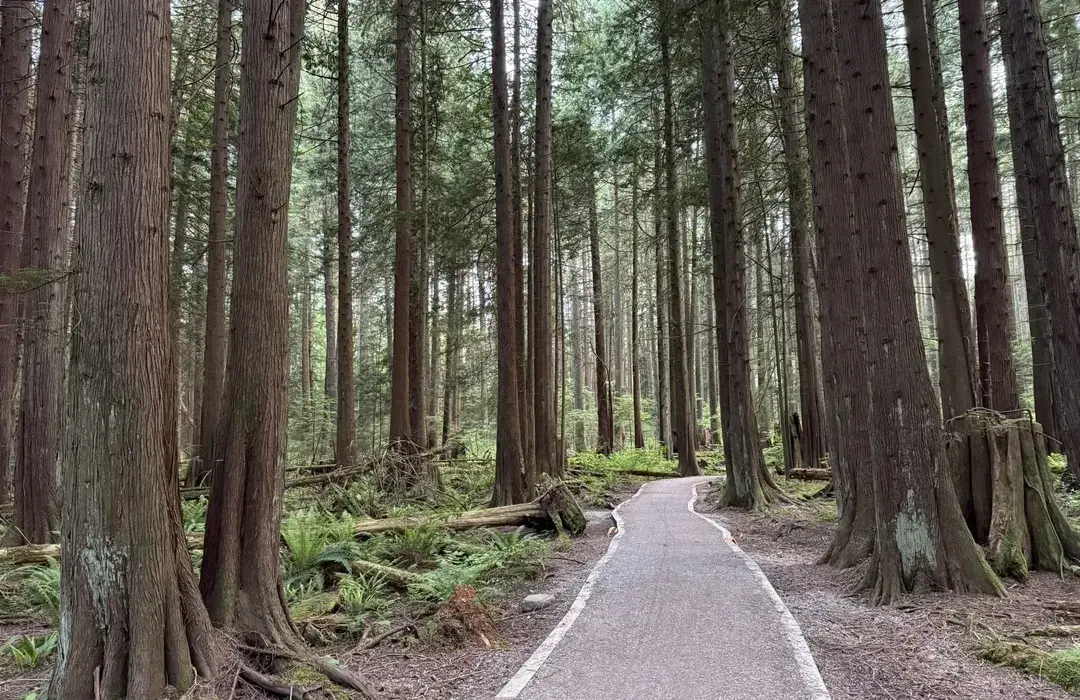
The most popular way to experience the lagoon is by walking or cycling the perimeter trail. This loop is approximately 1.7 kilometers long and is largely flat, making it suitable for all fitness levels. The path offers clear views of the water and the surrounding willow and cedar trees.
- Start your walk at the Nature House near the south end of the lagoon.
- Follow the paved path heading north along the western edge of the water.
- Cross under the bridge near the causeway to complete the loop on the eastern side.
- Stop at the various benches provided along the trail to observe the resident bird populations.
The trail connects directly to other major park routes, including the seawall. Many visitors choose to combine a lap around the lagoon with a longer excursion toward Second Beach or the forest trails deeper within Stanley Park.
Best times for wildlife viewing
Lost Lagoon serves as a critical habitat for a variety of migratory and resident birds. Birdwatchers frequently visit the area to spot species such as mute swans, Canada geese, mallards, and the occasional great blue heron. The best times for observation are during the early morning or late afternoon when the park is less crowded and wildlife activity is at its peak.
- Spring: Ideal for observing nesting behaviors and newly hatched ducklings.
- Autumn: A prime time to see migratory birds stopping over before heading south.
- Winter: The lagoon remains a refuge for waterfowl that stay in the region year-round.
To get the best experience, bring binoculars and maintain a respectful distance from the water’s edge. The lagoon is a protected sanctuary, and feeding the wildlife is strictly prohibited to maintain the health of the ecosystem.
Common mistakes when visiting the lagoon
A frequent mistake visitors make is attempting to feed the birds residing in the lagoon. Feeding waterfowl bread or human food is harmful to their health and disrupts their natural foraging behaviors. Furthermore, it often leads to an overpopulation of geese, which can degrade the water quality and damage the surrounding landscaping. Stick to observing the animals from the designated paths.
Another common error is failing to allocate enough time to explore the surrounding area. Visitors often treat the lagoon as a quick stop, missing the nearby Stanley Park Nature House or the hidden forest trails that branch off the main loop. To get the most out of your visit, plan for at least an hour to fully appreciate the scenery and the educational exhibits. Finally, always check the local weather forecast, as the lagoon’s open nature makes it susceptible to sudden shifts in temperature and rainfall during the winter months.
Key facts
- Lost Lagoon is a 16.6-hectare man-made body of water located within Stanley Park in Vancouver, British Columbia.
- It was originally a tidal salt marsh until a causeway was constructed in 1916, separating it from Coal Harbour.
- The lagoon was officially named in 1922, inspired by a poem written by E. Pauline Johnson.
- A paved 1.7-kilometer trail encircles the lagoon, making it a popular route for walkers, joggers, and cyclists.
- The area serves as a vital wildlife sanctuary for mute swans, Canada geese, great blue herons, and various duck species.
- Visitors should avoid feeding the wildlife, as human food disrupts the natural diet of the birds and encourages aggressive behavior.
The bottom line
Lost Lagoon is a serene, man-made landmark that serves as a vital ecological sanctuary within Vancouver’s iconic Stanley Park. By transforming from a tidal marsh into a freshwater habitat, it now offers a peaceful retreat for both urban wildlife and outdoor enthusiasts. Whether you are walking the scenic perimeter trail or observing the diverse bird populations, it remains a quintessential destination for experiencing nature in the city.
People also ask
Can you swim in Lost Lagoon?
No, swimming is strictly prohibited in Lost Lagoon to protect the water quality and the diverse wildlife that inhabits the area.
Is there a fountain in the middle of the lagoon?
Yes, the Jubilee Fountain is located in the center of the lagoon; it was originally installed in 1936 to commemorate Vancouver's golden jubilee.
Are dogs allowed around the lagoon?
Dogs are welcome on the surrounding trails, but they must be kept on a leash at all times to prevent them from disturbing the nesting birds.
What is the best time of year to visit?
Spring and autumn are ideal times to visit, as these seasons offer the best opportunities for birdwatching during migration periods.
Does the lagoon ever freeze over in the winter?
During exceptionally cold winters, the surface of the lagoon can freeze, though it is never safe for walking or skating due to unpredictable ice thickness.
Are there fishing opportunities at Lost Lagoon?
Fishing is not permitted in the lagoon, as it is a protected sanctuary dedicated to the conservation of local bird and aquatic species.
This answer was created with the help of AI research tools and reference sources. Spotted an error? Let us know — we correct mistakes quickly. See our editorial policy.