What is Katsushika Hokusai known for?
Short answer
Katsushika Hokusai was a prolific Japanese ukiyo-e painter and printmaker, most famous for his iconic woodblock print series, Thirty-six Views of Mount Fuji. His innovative approach to landscape art, mastery of composition, and use of Prussian blue pigment profoundly influenced Western Impressionism and defined the aesthetic of the Edo period.
On this page
What are Hokusai's most famous works?
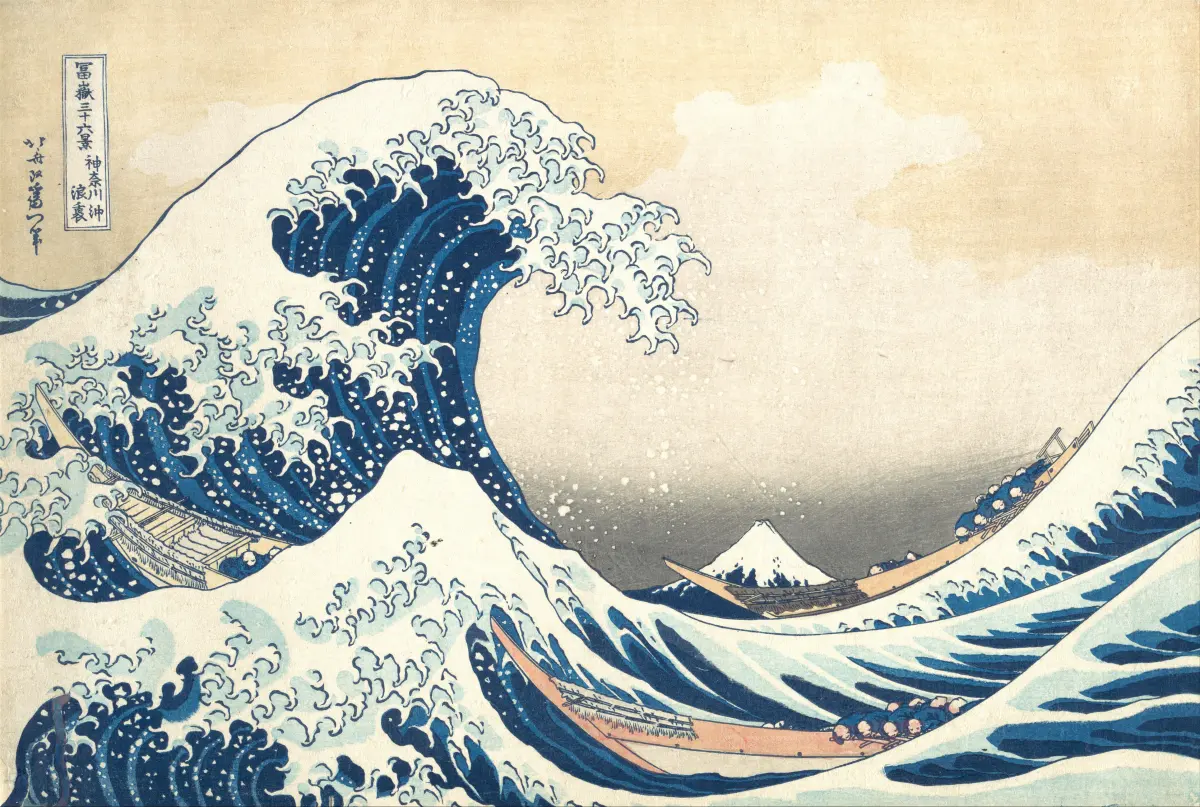
Hokusai is globally recognized for his masterful woodblock prints, which elevated landscape art to a central position in Japanese culture. His most celebrated work is "The Great Wave off Kanagawa," a dynamic print depicting a towering wave threatening boats near Mount Fuji. This image has become one of the most reproduced works of art in history, symbolizing the power of nature and the technical precision of the ukiyo-e style.
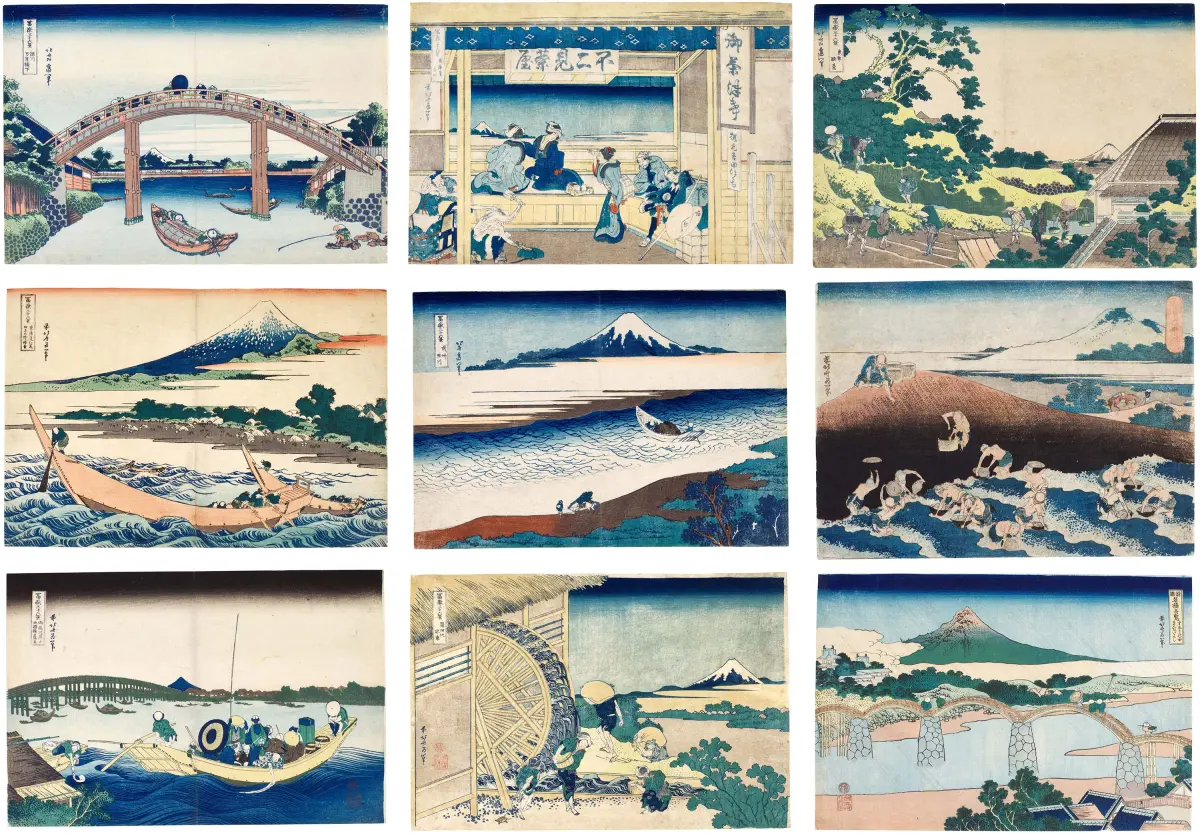
Beyond this single print, Hokusai produced an extensive body of work that showcased his versatility and technical skill. His series, Thirty-six Views of Mount Fuji, actually contains 46 prints that capture the sacred mountain from various perspectives, seasons, and weather conditions. These works are noted for their bold colors, particularly the introduction of synthetic Prussian blue, which allowed for deeper, more vibrant skies and oceans than traditional pigments.
- "The Great Wave off Kanagawa" (c. 1830–1832)
- "Fine Wind, Clear Morning" (c. 1830–1832)
- "Rainstorm Beneath the Summit" (c. 1830–1832)
- The Hokusai Manga (a collection of thousands of sketches)
How did Hokusai influence Western art?
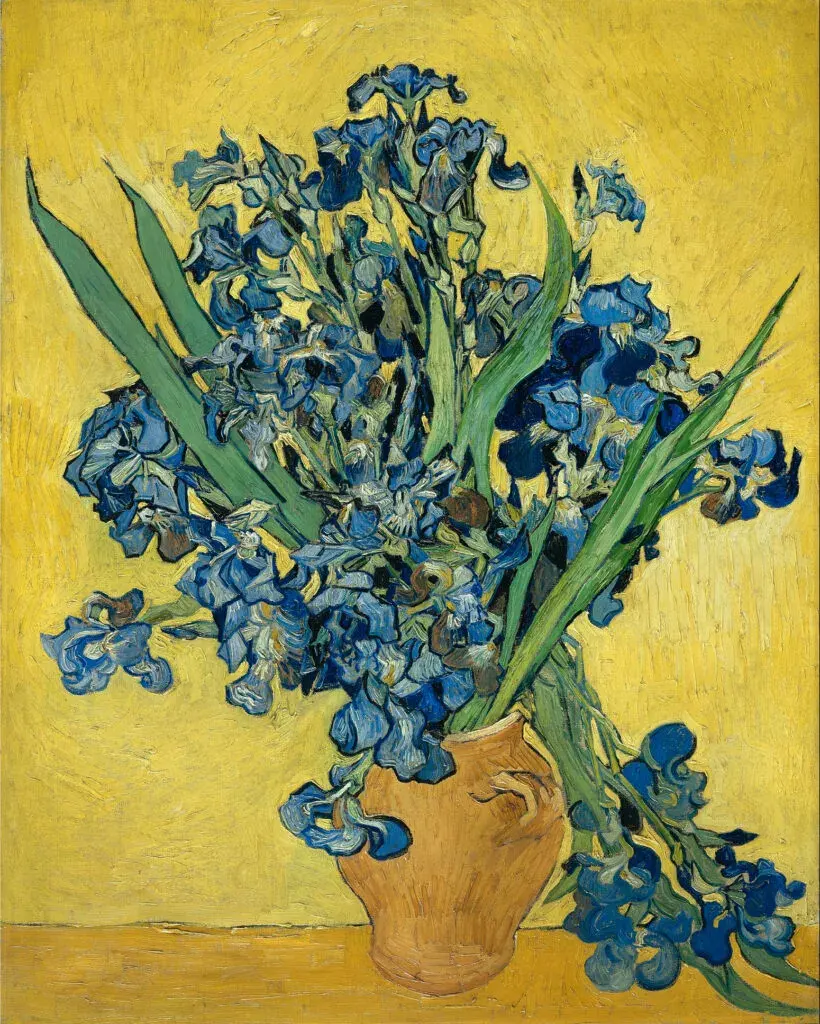
The arrival of Hokusai’s prints in Europe during the mid-19th century triggered a movement known as Japonisme. Artists like Vincent van Gogh, Claude Monet, and Edgar Degas were captivated by the unconventional compositions, flat areas of color, and lack of traditional Western perspective found in his work. Hokusai’s ability to capture transient moments and his focus on everyday life provided a fresh visual language that helped define the Impressionist and Post-Impressionist movements.
His influence extended beyond painting to graphic design and printmaking. The way he cropped scenes and utilized negative space encouraged Western artists to break free from the rigid constraints of academic realism. By studying his prints, European masters learned to prioritize emotional impact and atmospheric quality over photographic accuracy. This cross-cultural exchange fundamentally altered the trajectory of modern art, cementing Hokusai’s legacy as a bridge between Eastern and Western aesthetics.
What is the Hokusai Manga?
The Hokusai Manga is a massive collection of sketches covering a vast array of subjects, including people, animals, plants, and supernatural creatures. Published in 15 volumes starting in 1814, these books were intended as instructional guides for students of art. However, they quickly became popular among the general public due to their wit, observational detail, and the sheer energy of Hokusai’s brushwork.
These volumes are often cited as the spiritual ancestor of modern Japanese manga. Hokusai’s approach to drawing was highly systematic, focusing on breaking down complex forms into basic geometric shapes. This method allowed him to produce thousands of figures with distinct personalities and movements. For those interested in his technique, the collection provides a practical guide to his artistic philosophy:
- Observe the subject in its natural environment.
- Simplify the form into basic lines and shapes.
- Add expressive details to convey character or movement.
- Experiment with varied line weights to create depth.
Common mistakes when studying Hokusai's art
Many beginners make the mistake of viewing Hokusai’s prints as simple illustrations rather than complex, layered compositions. A common error is ignoring the technical difficulty of the woodblock printing process. Each color in a print required a separate carved block, meaning a single image could involve dozens of precise carvings and inkings. Failing to recognize this labor-intensive process diminishes the appreciation for the collaborative effort between the artist, the carver, and the printer.
Another mistake is assuming that Hokusai’s work was purely traditional. He was a lifelong experimenter who actively sought out Western techniques, such as linear perspective and the use of imported pigments. To truly understand his work, one must avoid labeling him as a static representative of old Japan. Instead, he should be viewed as a modern, restless artist who constantly evolved his style until his death at age 88.
How to appreciate Hokusai's legacy today
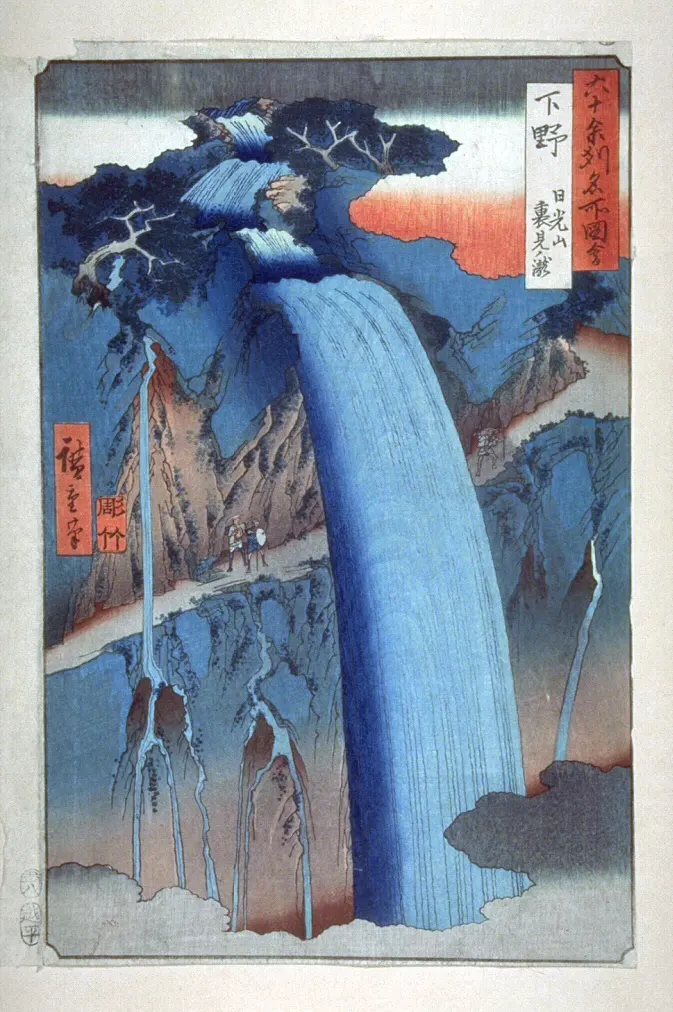
To appreciate Hokusai’s work, one should look beyond the famous "Great Wave" and explore his lesser-known prints of bridges, waterfalls, and ghosts. His work is best understood by examining the details of his compositions, such as the tension between the stillness of the mountain and the movement of the water. Many museums now offer digital archives where you can zoom into the fine lines of his woodblocks to see the intricate textures he created.
When engaging with his art, consider the following practical steps to deepen your understanding:
- Visit a museum with a dedicated collection of ukiyo-e to see the original color saturation.
- Compare his depictions of Mount Fuji to understand his use of repetition and variation.
- Research the history of the Edo period to understand the social context of his subjects.
- Attempt a simple sketch using his method of geometric simplification to experience his design logic firsthand.
By focusing on these elements, you gain a clearer picture of why Hokusai remains a towering figure in the history of global art.
Key facts
- Hokusai is most famous for the woodblock print series Thirty-six Views of Mount Fuji, published between 1830 and 1832.
- His iconic print The Great Wave off Kanagawa is one of the most reproduced images in global art history.
- He produced an estimated 30,000 works throughout his career, spanning paintings, sketches, and woodblock prints.
- Hokusai lived to age 88, an exceptional lifespan for the Edo period, and he famously claimed he only began to understand nature at age 73.
- He popularized the term "manga" through his Hokusai Manga, a collection of 15 volumes of sketches depicting everyday life and folklore.
- When viewing his prints, look for the "Prussian blue" pigment, a synthetic color he helped introduce to Japanese art in the 1820s.
The bottom line
Katsushika Hokusai remains a titan of Japanese art, celebrated for his technical ingenuity and profound influence on both Eastern and Western aesthetics. By blending traditional Japanese techniques with innovative compositions and pigments, he transformed woodblock printing into a high art form. His legacy endures through his prolific output, which continues to shape how the world perceives the beauty and power of the natural landscape.
People also ask
Did Hokusai only paint landscapes?
No, while his landscapes are his most famous works, he also created many portraits, erotic prints, and instructional drawing manuals. His subjects ranged from Japanese mythology and ghost stories to detailed studies of birds, flowers, and insects.
Why is The Great Wave so significant?
This print represents a technical masterpiece of the ukiyo-e style, utilizing complex multi-block printing techniques and vibrant imported pigments. It captured the dynamic tension between the power of nature and the vulnerability of humanity, influencing generations of Western Impressionists like Monet and Van Gogh.
How many times did Hokusai change his name?
Hokusai changed his professional name at least 30 times throughout his life, often to mark new phases in his artistic development. This practice was common among Japanese artists of the time to signify a shift in style or status.
Is Hokusai’s work still considered "ukiyo-e"?
Yes, he is a central figure of the ukiyo-e genre, which translates to "pictures of the floating world." This art movement focused on the transient, pleasure-seeking aspects of urban life in Edo-period Japan.
Can I see Hokusai’s original prints today?
Yes, original woodblock prints are held in major institutions like the British Museum, the Metropolitan Museum of Art, and the Sumida Hokusai Museum in Tokyo. Because they were mass-produced, many fine impressions survive, though they are light-sensitive and rarely displayed for long periods.
What is the best way to appreciate his detailed sketches?
To study his skill, look for his Hokusai Manga volumes, which demonstrate his mastery of movement and anatomy. Avoid assuming these sketches were meant for children; they were professional references intended to teach students how to draw everything from landscapes to human expressions.
This answer was created with the help of AI research tools and reference sources. Spotted an error? Let us know — we correct mistakes quickly. See our editorial policy.