How do you draw sneakers for beginners?
Short answer
Drawing sneakers involves breaking down complex footwear into simple geometric shapes like boxes and cylinders. Start by establishing the base perspective, then layer in the sole, upper, and specific details like laces or logos. With consistent practice of these foundational proportions, you can accurately capture the structure of any athletic shoe design.
On this page
How to start drawing sneakers for beginners
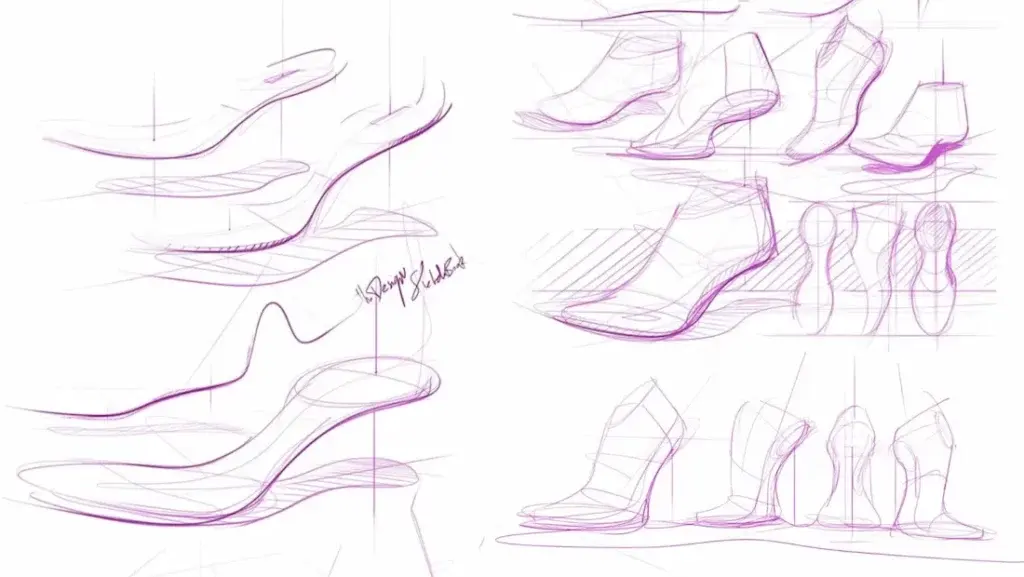
The most effective way to begin drawing a sneaker is to visualize it as a collection of basic 3D forms. Start by sketching a long, low rectangular box that defines the footprint and the height of the sole. Once the foundation is set, add a wedge shape for the heel and a rounded cylinder or curved block for the toe box. These primitive shapes act as a skeleton, ensuring your final drawing maintains realistic proportions and structural integrity before you add complex details.
Focusing on perspective is crucial during this initial phase. If you draw the shoe from a side profile, keep your lines parallel to the edge of the paper to maintain a clean, two-dimensional look. For a more dynamic three-quarter view, angle your base shapes to create depth. Use a light graphite pencil to sketch these guidelines, as you will need to erase them later once the primary contours of the shoe are established.
What tools are best for sneaker sketching
You do not need expensive equipment to produce high-quality sneaker illustrations. A standard HB pencil is ideal for initial layout work, while a 2B or 4B pencil allows for darker, bolder lines once the design is finalized. Keep a high-quality kneaded eraser nearby, as it is gentle on paper and allows you to lift graphite without damaging the surface. A fine-liner pen with a 0.5mm tip is excellent for adding crisp, permanent outlines that make your design pop.
For those interested in adding color, consider these options:
- Alcohol-based markers for smooth, streak-free gradients on the upper.
- Colored pencils to add texture to mesh or suede panels.
- White gel pens for highlighting reflective surfaces or laces.
- A ruler or French curve template to ensure perfectly straight lines on the sole.
- Heavyweight cartridge paper to prevent ink bleeding or graphite smudging during long sessions.
How to draw sneaker details accurately
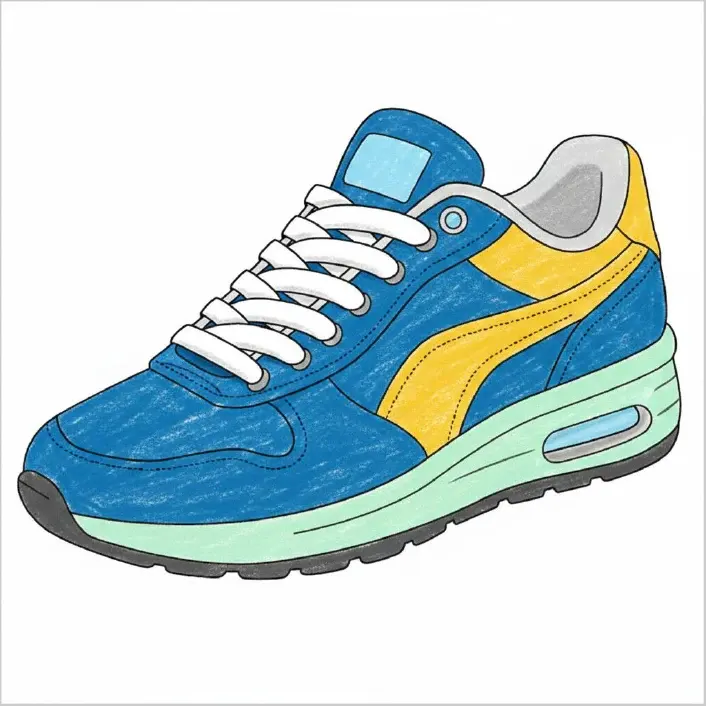
Details are what distinguish a generic shoe from a recognizable sneaker model. Once your base forms are solid, focus on the "eyestay," which is the area where the laces sit. Draw a curved line across the top of the foot to represent the tongue, and add small, evenly spaced circles for the eyelets. Remember that the laces should follow the contour of the shoe, overlapping the tongue and disappearing into the eyelets to suggest depth and tension.
The sole is another critical area that requires careful observation. Most modern sneakers feature a midsole made of foam or rubber, which often has distinct patterns or grooves. Follow these steps to refine your sneaker:
- Define the transition line between the upper fabric and the rubber midsole.
- Add the branding logo on the side panel, ensuring it follows the curve of the shoe.
- Draw the tread pattern on the bottom of the sole if the shoe is tilted upward.
- Add shading under the arch to create a sense of weight and contact with the ground.
Common mistakes when drawing sneakers
One of the most frequent errors beginners make is drawing the shoe too flat or "pancake-like." This usually happens when the artist ignores the volume of the heel or the height of the ankle collar. Always check that the heel area is wider and more rounded than the toe box. If the shoe looks unnatural, compare your sketch to a real-life reference photo to see where the curves should be more pronounced or where the lines should be straightened.
Another common mistake is neglecting the thickness of the materials. A sneaker is not just a thin skin; it has padded collars, thick tongues, and layered panels. If you draw the seams too close together, the shoe will look like a rigid plastic shell rather than a flexible piece of footwear. Practice drawing "double lines" at the edges of panels to represent the thickness of the leather or mesh, which immediately adds a sense of realism and professional quality to your work.
How to improve your sneaker drawing skills
Consistency is the primary driver of improvement in illustration. Dedicate fifteen minutes each day to sketching different angles of the same shoe, such as the heel, the toe, and the medial side. By rotating the object, you train your brain to understand how the panels wrap around the foot. Study classic sneaker silhouettes like the Nike Air Force 1 or the Converse Chuck Taylor, as their simple geometric designs are perfect for practicing fundamental proportions and perspective.
To further develop your technique, try these exercises:
- Sketch a sneaker from memory after observing it for one minute.
- Trace over a photograph of a shoe to understand how designers place seams.
- Experiment with lighting by placing a lamp on one side of a shoe and drawing the resulting shadows.
- Practice drawing textures like knit, leather, and rubber to make your drawings feel tactile.
- Join online communities or forums where you can share your sketches and receive constructive feedback from other artists.
By analyzing the work of professional footwear designers, you will begin to notice how they use line weight to emphasize the most important parts of the shoe. As you gain confidence, you can move away from rigid geometric boxes and start sketching more fluid, organic shapes that capture the speed and energy of modern athletic footwear design. Keep refining your lines, and your ability to render complex objects will grow significantly over time.
Key facts
- Start by sketching a simple "lozenge" or bean shape to define the overall silhouette of the sole and upper.
- Use a light graphite pencil (HB or 2H) to sketch initial construction lines so they are easy to erase later.
- Always establish the perspective of the shoe first, deciding if it is viewed from the side, front, or three-quarter angle.
- Focus on the "foxing"—the rubber strip that connects the sole to the upper—as this is a defining feature of most sneakers.
- Add depth by drawing the tongue and inner collar, which creates the illusion of volume and space inside the shoe.
- Practice drawing the tread pattern on the sole to ground the sneaker and provide a sense of weight to the drawing.
The bottom line
Drawing sneakers is an exercise in mastering basic perspective and structural volume. By breaking down the shoe into simple geometric shapes like rectangles and ovals, you can build a realistic foundation before adding details like laces and logos. Consistent practice with light sources and shading will eventually bring your sketches to life. Focus on the proportions of the sole and upper to ensure your design looks authentic.
People also ask
What is the most common mistake beginners make when drawing sneakers?
Beginners often neglect the thickness of the sole, making the shoe look flat or paper-thin. Always draw the sole as a three-dimensional block to ensure the sneaker looks grounded and realistic.
Should I use a ruler to draw the straight lines on a sneaker?
It is better to draw lines freehand to maintain a natural, organic look. Using a ruler can make the shoe appear stiff and mechanical, whereas slight imperfections add character to the design.
How do I make the laces look realistic?
Draw the laces as thick, overlapping ribbons rather than simple lines. Focus on the "eyelets" where the laces enter the shoe to create a sense of functional connection.
What is the best way to shade a sneaker drawing?
Identify a single light source and keep it consistent across the entire shoe. Use cross-hatching or smooth gradients to darken the areas furthest from the light, such as under the arch or the heel.
How do I draw the logo on a sneaker?
Draw the logo last, once the perspective and proportions of the shoe are finalized. Use the contours of the shoe's side panel as a guide to ensure the logo curves naturally with the fabric.
Does the type of shoe matter for learning?
Yes, start with classic canvas sneakers like the Converse Chuck Taylor because they have simple, geometric shapes. Avoid complex modern performance shoes with layered mesh until you master basic anatomy.
This answer was created with the help of AI research tools and reference sources. Spotted an error? Let us know — we correct mistakes quickly. See our editorial policy.