What is Jeff Koons known for?
Short answer
Jeff Koons is an American artist renowned for his large-scale sculptures that elevate everyday consumer objects into high art. He is best known for his "Celebration" series, particularly his stainless steel Balloon Dog sculptures. His work explores themes of popular culture, kitsch, and the boundaries between commercialism and fine art.
On this page
What is Jeff Koons most famous for?
Jeff Koons gained international prominence by challenging traditional distinctions between high culture and mass-market consumerism. He is most famous for his meticulous recreations of mundane items, such as vacuum cleaners encased in plexiglass or stainless steel sculptures modeled after balloon animals. By using industrial fabrication techniques, he creates polished, reflective surfaces that force viewers to confront their own image within the artwork.
His most iconic work, the Balloon Dog series, consists of five unique sculptures made of mirror-polished stainless steel with a transparent color coating. These works are celebrated for their technical precision and their ability to evoke childhood nostalgia while simultaneously serving as high-value status symbols. Koons intentionally blurs the line between the gallery space and the department store, positioning his art as a reflection of contemporary societal desires and material culture.
How does Jeff Koons create his art?
The creation of a Koons sculpture is a highly collaborative, industrial process rather than a solitary act of painting or carving. Koons acts as a conceptual director, employing a large team of assistants to execute his designs with extreme precision. He utilizes advanced manufacturing technologies, including 3D modeling and aerospace-grade engineering, to ensure that every curve and surface meets his exact specifications.
- Conceptualization: Koons develops an idea, often based on existing consumer objects or historical imagery.
- Digital Modeling: The design is rendered in 3D software to calculate structural integrity and aesthetic proportions.
- Fabrication: Specialized artisans use industrial materials like stainless steel, porcelain, or wood.
- Finishing: The surface is polished to a mirror finish, often requiring thousands of hours of hand-buffing.
This method allows Koons to produce works that are physically flawless, removing the "human touch" typically associated with traditional fine art. By outsourcing the physical labor, he emphasizes the importance of the initial concept and the final aesthetic impact over the artist's manual skill.
Why is Jeff Koons controversial?
Critics often polarize around Koons because his work frequently defies traditional definitions of artistic value. Detractors argue that his reliance on assistants and his focus on consumerist imagery prioritize marketing and commercial success over genuine creative expression. Some critics view his pieces as cynical or superficial, suggesting that they lack the emotional depth or political critique found in more traditional avant-garde movements.
- The "kitsch" factor: Many critics argue that his work is merely elevated kitsch, designed to appeal to the tastes of the ultra-wealthy.
- Commercialism: His close relationship with the luxury market and high-profile auction houses leads some to view his art as a financial asset rather than a cultural contribution.
- Lack of authorship: The heavy use of assistants leads to debates about whether the artist is truly the creator of the work.
Despite these criticisms, supporters maintain that Koons is a visionary who successfully navigates the complexities of the modern global economy. They argue that his work serves as a necessary mirror to contemporary society, forcing a dialogue about the value we place on material objects.

How to appreciate Jeff Koons' work
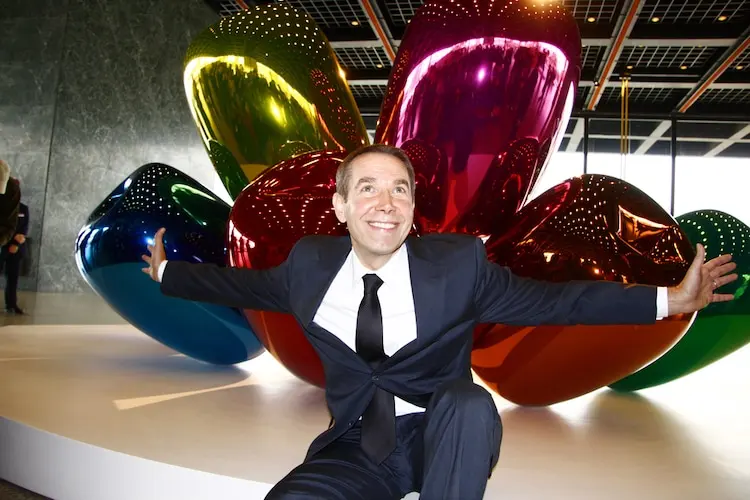
To truly understand a Koons piece, one must move past the initial shock of its size or shine and consider the context of the object. When visiting an exhibition, observe how the reflective surfaces interact with the room and the other people present. The sculpture is not just the object itself, but the way it distorts and incorporates the surrounding environment, effectively making the viewer a part of the installation.
- Look for the reflection: Notice how the sculpture warps the room and the people around it.
- Research the history: Understand the specific object Koons is referencing, such as a vacuum or a toy, to see how he has transformed its meaning.
- Consider the scale: Think about how the change in size—from a small balloon to a massive steel monument—alters your perception of the object.
By engaging with these elements, you can move beyond the surface level of the work and begin to appreciate the conceptual framework Koons is building. The goal is to recognize how he strips an object of its original utility and replaces it with a new, symbolic weight.
Common mistakes when analyzing Jeff Koons
A frequent error when analyzing Koons is assuming that his work is meant to be ironic or purely satirical. While his art often appears playful, Koons himself has stated that he does not intend for his work to be cynical or mocking. Assuming irony can prevent a viewer from seeing the genuine sincerity he attempts to imbue in his celebration of childhood innocence and common objects.
Another common mistake is judging his work solely by the price it fetches at auction. While his record-breaking sales are a significant part of his public identity, focusing exclusively on the market value ignores the technical achievements and the art-historical dialogue he creates. To gain a complete perspective, one must look past the headlines and evaluate the work based on its visual impact, its conceptual intent, and its role in the broader landscape of late 20th and 21st-century art history. By avoiding these biases, you can form a more nuanced understanding of his significant influence on modern culture.
Key facts
- Jeff Koons is an American artist best known for his large-scale sculptures of everyday objects, including balloon animals crafted from mirror-polished stainless steel.
- His 1986 piece Rabbit holds the record for the most expensive work ever sold by a living artist at auction, fetching $91.1 million in 2019.
- Koons gained prominence in the 1980s as a key figure in the Neo-Pop movement, which recontextualized kitsch and consumer culture into high art.
- To appreciate his work, look for the high-gloss finishes that reflect the viewer, effectively making the audience part of the sculpture.
- A common mistake is interpreting his work as purely ironic; Koons often emphasizes that his art is intended to be sincere and celebratory of popular culture.
- When visiting his installations, avoid touching the surfaces, as the delicate, reflective coatings are highly susceptible to oils and scratches.
The bottom line
Jeff Koons remains one of the most influential and polarizing figures in contemporary art. By transforming mundane, mass-produced objects into monumental, high-value sculptures, he forces a dialogue between consumer culture and the elite art market. Whether viewed as a cynical marketing genius or a sincere visionary, his work undeniably challenges traditional notions of craftsmanship, authenticity, and the very definition of what constitutes fine art today.
People also ask
What is the significance of the "Celebration" series?
This series features monumental sculptures of toys and party favors, such as the Balloon Dog. It represents his attempt to elevate childhood nostalgia and mass-produced aesthetics to the level of fine art.
Did Jeff Koons work on Wall Street?
Yes, before becoming a full-time artist, Koons worked as a commodities broker at the Chicago Mercantile Exchange. This experience influenced his understanding of market value and the commodification of art.
How does he create his massive stainless steel sculptures?
He employs a large team of assistants in his New York studio to fabricate works using industrial techniques. This process mirrors the methods of artists like Andy Warhol or Damien Hirst.
What is the "Banality" series?
This 1988 exhibition featured porcelain and wood sculptures of figures like Michael Jackson and his pet monkey, Bubbles. It challenged the boundaries between "high" and "low" culture by using kitsch subjects.
Are his works considered controversial?
His work often draws criticism for its commercial nature and reliance on a large studio staff. Critics debate whether his art possesses deep intellectual meaning or if it is merely a reflection of consumerism.
Where can I see his art in person?
Major pieces are held in permanent collections at the Museum of Modern Art in New York, the Tate in London, and the Centre Pompidou in Paris. Public installations are also frequently displayed in major metropolitan plazas.
This answer was created with the help of AI research tools and reference sources. Spotted an error? Let us know — we correct mistakes quickly. See our editorial policy.