What is infrared light?
Short answer
Infrared light is a form of electromagnetic radiation with wavelengths longer than those of visible light, extending from the red edge of the visible spectrum to the microwave region. Invisible to the human eye, it is primarily felt as heat. It plays a critical role in thermal imaging, telecommunications, and climate science.
On this page
What is infrared light exactly?
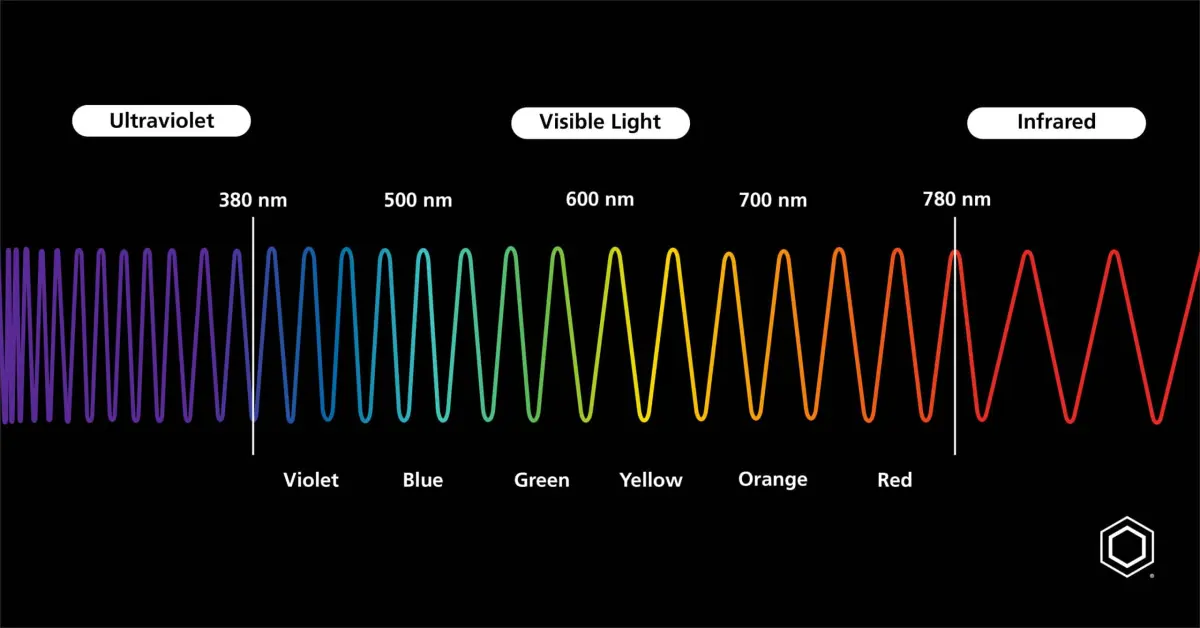
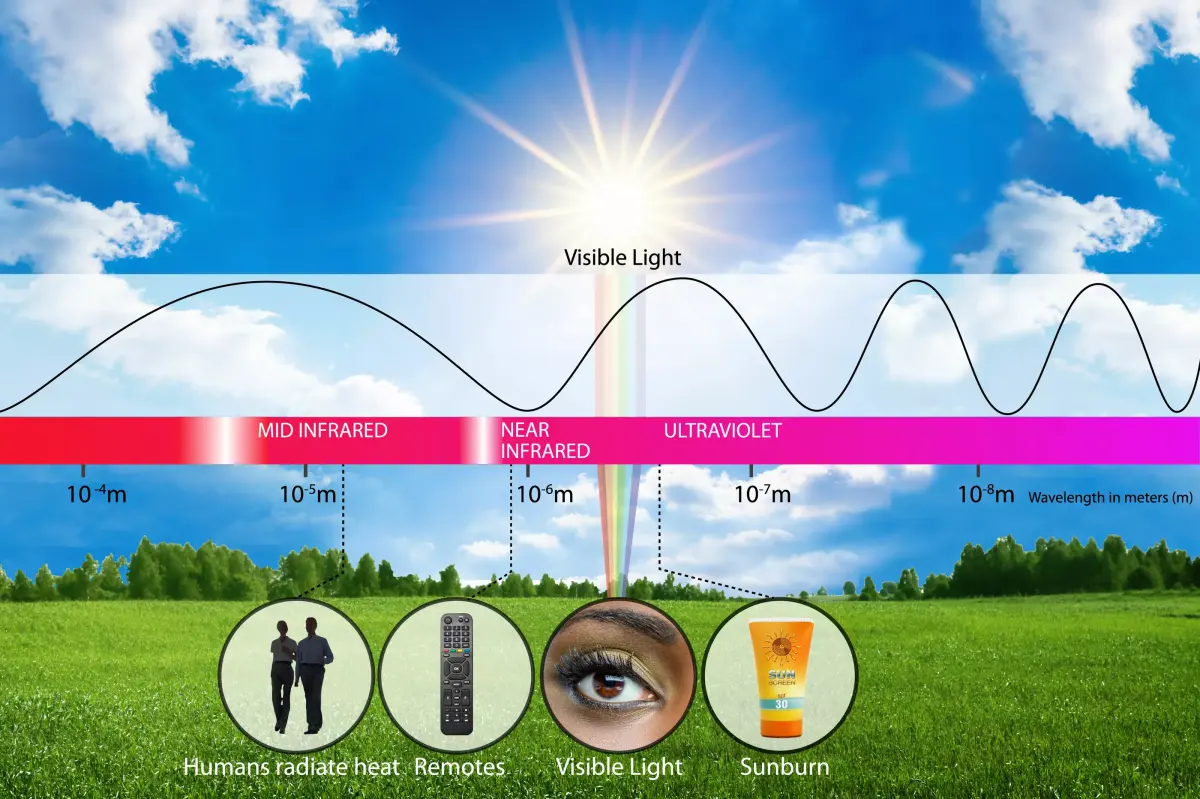
Infrared light occupies the portion of the electromagnetic spectrum between visible light and microwaves. Its wavelength ranges from approximately 700 nanometers to 1 millimeter. While humans cannot perceive these wavelengths through sight, our skin detects them as thermal energy. Everything with a temperature above absolute zero emits some level of infrared radiation, making it an essential component of how we understand energy transfer in the physical world.
The spectrum is generally divided into three distinct sub-regions based on their specific wavelengths and practical applications:
- Near-infrared: Closest to visible light, used in fiber-optic communications and remote controls.
- Mid-infrared: Commonly utilized in chemical sensing and gas detection systems.
- Far-infrared: Closest to microwaves, often associated with thermal imaging and space observation.
Because infrared light is essentially heat radiation, it is not blocked by the same obstacles as visible light. It can pass through certain materials like thin plastics or specialized filters while being absorbed by others. This unique interaction with matter allows scientists and engineers to develop technologies that see through fog, smoke, or darkness by focusing on the heat signatures emitted by objects rather than reflected visible light.
How do infrared cameras work?
Infrared cameras, often called thermal imagers, function by detecting the intensity of infrared radiation emitted by an object. Unlike standard cameras that capture reflected light, these devices use specialized sensors—often made of materials like vanadium oxide or amorphous silicon—to convert heat energy into electrical signals. These signals are then processed into a visual image where different colors represent varying temperature levels.
To interpret these images, users typically rely on a color palette where warmer objects appear brighter or in colors like red, orange, and yellow, while cooler objects appear in blue or purple. This technology is vital for various professional fields:
- Building inspections to identify heat loss or electrical faults.
- Search and rescue operations to locate individuals in dense forests or dark environments.
- Medical diagnostics to monitor inflammation or blood flow patterns.
- Industrial maintenance to check for overheating machinery before a failure occurs.
The accuracy of these cameras depends heavily on the "emissivity" of the target surface. Emissivity is a measure of how effectively a surface emits infrared energy. Highly reflective surfaces like polished metal can often trick a thermal camera, reflecting heat from the surroundings rather than showing the actual temperature of the object itself.
Why does infrared light matter in nature?
Infrared light is a fundamental driver of Earth’s climate and biological processes. The sun emits a significant portion of its energy as infrared, which warms the planet's surface. In turn, the Earth re-radiates this energy back toward space. Greenhouse gases, such as carbon dioxide and methane, absorb this outgoing infrared radiation, trapping it in the atmosphere. This process, known as the greenhouse effect, is what keeps our planet at a habitable temperature.
Beyond climate, infrared radiation is essential for many living organisms. Certain species of snakes, such as pit vipers, possess specialized organs called loreal pits that detect infrared radiation. This allows them to "see" the heat signatures of warm-blooded prey in total darkness, providing a significant evolutionary advantage for hunting. Similarly, many insects and flowers have evolved to interact with infrared signals, influencing pollination patterns and survival strategies in diverse ecosystems.
How to use infrared technology safely?
When using consumer-grade infrared devices, such as thermal cameras or infrared thermometers, precision is key. Always ensure that the device is calibrated for the specific material you are measuring. Different surfaces, such as wood, skin, or shiny aluminum, have vastly different emissivity values. If the device is not set to the correct emissivity, the temperature reading will be inaccurate, potentially leading to incorrect conclusions during an inspection.
To get the most reliable results, follow these practical steps:
- Maintain a stable distance from the object to avoid interference from ambient heat sources.
- Allow the device to acclimate to the ambient temperature of the room before starting.
- Avoid measuring surfaces that are highly reflective, as they will provide false readings.
- Use a piece of matte black electrical tape on a shiny surface to create a high-emissivity reference point.
Common mistakes include failing to account for environmental factors like wind or humidity, which can dissipate heat quickly and distort readings. Users should also avoid pointing high-powered infrared lasers directly at eyes, as even invisible beams can cause damage to the retina if the intensity is sufficient.
Best practices for infrared troubleshooting?
Troubleshooting electrical or mechanical systems with infrared tools requires a methodical approach. Start by performing a baseline scan of the equipment when it is operating under normal conditions. This helps you understand what "normal" heat distribution looks like for that specific machine. When a problem arises, you can compare the current thermal image against your baseline to pinpoint the exact location of the anomaly.
When analyzing your data, keep these tips in mind to ensure accuracy:
- Look for patterns rather than just individual hot spots, as heat often spreads through conduction.
- Check for loose connections, which typically appear as localized bright spots due to increased electrical resistance.
- Document the ambient temperature and load conditions at the time of the scan for future reference.
- Verify findings with secondary tools, such as multimeters, before recommending costly repairs.
Avoid the temptation to assume that a hot spot always indicates a failing component. Sometimes, a component is designed to run hot, or the heat may be transferred from an adjacent part. Always consider the context of the entire system before making a final diagnosis, as a holistic view prevents unnecessary downtime and ensures that maintenance efforts are focused on genuine mechanical or electrical failures.
Key facts
- Infrared light is electromagnetic radiation with wavelengths longer than visible red light but shorter than microwaves.
- Sir William Herschel discovered infrared radiation in 1800 by using a prism and a thermometer to measure heat beyond the red end of the spectrum.
- Human eyes cannot see infrared light, but human skin can perceive it as heat when emitted from warm objects.
- Infrared is categorized into three bands: near-infrared (closest to visible light), mid-infrared, and far-infrared (thermal radiation).
- Most television remote controls use infrared light-emitting diodes (LEDs) to send coded signals to a receiver.
- To use an infrared camera effectively, ensure the lens is clean, as smudges or dust can scatter the light and obscure the thermal image.
The bottom line
Infrared light is a form of invisible electromagnetic radiation that we experience daily as heat. From the thermal sensors in your home security system to the simple remote control on your coffee table, this technology plays a vital role in modern communication and sensing. Understanding its properties helps you better utilize infrared-based tools and appreciate the hidden spectrum of energy that surrounds us every single day.
People also ask
Can humans see infrared light?
No, the human eye is only sensitive to the visible light spectrum, which ranges from violet to red. Infrared light has a longer wavelength than red light, placing it outside the range of human vision.
How do infrared thermometers work?
These devices measure the amount of infrared energy emitted by an object's surface. By detecting this thermal radiation, the thermometer calculates the surface temperature without needing physical contact.
Is infrared light dangerous to your health?
Generally, infrared light is safe and is even used in medical therapies to promote healing and circulation. However, prolonged, intense exposure to high-heat infrared sources can cause skin burns or eye damage.
Why do night-vision cameras use infrared?
Night-vision technology relies on infrared because it allows cameras to "see" heat signatures in total darkness. This is useful for surveillance, search and rescue, and wildlife observation where visible light is unavailable.
What is the difference between infrared and ultraviolet light?
Infrared light has longer wavelengths and lower energy than visible light, while ultraviolet light has shorter wavelengths and higher energy. Ultraviolet light is often associated with sun damage, whereas infrared is associated with heat.
Can infrared signals pass through walls?
Infrared light behaves similarly to visible light and cannot penetrate solid, opaque objects like walls. This is why remote controls only work when you have a clear line of sight to the device.
This answer was created with the help of AI research tools and reference sources. Spotted an error? Let us know — we correct mistakes quickly. See our editorial policy.