What is fat over lean in oil painting?
Short answer
Fat over lean is a foundational rule in oil painting stating that each subsequent layer of paint must contain more oil than the layer beneath it. This ensures that upper layers dry more slowly than lower ones, preventing the surface from cracking, peeling, or wrinkling as the paint film cures over time.
On this page
What is the fat over lean rule?
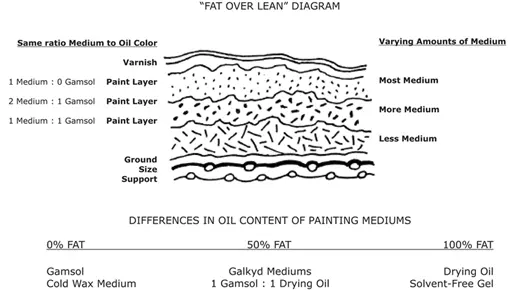
The "fat" in this context refers to oil content, while "lean" refers to paint thinned with a solvent like turpentine or mineral spirits. Oil paint dries through oxidation, a process where the oil absorbs oxygen and hardens. If a fast-drying, lean layer is placed on top of a slow-drying, oily layer, the top layer will harden first. As the underlying fat layer continues to shrink during its slower drying process, it pulls the top layer apart, resulting in unsightly cracks known as "cracking" or "checking."
Adhering to this principle creates a structurally sound painting that remains stable for centuries. By ensuring the bottom layers dry faster than the top, you create a tension-free surface that moves uniformly. This technique is essential for artists working in multiple layers, such as those using the indirect painting method or glazing, where transparency and depth are built up through successive applications of oil-rich pigments.
How to layer oil paint correctly
To apply the fat over lean rule effectively, you must adjust the medium-to-solvent ratio in your paint mixtures for every layer you add. The first layer, often called the underpainting or "imprimatura," should be very lean, consisting of paint thinned significantly with solvent. As you progress, you gradually increase the amount of oil or oil-based medium in your mixtures.
- Start with a lean underpainting using a high ratio of solvent to paint.
- Apply mid-layers with a balanced mixture of paint and a small amount of medium.
- Finish with fat layers, using pure paint or paint mixed with a high proportion of linseed or stand oil.
- Allow each layer to become "touch dry" before adding the next to ensure the structural integrity of the entire piece.
Why oil painting cracks happen
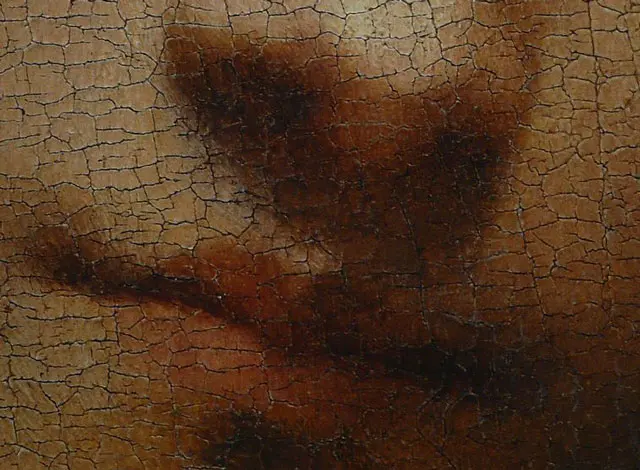
Cracking, or "craquelure," occurs when the internal chemistry of the paint film is disrupted during the drying process. When a layer with high oil content is trapped under a layer with low oil content, the bottom layer remains soft and flexible while the top layer becomes brittle and rigid. Because oil paint continues to oxidize and contract for months or even years, the rigid top layer cannot accommodate the movement of the layer underneath.
Environmental factors also play a role in the longevity of a painting. Extreme fluctuations in temperature or humidity can accelerate the stress on a poorly layered painting, causing the paint film to lose adhesion to the canvas or the layer below it. By following the fat over lean rule, you minimize these internal stresses, ensuring that the painting remains cohesive even as it ages. Professional conservators often point to a lack of understanding of this rule as the primary cause of damage in historical oil paintings.
Common mistakes when layering paint
Many beginners inadvertently violate the fat over lean rule by using the same medium for every stage of their work. Another frequent error is applying thick, impasto-style paint directly onto the canvas and then attempting to paint thin, lean glazes over the top. This effectively reverses the rule, placing a lean layer over a fat one, which is a recipe for long-term structural failure.
- Using too much solvent in the final layers, which makes them lean and prone to cracking.
- Applying thick, oily paint directly onto a raw, unprimed canvas without a lean base.
- Ignoring the drying time between layers, which traps wet, fat paint beneath a new application.
- Using low-quality drying oils that do not oxidize properly, leading to a gummy, unstable surface.
- Over-thinning the paint to the point where it loses its binder, resulting in a chalky, powdery finish that flakes off.
Best practices for oil painting success
To master this technique, keep a simple record of your mixtures or use a systematic approach to your medium additions. Many artists use a "three-cup" system: one cup for pure solvent, one for a 50/50 mix of solvent and oil, and one for pure oil or a fat medium. By dipping your brush into these cups in order, you naturally increase the fat content of your paint as you move toward the final details of the composition.
Always remember that the rule is a guide, not a rigid law that restricts creativity. It is perfectly acceptable to paint "lean over lean" or "fat over fat" if you are working in a single session, commonly known as alla prima or wet-on-wet painting. In these cases, the layers are integrated immediately, so there is no risk of differential drying times. However, for any work involving drying intervals, sticking to the fat over lean progression remains the most reliable method for creating professional, archival-quality artwork that will endure for generations to come.
Key facts
- "Fat" refers to paint with a high oil content, while "lean" refers to paint thinned with solvents like turpentine or mineral spirits.
- The rule dictates that each subsequent layer of paint must contain more oil than the layer beneath it to prevent cracking.
- Lean paint dries faster than fat paint because solvents evaporate quickly, while oil requires oxidation to harden.
- If a fat layer is placed under a lean layer, the top layer will dry and shrink faster, causing the bottom layer to buckle and crack.
- Use a ratio of 70% solvent to 30% oil for the first layer, gradually increasing the oil proportion in every following stage.
- Always avoid using excessive amounts of solvent in the final stages of a painting to ensure the structural integrity of the dried film.
The bottom line
The "fat over lean" rule is the fundamental structural principle of oil painting, ensuring long-term stability. By layering paint with increasing oil content, artists prevent the top surface from drying faster than the base, which causes unsightly cracks. Following this sequence—starting with thin, solvent-rich washes and building toward thick, oil-rich highlights—guarantees that your artwork remains flexible, durable, and free from structural failure for generations.
People also ask
Can I paint lean over fat if I use a fast-drying medium?
No, the chemical principle of drying remains the same regardless of additives. Applying a lean layer over a fat one will almost always lead to cracking as the underlying fat layer continues to shift during its long drying process.
How do I know if my paint is fat or lean?
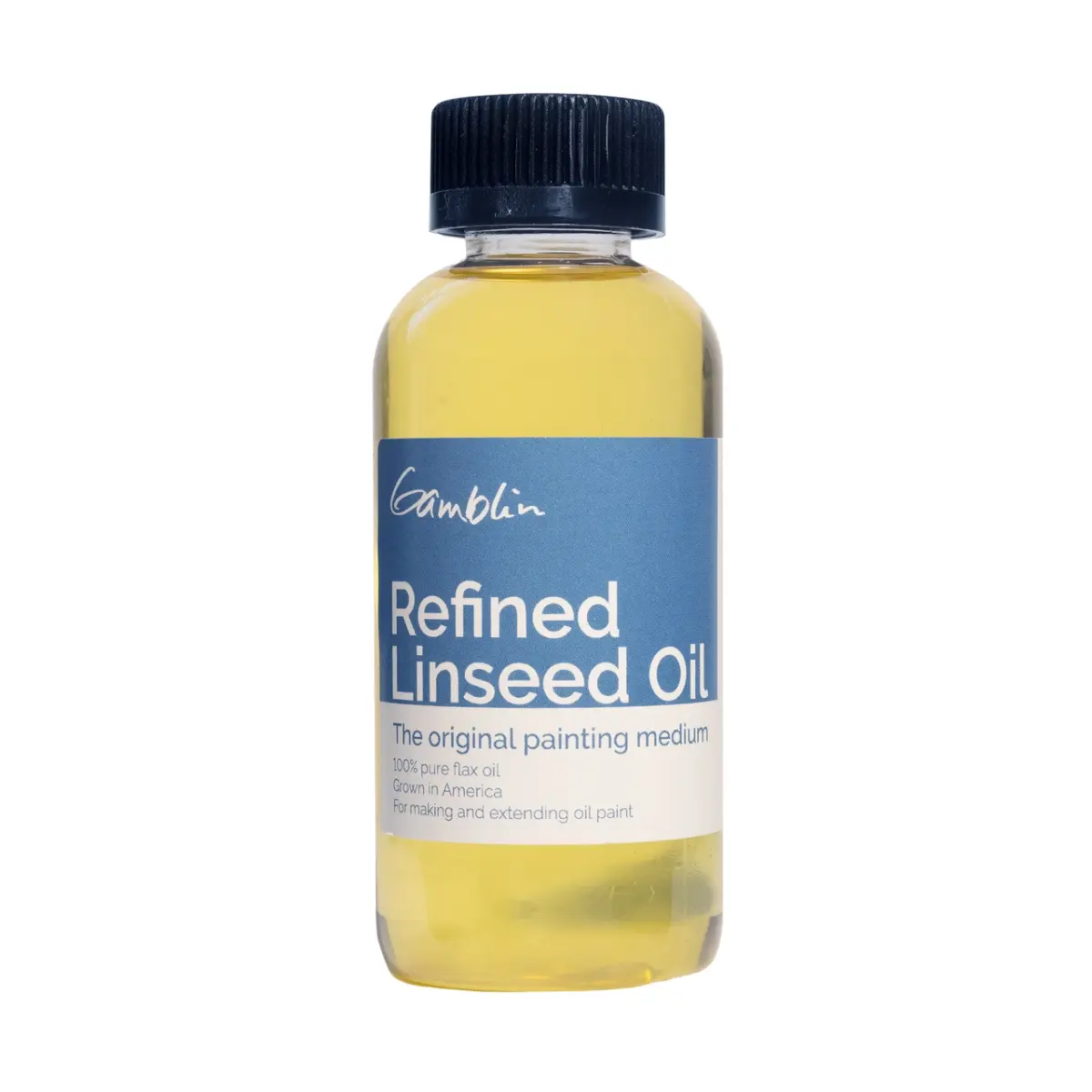
Lean paint has a matte, chalky appearance and is easily spreadable, while fat paint is glossy, buttery, and rich in linseed or walnut oil. You can increase the fat content by mixing in stand oil or refined linseed oil.
Does this rule apply to acrylic paints?
No, the fat over lean rule is specific to oil painting. Acrylics dry through evaporation rather than oxidation, so they do not have the same structural incompatibility issues between layers.
What happens if I use too much oil in the first layer?
If the base layer is too fat, any subsequent layer will struggle to adhere properly. This can lead to the top layers eventually peeling or flaking off the canvas over time.
Should I use a primer to make the surface leaner?
Yes, applying a gesso primer creates a lean, absorbent surface that is ideal for the first layer of paint. This provides a stable foundation that helps the initial lean paint layers bond securely to the canvas.
Is it okay to use pure oil for the final highlights?
Yes, using pure oil or a high-oil glazing medium for final details is perfectly acceptable. Since this is the final "fat" layer, it will dry slowly and remain flexible without causing structural damage to the layers underneath.
This answer was created with the help of AI research tools and reference sources. Spotted an error? Let us know — we correct mistakes quickly. See our editorial policy.