What is a unicorn in mythology?
Short answer
A unicorn is a legendary creature from European folklore, typically depicted as a horse-like animal with a single, spiraling horn projecting from its forehead. Historically viewed as a symbol of purity, grace, and untamable wildness, the unicorn has evolved from a serious medieval religious icon into a popular modern cultural fantasy figure.
On this page
Where did the unicorn myth originate?
The unicorn does not trace its roots to a single culture but rather to a blend of ancient natural history and misinterpretation. Early accounts of the creature appear in the writings of Greek historians such as Ctesias, who in the 4th century BCE described "wild asses" in India that possessed a single horn. These descriptions were likely based on travelers' distorted reports of rhinoceroses or antelopes seen from a distance.
During the Middle Ages, these accounts were synthesized with biblical references, specifically the "re'em" mentioned in the Old Testament, which was translated as "unicorn" in the King James Version. By the 12th century, the creature had become a staple of bestiaries, where it was imbued with deep Christian symbolism. It was frequently depicted as an elusive beast that could only be captured by a virgin, serving as an allegory for the Incarnation of Christ.
What are the physical characteristics of a unicorn?
While modern depictions generally favor a white horse, the traditional unicorn was a composite animal. Medieval artists often combined the body of a horse, the tail of a lion, and the cloven hooves of a goat or stag. This hybrid anatomy emphasized the creature's status as a supernatural being that defied the natural order of the animal kingdom.
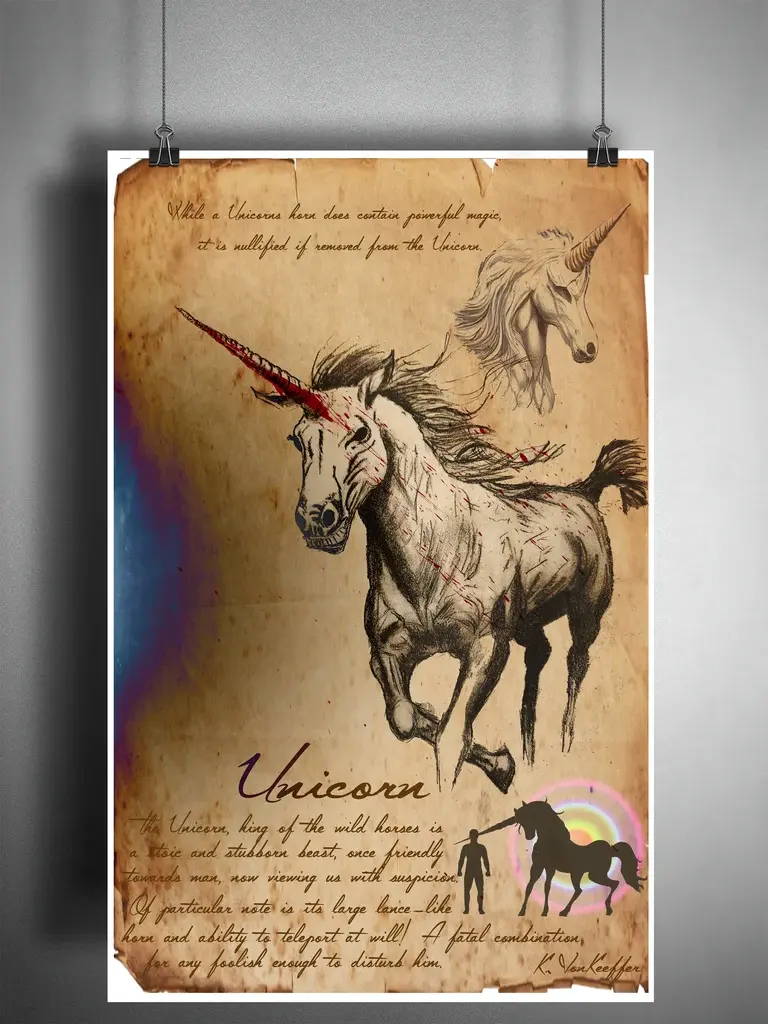
The most defining feature remains the horn, known in heraldry as an "alicorn." In folklore, this horn was considered a potent magical tool. According to legend, the horn possessed the following properties:
- Purification of poisoned water sources.
- Neutralization of toxins found in food or drink.
- Healing powers for various physical ailments.
- Detection of deceitful individuals in its presence.
These attributes led to a lucrative trade in "unicorn horns" throughout Europe, which were actually the tusks of narwhals sold by merchants to gullible nobility.
How was the unicorn used in art and heraldry?
The unicorn holds a prominent place in Western art, most famously represented in the 15th-century tapestry series known as The Lady and the Unicorn. In these works, the creature is rendered with meticulous detail, often surrounded by lush gardens and symbolic flora. These tapestries highlight the unicorn's role as a symbol of courtly love and the refinement of the human spirit.
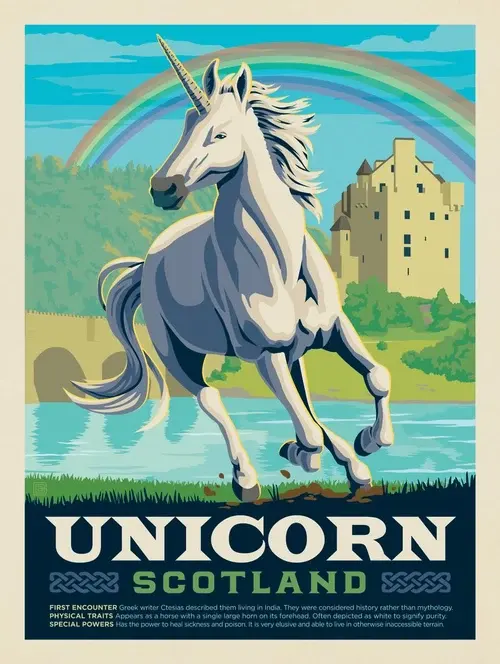
In heraldry, the unicorn became a common charge, representing courage, virtue, and strength. It is perhaps most recognizable today as a supporter on the Royal Coat of Arms of the United Kingdom, where it is paired with the lion. The unicorn represents Scotland, while the lion represents England. When used in this context, the unicorn is typically shown with a golden chain wrapped around its neck, symbolizing that its wild, untamable nature has been mastered by the Scottish monarchy.
Why do people confuse unicorns with other creatures?
Confusion often arises because many cultures have developed their own single-horned myths that share superficial similarities with the European unicorn. It is essential to distinguish between these regional variations to avoid historical inaccuracies. For instance, the Chinese qilin is frequently mistranslated as a unicorn, yet it is a distinct chimera with scales, a dragon-like head, and a benevolent nature that differs significantly from the Western tradition.
To correctly identify these mythological beings, consider these factors:
- Origin: Determine if the source is European, Asian, or Middle Eastern.
- Anatomy: Check for equine features versus bovine, reptilian, or feline traits.
- Symbolism: Analyze whether the creature represents purity, divine power, or moral judgment.
- Horn Shape: Note if the horn is spiraled, straight, or antler-like.
Common mistakes include assuming all one-horned creatures are related or that the unicorn was always intended to be a horse. Recognizing these distinctions prevents the conflation of disparate cultural belief systems.
What is the modern perception of the unicorn?
In contemporary times, the unicorn has shifted from a symbol of religious purity to a symbol of whimsy, individuality, and childhood wonder. It is frequently featured in fantasy literature, film, and fashion, often associated with vibrant colors and magical escapism. This modern interpretation tends to strip away the darker, more cautionary elements of the medieval legend, such as the creature's dangerous, aggressive nature.
Despite its current status as a pop-culture icon, the unicorn remains a powerful archetype of the "other." It represents the desire to encounter the impossible and the fascination with things that exist on the fringes of reality. Whether viewed through the lens of ancient natural history or modern fantasy, the unicorn continues to endure because it satisfies a fundamental human need for mystery. As long as people seek to find magic in the mundane world, the image of the singular, spiraling horn will remain a potent emblem of the extraordinary.
Key facts
- The unicorn is a legendary creature typically depicted as a horse with a single, spiraled horn protruding from its forehead.
- Ancient Greek historians, such as Ctesias in the 4th century BCE, first described unicorns as real animals inhabiting India.
- During the Middle Ages, the creature became a potent religious symbol representing purity, grace, and the incarnation of Christ.
- Unicorn horns, often sold as "alicorns," were historically believed to possess the magical ability to neutralize poisons and purify water.
- In heraldry, the unicorn is frequently paired with the lion, symbolizing the balance between wild nature and royal authority.
- Avoid confusing the mythical unicorn with the narwhal, a real marine mammal whose long, protruding tusk likely inspired many medieval unicorn legends.
The bottom line
The unicorn remains one of history’s most enduring symbols, evolving from an ancient biological curiosity into a complex emblem of purity and power. While it never existed as a biological species, the myth persists because it represents the human desire to categorize the unknown. By understanding its shift from a "real" animal to a cultural icon, readers can appreciate how folklore shapes our collective imagination today.
People also ask
Did people in the Middle Ages believe unicorns were real animals?
Yes, many medieval Europeans considered the unicorn a genuine creature of the natural world. They often cataloged it alongside exotic animals like elephants and giraffes in bestiaries.
What is the significance of the unicorn in the famous "The Lady and the Unicorn" tapestries?
These 15th-century tapestries use the unicorn to represent the five senses and the concept of courtly love. It serves as a sophisticated allegory for human desire and spiritual refinement.
Why is the unicorn often associated with the moon?
In various folklore traditions, the unicorn is linked to lunar cycles because of its connection to purity and the night. This association emphasizes its elusive and ethereal nature.
How do unicorns differ from other horned mythical creatures like the Pegasus?
While both are equine, a Pegasus is defined by its wings and ability to fly. A unicorn is defined specifically by its singular, magical horn and its grounding in terrestrial lore.
Are there versions of the unicorn in Asian mythology?
Yes, the qilin is a hooved chimerical creature in Chinese mythology that shares some traits with the unicorn. It is considered a benevolent omen that appears during the reign of a virtuous ruler.
Why were unicorn horns so expensive in historical trade?
Because they were falsely marketed as antidotes to poison, monarchs and wealthy collectors paid exorbitant prices for them. Most of these items were actually narwhal tusks traded by Vikings and merchants.
This answer was created with the help of AI research tools and reference sources. Spotted an error? Let us know — we correct mistakes quickly. See our editorial policy.