What is a button blanket?
Short answer
A button blanket is a ceremonial textile garment traditionally crafted by Indigenous peoples of the Pacific Northwest Coast, particularly the Tlingit, Tsimshian, and Haida nations. These wool blankets are adorned with mother-of-pearl buttons and appliquéd felt designs, representing family crests and ancestral lineages during potlatches, naming ceremonies, and other significant cultural gatherings.
On this page
What is the history of button blankets?
Button blankets emerged as a distinct art form during the late 18th and early 19th centuries following increased contact with European traders. Indigenous artisans began incorporating trade goods, specifically wool blankets and iridescent pearl buttons, into their traditional regalia. These materials replaced or supplemented older forms of ornamentation, such as cedar bark or animal skins, while maintaining the deep symbolic significance of the garments.
The blankets served as a visual manifestation of a family’s status, history, and rights to specific crests. By wearing these blankets during a potlatch, a host demonstrated their wealth and confirmed their social standing within the community. The buttons themselves were highly valued as currency and status symbols, reflecting the owner's ability to engage in international trade. Today, these blankets remain vital cultural markers, worn with pride during ceremonies to honor ancestors and maintain the continuity of Indigenous traditions across generations.
How are button blankets constructed?
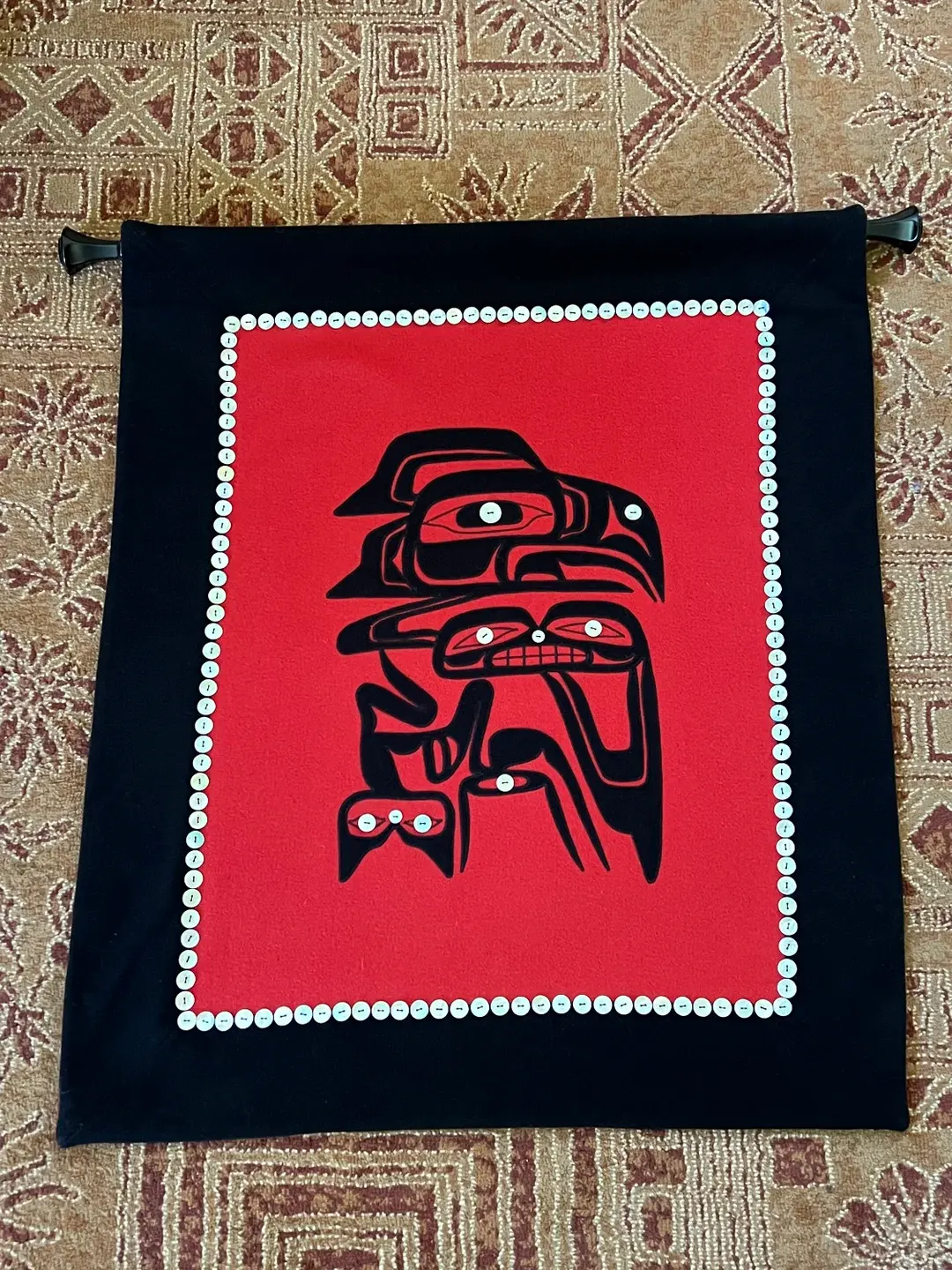
The construction of a button blanket follows a specific aesthetic and structural tradition that emphasizes symmetry and bold, graphic representation. The base is typically a large, rectangular piece of high-quality wool, traditionally navy blue or black. Artisans then sew a border of red felt or wool around the edges, which serves as a frame for the central design.
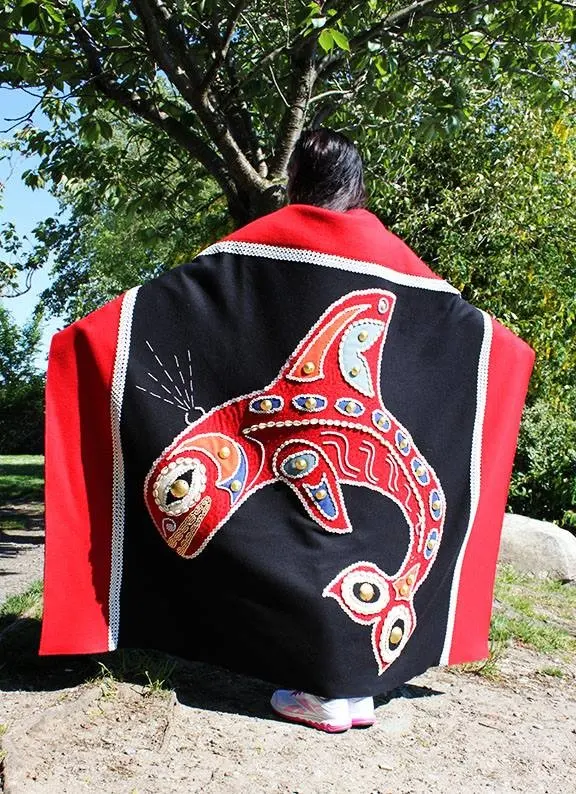
The central motif is created using appliqué, where felt shapes are cut into stylized figures of clan animals—such as ravens, eagles, wolves, or whales—and stitched onto the base. The final, most iconic step involves outlining these figures and the border with hundreds of individual mother-of-pearl buttons. These buttons catch the light during movement, adding a dynamic, shimmering quality to the garment.
- Select a high-quality, heavy-weight wool base in a traditional dark color.
- Cut the central crest design from vibrant red wool or felt.
- Secure the appliqué to the center of the blanket using careful needlework.
- Sew individual mother-of-pearl buttons along the edges and the outline of the crest.
- Ensure the buttons are spaced evenly to create a uniform, shimmering effect.
What do the designs on a button blanket mean?
Every button blanket is a unique narrative document, telling the story of the wearer's lineage and social identity. The primary design typically depicts the wearer's crest, which is an animal or supernatural being associated with their clan. These crests are not merely decorative; they represent the spiritual connection between the family and the natural world, as well as the specific privileges or "rights" held by that family.
The arrangement of the buttons and the specific choice of animal figures are dictated by strict protocols passed down through oral history. For instance, a blanket might feature a raven to signify a specific moiety or a killer whale to denote a particular house group. Because these designs are protected intellectual property, one cannot simply choose an animal at random. The imagery must accurately reflect the wearer’s legitimate ancestral claims, ensuring that the blanket functions as a formal, recognized statement of identity within the community.
How to care for a button blanket?
Because button blankets are crafted from delicate wool and antique or shell buttons, they require specialized care to ensure they last for generations. Proper storage is the most important factor in preservation, as wool is highly susceptible to damage from moths and other insects. Always store the blanket in a clean, acid-free garment bag or a cedar chest to deter pests and maintain the integrity of the natural fibers.
- Keep the blanket away from direct sunlight to prevent the vibrant red wool from fading.
- Avoid hanging the blanket for long periods, as the weight of the buttons can cause the wool to stretch or tear.
- Lay the blanket flat in a cool, dry environment when it is not being worn.
- Periodically check the stitching on the buttons to ensure none have loosened over time.
- If the blanket becomes dusty, use a soft-bristled brush to gently remove debris rather than using liquid cleaners.
Common mistakes when making a button blanket?
One of the most frequent errors in creating a button blanket is using synthetic materials that do not drape or hold their shape like traditional wool. While modern craft stores offer various felt products, using low-quality, thin polyester felt can result in a garment that looks flat and lacks the necessary structure to support the weight of the buttons. Additionally, failing to properly secure the buttons can lead to loss or damage during the active movements of a dance or ceremony.
Another significant mistake is ignoring the protocols surrounding crest ownership. Designing a blanket with an animal figure that one has no ancestral right to use is considered highly disrespectful and culturally inappropriate. Always consult with elders or community knowledge keepers before beginning a project to ensure that the design is accurate and follows the established protocols of your specific nation. By respecting these guidelines, the creator ensures that the blanket honors the traditions it is meant to represent.
Key facts
- A button blanket is a ceremonial textile traditionally created by Indigenous peoples of the Northwest Coast, such as the Tlingit, Haida, and Tsimshian.
- The base of the blanket is typically made from dark blue or black wool stroud, which serves as a backdrop for elaborate appliqué designs.
- Mother-of-pearl buttons are sewn along the borders and used to outline the central crest, which represents the owner’s family lineage or clan.
- These blankets are worn draped over the shoulders during potlatches, dances, and naming ceremonies to signify status and heritage.
- Modern makers often use felt or heavy wool fabric, ensuring the base is sturdy enough to support the weight of hundreds of metal buttons.
- A common mistake is using plastic buttons instead of traditional pearl or bone; authentic blankets rely on the reflective quality of shell to catch light during movement.
The bottom line
The button blanket is a profound expression of Northwest Coast Indigenous artistry, blending historical trade materials with ancient cultural storytelling. By combining dark wool with shimmering mother-of-pearl buttons, these garments serve as wearable crests that validate family lineage during ceremonies. Understanding their construction requires respecting the specific protocols and artistic traditions that have preserved these beautiful, functional, and deeply significant textiles for many generations.
People also ask
Why are buttons used instead of other decorations?
Buttons were introduced to the Northwest Coast through 18th-century maritime fur trade and quickly became a symbol of wealth and prestige. They are preferred because their reflective, iridescent surface catches the light during ceremonial dancing, creating a dynamic visual effect.
Can anyone make a button blanket?
While anyone can learn the sewing techniques, a button blanket is deeply tied to Indigenous identity and protocol. It is respectful to acknowledge that these designs represent specific family crests and ancestral rights, which are not intended for casual or unauthorized use.
How do you attach the buttons securely?
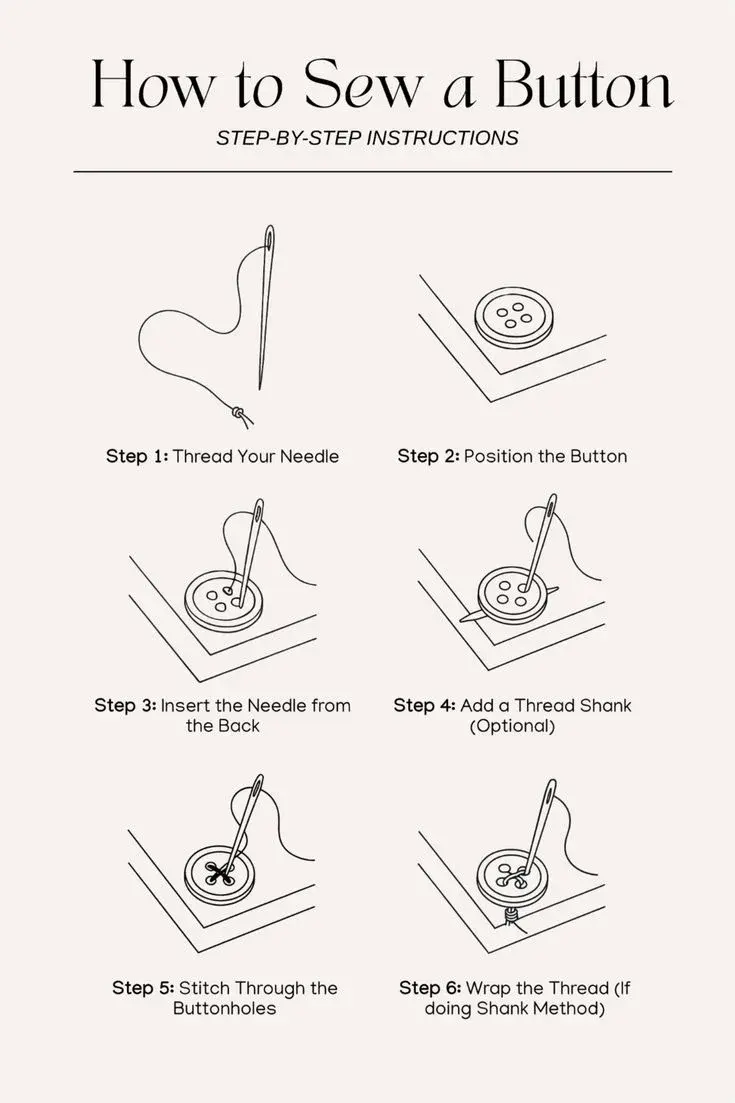
Use a strong, waxed nylon or heavy-duty cotton thread to ensure the buttons do not tear the wool over time. Double-stitch each button, passing the needle through the fabric at least twice to account for the weight and movement of the garment.
What do the designs on the blanket represent?
The central image usually depicts a clan crest, such as a Raven, Eagle, Wolf, or Killer Whale. These figures tell the story of the wearer’s ancestry and their connection to the natural and spiritual world.
How should a button blanket be stored?
Store the blanket flat or rolled in a cool, dry place away from direct sunlight to prevent the wool from fading. Use cedar chips or lavender sachets to protect the natural fibers from moths, which are attracted to wool.
Are button blankets still worn today?
Yes, they remain a vital part of contemporary Indigenous culture and are frequently worn during community celebrations. They serve as a living link to the past, honoring traditions while evolving through modern artistic expression.
This answer was created with the help of AI research tools and reference sources. Spotted an error? Let us know — we correct mistakes quickly. See our editorial policy.