How many babies do giraffes have?
Short answer
Giraffes almost always give birth to a single calf at a time. While twins are theoretically possible, they are extremely rare in the wild and in captivity. A female giraffe, known as a cow, typically experiences a gestation period of approximately 15 months before delivering her lone offspring while standing upright.
On this page
How often do giraffes give birth?
Giraffes do not follow a strict seasonal breeding cycle, meaning they can conceive at any time throughout the year. However, birth rates are often influenced by environmental factors such as food availability and rainfall patterns. Once a female reaches sexual maturity, which typically occurs between three and five years of age, she can produce a calf every 20 to 30 months. This interval allows the mother sufficient time to nurse and protect her young before the next pregnancy begins.
The reproductive strategy of the giraffe focuses on quality over quantity. By investing significant energy into a single calf, the mother increases the likelihood that her offspring will survive the high-predation environment of the African savanna. Because of this long inter-birth interval, a single female may only produce eight to ten calves during her entire lifetime. This slow reproductive rate makes the species particularly vulnerable to population declines caused by habitat loss or poaching.
How long is the giraffe gestation period?
The gestation period for a giraffe is one of the longest among land mammals, lasting approximately 440 to 460 days. This extended period is necessary for the calf to develop the physical traits required for immediate survival. When a calf is born, it must be capable of standing and walking within an hour to avoid predators like lions and hyenas. The mother’s body invests heavily in the development of the calf’s long limbs and neurological coordination during these 15 months.
To ensure the health of the fetus during this long duration, the mother requires a consistent supply of nutrient-dense vegetation. During the final months of pregnancy, the cow often seeks out areas with high-quality browse to support the rapid growth of the calf. The following factors are critical for a successful gestation:
- Access to diverse acacia species for essential minerals.
- Minimal disturbance from predators or human activity.
- Availability of water sources within the home range.
- Stable social structures that provide protection for pregnant females.
What happens during the birth process?
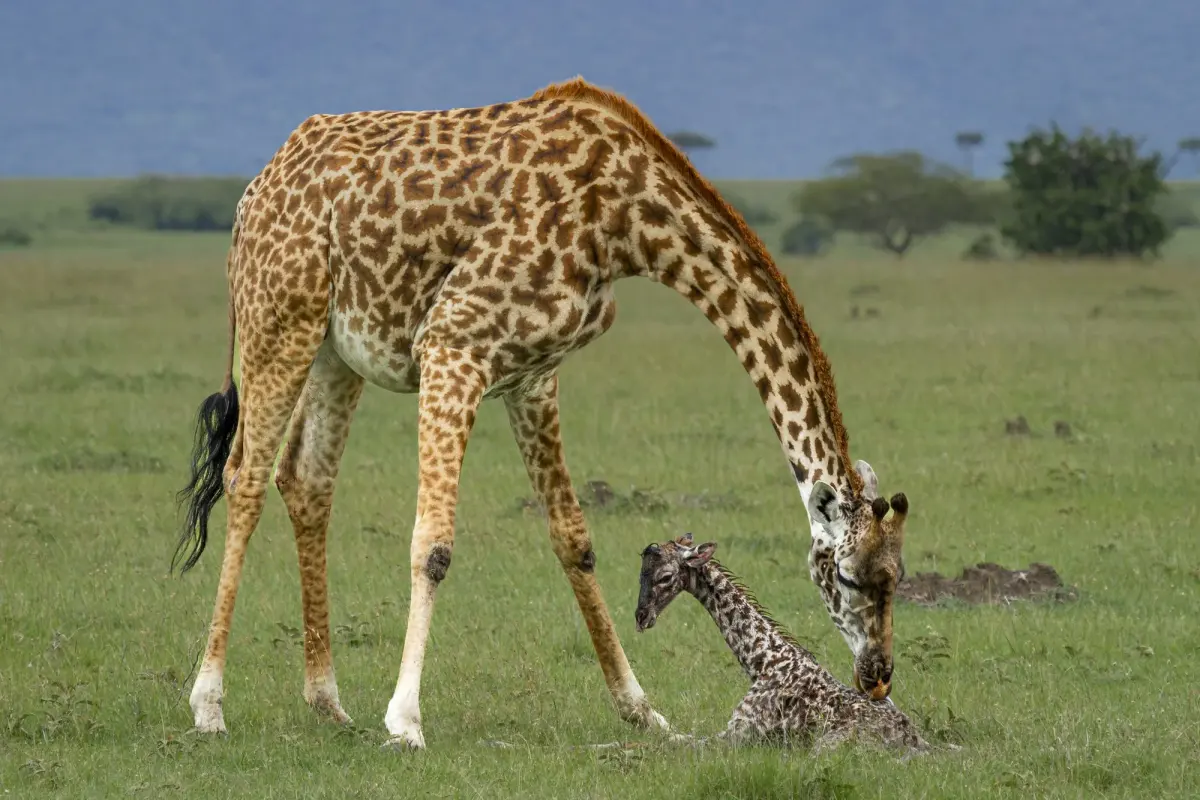
Giraffes give birth while standing, which means the calf experiences a rather dramatic entry into the world. As the mother stands, the calf drops approximately five to six feet to the ground, head-first. This fall is a natural part of the process and generally does not injure the newborn. The impact helps to break the amniotic sac and often stimulates the calf to take its first breath. Shortly after the drop, the mother will lower her head to lick the calf clean and encourage it to stand.
The process is swift and efficient to minimize the time the calf is vulnerable on the ground. Within the first hour of life, the calf typically achieves the following milestones:
- It clears its airways of birth fluids.
- It attempts to stand on its wobbly, long legs.
- It locates the mother’s teats to begin nursing.
- It begins to follow the mother to join the rest of the herd.
How do giraffes care for their calves?
Mother giraffes are highly attentive and protective, often forming "nursery herds" where several mothers leave their calves in a communal group while they forage nearby. This behavior, known as "calving crèches," allows the mothers to rotate duties, with one or two adults remaining to guard the youngsters. This social structure provides a significant safety net for the calves, as the adults can spot predators from great distances and defend the group with powerful kicks.
Despite this protection, the first few months are incredibly dangerous for young giraffes. Mortality rates can be high, with some studies suggesting that up to 50 percent of calves do not survive their first year. The mother provides milk for the calf for up to a year, although the young animal will begin nibbling on leaves as early as a few weeks old. This transition to solid food is essential for the calf to grow rapidly and gain the height needed to reach higher branches.
Common mistakes when observing giraffe births
One common mistake observers make is assuming that a lone calf is abandoned if the mother is not immediately visible. In reality, mothers often hide their calves in tall grass or thick brush to keep them concealed from predators while they graze nearby. If you encounter a young calf alone, it is vital to maintain a significant distance and avoid interfering. Getting too close can cause the mother to abandon the area or, conversely, charge to defend her offspring.
Another error is underestimating the speed at which a calf develops. Many people assume newborns are helpless for days, but they are remarkably precocious. If you are tracking or observing these animals, avoid these actions:
- Making loud noises that could attract predators to the calf's location.
- Attempting to feed or touch the calf, which can disrupt the mother-infant bond.
- Using drones or vehicles to follow the pair, as this causes unnecessary stress.
- Assuming the calf is sick just because it spends time lying down to conserve energy.
Key facts
- Giraffes almost always give birth to a single calf at a time.
- Twins are extremely rare in giraffes and have a very low survival rate.
- The gestation period for a giraffe is approximately 15 months.
- A newborn calf typically stands about 6 feet tall at birth.
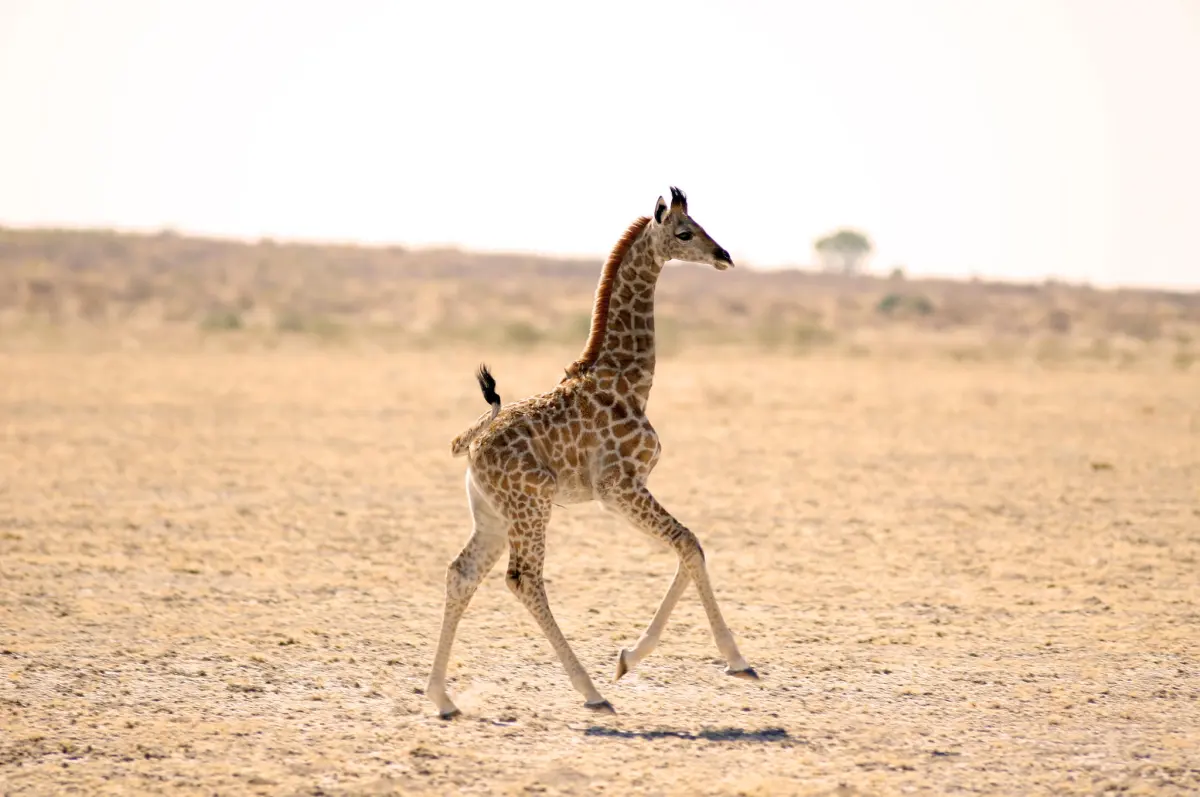
- Calves are able to stand and walk within an hour of being born.
- Mothers remain highly protective, keeping their calves close for the first few months of life.
The bottom line
Giraffes typically give birth to a single calf after a long 15-month pregnancy. Because twins are exceptionally rare, the survival of each individual calf is critical to the population. Newborns are remarkably independent, standing within an hour to navigate their environment. Understanding these reproductive patterns highlights the significant maternal investment required to raise a calf to maturity in the challenging environments of the African savanna.
People also ask
How long do giraffe calves stay with their mothers?
Calves usually stay with their mothers for about 12 to 16 months. During this time, they learn how to forage and socialize within the herd.
Do male giraffes help raise the calves?
No, male giraffes do not participate in the rearing of young. The responsibility of protection and nursing falls entirely on the mother.
What do newborn giraffes eat?
Newborns rely exclusively on their mother's milk for the first few weeks of life. They begin to experiment with solid vegetation, such as acacia leaves, at around three to four months old.
How much does a newborn giraffe weigh?
A newborn calf usually weighs between 100 and 150 pounds. Despite this weight, they are surprisingly agile and ready to move shortly after birth.
Why do giraffes give birth while standing up?
Giraffes give birth standing up to avoid predators and to allow the calf to drop to the ground, which helps break the umbilical cord. This behavior is a survival mechanism evolved to protect the vulnerable newborn.
How often do female giraffes reproduce?
A healthy female can produce a calf every 20 to 24 months. This interval allows the mother enough time to nurse and raise her current offspring before the next pregnancy.
This answer was created with the help of AI research tools and reference sources. Spotted an error? Let us know — we correct mistakes quickly. See our editorial policy.