How do you shade grass?
Short answer
Shading grass involves managing light levels to support growth in areas with limited sun. You cannot physically "shade" grass to make it grow, but you can select shade-tolerant species, prune overhead tree canopies to increase filtered light, and adjust maintenance practices like mowing height and irrigation to help grass thrive in low-light environments.
On this page
Which grass types grow best in shade?
Not all turfgrass varieties possess the biological capacity to photosynthesize efficiently under reduced light conditions. If your lawn receives less than four hours of direct sunlight daily, standard sun-loving varieties like Bermuda grass or Kentucky bluegrass will likely thin out and eventually perish. Instead, you must select cultivars specifically bred for shade tolerance, which often feature thinner leaf blades and lower metabolic demands.
For cool-season climates, fine fescues are the gold standard for shaded areas. These include creeping red fescue, chewings fescue, and hard fescue, all of which tolerate dry shade exceptionally well. In warmer regions, St. Augustine grass and Zoysia grass perform significantly better than other warm-season alternatives. When selecting seed or sod, look for labels that explicitly mention "shade tolerance" or "low-light performance" to ensure the plants are genetically suited for your specific environment.
- Fine Fescue: Excellent for dry, cool-shaded spots.
- St. Augustine: The top choice for warm-season shade.
- Zoysia: Offers moderate shade tolerance with high durability.
- Rough Bluegrass: Best for consistently moist, shaded areas.
How to increase light in shaded areas
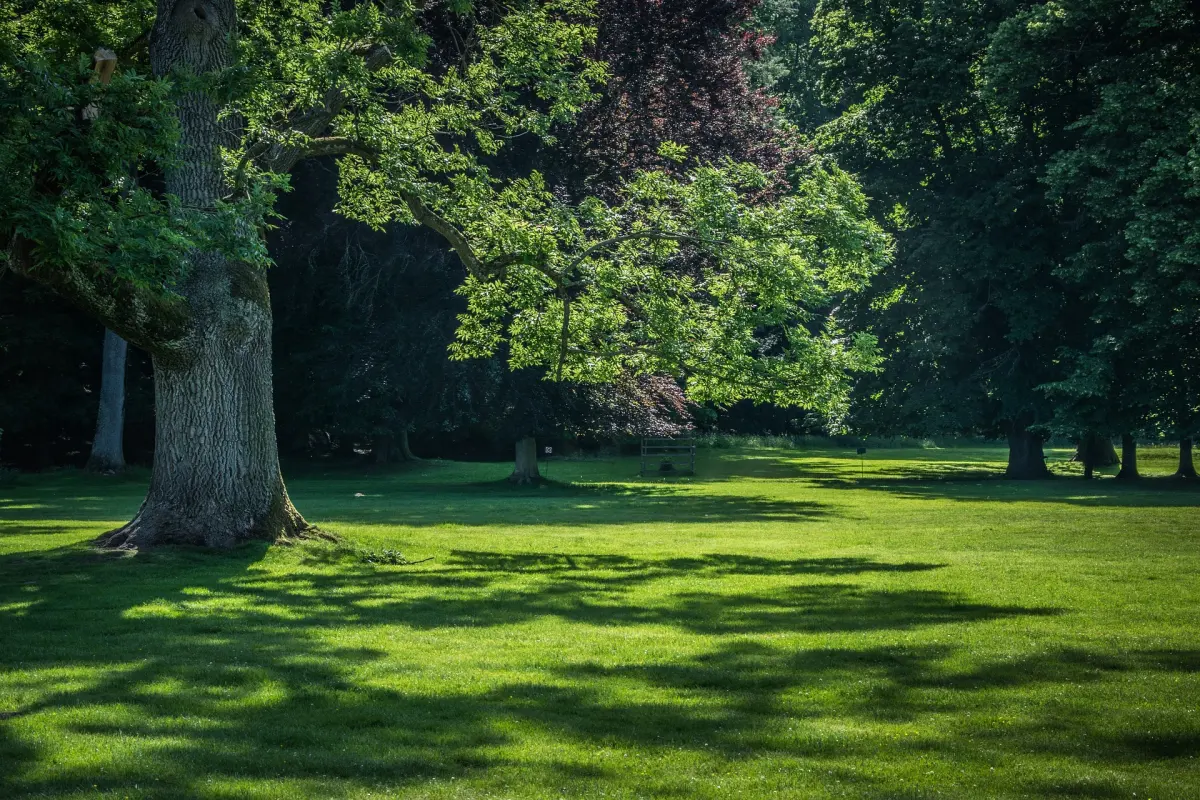
The most effective way to improve grass health in a shaded yard is to manipulate the existing canopy to allow more light penetration. Dense tree foliage acts as a physical barrier to solar radiation, starving the turf below. By thinning out the crown of trees, you can increase the amount of "dappled" light reaching the ground, which is often sufficient for shade-tolerant grasses to survive and maintain a healthy appearance.
Professional arborists recommend a process called "crown thinning," which involves removing select branches to improve air circulation and light filtration. Avoid "topping" trees, as this creates weak, rapid growth that eventually blocks more light than before. Additionally, removing lower limbs—a process known as "limbing up"—can redirect sunlight toward the lawn without compromising the tree's health. Aim to remove no more than 25 percent of a tree's foliage in a single growing season to prevent shock.
- Assess which trees are casting the deepest shadows.
- Hire a certified arborist to perform selective crown thinning.
- Remove lower branches to allow sunlight to hit the grass from side angles.
- Clean up fallen leaves regularly to prevent smothering the turf.
How to maintain grass in the shade
Shaded grass requires a fundamentally different maintenance routine than grass grown in full sun. Because shaded turf grows more slowly and has less energy stored in its roots, it cannot withstand the same level of foot traffic or aggressive mowing. You must adjust your expectations and your tools to ensure the grass remains resilient enough to compete with moss and weeds that often invade low-light areas.
First, raise your mower deck. Taller grass blades have more surface area for photosynthesis, allowing the plant to capture what little light is available. Aim for a height of 3 to 4 inches. Second, reduce your fertilization schedule. Shaded grass needs less nitrogen because it is not growing at the same rate as sun-drenched turf; over-fertilizing can lead to disease outbreaks like powdery mildew. Finally, be mindful of irrigation. Shaded areas stay damp longer, so water deeply but infrequently to prevent root rot and fungal growth.
Common mistakes when growing shade grass
The most frequent error homeowners make is treating shaded lawn areas exactly like sunny ones. This often manifests as over-watering or over-fertilizing, both of which stress the grass and encourage pathogens. When the soil remains constantly soggy due to lack of evaporation, the root system fails to develop properly. This leads to a cycle of decline where the grass thins, weeds take over, and the homeowner attempts to fix it with more chemicals.
Another common mistake is ignoring the competition for resources. Trees do not just cast shade; their massive root systems aggressively compete with grass for water and nutrients. If your grass is struggling under a large oak or maple, it is likely losing the battle for soil moisture. You must provide supplemental water to compensate for what the tree roots are stealing. Additionally, avoid heavy foot traffic in these areas, as shaded grass lacks the energy reserves to recover from soil compaction or physical damage.
Best alternatives to grass in deep shade
Sometimes, the shade is simply too dense for any grass variety to survive. If you have tried shade-tolerant fescues and increased light through pruning, yet the area remains bare, it is time to consider alternatives. Trying to force grass to grow in deep, permanent shade is a losing battle that wastes time, money, and water. Instead, embrace the conditions by installing ground covers or hardscaping that thrive in low-light environments.
Shade-loving ground covers provide a lush, green aesthetic without the high-maintenance requirements of turfgrass. Plants like pachysandra, hostas, or sweet woodruff are excellent choices for creating a carpet-like effect in areas where sunlight never reaches. Alternatively, you can use mulch, river rock, or flagstone to create a decorative path or seating area. These hardscape elements eliminate the need for mowing and watering entirely while turning a problematic, muddy patch of dirt into a functional and attractive feature of your landscape design.
Key facts
- Most common lawn grasses, such as Kentucky bluegrass, require at least 4 to 6 hours of direct sunlight daily to thrive.
- Fine fescue grasses are the best choice for shaded areas because they tolerate low light levels better than most other species.
- Pruning tree branches to raise the canopy allows more sunlight to reach the ground and improves air circulation.
- Applying a high-nitrogen fertilizer in shade can weaken grass by encouraging succulent growth that is prone to disease.
- Shade-tolerant grass varieties should be mowed at a higher setting, typically 3 to 4 inches, to increase leaf surface area for photosynthesis.
- Excessive shade often leads to moss growth, which indicates that the environment is too damp and dark for healthy turf.
The bottom line
Successfully maintaining grass in shaded areas requires a strategic approach focused on selecting the right species, such as fine fescue, and optimizing environmental conditions. By raising your mower height, pruning overhead tree branches, and avoiding excessive irrigation, you can significantly improve the health and density of your turf. Always prioritize sunlight exposure and soil drainage to ensure your lawn remains resilient even in challenging, low-light landscape environments.
People also ask
Why is my grass dying under large trees?
Grass under trees often dies due to a combination of insufficient sunlight and competition for water and nutrients from the tree's root system. Trees also intercept rainfall, leaving the soil beneath them dry and inhospitable for turf.
Can I grow grass in total shade?
No, grass cannot survive in total shade because it requires photosynthesis to produce energy. If an area receives less than 3 hours of sunlight, it is better to install shade-loving groundcovers like hostas or pachysandra.
How often should I water shaded grass?
Shaded grass requires less water than grass in full sun because the soil stays cooler and evaporation is slower. Overwatering in shaded areas often leads to fungal diseases and root rot.
Should I rake leaves off my lawn in the fall?
Yes, you must remove leaf litter promptly, as a thick layer of leaves blocks sunlight and traps moisture. This creates a suffocating environment that can kill grass within a few weeks.
Is it better to overseed shade-tolerant grass in spring or fall?
Fall is the ideal time to overseed because the soil is still warm and the cooler air temperatures reduce stress on new seedlings. Spring seeding is possible but requires more frequent watering to prevent the young grass from drying out.
Will thinning the tree canopy help my lawn?
Yes, removing lower branches or thinning the crown of a tree allows more light to penetrate to the lawn surface. This practice is often more effective than choosing shade-tolerant grass varieties alone.
This answer was created with the help of AI research tools and reference sources. Spotted an error? Let us know — we correct mistakes quickly. See our editorial policy.