How do you paint with a palette knife?
Short answer
Painting with a palette knife involves applying thick, textured layers of paint directly onto a canvas using metal or plastic blades. By scooping pigment and pressing it against the surface, artists create sculptural impasto effects, sharp edges, and vibrant color mixes that brushes cannot easily replicate, offering a bold, expressive painting style.
On this page
What tools do I need for palette knife painting?
To begin, you need a selection of palette knives, which are distinct from painting knives. Palette knives are typically long, flexible, and blunt-edged, designed primarily for mixing paint on a palette. Painting knives, however, feature a cranked handle to keep your knuckles off the canvas and come in various shapes like diamonds, trowels, and needles. A basic starter set should include at least one small, pointed trowel for fine details and a larger, flat-edged blade for covering broad areas.
Beyond the knives, you need a sturdy substrate. Canvas boards or rigid wooden panels are superior to stretched canvas because they do not flex under the pressure of the blade. For paint, heavy-body acrylics or traditional oil paints are ideal because they hold their shape and texture once applied. You will also need a glass or wooden palette for mixing colors and a rag to clean your blade frequently between applications to prevent muddying your pigments.
How do I apply paint with a palette knife?
The technique relies on loading the blade correctly to achieve the desired stroke. Scoop a small amount of paint onto the underside of the blade, similar to spreading butter on toast. Hold the knife at a slight angle to the canvas and press down firmly, dragging the blade across the surface to release the paint. The amount of pressure you apply determines the thickness and coverage of your mark.
- Load the underside of the blade with a generous amount of paint.
- Place the edge of the blade against the canvas at a 30-degree angle.
- Drag the knife across the surface in one fluid motion to create a clean stroke.
- Lift the blade vertically at the end of the stroke to leave a sharp, raised edge.
- Clean the knife with a rag before picking up a new color to maintain vibrancy.
Best techniques for texture and layering
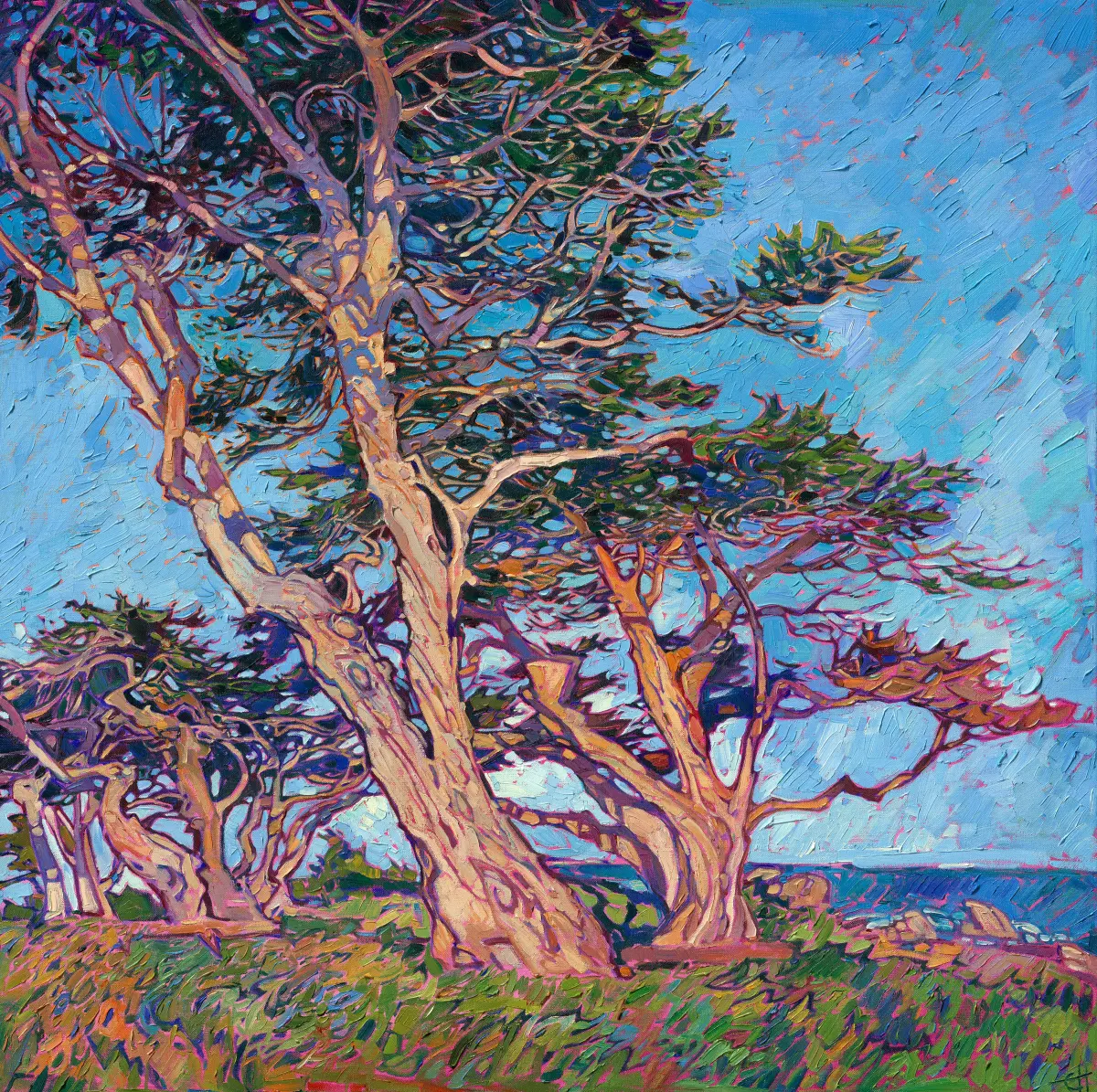
Palette knife painting is famous for the impasto technique, where paint is applied so thickly that it stands out from the surface. To build depth, start by blocking in your composition with thin layers, then gradually increase the thickness of your paint as you move toward the highlights. You can create interesting textures by "scumbling," which involves lightly dragging a dry, paint-loaded blade over a dried layer of paint, allowing the bottom color to peek through the gaps.
Another effective method is "sgraffito," where you use the pointed tip of the knife to scratch into wet paint, revealing the color of the layer beneath. This is particularly useful for adding fine details like grass, hair, or architectural lines. Because the knife does not absorb paint like a brush, you can achieve brilliant, unblended color streaks by picking up two or three colors on the blade simultaneously and applying them in a single, marbled stroke.
Why do my colors look muddy?
Color muddiness is a common frustration for beginners, usually caused by overworking the paint on the canvas. When you continue to scrape or drag the knife over the same area, the colors begin to mix together, losing their individual clarity and turning into a dull gray or brown. To avoid this, try to make your marks with confidence and leave them alone once they are placed. The beauty of knife painting lies in the fresh, spontaneous quality of each stroke.
Another cause of muddy colors is failing to clean your knife between applications. Even a tiny residue of a dark color left on the blade will contaminate a lighter color on your palette. Always keep a clean cloth or paper towel nearby and wipe the blade thoroughly after every few strokes. If you find your colors are still blending too much, wait for the underlayer to become "tacky" or dry to the touch before applying the next layer on top.
Common mistakes when using a palette knife
One frequent error is applying too much pressure, which flattens the paint and removes the sculptural quality that makes knife painting unique. Beginners often press down as if they are trying to scrape the paint off rather than depositing it onto the canvas. Remember that the knife is a tool for placement; let the paint sit on top of the surface rather than pushing it into the weave of the fabric.
- Using too much medium: Excessive thinning agents make the paint runny, causing it to lose its structural integrity and drip down the canvas.
- Neglecting the edges: Beginners often focus on the center of the canvas while ignoring how the knife interacts with the edges of the composition.
- Fear of bold marks: Hesitation leads to small, timid strokes that lack the energy characteristic of this medium.
- Using the wrong surface: Flexible stretched canvas can cause thick layers of paint to crack as they dry and the fabric moves.
By avoiding these pitfalls and practicing consistent blade maintenance, you will develop the control necessary to create dynamic, professional-looking works of art. Focus on the physical sensation of the paint under the blade, and allow the tool to dictate the flow of your composition. With time, you will learn to balance the thick, heavy impasto with delicate, precise details to create a truly compelling visual experience.
Key facts
- Palette knives are made of flexible steel or plastic, with steel blades offering better responsiveness and longevity.
- Use a "loading" technique by picking up paint from the underside of the blade rather than the top.
- Apply paint using the edge of the knife to create sharp, linear details or the flat side for broad, impasto textures.
- Clean the knife immediately after use with a rag or paper towel to prevent dried paint buildup that can damage the blade.
- Work from the background to the foreground, as palette knife layers are thick and difficult to paint over once dry.
- Hold the knife like a pencil for precise marks or use a loose, wrist-heavy grip for expressive, gestural strokes.
The bottom line
Painting with a palette knife is a transformative technique that emphasizes texture, spontaneity, and bold color application. By loading the blade correctly and utilizing the edge for precision, you can create sculptural effects that brushes cannot replicate. Focus on building layers deliberately and maintaining a clean tool to ensure your work remains vibrant. With practice, this method allows for a unique, expressive style in your artwork.
People also ask
Can you use a palette knife with watercolor paints?
Palette knives are generally unsuitable for traditional watercolors because the medium lacks the necessary body and viscosity. They are designed for thick, buttery mediums like oil or heavy-body acrylic paint.
What is the difference between a palette knife and a painting knife?
A palette knife has a straight, flat blade designed primarily for mixing colors on a palette. A painting knife features an offset handle that keeps your knuckles away from the canvas while applying paint.
Do I need to prime my canvas before using a palette knife?
Yes, applying gesso to your canvas is essential to prevent the oil in the paint from rotting the fabric fibers. A sturdy, stretched canvas or a wood panel provides the best surface for thick, heavy applications.
How do I achieve smooth transitions with a knife?
To blend colors, lay two colors side-by-side on the canvas and gently drag the flat edge of the blade across the seam. Avoid over-mixing, as this will create a muddy appearance rather than a clean gradient.
How long does it take for palette knife paintings to dry?
Because palette knife work often involves thick impasto layers, the paint can take weeks or even months to dry completely. It is important to avoid varnishing the piece until the thickest areas are fully cured.
Can I use a palette knife on paper?
You can use a knife on heavy-duty paper or board, provided it is primed with gesso. Thin paper will likely buckle or tear under the pressure and weight of the heavy paint layers.
This answer was created with the help of AI research tools and reference sources. Spotted an error? Let us know — we correct mistakes quickly. See our editorial policy.