How do you draw a treehouse step by step?
Short answer
Drawing a treehouse involves establishing a sturdy base within the branches, sketching the main structure, and adding architectural details like ladders and windows. By using basic geometric shapes to build the frame and incorporating organic textures for the tree, you can create a realistic and charming illustration of a woodland hideaway.
On this page
How to sketch the basic tree structure
The foundation of any treehouse drawing is the tree itself. Start by sketching a thick, slightly curved vertical line for the trunk, adding smaller, branching lines that extend outward to create the limbs. Use irregular, wavy lines to represent the bark texture, ensuring the trunk is wider at the bottom than at the top to provide a sense of stability.
Once the primary branches are set, draw large, cloud-like shapes around the upper limbs to represent the canopy of leaves. Do not worry about drawing every individual leaf; instead, focus on creating clusters that frame the space where the house will sit. This provides a natural cradle for your structure and makes the final drawing look more integrated into the environment.
How to draw the treehouse frame
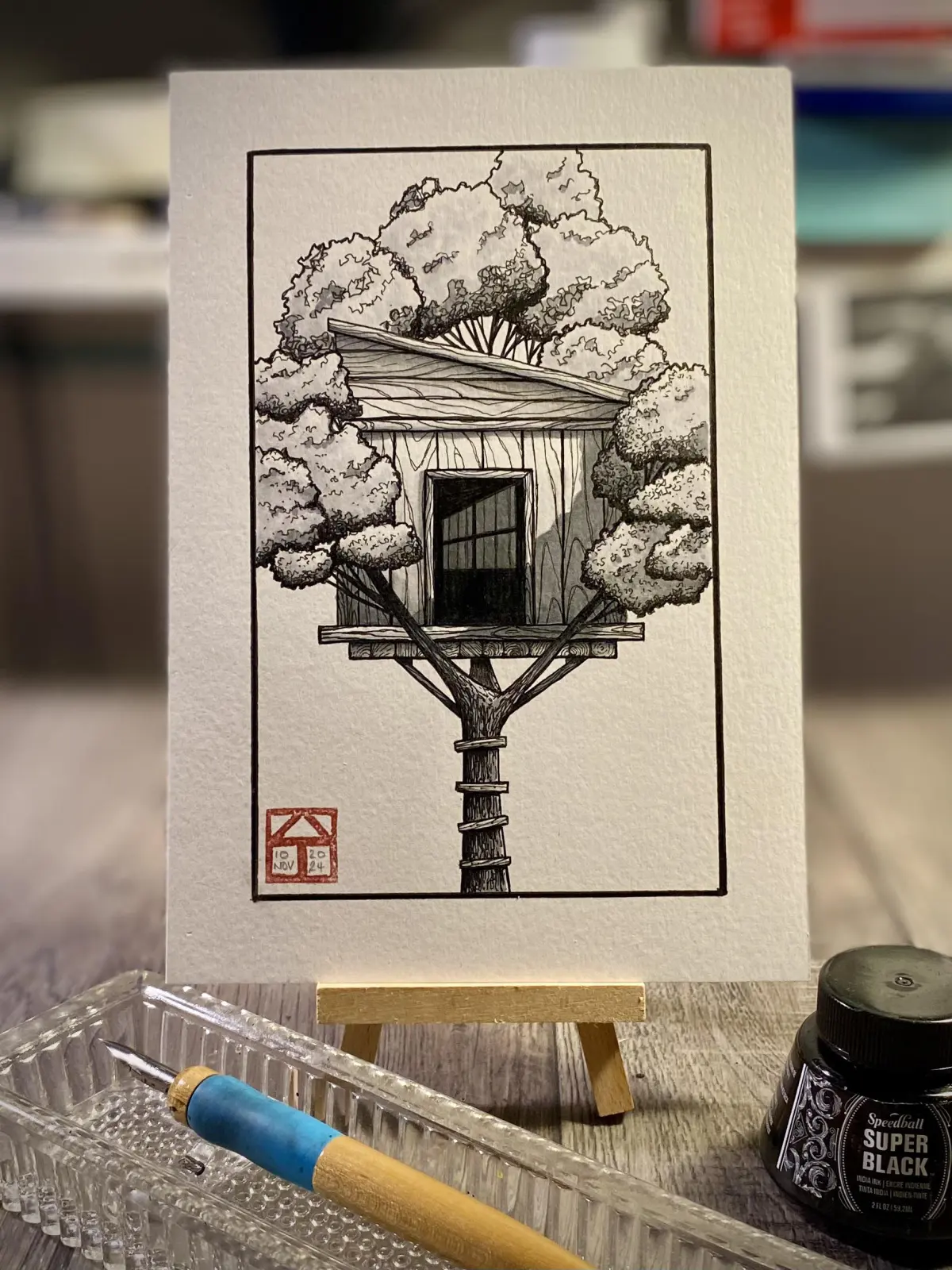
To build the house, begin by drawing a simple rectangle or square nestled between two sturdy branches. Use a ruler if you want precise lines, or keep them slightly loose for a rustic, handmade appearance. Ensure the base of your structure appears to be resting securely on the limbs, rather than floating in the air, to maintain a logical sense of perspective.
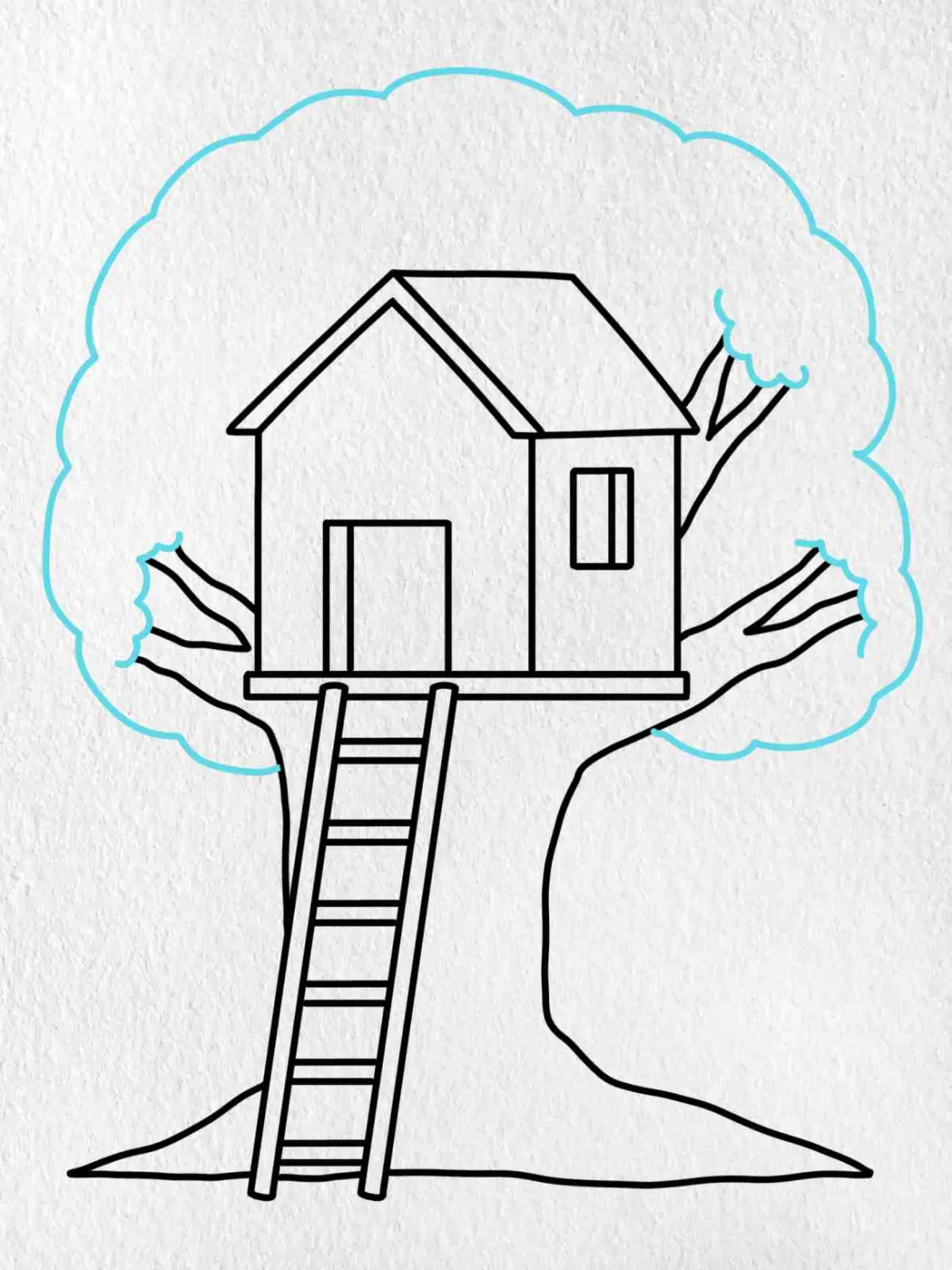
Follow these steps to construct the house:
- Draw a box shape that fits snugly against the main trunk.
- Add a triangular or gabled roof on top of the box.
- Erase the lines of the tree trunk that would be hidden behind the walls of the house.
- Add a floor platform that extends slightly beyond the walls to create a small porch or deck.
How to add realistic architectural details
Details transform a basic box into a believable dwelling. Add a small door and several windows to the front face of the structure, using simple rectangles or squares. You can add cross-hatch marks inside the window frames to simulate glass panes, or draw small shutters hanging on the sides to enhance the cozy, cabin-like aesthetic.
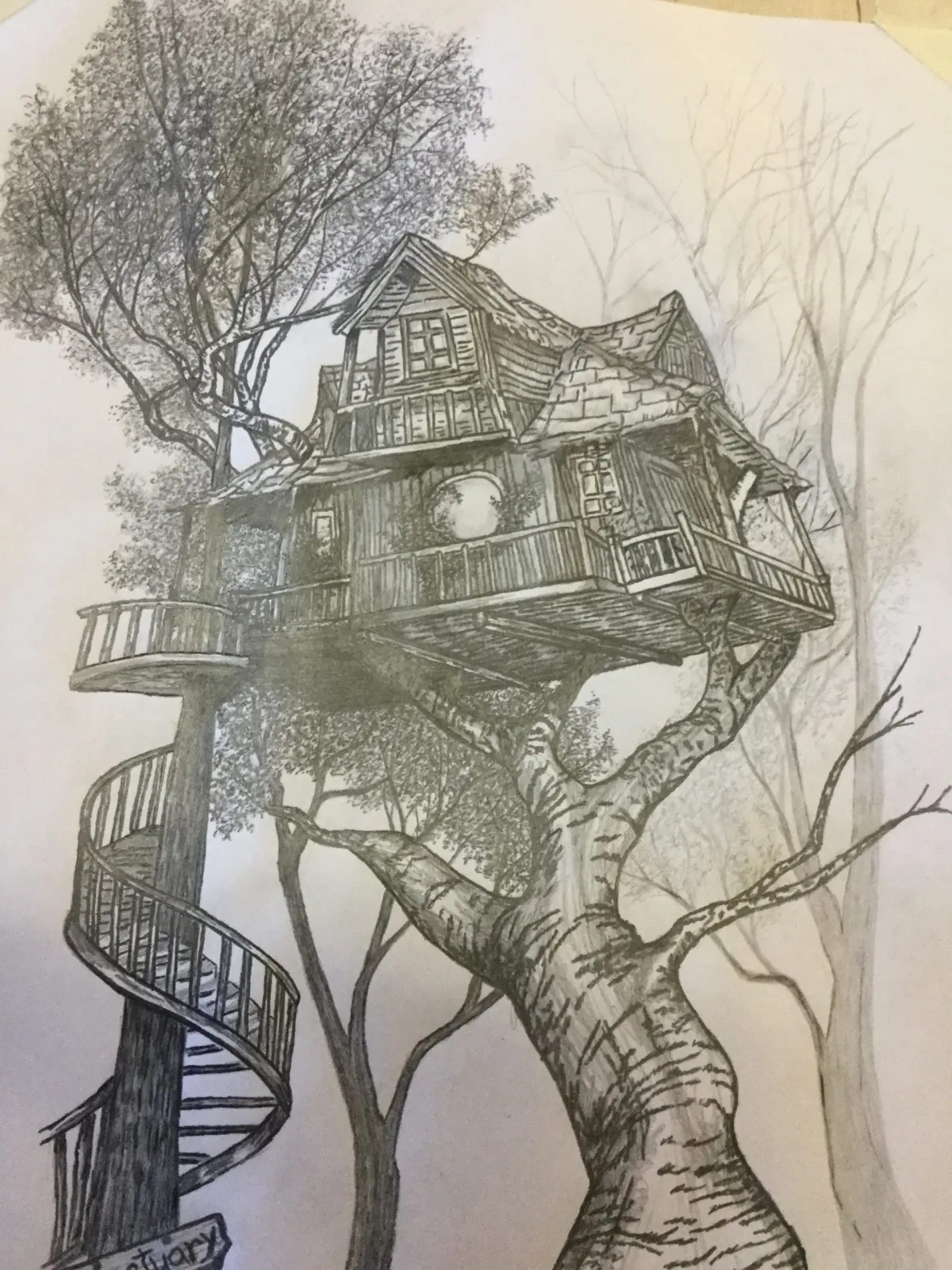
Incorporate access points to make the treehouse functional. A rope ladder dangling from the porch is a classic choice, drawn as two parallel lines with short horizontal rungs connecting them. Alternatively, you can draw a wooden staircase winding around the trunk. Adding a small railing around the porch deck increases the visual interest and adds a layer of safety to your illustrated design.
Common mistakes when drawing treehouses
One of the most frequent errors is failing to account for the tree's natural growth. Artists often draw the treehouse as if it were a building on flat ground, ignoring how branches would naturally intersect with the walls. Always ensure the branches appear to pass behind or through the structure, rather than just stopping abruptly at the edge of the wood.
Another common mistake is ignoring scale. If the house is too large for the tree, the drawing will look unstable or unrealistic. Keep the structure proportional to the thickness of the branches supporting it. If you are unsure, compare the height of the door to the width of the trunk; a door should never be wider than the main branch it sits upon.
Best tips for adding texture and shading
To make your drawing pop, focus on the contrast between the organic tree and the man-made house. Use short, dense strokes for the bark to show roughness, while keeping the lines of the house clean and straight. This difference in line quality helps the viewer distinguish between the natural elements and the construction materials of the treehouse.
Use shading to create depth and volume in your work:
- Apply shadows on the underside of the treehouse floor to suggest it is elevated.
- Add darker shading on the side of the trunk opposite your light source.
- Use light, circular motions to shade the leaves, leaving small white gaps to represent sunlight filtering through the canopy.
- Add a subtle shadow on the roof where the branches hang over it to show the house is nestled within the tree.
By consistently applying these shading techniques, you will create a three-dimensional effect that makes your treehouse look like a genuine, inviting space.
Key facts
- Start by drawing a sturdy, thick trunk with two or three main branches to provide a stable foundation.
- Sketch a rectangular platform resting on the branches before adding the walls to ensure the structure looks balanced.
- Use a ruler to keep your lines straight, as crooked walls can make the treehouse appear unstable or poorly constructed.
- Add a ladder or a rope swing to the exterior to provide a sense of scale and interactivity to your drawing.
- Incorporate foliage by drawing loose, cloud-like shapes around the branches to represent the tree's canopy.
- Avoid drawing the treehouse too high up the trunk, as it can make the perspective look unrealistic and top-heavy.
The bottom line
Drawing a treehouse requires a balance between structural logic and artistic flair. By establishing the tree’s foundation first, you create a realistic anchor for your design. Focus on geometric shapes for the building and organic, loose lines for the foliage. With consistent practice in perspective and shading, you can create a detailed, charming illustration that feels both imaginative and structurally sound for any viewer.
People also ask
What is the best pencil grade for sketching architectural structures?
An HB pencil is ideal for initial light sketches, while a 2B pencil is better for adding darker, defined outlines. Using different grades helps create depth and contrast in your drawing.
How do I make the treehouse look like it is actually attached to the tree?
Draw the platform planks wrapping slightly around the trunk rather than just sitting behind it. Adding small "L" brackets or support beams connecting the floor to the branches reinforces the illusion of attachment.
Should I draw the tree before the house or the house before the tree?
Always draw the tree first to establish the structural constraints of the branches. Building the house around existing branches makes the final image look more authentic and grounded.
How can I add texture to the bark of the tree?
Use short, irregular vertical dashes and squiggly lines to simulate the rough surface of bark. Vary the pressure of your pencil to create shadows in the crevices, which adds a three-dimensional effect.
What is the most common mistake when drawing a treehouse?
The most common error is ignoring perspective, which makes the house look like it is floating off the branches. Ensure the floor of the treehouse aligns with the angle of the supporting limbs.
How do I draw a roof that looks realistic?
Draw the roof as two intersecting planes that meet at a ridge line above the center of the structure. Adding a slight overhang beyond the walls makes the roof look functional and protective.
This answer was created with the help of AI research tools and reference sources. Spotted an error? Let us know — we correct mistakes quickly. See our editorial policy.