How do you draw a suit?
Short answer
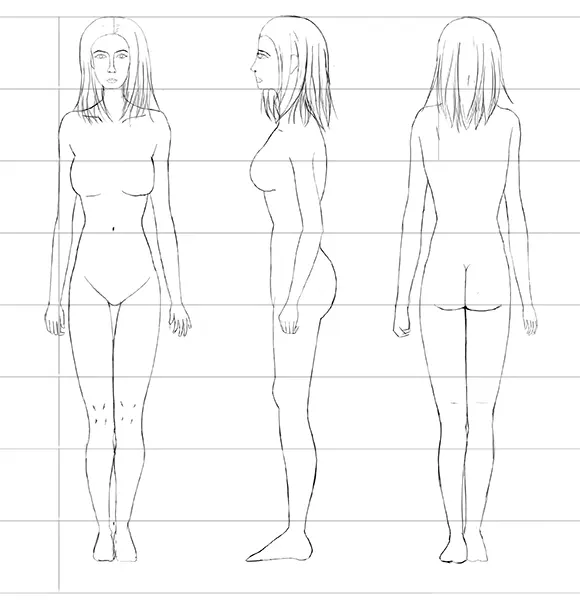
Drawing a suit requires understanding human anatomy and the structural drape of fabric. Begin by sketching a simplified mannequin to establish posture, then layer the jacket and trousers over the frame. Focus on key tension points like the shoulders and waist to ensure the clothing appears to hang naturally on the body.
On this page
How to structure a suit drawing
The foundation of a realistic suit drawing is the underlying skeleton. Before adding fabric, sketch a light gesture drawing of the figure to determine the pose, as the suit must conform to the body's movement. A suit is a rigid, tailored garment, so the lines should be cleaner and more geometric than those used for casual clothing.
When mapping the suit, focus on the shoulder width and the placement of the lapels. The jacket should extend slightly beyond the natural shoulder line to account for shoulder pads, which are standard in formal tailoring. Use these steps to establish your base:
- Draw the head and neck to determine the scale of the torso.
- Sketch a trapezoid for the chest area to define the jacket's frame.
- Add vertical lines for the trousers, keeping them wider than the legs to show the drape of the fabric.
- Connect the torso and legs with a waistline that sits near the navel.
Best techniques for drawing suit fabric
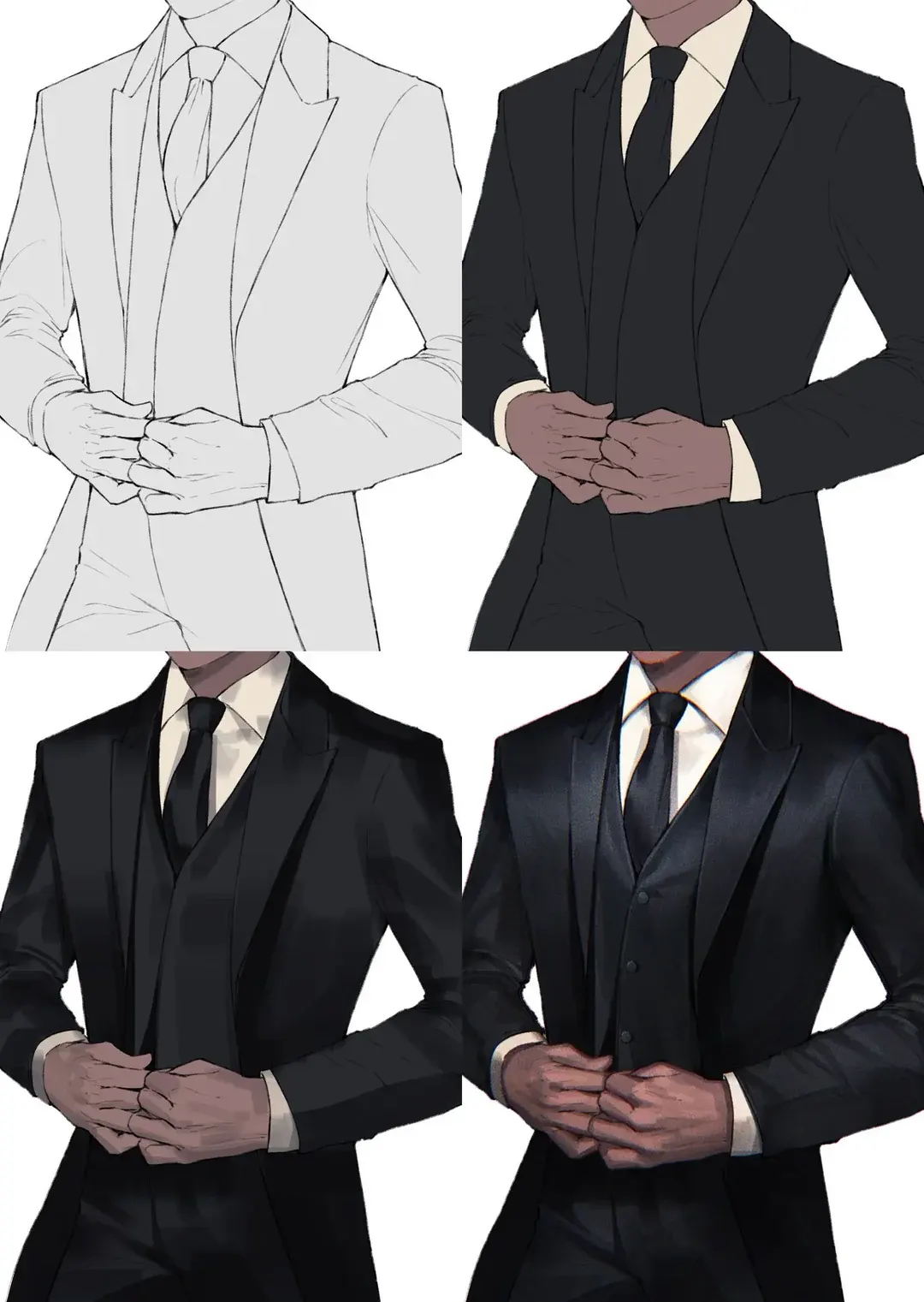
Fabric behavior is the most critical element in making a suit look authentic. Unlike t-shirts or athletic wear, suit fabric is heavy and holds its shape, meaning it does not wrinkle easily. Instead of drawing many small folds, focus on "tension folds" that occur at stress points, such as the elbows, the armpits, and the crotch area.
To master the look of professional tailoring, pay attention to the following details:
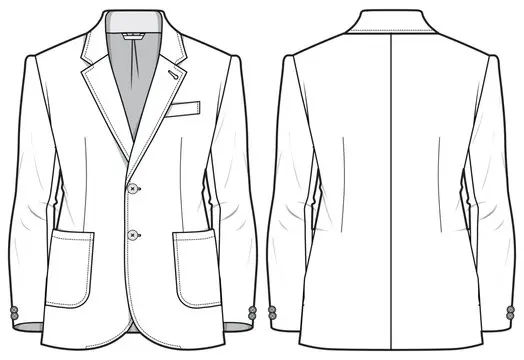
- Lapels: These should be drawn as separate, folded pieces of fabric that taper toward the top button.
- Pockets: Keep these horizontal and aligned with the waist button to maintain a clean, professional aesthetic.
- Trouser Break: Draw a slight fold at the bottom of the pant leg where it meets the shoe, indicating the length and weight of the fabric.
- Buttons: Always place the top button of a two-button jacket slightly above the natural waistline to create a flattering silhouette.
How to draw suit proportions
Proportions define the difference between a modern slim-fit suit and a traditional loose-fit suit. In contemporary fashion, the jacket should end near the mid-palm of the wearer's hand when their arms are at their sides. If the jacket is too long, the figure will look stunted; if it is too short, the proportions will appear cartoonish.
The trousers should follow the line of the leg without clinging tightly. For a standard fit, the pant leg should be wide enough to cover the shoe heel partially. When drawing the sleeves, ensure they are short enough to reveal about half an inch of the shirt cuff. This specific detail is a hallmark of formal attire and adds a layer of realism that elevates the quality of your illustration.
Common mistakes when drawing suits
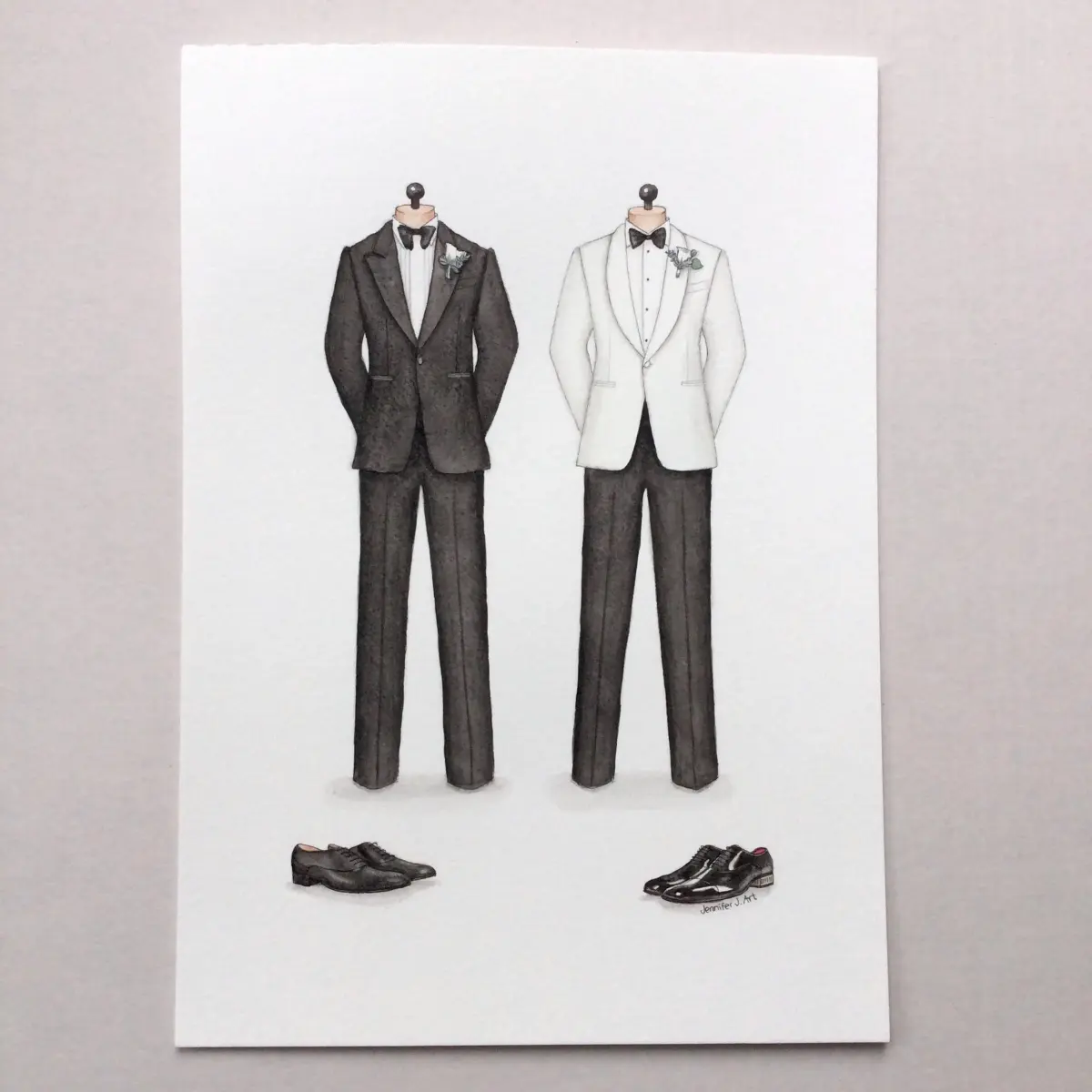
One of the most frequent errors is drawing the suit as a skin-tight garment. Because suits are constructed from wool or polyester blends, they have a structural integrity that creates a "boxier" look than the body underneath. Avoid drawing the contours of the muscles through the jacket, as this destroys the illusion of tailored clothing.
Another common mistake involves the placement of the lapels and the collar. The collar should hug the neck of the shirt closely, while the lapels should lay flat against the chest. If the lapels appear to float off the chest, the drawing will look stiff and unrealistic. Remember that the jacket is a shell, and it should move independently of the arms and torso, especially when the figure is in motion or sitting down.
Why suit anatomy matters for artists
Understanding the anatomy of a suit allows you to convey status and character through clothing. A well-fitted suit suggests confidence and professionalism, while an ill-fitting suit can imply discomfort or a lack of attention to detail. By mastering the drape and structure of the garment, you can use the suit as a narrative tool to tell the audience more about your character's personality.
Focusing on the interplay between the body and the suit will improve your overall figure drawing skills. Practice sketching the suit in various positions, such as reaching for a door handle or sitting in a chair, to see how the fabric shifts. By observing how the jacket buttons pull against the fabric when the wearer moves, you will learn to create dynamic, believable illustrations that reflect the true weight and texture of high-quality tailored clothing.
Key facts
- Start by sketching a basic "T" shape to establish the shoulders and the center line of the jacket.
- The jacket length should typically end at the knuckles when your arms hang naturally at your sides.
- Draw the lapels as two triangles meeting at the gorge point, which is where the collar meets the lapel.
- Keep the sleeve width consistent; a common mistake is making them too tight or too baggy compared to the torso.
- Add "break" lines at the bottom of the trousers where they touch the shoes to imply natural fabric folding.
- Use simple geometric shapes like rectangles for the torso and cylinders for the limbs to maintain proper proportions.
The bottom line
Drawing a suit requires balancing structure with natural movement. By focusing on the shoulder width, the proper length of the jacket, and the placement of lapels, you can create a professional look. Remember to use minimal lines to suggest fabric folds, as over-detailing often ruins the clean silhouette. Practice these basic proportions first, and you will quickly master the art of illustrating tailored clothing accurately.
People also ask
What is the most important part of a suit's silhouette?
The shoulder line is the most critical element because it dictates the structure of the entire garment. If the shoulders are drawn too wide or too narrow, the rest of the suit will look distorted and unnatural.
Should I draw the buttons on the left or right side?
For a standard men's suit, the buttons are placed on the wearer's right side. If you are drawing a woman's suit, the buttons are traditionally placed on the wearer's left side.
How do I make the fabric look realistic?
Use subtle, curved lines to indicate folds near the elbows, waist, and knees. Avoid drawing too many lines, as heavy shading can make the fabric appear stiff or like heavy metal.
How long should the trousers be in a drawing?
Trousers should ideally reach the top of the shoes with a slight fold or "break" at the ankle. Avoid drawing them too short, which looks like cropped pants, or too long, which creates messy puddles of fabric.
What is the purpose of the gorge point?
The gorge point is the seam where the collar meets the lapel, and its height determines the suit's style. A higher gorge point is considered modern, while a lower one provides a more traditional, vintage appearance.
How do I draw the pocket flaps?
Draw them as thin horizontal rectangles slightly angled downward toward the sides of the jacket. Ensure they are placed at the same height on both sides of the torso to maintain symmetry.
This answer was created with the help of AI research tools and reference sources. Spotted an error? Let us know — we correct mistakes quickly. See our editorial policy.