How do you draw jeans step by step?
Short answer
Drawing realistic jeans requires focusing on the structural anatomy of the legs and the specific behavior of denim fabric. By establishing the base form, mapping out tension points, and layering details like seams and rivets, you can create a convincing illustration that captures the weight and texture of the material.
On this page
How to sketch the basic shape of jeans
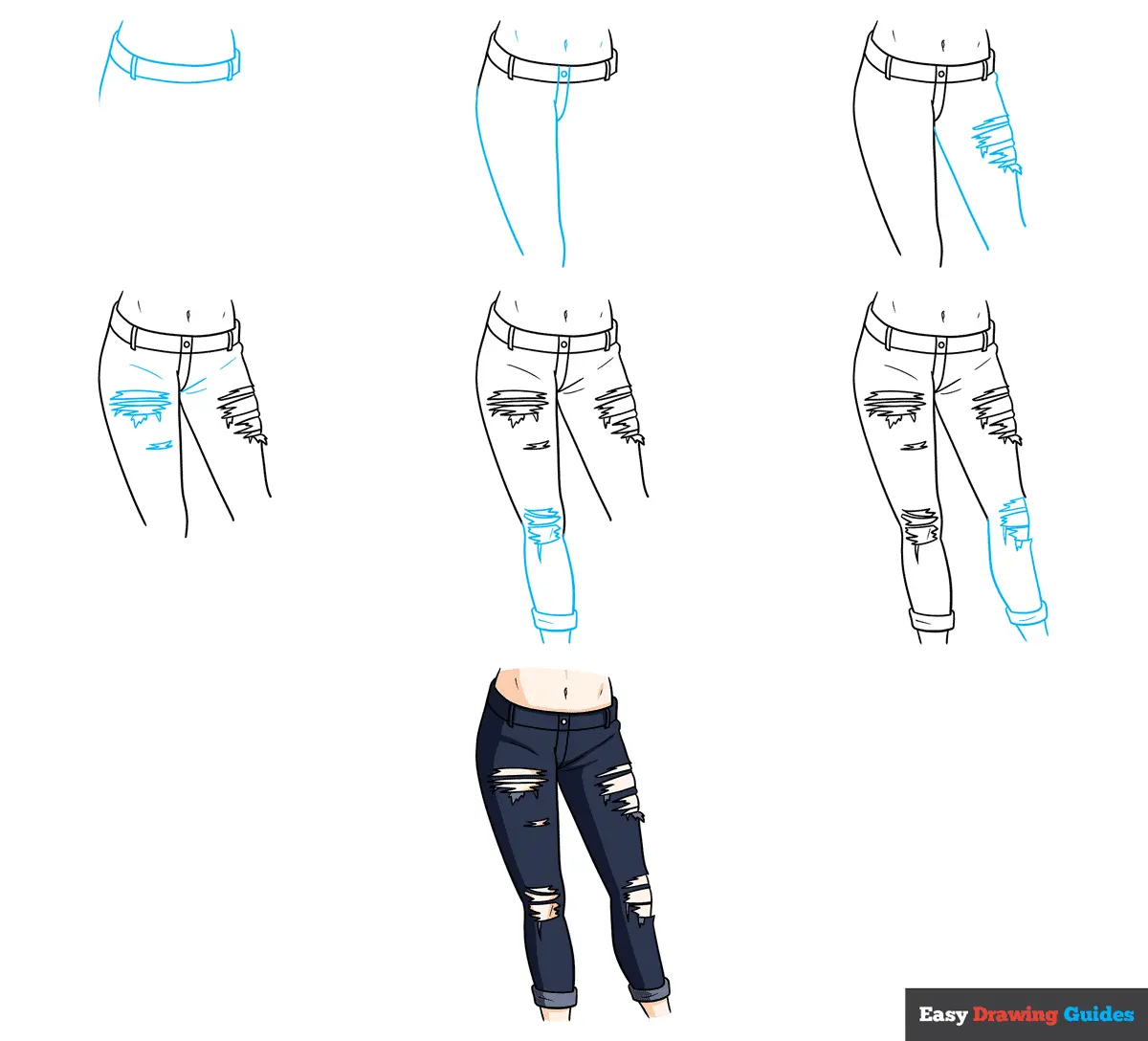
To draw jeans, start by sketching the underlying anatomy of the legs. Even though denim is a thick, heavy fabric, it must conform to the body’s silhouette. Use light, gestural lines to define the hips, thighs, knees, and ankles. Remember that jeans are not skin-tight unless they are a specific skinny-fit style; leave a small amount of negative space between the leg anatomy and the outer edge of the denim to account for the fabric's thickness.
Once the proportions are set, establish the waistband and the crotch seam. The waistband should sit firmly at the hips or waist, depending on the desired fit. The crotch seam is a critical anchor point; it usually forms a slight "J" shape on the front of the garment. Keep your initial lines loose so you can easily adjust the width of the pant legs to match the intended style, such as bootcut, straight-leg, or wide-leg.
How to draw fabric folds and wrinkles
Denim is a rigid, durable material that does not drape like silk or cotton. When drawing folds, focus on "tension points" where the fabric is pulled or bunched. Common locations for these folds include the crotch, the back of the knees, and the hem where the pants pool around the shoes. Use sharp, angular lines rather than soft, rounded curves to represent the stiffness of the denim.
Follow these steps to create realistic folds:
- Identify where the fabric is being stretched, such as the hip area when a character is sitting.
- Draw short, V-shaped or Y-shaped lines radiating from these tension points.
- Keep the folds sparse; too many lines will make the jeans look like thin fabric rather than heavy denim.
- Add subtle horizontal lines across the knees to suggest the natural creasing that occurs from walking and sitting.
Best tools for drawing jeans textures
The texture of denim is defined by its weave and its tendency to fade in high-friction areas. For traditional media, use a graphite pencil for the structure and a fine-liner pen to emphasize the seams and rivets. If you are working digitally, use a textured brush that mimics the cross-hatch pattern of denim fabric. Layering is essential here; start with a flat base color or tone, then add lighter highlights to the thighs and knees to simulate fading.
When adding detail, consider the following elements:
- Double-stitching: Use two parallel lines along the side seams and pockets.
- Rivets: Add small circles at the corners of the front pockets to indicate hardware.
- Fraying: Use short, erratic strokes at the hem to show wear and tear.
- Contrast: Ensure the shadows in the inner thighs are darker than the highlights on the outer legs to create a three-dimensional effect.
Why jeans look unrealistic in drawings
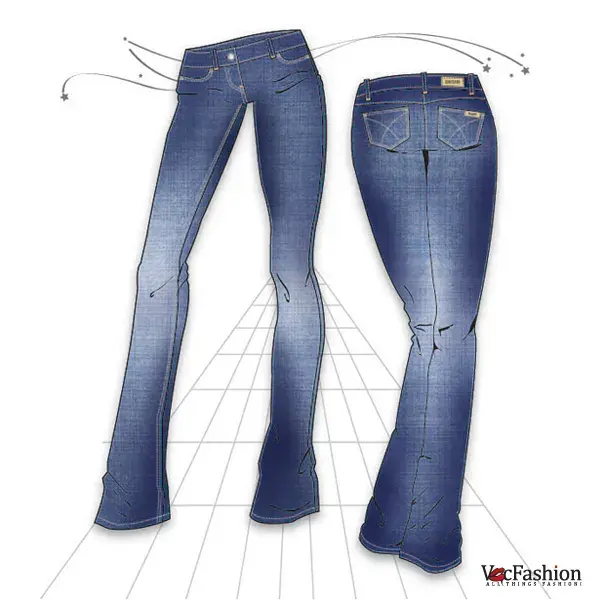
The most common reason jeans look "off" in a drawing is a lack of structural integrity. If the fabric does not appear to have weight, the garment will look like it is floating around the body. Ensure that the jeans follow the gravity of the pose. If a character is bending their knee, the fabric must bunch up on the inside of the joint and stretch tightly across the kneecap. Ignoring the interaction between the body and the material results in a flat, unconvincing image.
Another issue is inconsistent lighting. Denim absorbs light differently depending on the wash. Dark, raw denim should have high-contrast shadows with very little highlight, while light-washed or distressed denim requires more varied shading to show the texture of the worn fibers. Always identify your light source before you begin shading. If the light comes from the upper left, the right side of the legs and the underside of the folds should be significantly darker.
Common mistakes when drawing denim
Beginners often over-detail the entire surface of the jeans. This creates a cluttered look that distracts from the form of the legs. Focus your details on the seams, the pockets, and the areas where the fabric bunches. Leave the large, flat areas of the thighs and calves relatively clean, only adding subtle shading to suggest the curve of the leg. This contrast between detailed areas and simple areas makes the drawing look more professional and grounded.
Avoid these frequent errors to improve your results:
- Drawing the hem too high or too low for the character's shoes.
- Forgetting to draw the fly and the button closure at the waist.
- Making the pockets too small or placing them too low on the buttocks.
- Using perfectly straight lines for the legs, which ignores the natural taper of the human body.
- Failing to account for the thickness of the hem, which should be drawn as a small, distinct cuff at the bottom of the pant leg.
Key facts
- Start by sketching a basic cylinder shape for the legs to establish the correct proportions and volume.
- Focus on the crotch seam, which should resemble a "J" shape on one side and a mirrored "J" on the other.
- Add horizontal wrinkles near the knees and ankles to suggest the fabric is bunching due to movement.
- Draw the waistband as a thick, separate rectangular band that sits slightly above the hip line.
- Use double-line stitching details along the side seams and pockets to create the authentic look of denim.
- Vary the thickness of your lines to emphasize shadows under the pockets and behind the knees for depth.
The bottom line
Drawing realistic jeans requires balancing the anatomy of the legs with the physical properties of denim fabric. By focusing on the crotch seam, proper waistband placement, and strategic fabric folds, you can create a convincing illustration. Remember to emphasize texture through stitching details and shading to distinguish denim from other materials. With practice, these structural steps will allow you to render various denim styles with professional accuracy.
People also ask
How do I make jeans look like denim fabric?
Use cross-hatching or subtle diagonal lines to represent the twill weave of denim. Adding small highlights with an eraser can also simulate the faded areas on the thighs and knees.
Should I draw the legs straight or bent?
Drawing legs with a slight bend at the knee makes the jeans look more realistic and dynamic. Straight legs often appear stiff and lack the natural tension found in real clothing.
How do I draw the pockets correctly?
Place the back pockets slightly below the waistband level, ensuring they are tilted outward. Front pockets should be drawn as curved slits or deep pockets that follow the hip contour.
What is the biggest mistake when drawing jeans?
The most common error is drawing the legs too thin or failing to account for the thickness of the fabric. Always allow extra space around the leg silhouette to represent the denim material.
How do I draw the fly and buttons?
Draw a small vertical rectangle in the center below the waistband for the fly. Add a few small circles for buttons and a curved line to indicate the zipper flap.
How can I show the difference between skinny and baggy jeans?
Skinny jeans should follow the contour of the leg closely with minimal extra space. Baggy jeans require wider, flowing shapes that bunch up significantly at the ankles and hips.
This answer was created with the help of AI research tools and reference sources. Spotted an error? Let us know — we correct mistakes quickly. See our editorial policy.