How do you draw a stingray?
Short answer
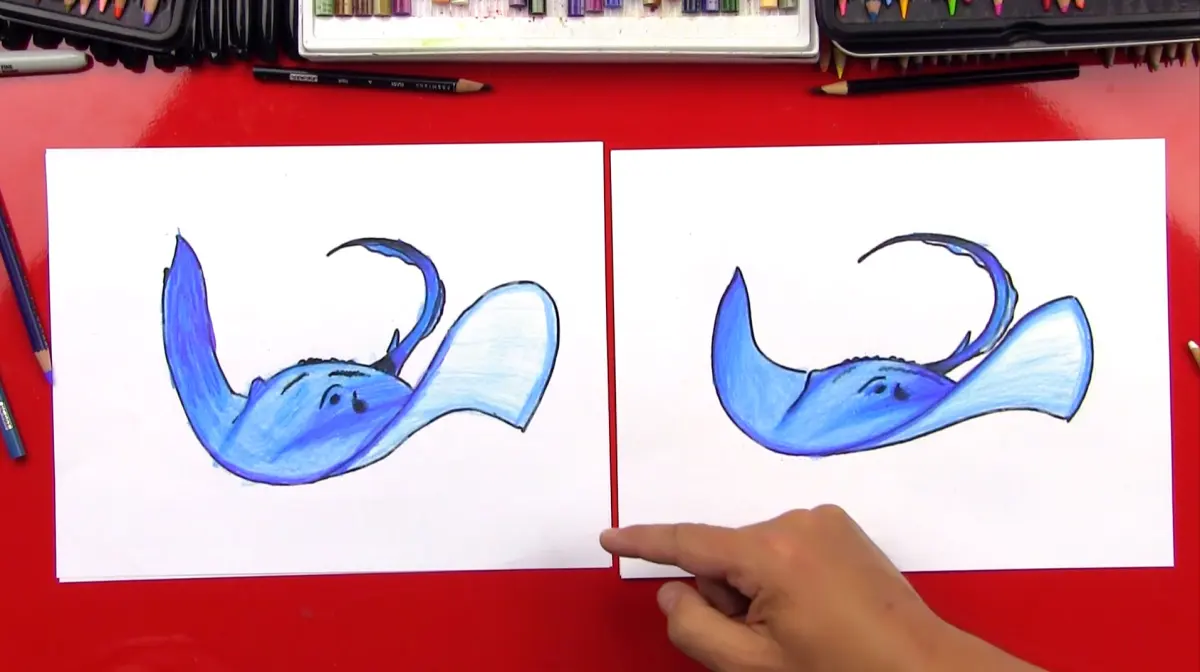
Draw a stingray by sketching a wide, flattened diamond or disc shape as the central body. Extend a long, thin, whip-like tail from the rear, ensuring it tapers toward the end. Add two small, forward-facing eyes on the top of the disc and subtle, curved lines to define the pectoral fins.
On this page
How to sketch the basic anatomy of a stingray
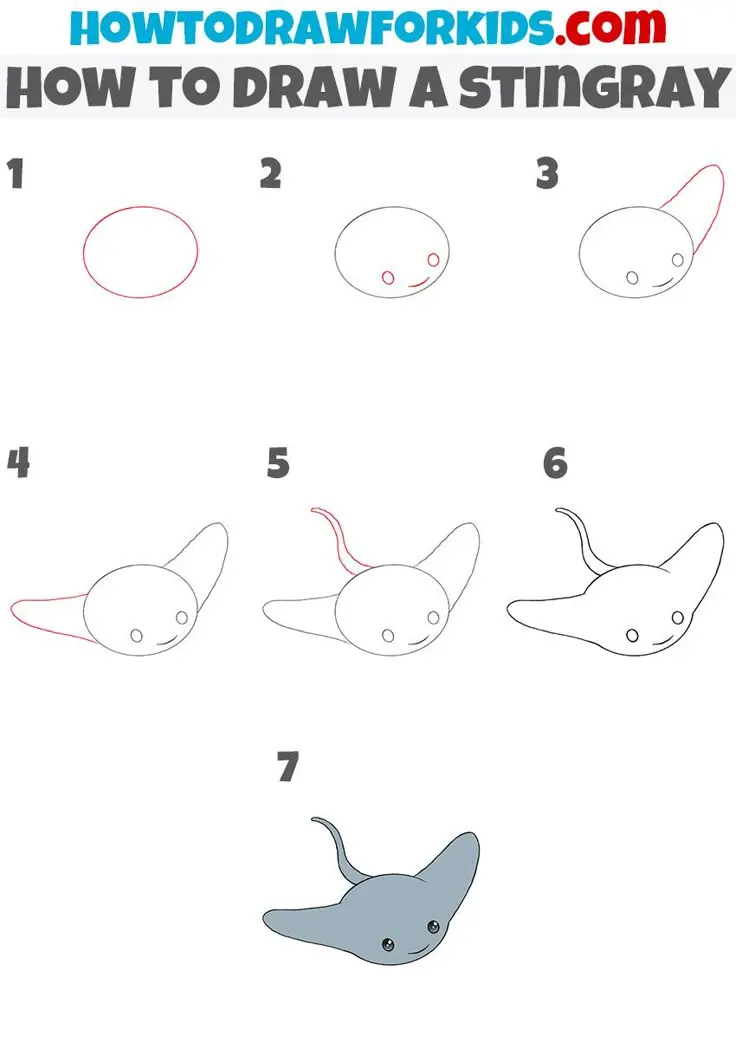
The foundation of a realistic stingray drawing lies in its unique, flattened disc shape. Start by drawing a wide, elongated oval or a soft diamond shape with rounded corners. This represents the pectoral fins, which are fused to the head and trunk. Keep your initial lines light, as you will need to refine these edges into a smooth, continuous curve that resembles a kite.
Once the body shape is established, focus on the proportions of the tail. The tail should originate from the center of the rear edge of the disc and be significantly longer than the body itself. Unlike a shark, a stingray’s tail is often slender and whip-like. To ensure accuracy, follow these steps:
- Sketch a horizontal oval for the main body.
- Extend a long, thin line from the back, curving it slightly for a natural look.
- Add a small, triangular bump at the base of the tail to represent the pelvic fins.
Best drawing techniques for beginners
Beginners often struggle with the placement of facial features, which are located on the dorsal side of the animal. Because stingrays are bottom-dwellers, their eyes are positioned on top of the head to monitor the water column above. Draw two small, circular shapes near the front center of the disc, spaced a few inches apart. Just behind the eyes, add two larger, kidney-shaped marks to represent the spiracles, which allow the ray to breathe while resting on the seafloor.
When adding detail to the skin, avoid drawing perfectly straight lines. Stingray skin is often textured or patterned, so use soft, stippled dots or light hatching to suggest the surface. If you are drawing a specific species, such as the Southern stingray, you might consider adding subtle spots or a mottled pattern. Keep your strokes fluid to mimic the graceful, gliding motion these creatures exhibit when swimming through the ocean.
How to create depth and shadow
To make your drawing appear three-dimensional, you must master the use of light and shadow along the edges of the pectoral fins. Since the fins are thin and flexible, they often ripple or curve as the ray moves. Darken the undersides of the disc where the body meets the sand or water, and use a lighter touch near the outer edges of the fins. This contrast helps the stingray look as though it is hovering just above the seabed.
Consider the following tips for enhancing depth:
- Apply darker shading near the center of the body to suggest a rounded, thick torso.
- Use a blending stump or a soft eraser to smooth out transitions between light and dark areas.
- Add a faint, elliptical shadow directly beneath the stingray to ground it in your composition.
- Leave a thin highlight along the very edge of the fins to suggest the light reflecting off the water.
Common mistakes when drawing stingrays
A frequent error is drawing the stingray with a rigid, stiff body. In nature, these animals are incredibly flexible, using their pectoral fins to create a wave-like motion. If your drawing looks like a flat, static board, try curving the edges of the fins upward or downward. Another common mistake is making the tail too thick; the tail should be thin and delicate, often tapering to a point that is barely visible at the very end.
Additionally, avoid placing the mouth on the top of the body. The mouth, gills, and nostrils are located on the ventral side, which is the underside of the ray. Unless you are drawing the ray from a perspective where it is flipped over, these features should not be visible. Keep the dorsal surface clean, focusing only on the eyes, spiracles, and the texture of the skin to maintain a realistic and scientifically accurate appearance.
Why proportions matter in marine illustration
Achieving the correct ratio between the width of the disc and the length of the tail is essential for a professional result. In many species, the tail can be up to twice the length of the body, while in others, it is much shorter. Researching the specific species you intend to draw will prevent the common pitfall of creating an anatomically impossible creature. A well-proportioned drawing relies on the balance between the expansive, wide wingspan and the slender, elegant tail.
By maintaining consistent proportions, you ensure that the viewer immediately recognizes the subject as a stingray rather than a generic flatfish. Pay attention to the transition point where the disc ends and the tail begins, as this is a key anatomical landmark. If the transition is too abrupt, the drawing will look disjointed. Instead, ensure the body tapers gracefully into the base of the tail, creating a seamless silhouette that captures the essence of this fascinating marine animal.
Key facts
- A stingray’s body is primarily a flat, diamond-shaped disc formed by the fusion of its pectoral fins with its head.
- The tail is typically long and whip-like, often featuring one or more serrated, venomous barbs near the base.
- Position the eyes on the top of the disc and the mouth on the underside to maintain anatomical accuracy.
- Use soft, curved lines for the outer edges of the disc to capture the graceful, flowing movement of the animal.
- Avoid drawing the stingray as a perfect geometric diamond; add subtle undulations to the edges to suggest motion.
- Keep the body thin and flat, as stingrays are cartilaginous fish designed for gliding along the ocean floor.
The bottom line
Drawing a stingray effectively requires focusing on its distinct, flattened diamond shape and fluid, graceful edges. By prioritizing the long, whip-like tail and placing the eyes and mouth correctly, you can create a recognizable and accurate illustration. Remember to avoid rigid, straight lines; instead, embrace the soft curves that define these marine creatures. With these simple anatomical adjustments, your drawing will capture the essence of their movement.
People also ask
How do I draw the gills on a stingray?
Draw five small, horizontal slits on the underside of the disc, positioned between the mouth and the pectoral fins. These gill slits are essential for the ray's respiration and should be spaced evenly.
Should I draw the stingray's mouth open or closed?
You can draw it either way, but a closed mouth is often represented by a simple, slightly curved horizontal line. If you draw it open, keep the shape oval-shaped and situated toward the front of the ventral side.
How long should the tail be?
The tail should be significantly longer than the body, often equal to or exceeding the length of the disc itself. It should taper gradually from a thick base to a very thin, whip-like tip.
What is the best way to shade a stingray?
Use darker shading toward the center of the disc and lighter shading toward the edges to create a sense of volume. This technique emphasizes the ray's flat, thin profile while giving it a three-dimensional appearance.
Do stingrays have scales?
No, stingrays do not have typical fish scales. Instead, their skin is smooth or covered in small, tooth-like structures called dermal denticles, so avoid drawing a textured, scaly pattern.
How do I make the stingray look like it is swimming?
Draw the edges of the pectoral fins with a slight wave or ripple effect. By bending the disc into a soft "S" shape, you imply the rhythmic, undulating motion used for propulsion.
This answer was created with the help of AI research tools and reference sources. Spotted an error? Let us know — we correct mistakes quickly. See our editorial policy.