How do you draw a museum step by step?
Short answer
Drawing a museum requires breaking down complex architecture into basic geometric shapes like rectangles and triangles. Begin by establishing a central perspective line to ensure structural symmetry. Focus on defining the grand entrance, rhythmic window patterns, and decorative columns before adding intricate textures, shadows, and surrounding landscape elements for depth.
On this page
How to draw a museum step by step
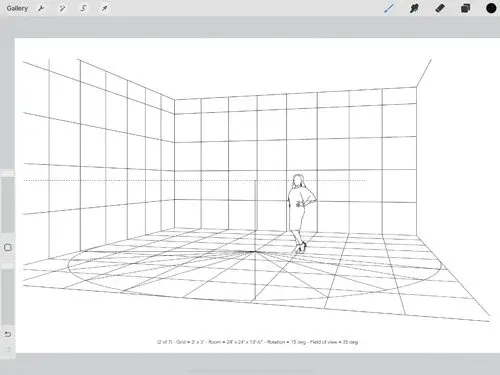
To draw a museum, start by establishing a horizon line to determine your perspective. Use a light pencil to sketch a large rectangular prism that serves as the main building block for the structure. Divide this shape into smaller segments to represent different wings or galleries. Once the primary massing is set, define the roofline, which may feature a classic pediment or a modern flat design.
After the basic silhouette is established, add architectural details to ground the drawing in reality. Museums often feature grand entrances, so draw a series of steps leading up to a prominent doorway. Use vertical lines to indicate columns or pilasters, which provide a sense of scale and historical importance. Ensure that your lines converge toward a vanishing point to maintain accurate linear perspective, which prevents the building from appearing tilted or distorted.
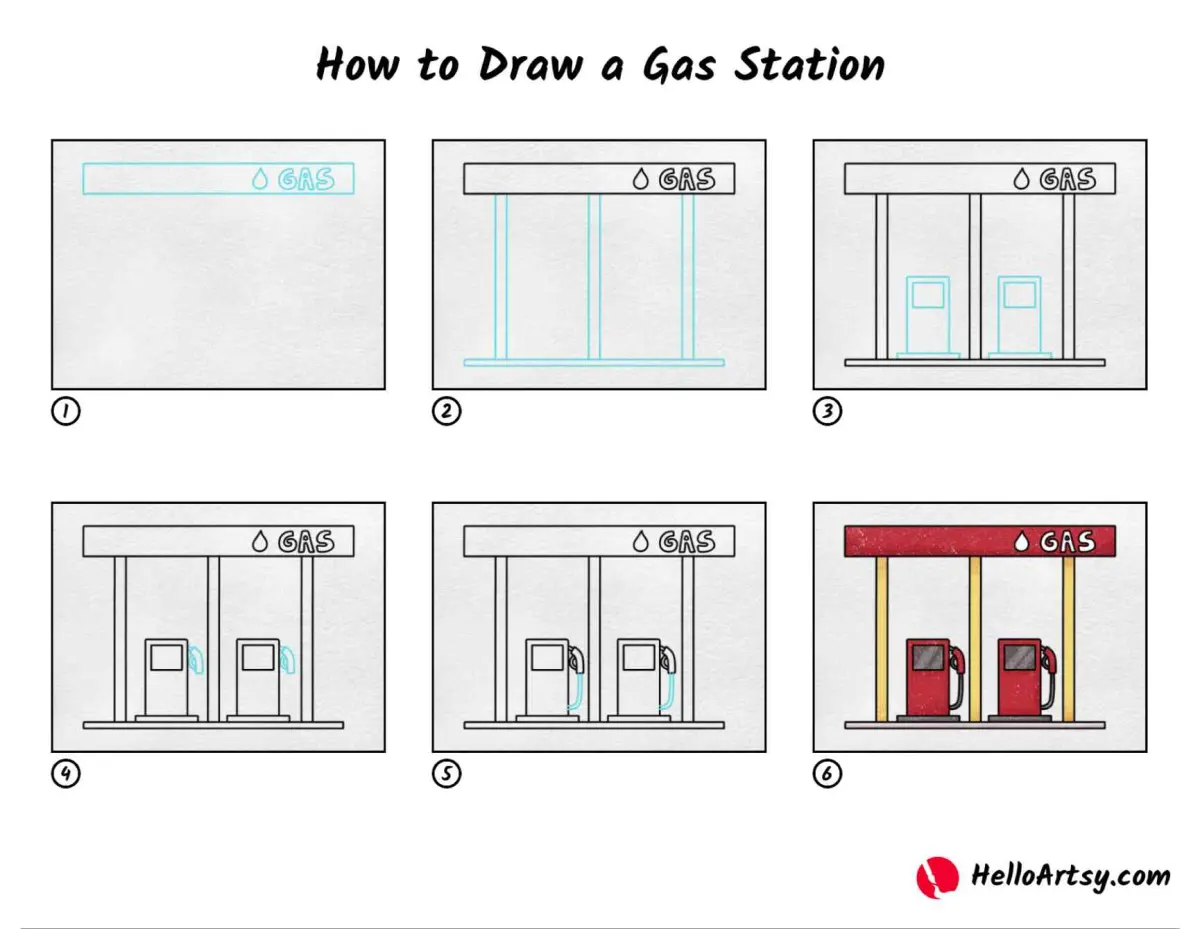
- Sketch a horizon line and a central vanishing point.
- Outline the primary rectangular volumes of the structure.
- Draw the roofline and any domes or skylights.
- Add the entrance, columns, and window placements.
- Refine lines and add shading to create three-dimensional volume.
Best drawing techniques for beginners
Beginners should prioritize structural accuracy over intricate detail. Start by using a 2H or HB graphite pencil to keep your initial construction lines faint and easily erasable. Focus on "blocking in" the building, which means simplifying the complex facade into basic cubes, cylinders, and spheres. This method helps you manage the proportions of the building before committing to permanent ink or heavy shading.
When drawing windows and doors, use a ruler to maintain consistent spacing, as museums are typically designed with mathematical precision. If you are drawing a classical museum, like the British Museum, incorporate repeating patterns to create rhythm across the facade. If you are drawing a modern museum, such as the Guggenheim, focus on sweeping curves and unconventional geometric shapes. Practice drawing simple boxes in perspective first to build the spatial awareness necessary for complex architectural subjects.
- Use a ruler for straight architectural lines.
- Practice one-point perspective for frontal views.
- Use two-point perspective for corner views.
- Keep construction lines light to avoid smudging.
- Use a kneaded eraser to lift graphite without damaging paper.
Why perspective is important in architecture
Perspective is the foundation of architectural drawing because it dictates how the viewer perceives the depth and scale of the museum. Without a clear vanishing point, a building will look flat, disjointed, or physically impossible. By placing your vanishing points on the horizon line, you ensure that the parallel lines of the building—such as the roof edges and the base—converge correctly. This creates the illusion of distance and makes the museum look like a solid, three-dimensional object.
Many famous museums, such as the Louvre in Paris, utilize symmetrical layouts that rely heavily on balanced perspective. When sketching these buildings, identifying the central axis is crucial for maintaining symmetry. If you are drawing a museum from a corner view, use two-point perspective to show two sides of the building receding into the distance. Mastering these geometric principles allows you to translate the grandeur of real-world architecture onto a two-dimensional page with professional accuracy and clarity.
Common mistakes when drawing buildings
A frequent error is failing to maintain consistent scale across the entire building. For instance, windows on the left side of the facade should match the height and width of those on the right unless the architecture is intentionally asymmetrical. Another common mistake is neglecting the "weight" of the building. Museums are massive structures; if you draw the walls too thin or the roof too light, the building will look like a fragile model rather than a permanent institution.
Avoid the temptation to add fine details, such as statues or decorative carvings, before the structural framework is complete. If the underlying perspective is flawed, no amount of detail will fix the drawing. Additionally, beginners often forget to account for light sources. A building without shadows lacks depth, making it appear like a cardboard cutout. Always decide where the sun is positioned in your scene and apply consistent shading to all surfaces facing away from that light source.
How to add texture and depth
Once the structure is sound, focus on the materials that define the museum’s character. Use cross-hatching or stippling to represent stone, marble, or glass surfaces. For stone walls, draw irregular, light outlines to suggest blocks, but do not outline every single stone, as this makes the building look cluttered. Glass windows should be rendered with darker values to contrast with the lighter stone or concrete walls, which helps the windows "recede" into the building facade.
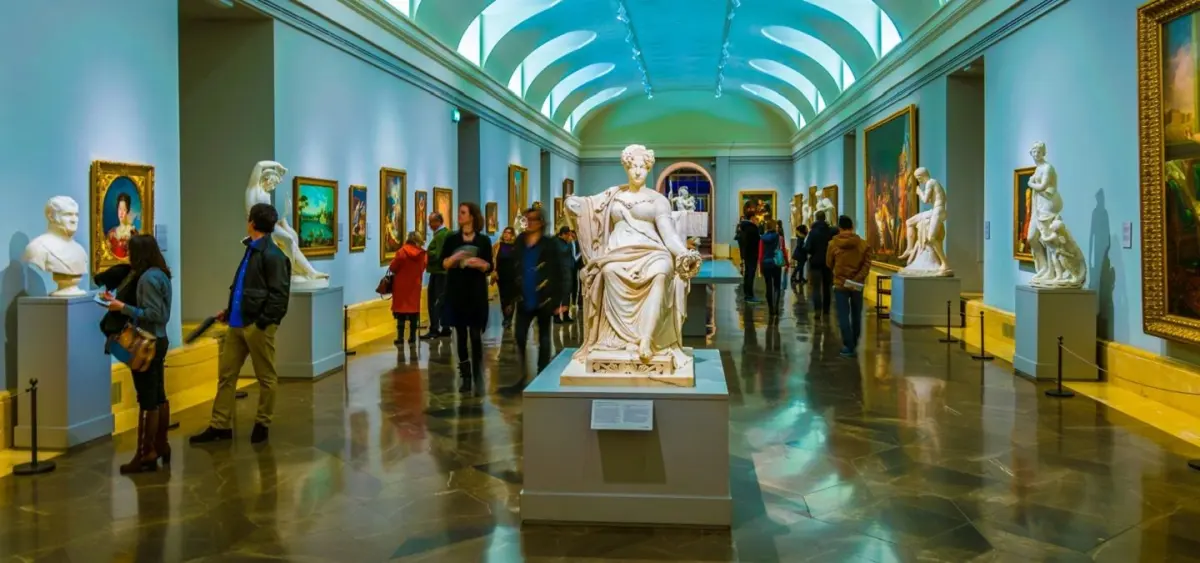
Adding the surrounding environment is the final step to creating a realistic museum scene. Include trees, lampposts, or people to provide a sense of scale. A person standing near the entrance helps the viewer understand just how tall the columns are. Use lighter, less detailed strokes for background elements to keep the focus on the museum itself. By layering these details, you transform a simple geometric sketch into a professional architectural rendering that captures the atmosphere and gravity of a real museum.
Key facts
- Use a vanishing point to establish linear perspective, which is essential for rendering the large, boxy volumes of museum architecture.
- Sketch a large rectangular prism first to define the main gallery hall before adding smaller wings or decorative porticos.
- Incorporate classical elements like pediments or columns, which are common in Neoclassical museum designs like the British Museum.
- Use a ruler to ensure vertical lines remain perfectly parallel, as even slight tilts can make a large stone structure look unstable.
- Focus on the entrance by drawing a wide set of stairs, which provides a sense of scale and grandeur to the building.
- Add texture to the facade by lightly cross-hatching to represent stone blocks or marble panels, avoiding over-detailing the entire surface.
The bottom line
Drawing a museum requires a firm grasp of linear perspective and geometric precision. By starting with a basic rectangular prism and grounding it with a clear horizon line, you create a stable foundation for complex architectural details. Focus on maintaining vertical alignment and using subtle shading to convey material textures. With patience and consistent use of a ruler, you can effectively capture the grandeur of institutional architecture.
People also ask
How do I make the museum look realistic?
Use atmospheric perspective by drawing distant parts of the museum with less contrast and lighter lines. This technique helps the viewer perceive depth and scale in large architectural structures.
Should I draw the interior or the exterior?
The exterior is generally easier for beginners because it relies on geometric shapes and external lighting. Interiors require complex understanding of ceiling height and lighting fixtures, which can be more challenging to render.
How do I draw columns accurately?
Draw a cylinder and use curved lines at the top and bottom to create a sense of volume. Ensure the spacing between columns is consistent to maintain the rhythm of the architecture.
What is the biggest mistake when drawing buildings?
The most common error is ignoring the horizon line, which causes the building to look like it is sliding off the paper. Always establish your eye level before starting the structural sketch.
How do I represent glass windows?
Use thin, sharp lines for frames and light shading to suggest reflections. Avoid solid black blocks, as glass typically reflects the sky or surrounding environment.
How do I add people to the scene?
Keep figures small relative to the building to emphasize the museum's massive size. Use simple silhouettes to populate the entrance area without distracting from the architecture.
This answer was created with the help of AI research tools and reference sources. Spotted an error? Let us know — we correct mistakes quickly. See our editorial policy.