What do children's drawings mean?
Short answer
Children’s drawings are primarily a form of non-verbal communication and cognitive development rather than a direct window into a child's subconscious. They reflect a child's evolving mastery of fine motor skills, spatial awareness, and their perception of the world. While they reveal developmental milestones, they are rarely definitive psychological diagnostic tools.
On this page
Why do children draw the way they do?
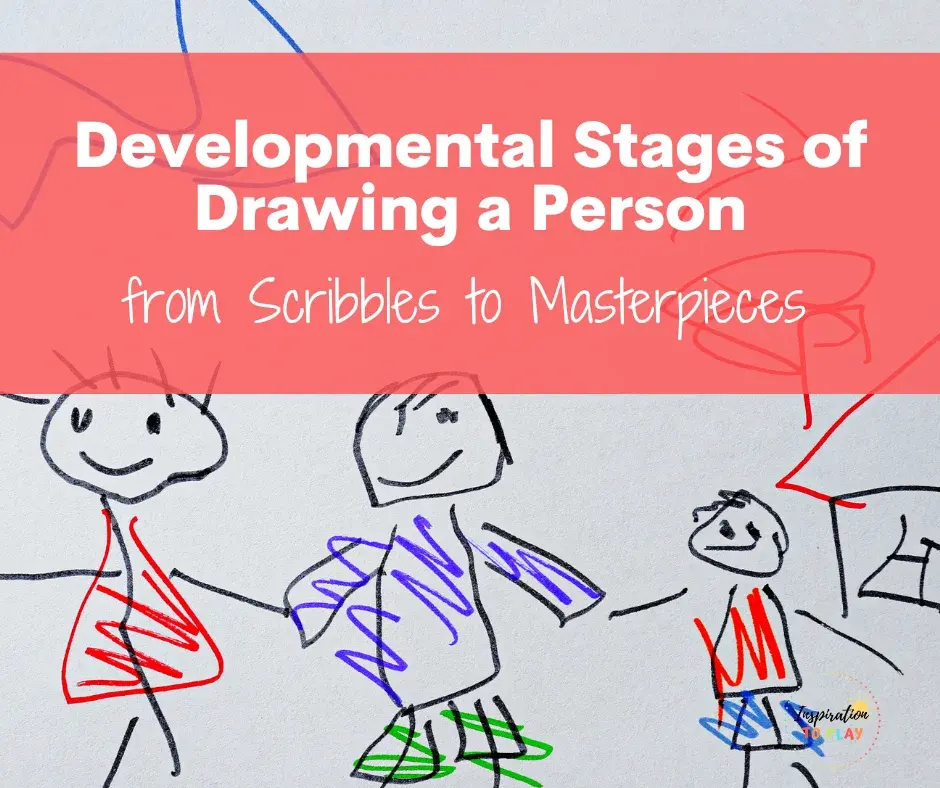
Children’s drawings evolve in predictable stages that mirror their neurological and physical development. Between the ages of two and four, children move from "scribbling" to "preschematic" art, where they begin to assign meaning to shapes. A circle might suddenly represent a person or a sun, marking the transition from kinesthetic pleasure to representational intent. This process is less about artistic talent and more about the child’s attempt to organize their environment.
By age five or six, children enter the "schematic" stage, characterized by the use of symbols to represent objects. They often draw "x-ray" pictures, showing the inside of a house or the contents of a stomach, which indicates they are drawing what they know rather than what they see. This cognitive shift demonstrates that the child is beginning to understand internal structures and relationships, even if their technical ability to render perspective is still years away.
How to interpret children's drawings accurately
Parents and educators often look for hidden meanings in colors or shapes, but experts caution against over-interpreting individual elements. A child choosing to use black instead of bright colors is often simply selecting the closest crayon rather than expressing a dark mood. Instead of looking for symbolic trauma, focus on the child’s engagement and the story they tell about the work.
When analyzing a drawing, consider these developmental markers:
- Fine motor control: Can the child hold the crayon firmly and stay within boundaries?
- Spatial organization: Is the drawing centered, or does it crowd the edges of the page?
- Detail density: Does the child include specific features like fingers, hair, or buttons?
- Narrative intent: Can the child describe what is happening in the scene?
If you are concerned about a child’s emotional state, look for consistent patterns over time rather than a single, isolated image. A sudden, drastic change in the style or content of drawings over several weeks may warrant a conversation with a pediatrician or school counselor.
Common mistakes when analyzing drawings
The most frequent error adults make is applying adult-level logic to a child’s artistic choices. For example, a child might draw a parent as significantly larger than themselves, which is often a matter of physical scale or importance rather than a sign of fear or intimidation. Similarly, drawing figures without hands or feet is usually a reflection of limited motor skills rather than a psychological deficit.
Avoid these common pitfalls to maintain an objective perspective:
- Assuming that specific colors equate to specific emotions.
- Ignoring the physical limitations of the child’s age group.
- Projecting your own anxieties onto the child’s creative output.
- Using a single drawing as a diagnostic tool for behavioral issues.
Treating a drawing as a psychological test can cause unnecessary alarm. Always remember that children often draw for the sheer joy of the activity, and their primary goal is to experiment with lines, shapes, and colors.
How to encourage artistic growth in children
Supporting a child’s artistic journey is more beneficial than analyzing their work for hidden messages. Provide a variety of materials, such as thick crayons, washable markers, and large sheets of paper, to allow for physical exploration. Encourage the process rather than the final product by asking open-ended questions about what they enjoyed creating.
Follow these steps to foster a healthy creative environment:
- Provide a dedicated space where the child can draw without fear of making a mess.
- Offer positive reinforcement by commenting on the effort, such as "I see you worked hard on these patterns."
- Avoid correcting their work or showing them "the right way" to draw a house or person.
- Display their art in the home to show that you value their creative contributions.
By focusing on the act of creation, you help the child build confidence and improve their hand-eye coordination. This approach creates a safe space for them to express their world on their own terms.
What do specific drawing themes mean?
Certain themes often appear as children grow, such as drawing family members, houses, or animals. These subjects are chosen because they are the most significant parts of the child's daily life. A house drawing often features a large door or windows, reflecting the child's interest in the boundaries between their private world and the outside.
If a child consistently draws family members, observe the interactions they depict. Are the figures holding hands? Are they engaged in an activity together? These details provide insight into how the child perceives their social environment. However, always keep in mind that these images are snapshots of a child’s current focus. As their world expands, their drawings will naturally shift to include new interests, friends, and experiences. By maintaining a supportive and observant stance, you can enjoy the evolution of their artistic voice as they grow into more complex thinkers.
Key facts
- Children typically begin drawing representational figures, such as "tadpole people," between the ages of 3 and 4.
- Drawings reflect a child's cognitive development and motor skills rather than serving as a direct window into their subconscious.
- Size often indicates importance to the child; they will draw themselves or loved ones larger than background objects.
- Color choice in early childhood is frequently based on availability or preference rather than emotional state.
- Focus on the process of drawing, such as the child's enthusiasm or narrative, rather than the aesthetic quality of the final image.
- Avoid interpreting single drawings as evidence of trauma; patterns over time are much more significant than isolated sketches.
The bottom line
Children’s drawings are primarily a reflection of their developing cognitive and motor skills rather than hidden psychological messages. While parents often seek deep meaning in these sketches, the most value lies in the act of creation itself. By encouraging your child’s artistic process and listening to their stories, you foster their creativity and confidence while supporting their natural growth during these formative early years.
People also ask
Why do children draw people with giant heads and no bodies?
This is a standard stage of development known as the "tadpole" phase, occurring around age 3. Children prioritize the most important features like eyes and mouths, often omitting limbs or torsos simply because they are still learning how to organize spatial relationships on paper.
Should I ask my child what their drawing is?
Yes, but phrase it as an open-ended invitation rather than a test. Say, "Tell me about your drawing," instead of guessing, which allows the child to explain their intent and practice their narrative skills without feeling pressured to produce "correct" art.
Is it a red flag if my child uses dark colors like black or red?
Not necessarily, as children often choose colors based on what is closest to them or what they find visually striking. Unless the child is also displaying significant behavioral changes or distress, color choice is rarely a diagnostic tool for emotional health.
How can I encourage a child who says they cannot draw?
Focus on the fun of mark-making rather than the outcome. Provide diverse materials like chalk, crayons, and clay, and praise their effort or the specific shapes they used, which builds confidence and reduces the fear of making mistakes.
Do drawings change as children get older?
Yes, drawings become increasingly complex as children develop better fine motor control and observational skills. By age 7 or 8, children typically begin incorporating baseline lines, perspectives, and more realistic proportions as their understanding of the physical world matures.
Can I use drawings to detect learning disabilities?
Drawings can sometimes highlight delays in fine motor skills or spatial awareness, but they are not clinical diagnostic tools. If you have concerns about your child's development, consult a professional who can conduct standardized assessments rather than relying on artistic output.
This answer was created with the help of AI research tools and reference sources. Spotted an error? Let us know — we correct mistakes quickly. See our editorial policy.