How do you draw a mountain goat?
Short answer
Drawing a mountain goat requires focusing on its distinct, stocky silhouette and thick, shaggy coat. Begin by sketching a sturdy, rectangular frame to capture its powerful build. Add characteristic features like the short, black horns, a pronounced beard, and sturdy hooves designed for climbing. Use layered, textured strokes to represent its dense winter fur.
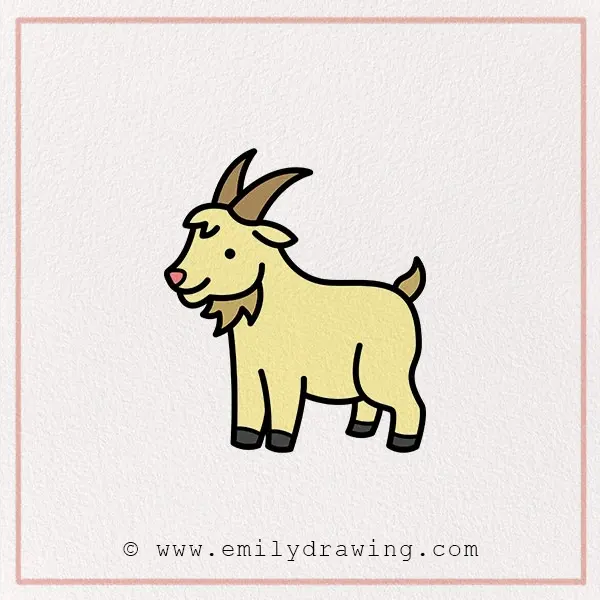
On this page
How to structure the mountain goat body
The mountain goat (Oreamnos americanus) possesses a unique, muscular anatomy that differs significantly from typical mountain sheep. Start your drawing by establishing a solid foundation using simple geometric shapes. A large, slightly rectangular oval serves as the main body, while a smaller, rounded shape represents the chest area. Keep the legs relatively short and thick, as these animals are built for stability on steep, rocky terrain rather than speed.
When sketching the frame, pay attention to the high shoulder hump. This feature is a hallmark of the species and gives them their powerful, forward-leaning posture. Ensure the neck appears thick and strong to support the head. Avoid making the legs too slender, as this will undermine the animal's natural appearance of rugged durability. Use light, gestural lines initially so you can adjust the proportions before committing to final details.
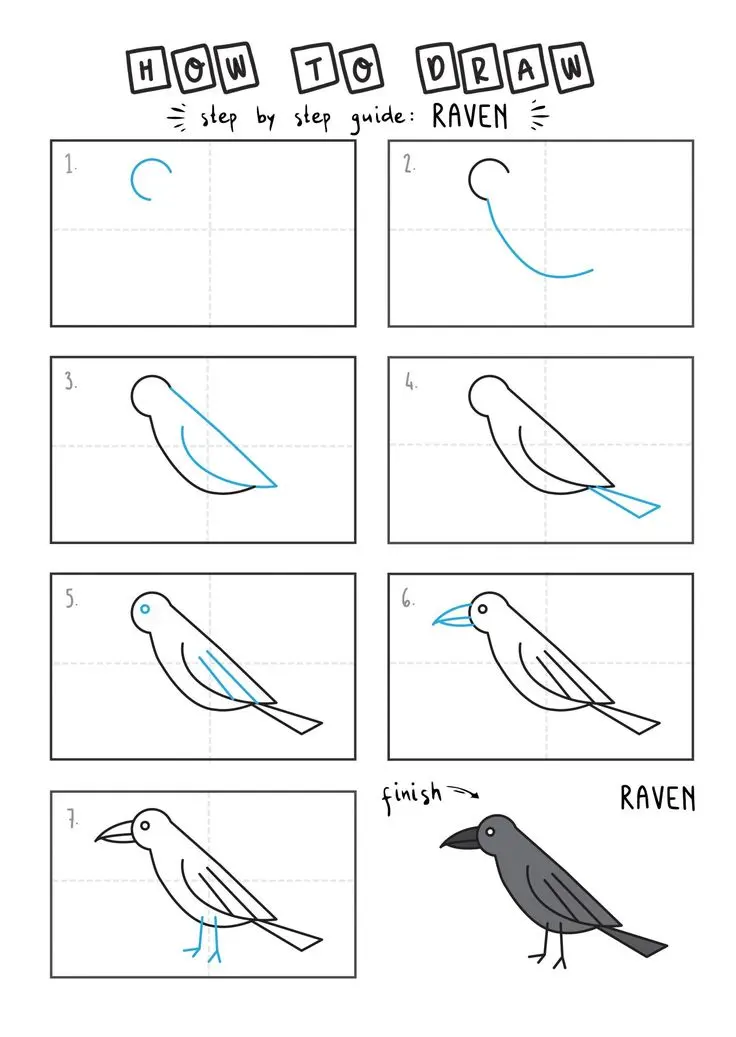
- Sketch a large, blocky oval for the torso.
- Add a smaller, circular shape for the chest and shoulder hump.
- Draw a smaller oval for the head, positioned slightly lower than the top of the shoulders.
- Connect these shapes with a thick, muscular neck line.
- Place four short, sturdy pillars for the legs, noting the joints.
How to draw the head and facial features
The head of a mountain goat is distinctively long and narrow, topped with sharp, black, slightly curved horns. Start by drawing the profile, ensuring the nose bridge is relatively straight. The eyes are positioned on the sides of the head, giving them a wide field of vision. Below the chin, you must include the iconic, long beard, which adds significant character to the portrait.
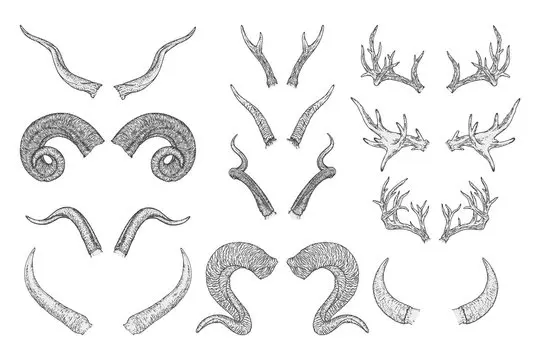
The horns are perhaps the most important detail for identification. They should be drawn as two slender, slightly backward-curving spikes that emerge from the top of the skull. Do not draw them too long; in reality, they rarely exceed 10 to 12 inches in length. The ears are small and rounded, tucked just behind the base of the horns. Keep the expression neutral and alert, reflecting the goat's constant state of vigilance in its harsh alpine environment.
- Horns: Sharp, black, and slightly curved backward.
- Eyes: Dark, almond-shaped, and set laterally.
- Muzzle: Broad and blunt, suitable for grazing on alpine vegetation.
- Beard: Long, coarse hair hanging from the chin.
How to render the shaggy white coat
The mountain goat is famous for its thick, double-layered white coat that provides insulation against freezing temperatures. To capture this texture, avoid drawing individual hairs everywhere. Instead, focus on creating clumps and jagged edges along the silhouette. Use short, flicking pencil strokes to suggest the density of the fur, particularly around the chest and the back of the legs where the coat is longest.
Because the coat is white, you should use shading to define the form rather than harsh outlines. Use a light gray or a soft graphite lead to create shadows under the belly, along the neck, and where the legs meet the body. These shadows provide volume and prevent the goat from looking like a flat, white shape. Leave the brightest areas of the back and head mostly unshaded to emphasize the sunlight hitting the thick fur.
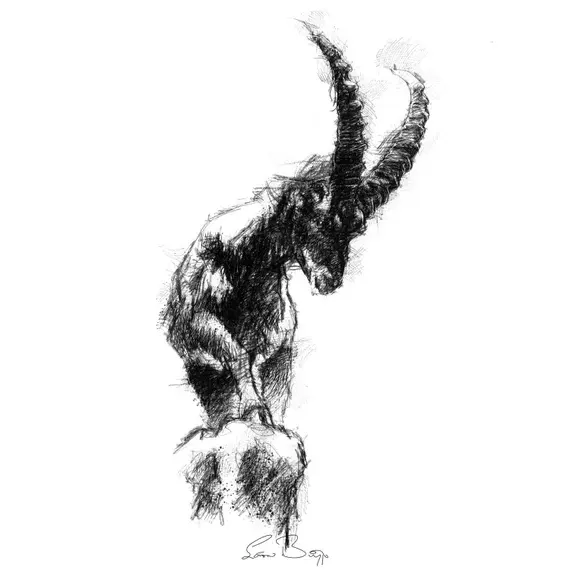
Best techniques for drawing hooves and legs
Mountain goat hooves are specialized tools for survival, featuring a hard, outer rim and a soft, rubbery pad in the center. When drawing the legs, ensure the hooves look substantial and well-anchored to the ground. The dewclaws, located slightly above the main hoof, are often visible and add a realistic touch to the anatomy. Draw the lower legs with a sense of weight to show how the animal grips the rock.
Avoid drawing the legs as perfectly straight lines. The joints should be clearly marked, and the angle of the hock should be accurate to the goat's stance. Since these animals are often depicted on ledges or steep slopes, the orientation of the hooves is critical. Make sure they appear to be pressing into the surface rather than simply floating on top of it. This attention to gravity will make your drawing feel grounded and authentic.
Common mistakes when drawing mountain goats
A frequent error is making the animal look too much like a domestic goat or a deer. Mountain goats have a much more compact, powerful build and a unique, blocky head shape. Another common mistake is neglecting the shoulder hump, which is essential for capturing their silhouette. Always compare your sketch to reference images to ensure the proportions of the neck and the depth of the chest are accurate.
Another pitfall is over-detailing the fur. If you draw every single strand of hair, the drawing will look cluttered and lose its sense of mass. Focus on the overall shape of the fur clumps instead. Finally, ensure the horns are not too large or overly curved; they should look like simple, elegant spikes. By keeping the silhouette clean and focusing on the distinct, rugged features of the species, you will create a convincing and professional-looking illustration.
Key facts
- Mountain goats possess a rectangular body shape, unlike the more rounded or oval torso of a domestic goat.
- Their most distinctive feature is a dense, shaggy white coat that appears thickest around the neck and shoulders.
- The horns are short, slightly curved backward, and pitch black, contrasting sharply with their white fur.
- Focus on the "beard" under the chin, which is a signature characteristic that adds depth to the goat's profile.
- Their hooves are specialized with rubbery pads for grip, making them appear wider and more stable than standard hooves.
- A common mistake is drawing the legs too thin; mountain goats have powerful, muscular limbs built for climbing steep cliffs.
The bottom line
To draw a mountain goat effectively, prioritize its blocky, muscular silhouette over delicate features. Emphasize the thick, shaggy coat with short, choppy lines and ensure the legs appear sturdy enough to support a climber on vertical terrain. By focusing on the distinctive black, slightly curved horns and the heavy, bearded jawline, you will capture the iconic, rugged aesthetic of this resilient alpine mammal with professional precision.
People also ask
Why do mountain goats look so bulky in drawings?
They have a thick double coat consisting of a dense woolly underlayer and long, hollow guard hairs. This insulation makes them look significantly larger than their actual skeletal frame.
Should I draw the mountain goat with pupils or solid eyes?
You should draw them with horizontal, rectangular pupils. This unique eye shape provides them with a wide field of vision to spot predators on rocky terrain.
How do I capture their climbing posture?
Position the body so the center of gravity is low and the legs are tucked under the torso. They rarely stand perfectly upright, instead leaning into the slope of a mountain.
What is the best way to draw the texture of their fur?
Use short, directional strokes rather than long, flowing lines. The fur is coarse and matted, so irregular, choppy marks better represent its natural appearance.
Are the horns of male and female mountain goats different?
Both sexes have horns, but males (billies) typically have thicker, more curved horns than females (nannies). Keeping the base of the horn wide is essential for accuracy.
What is the most common mistake when drawing the head?
Artists often make the snout too pointed. Mountain goats have a relatively blunt, square-shaped muzzle that gives them a sturdy, serious expression.
This answer was created with the help of AI research tools and reference sources. Spotted an error? Let us know — we correct mistakes quickly. See our editorial policy.