How do you draw a hermit crab?
Short answer
Drawing a hermit crab requires capturing the contrast between its soft, vulnerable abdomen and the protective spiral shell it inhabits. Start by sketching the shell’s coiled shape, then attach the crab’s distinct, jointed legs and large, asymmetrical claws. Focus on the texture of the shell and the articulated segments of the limbs.
On this page
How to draw a hermit crab step by step
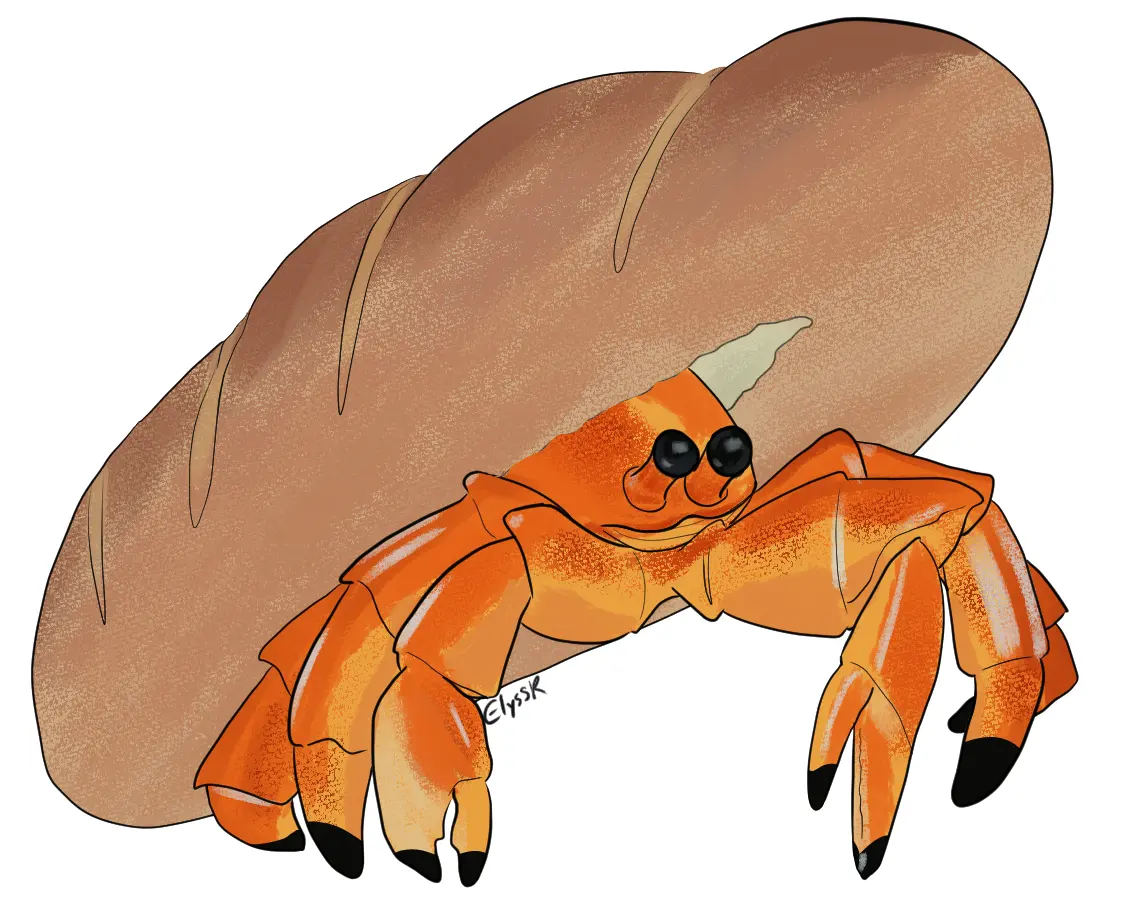
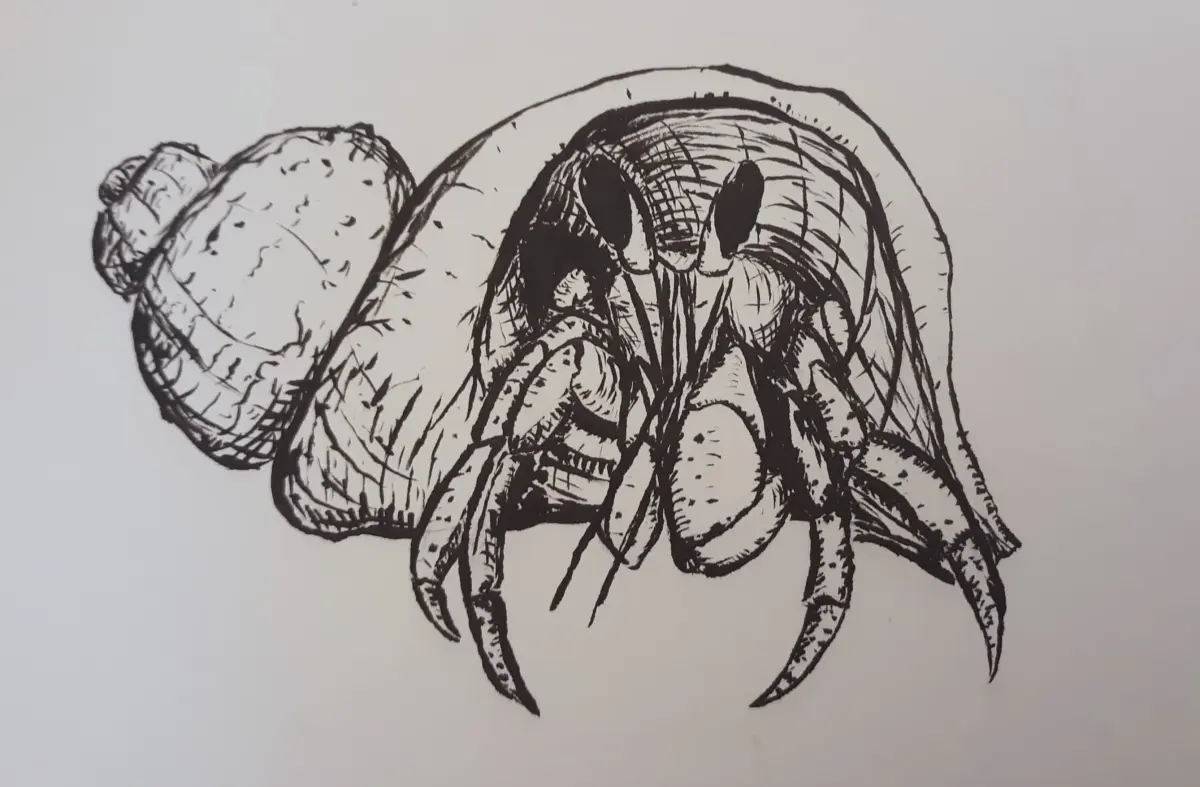
To draw a hermit crab, begin by establishing the shell, which is the most prominent feature. Most hermit crabs use gastropod shells, so draw a rounded, spiral shape with a wide opening at the bottom. Once the shell is set, sketch the main body parts protruding from the aperture. You will need to draw the cephalothorax, which is the hard front part of the body, and the various appendages that extend outward.
Follow these steps to build your sketch:
- Sketch a large, coiled shell as the base, ensuring the opening is wide enough for the crab to emerge.
- Draw the cephalothorax as a small, rectangular or oval shape just inside the shell opening.
- Add the two large claws, making one significantly bigger than the other to reflect natural anatomy.
- Draw three pairs of walking legs extending from the sides, using jointed lines to show movement.
- Add the eyes on long, thin stalks protruding from the front of the cephalothorax.
Best drawing techniques for beginners
When starting, use light pencil strokes to map out the basic geometry of the animal. Hermit crabs are essentially a collection of cylinders and spheres, so breaking the body down into these simple shapes helps maintain correct proportions. Focus on the "heaviness" of the shell compared to the spindly nature of the legs. This contrast is the key to making the drawing look realistic rather than like a cartoon.
Once the basic structure is complete, refine your lines by adding texture. The shell should have subtle ridges or patterns, while the legs should have small hairs or spines. Using a blending stump or your finger can help create soft shadows under the shell, which anchors the crab to the ground. Avoid pressing too hard with your pencil in the early stages, as this makes it difficult to erase and adjust the shape of the claws.
Why hermit crab anatomy is unique
Understanding the biology of a hermit crab helps in drawing it accurately. Unlike true crabs, hermit crabs have a soft, unprotected abdomen that they must tuck inside a discarded shell for safety. This means your drawing should show the body curving into the shell rather than extending straight out. The asymmetry of the claws is also vital; in many species, the left claw is larger and acts as a door to seal the shell when the crab retreats.
The eyestalks are another defining feature that adds personality to your drawing. These are flexible and can be moved independently, allowing the crab to scan its environment. When drawing the legs, remember that they are jointed, similar to those of a spider or insect. Each leg segment should be slightly smaller than the one before it, tapering down to a sharp, pointed tip that the crab uses to grip surfaces.
Common mistakes when drawing hermit crabs
A frequent error is drawing the crab as if it has a hard, armored shell covering its entire body. Remember that the hermit crab only has a hard exoskeleton on its front half; the back half is soft and vulnerable. If you draw the abdomen visible outside the shell, ensure it looks soft and fleshy rather than rigid. Another mistake is drawing the legs as smooth, solid tubes, which ignores the necessary joints that allow the crab to walk.
Pay attention to the scale of the claws relative to the body. Beginners often make the claws too small, but in many hermit crab species, the front claws are quite massive and serve as the primary defensive tools. Additionally, ensure the shell is positioned logically. The crab should appear to be emerging from the opening, not just floating near it. If the shell looks detached, the drawing loses its sense of realism and biological accuracy.
How to add detail and texture
To elevate your drawing, focus on the interplay of light and shadow on the shell’s surface. Shells are often shiny or textured with bumps and grooves, which can be represented by varying the pressure of your pencil. Use cross-hatching or stippling to create depth in the darker areas of the shell opening. This creates a sense of mystery about what lies inside the dark, protected space where the crab spends its time.
Consider these finishing touches to improve the final image:
- Add a small shadow directly beneath the shell to ground the crab in its environment.
- Use a fine-liner pen to emphasize the sharp points of the legs and the edges of the claws.
- Add tiny, thin lines along the legs to represent the sensory hairs that hermit crabs use to navigate.
- Vary the line weight, using thicker lines for the outer edges and thinner lines for internal details.
- Add a few grains of sand or a small pebble near the legs to provide a sense of scale and habitat.
Key facts
- Hermit crabs possess asymmetrical, soft abdomens that require them to occupy discarded snail shells for protection.
- Their bodies feature ten legs, including two large, unequal claws used for defense and feeding.
- When drawing, focus on the "spiral" shape of the shell, which serves as the anchor for the entire composition.
- The crab’s primary walking legs are jointed and should be drawn with distinct segments to show movement.
- Eyes are located on the ends of long, movable stalks, which are a defining anatomical feature of the species.
- A common mistake is drawing the crab as a symmetrical creature; always place the larger claw on one side to maintain biological accuracy.
The bottom line
Drawing a hermit crab requires balancing the rigid, geometric spiral of the shell with the organic, multi-jointed structure of the crab’s appendages. By focusing on the asymmetrical placement of the claws and the distinct eye stalks, you can create a lifelike representation. Always prioritize the shell’s orientation, as it dictates the crab's posture and provides the necessary context for its unique, vulnerable anatomy.
People also ask
Why do hermit crabs change shells?
As a hermit crab grows, its current shell becomes too tight or damaged to provide adequate protection. They must periodically find and move into larger, empty shells to accommodate their increasing body size.
How many antennae does a hermit crab have?
Hermit crabs possess two pairs of antennae. One pair is long for sensing the environment, while the shorter pair helps them taste and smell their surroundings.
Do all hermit crabs live in the ocean?
While most species are marine, there are terrestrial hermit crabs that live on land. These species still require access to water to keep their gills moist and to reproduce.
How do you draw the texture of a shell?
Use cross-hatching or stippling to create shadows within the spiral grooves of the shell. Varying the pressure of your pencil helps define the hard, calcified surface against the softer texture of the crab's body.
What is the purpose of the hermit crab's smaller legs?
The smaller legs, located toward the back, are primarily used for gripping the interior of the shell. This allows the crab to anchor itself firmly so it cannot be easily pulled out by predators.
Can hermit crabs regenerate lost limbs?
Yes, hermit crabs can regrow lost legs or claws during the molting process. If you are drawing a crab that has recently survived a struggle, you might depict one claw as significantly smaller than the other.
This answer was created with the help of AI research tools and reference sources. Spotted an error? Let us know — we correct mistakes quickly. See our editorial policy.