How do you draw a cute frog?
Short answer
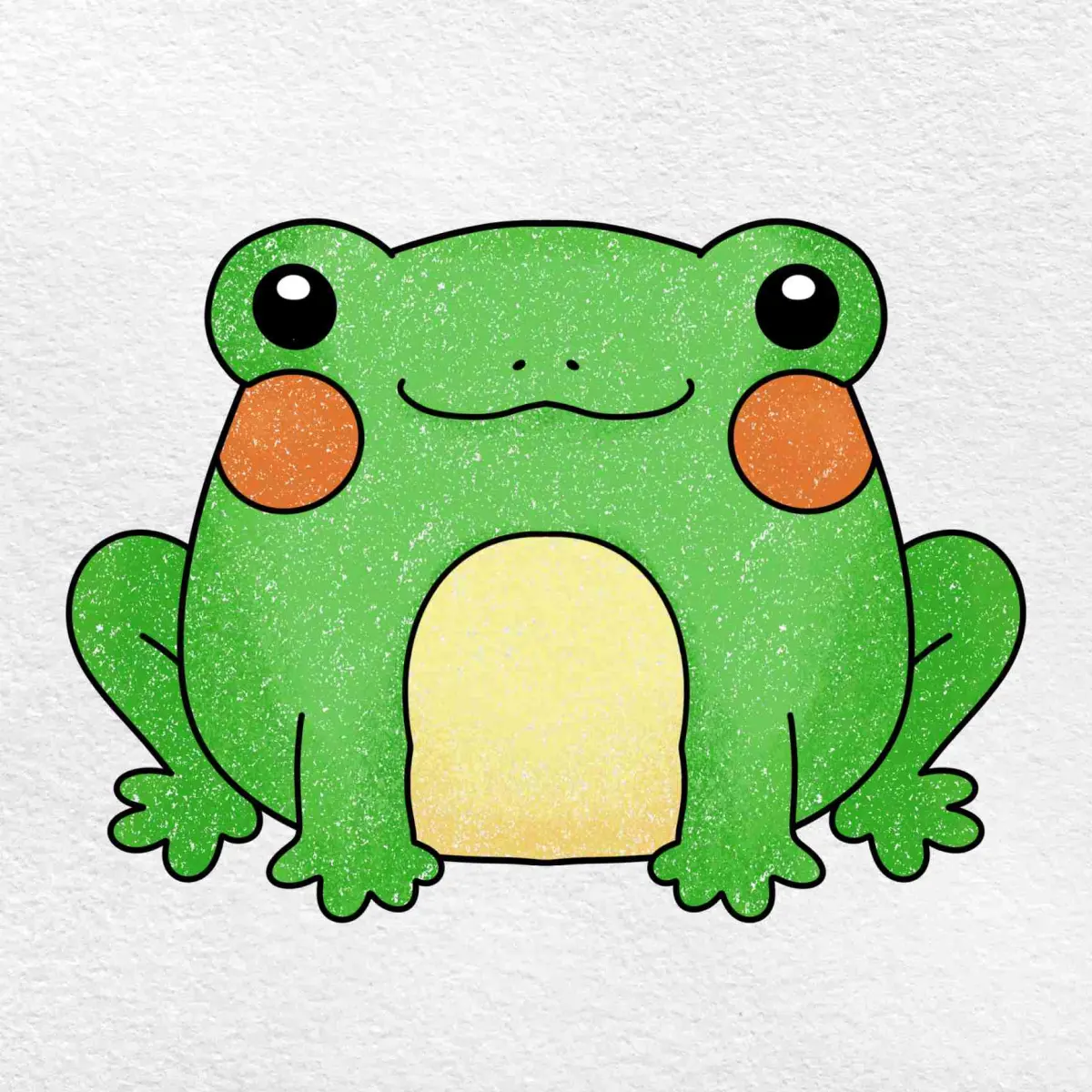
Drawing a cute frog involves using simple, rounded shapes to create a friendly character. Start with a large oval for the head and smaller circles for the eyes. By emphasizing soft curves, wide-set eyes, and a gentle smile, you can easily capture the whimsical, charming aesthetic characteristic of cartoon amphibians.
On this page
How to sketch a cute frog for beginners
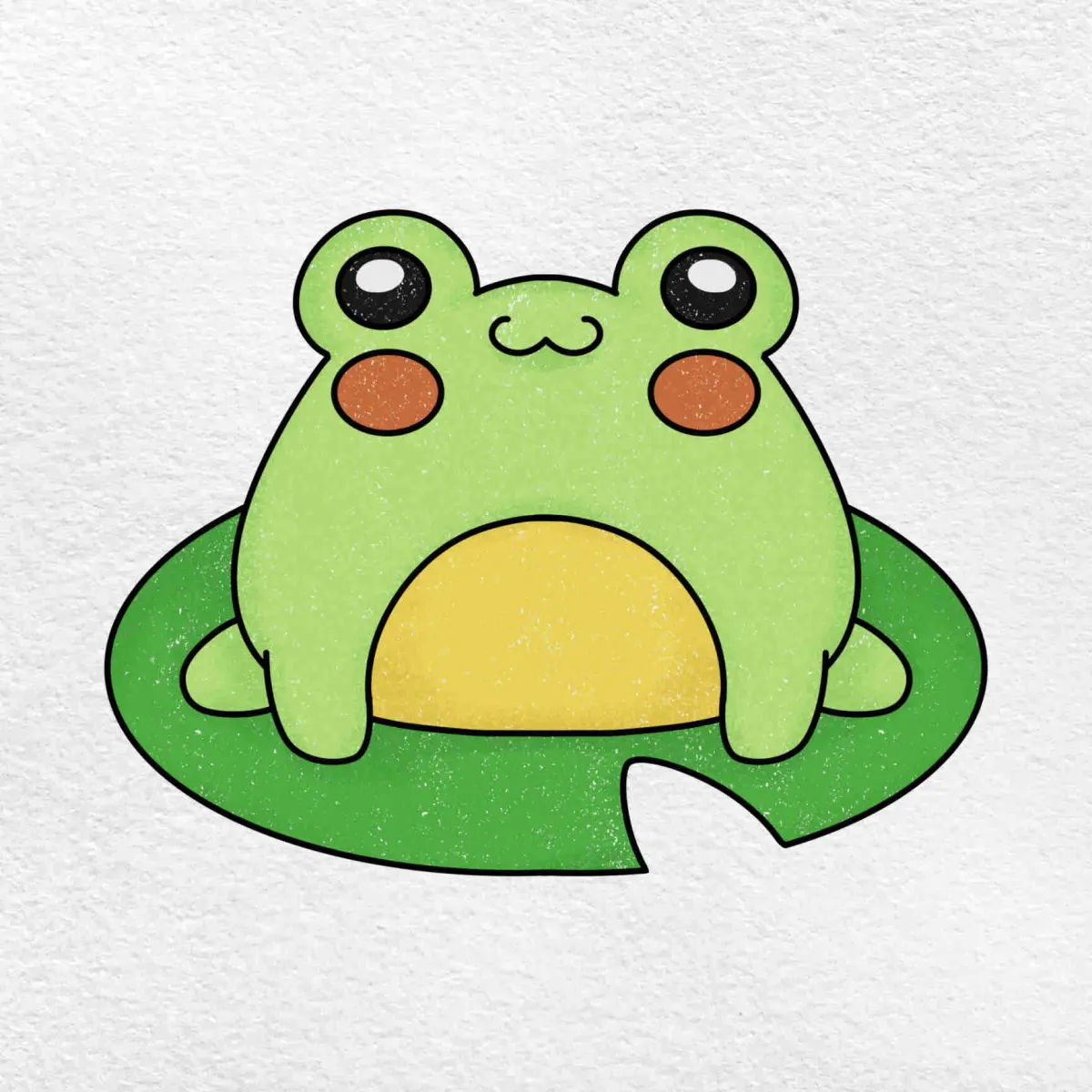
Drawing a cute frog begins with establishing basic geometric shapes that serve as the foundation for your character. Start by drawing a wide, horizontal oval to represent the head. Below this, add a slightly larger, rounded body shape that connects directly to the head without a distinct neck. This overlapping technique creates a soft, approachable silhouette that is essential for a "cute" aesthetic.
Once the main shapes are set, focus on the facial features. Position two large circles near the top of the head for the eyes. To enhance the cuteness, place these eyes slightly apart and ensure they are large in proportion to the rest of the face. Adding small, dark pupils near the bottom of these circles gives the frog a curious, upward-looking expression.
- Sketch a horizontal oval for the head.
- Add a larger, rounded body shape beneath the head.
- Place two large circles near the top for the eyes.
- Draw a small, curved line for the mouth.
- Add two small ovals at the bottom for the feet.
Best tools for drawing cute characters
The tools you choose significantly influence the final look of your drawing. For beginners, a standard HB graphite pencil is ideal because it allows for light, erasable lines during the initial sketching phase. Using a soft eraser, such as a kneaded eraser, helps lift away graphite without damaging the paper, which is crucial when refining the rounded contours of a frog.
For the final outline, consider using a fine-liner pen with a consistent ink flow. A felt-tip pen with a 0.5mm nib provides a clean, bold line that makes the character pop against the page. If you intend to add color, alcohol-based markers or colored pencils work best. These mediums blend easily, allowing you to create smooth gradients that emphasize the roundness of the frog's body.
- HB Graphite pencil for initial sketches.
- Kneaded eraser for gentle corrections.
- 0.5mm fine-liner for permanent outlines.
- Alcohol-based markers for vibrant, smooth coloring.
- Heavyweight paper to prevent ink bleed-through.
Why proportions matter for cuteness
In character design, the "baby schema" or kindchenschema is a psychological principle that explains why certain features appear cute. This concept suggests that large eyes, a rounded head, and small limbs trigger a nurturing response in humans. When drawing your frog, intentionally exaggerate these proportions by making the head roughly one-third of the total body size.
Avoid making the limbs too long or angular, as sharp edges can make the frog appear aggressive or realistic rather than charming. Keep the legs short and stubby, ending in rounded toes. By prioritizing soft, circular shapes over sharp, jagged lines, you maintain a friendly appearance. Remember that the goal is to simplify the anatomy of a real frog into a stylized, approachable cartoon form.
Common mistakes when drawing frogs
A frequent error is placing the eyes too close together, which can make the frog look confused or cross-eyed. Always leave a small gap between the eyes to maintain a balanced, pleasant facial structure. Another common mistake is drawing the mouth as a straight line. A straight line lacks emotion; instead, use a gentle curve that turns upward at the corners to imply a smile.
Many beginners also struggle with the placement of the feet. Drawing feet that are too large or positioned incorrectly can make the character look unbalanced. Ensure the feet are tucked slightly under the body to ground the character. If the frog looks like it is floating, adjust the bottom of the body so that it appears to be resting firmly on a surface, such as a lily pad.
How to add personality to your drawing
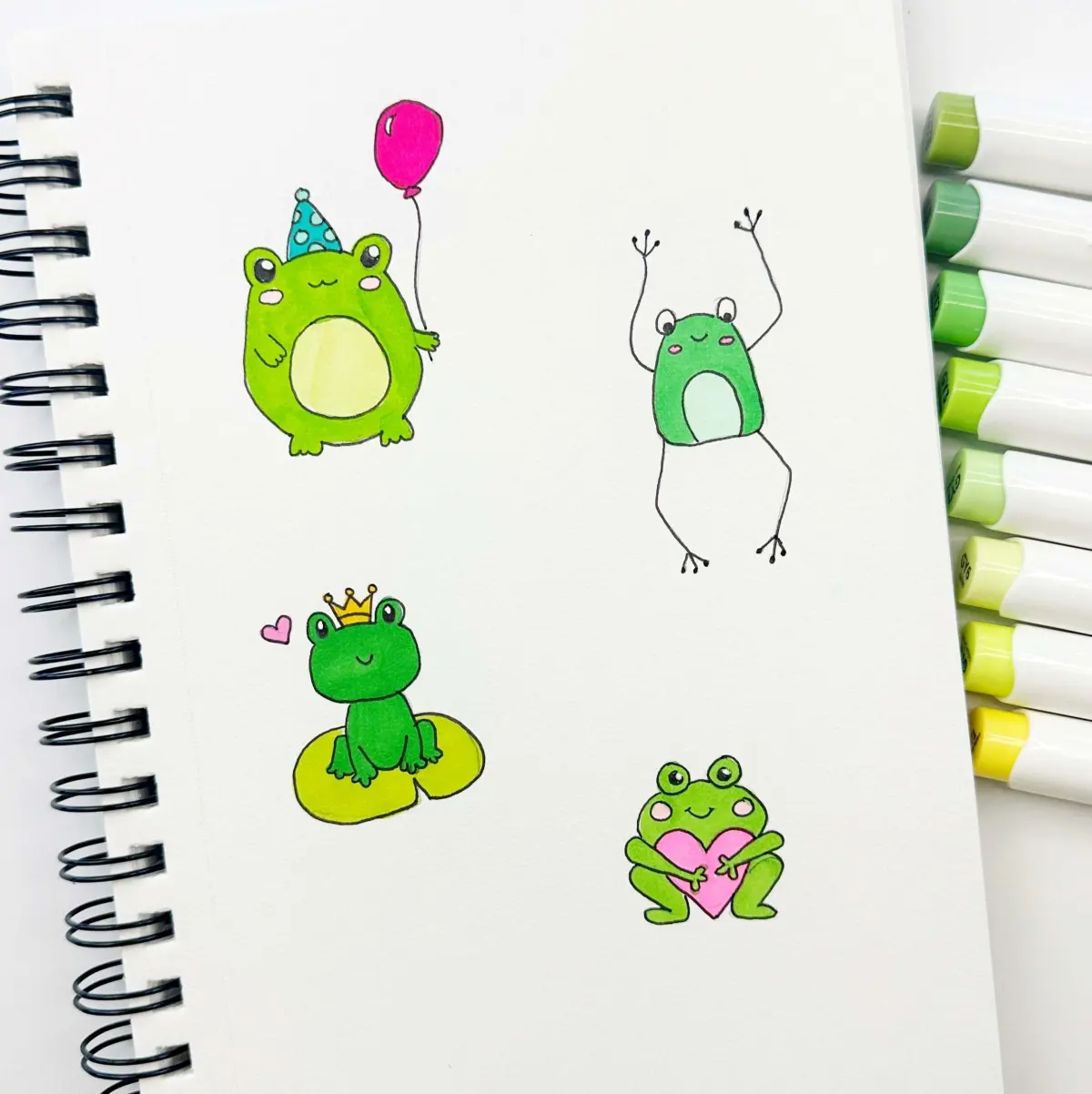
Once you have mastered the basic form, you can add personality through small, deliberate details. Accessories like a small hat, a bow, or a lily pad can tell a story about your character. You might also experiment with the expression by changing the shape of the mouth or adding small, rosy cheeks using a light pink pencil or marker.
Lighting also plays a role in the final presentation. By leaving a small white spot in the pupils, you create a "highlight" that makes the eyes appear wet and lively. Similarly, adding a subtle shadow under the frog can help it pop off the page. These minor adjustments transform a simple drawing into a unique character that feels alive and engaging to the viewer.
Key facts
- Use a large horizontal oval for the body and two smaller circles on top for the eyes to establish a balanced, cute silhouette.
- Frogs are amphibians characterized by their lack of tails and powerful hind legs, which you can represent as simple folded triangles.
- Keep the eyes large and positioned near the top of the head to emphasize a youthful, "chibi" aesthetic.
- Use a wide, curved line for the mouth to create a friendly expression, as straight or downward lines look stern.
- Add small, rounded pads at the ends of the toes to give the frog a soft, tactile appearance.
- Incorporate a lighter shade of green on the belly to create depth and visual interest in your drawing.
The bottom line
Drawing a cute frog relies on emphasizing rounded shapes, oversized eyes, and a friendly, curved mouth. By simplifying the anatomy into basic geometric forms and adding soft, rounded details like toe pads, you create an appealing character. Focus on clean lines and a vibrant color palette to enhance the aesthetic. With practice, you can easily master these proportions to bring your own charming amphibian to life.
People also ask
What is the best medium for drawing cartoon animals?
Graphite pencils are ideal for beginners because they allow for easy erasing and shading. Once the sketch is complete, fine-liner pens or alcohol-based markers are excellent for adding bold, clean outlines and vibrant colors.
How do I make my frog look more expressive?
Focus on the placement of the pupils and the curve of the mouth. Large, dilated pupils often look endearing, while adjusting the angle of the mouth can make the frog look happy, surprised, or thoughtful.
Should I draw a background for my frog?
Adding simple elements like lily pads, reeds, or water ripples provides context for the character. Keep background details minimal so they do not distract from the main subject.
Why do my frog drawings look like blobs?
This usually happens when the limbs are too small or lack distinct joints. Ensure the back legs are significantly larger than the front legs to maintain the frog's recognizable anatomy.
Can I use non-traditional colors for a cute frog?
Absolutely, as stylized art often uses bright pinks, blues, or purples to enhance the "cute" factor. Using a consistent color palette helps maintain a cohesive and professional look.
How do I add texture to the skin?
Instead of drawing many bumps, use small, scattered dots or subtle cross-hatching around the edges. This implies texture without making the drawing look cluttered or messy.
This answer was created with the help of AI research tools and reference sources. Spotted an error? Let us know — we correct mistakes quickly. See our editorial policy.