How big do walruses get?
Short answer
Adult walruses typically reach lengths of 7.5 to 12 feet and weigh between 1,500 and 4,000 pounds. Males are significantly larger than females, often weighing twice as much. These massive marine mammals use their heavy, blubber-rich bodies to maintain core temperatures in freezing Arctic waters and to facilitate deep-sea foraging.
On this page
How big do male and female walruses get?
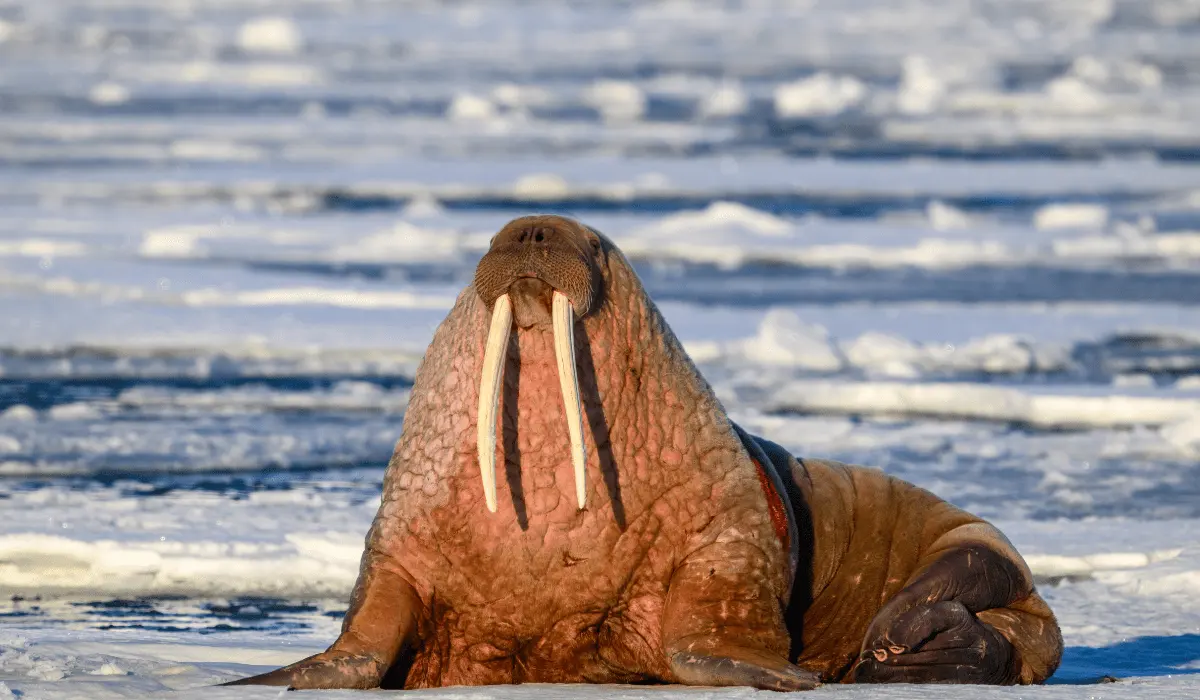
Walruses exhibit extreme sexual dimorphism, meaning males and females differ significantly in size and physical appearance. A mature male, known as a bull, can weigh up to 4,000 pounds, though the average is usually closer to 2,500 pounds. In contrast, adult females, or cows, typically weigh between 1,000 and 2,500 pounds, with an average weight of about 1,800 pounds.
Length also varies by sex, with males generally measuring between 9 and 12 feet, while females usually range from 7.5 to 10 feet. These measurements are taken from the tip of the nose to the end of the tail. Because walruses spend much of their lives in water, their massive girth is essential for buoyancy and insulation. Their size is not static, however, as they often lose significant body mass during breeding seasons when males focus on competition rather than feeding.
Why do walruses grow so large?
The primary driver for the walrus’s massive size is the need to survive in the harsh Arctic and sub-Arctic environments. A thick layer of blubber, which can be up to six inches deep, acts as a critical thermal barrier against sub-zero water temperatures. This blubber also serves as an energy reserve, allowing the animals to survive for extended periods when food sources are scarce or inaccessible due to thick sea ice.
Beyond temperature regulation, their large frame supports the physical demands of their lifestyle. Walruses are benthic foragers, meaning they dive to the seafloor to hunt for clams, snails, and other invertebrates. Their weight helps them remain stable on the ocean floor, while their powerful bodies provide the necessary leverage to use their tusks and snouts to disturb the sediment. Their size also provides a natural defense against primary predators, such as polar bears and killer whales.
How to identify a walrus by its physical traits
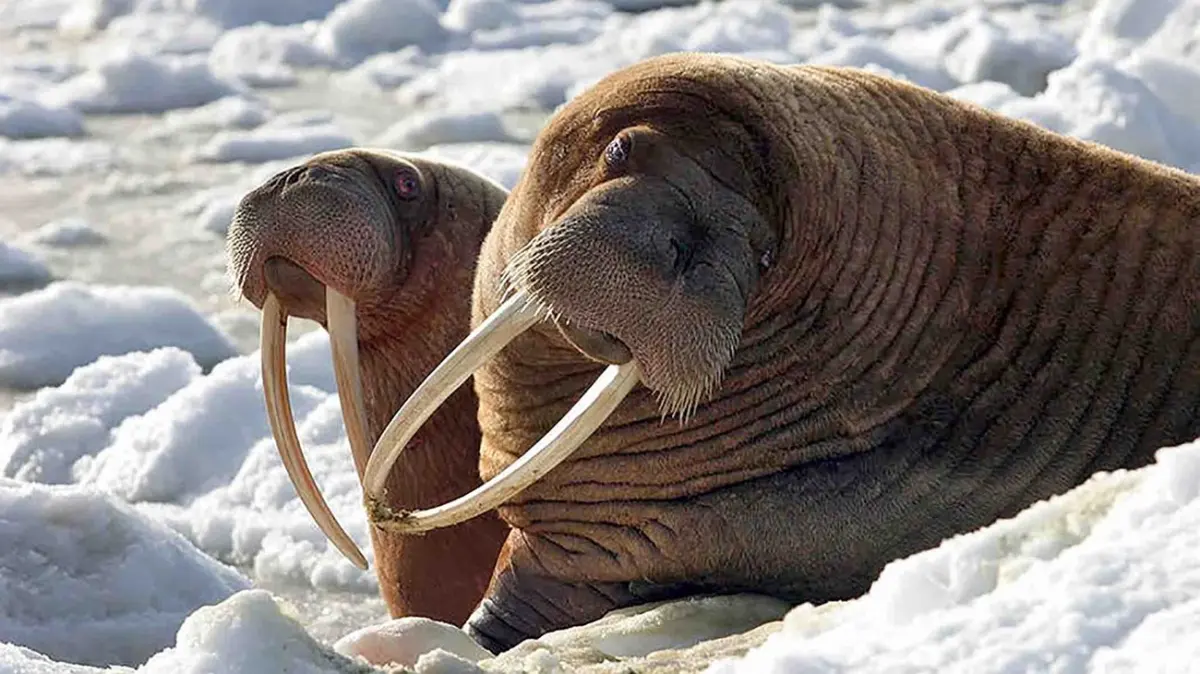
When observing walruses in the wild, size is the most immediate indicator of age and sex. Younger walruses are much smaller and lack the prominent tusks seen in adults. To accurately identify the characteristics of a walrus, consider these visual markers:
- Tusks: Both sexes grow tusks, but those of a male are typically longer, thicker, and more divergent.
- Skin Color: Younger walruses are dark brown, but as they age, their skin becomes paler, often appearing pinkish or white in older males due to blood vessel constriction in cold water.
- Neck Girth: Males develop massive, thick necks covered in heavy skin folds and nodules, which protect them during aggressive territorial disputes.
- Whiskers: The sensitive vibrissae, or whiskers, are used to detect prey in dark, murky water and are present in both sexes regardless of size.
Common mistakes when estimating walrus size
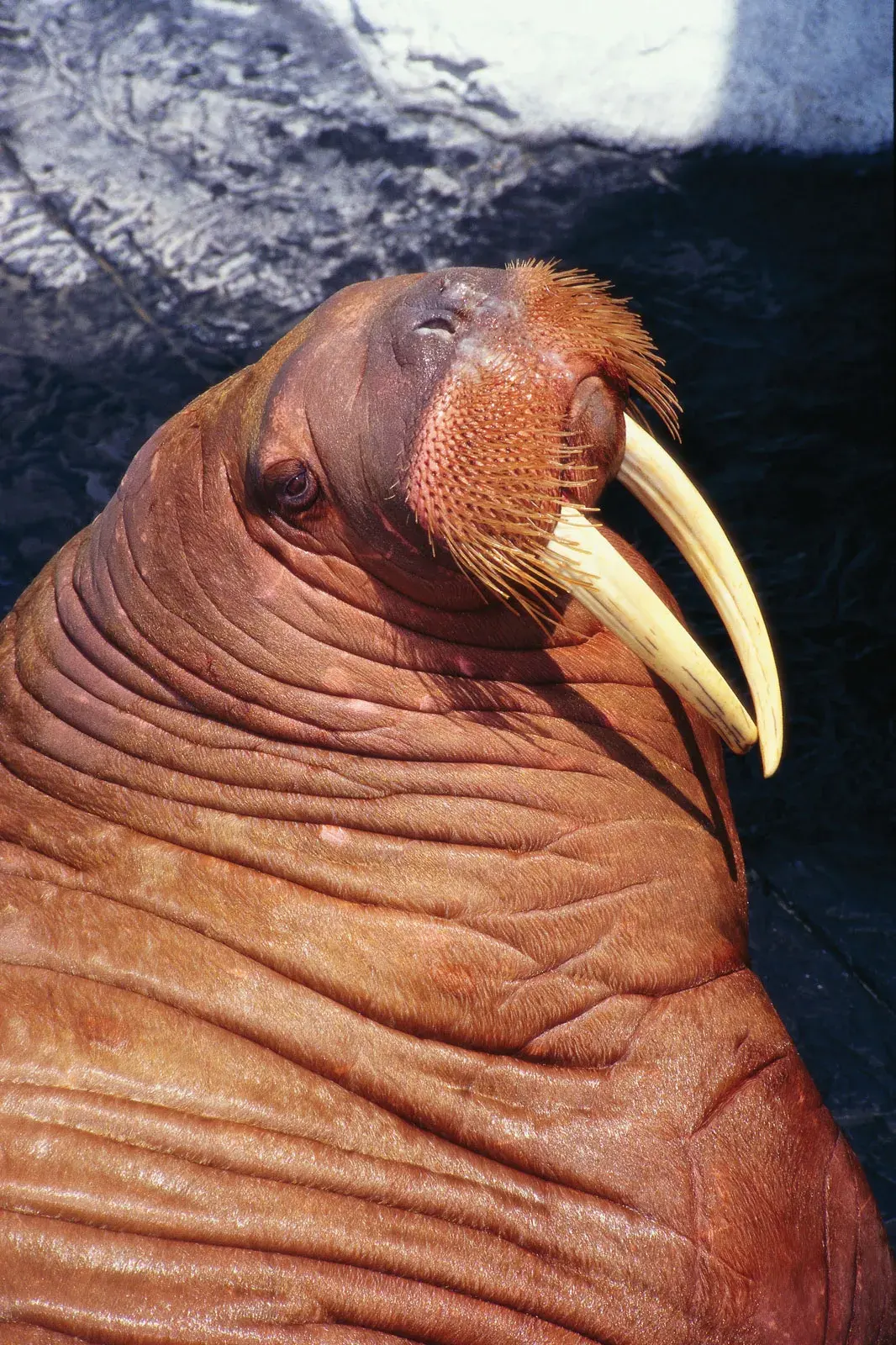
A frequent error when observing walruses is overestimating their size due to their bulky, rounded appearance. Because they are often seen hauled out on ice floes or beaches in tight, crowded groups, it is difficult to isolate an individual for an accurate size comparison. Their skin is extremely loose and folds over their body, which can make them appear much larger or more bloated than they actually are.
Another mistake is assuming that all large walruses are males. While males are generally larger, an old, well-fed female can sometimes be mistaken for a smaller male. Additionally, observers often fail to account for the season. A walrus seen in the late summer will likely be at its peak weight after months of feeding, whereas one seen in the spring may appear significantly thinner and smaller due to the metabolic demands of the winter months and the breeding cycle.
How to safely observe walruses in their habitat
If you are planning to view walruses in their natural habitat, safety and conservation are paramount. Because they are easily startled, approaching them incorrectly can cause a stampede, which is dangerous for the animals and the observer. Follow these steps to ensure a responsible experience:
- Maintain a distance of at least 500 yards if you are in a boat to avoid causing a panic.
- Observe from a stationary position; do not attempt to move toward a herd that is resting on an ice floe or beach.
- Use high-quality binoculars or a camera with a telephoto lens to get a clear view without encroaching on their space.
- Watch for signs of agitation, such as increased vocalizations or heads turning toward you, and retreat immediately if these behaviors occur.
By following these protocols, you can appreciate the immense scale of these animals without disrupting their essential behaviors. Remember that their size is a testament to their evolutionary success in one of the planet's most challenging climates, and they deserve to be observed with the utmost respect for their biological needs.
Key facts
- Adult male Pacific walruses can weigh up to 4,400 pounds (2,000 kilograms).
- Female walruses are significantly smaller, typically weighing between 1,300 and 2,700 pounds.
- Both sexes grow to lengths ranging from 7.5 to 12 feet (2.3 to 3.6 meters).
- A walrus’s layer of blubber can reach up to 6 inches in thickness to provide insulation.
- The tusks of a male walrus can grow to exceed 3 feet in length.
- Avoid approaching walruses in the wild, as their massive size and tusks make them dangerous if they feel threatened.
The bottom line
Walruses are among the largest pinnipeds in the world, with males reaching impressive weights of over 4,000 pounds. Their massive size is supported by a thick layer of blubber and a specialized diet of benthic organisms. While they appear slow on land, they are powerful swimmers. Understanding their scale is essential for appreciating how these animals survive the extreme, freezing conditions of their Arctic home.
People also ask
How long do walruses live in the wild?
Walruses typically live between 20 and 30 years in their natural Arctic habitats. Their longevity is influenced by environmental conditions and the availability of their primary food sources, such as clams.
What do walruses eat to maintain their massive size?
They are benthic feeders that primarily consume clams, mussels, and other marine invertebrates found on the ocean floor. A single walrus can consume thousands of clams in one feeding session.
Why do walruses have such long tusks?
Both males and females grow tusks, which are actually elongated canine teeth. They use them to haul their heavy bodies onto ice floes and to display social dominance during mating seasons.
Are there different subspecies of walruses?
Yes, there are two primary subspecies: the Atlantic walrus and the Pacific walrus. The Pacific walrus is generally larger and more numerous than its Atlantic counterpart.
Do walruses have any natural predators?
Polar bears and killer whales are the only significant predators of walruses. Because of their immense size and thick skin, adults are rarely targeted, though calves are more vulnerable.
How deep can a walrus dive?
Walruses are capable of diving to depths of approximately 260 feet to forage for food. They can remain underwater for up to 30 minutes before needing to surface for air.
This answer was created with the help of AI research tools and reference sources. Spotted an error? Let us know — we correct mistakes quickly. See our editorial policy.